 Haaland Has Seven Goals and Norway Runs Entirely Through Him
⚽️2026 FIFA WORLD CUP
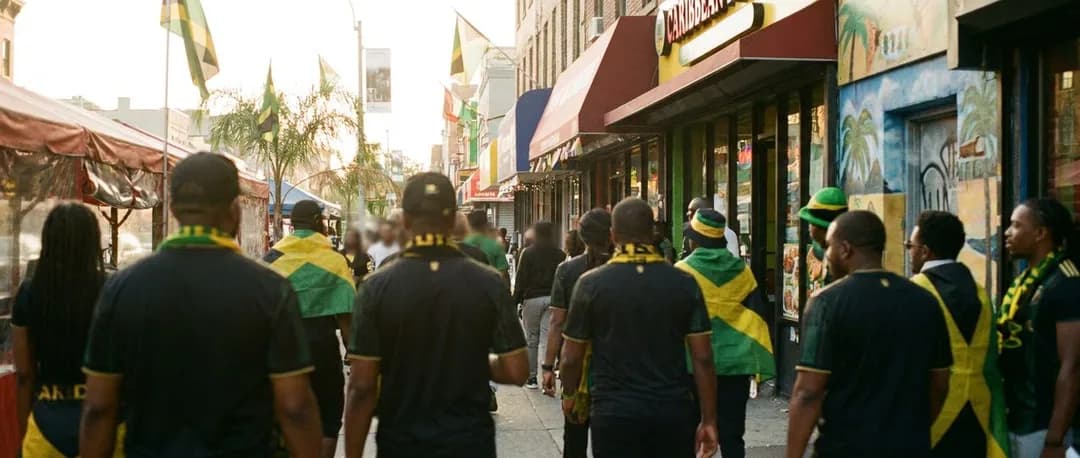
Jamaica's Historic World Cup Debut Sends Fans Into Flatbush and the Bronx
Jamaica's qualification for the 2026 World Cup, a historic milestone for Caribbean football, has electrified the Jamaican communities of Flatbush, Brooklyn and the South Bronx, where supporters have been waiting for this moment for decades and are building viewing setups that celebrate the Reggae Boyz with unmistakable New York energy.
The Reggae Boyz have finally broken through. Jamaica's qualification for the 2026 World Cup—their first appearance since France 1998—has transformed two of New York City's most vibrant Caribbean neighborhoods into epicenters of celebration that blend island pride with unmistakable New York grit. In Flatbush, Brooklyn and the South Bronx, Jamaican communities that have waited nearly three decades for this moment are building viewing experiences that turn every match into a cultural event, complete with jerk chicken smoke drifting through the streets and sound systems that shake storefront windows.
Flatbush Transforms Church Avenue Into a Green-and-Gold Corridor
Church Avenue between Flatbush and Nostrand has become ground zero for Reggae Boyz fever. Storefronts that normally display patties and plantains now showcase massive Jamaican flags alongside hand-painted signs counting down to match days. Golden Krust on Church Avenue has installed three flat-screens in its dining area, while the owner has been running a special "Boyz Menu" featuring beef patties stamped with edible green-and-gold designs. By 10 a.m. on match days, the line extends onto the sidewalk as fans arrive early to claim tables near the screens.
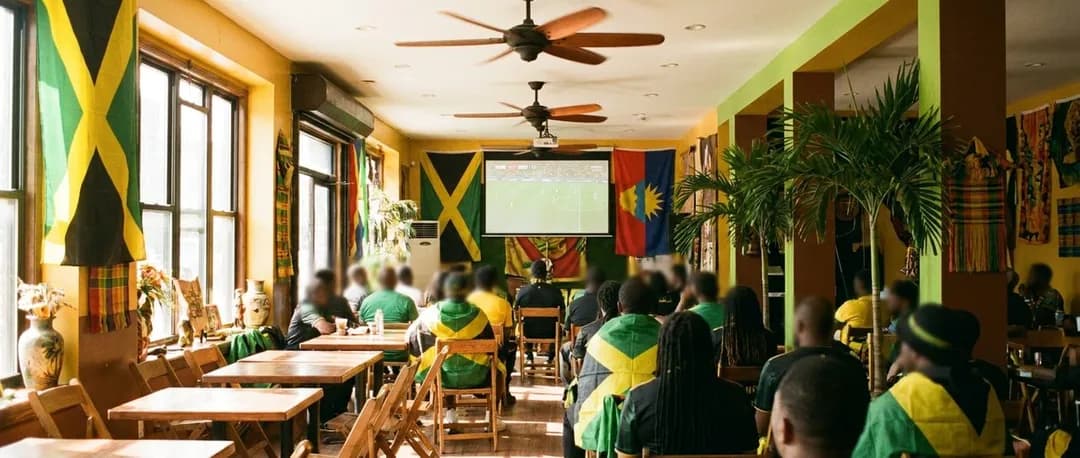
Two blocks down, D&D's Caribbean Restaurant has gone further, renting a projector that turns the restaurant's back wall into a twelve-foot screen. The owner reports that reservations for World Cup matches filled up within forty-eight hours of Jamaica's qualification, with groups of fifteen to twenty claiming entire sections. The restaurant has started opening two hours earlier on match days, serving breakfast plates of ackee and saltfish to fans who treat the buildup like a daylong festival. Between matches, the projector plays highlight reels from 1998, when Theodore Whitmore's goals against Japan gave Jamaica their only World Cup wins—footage that brings older patrons to their feet.
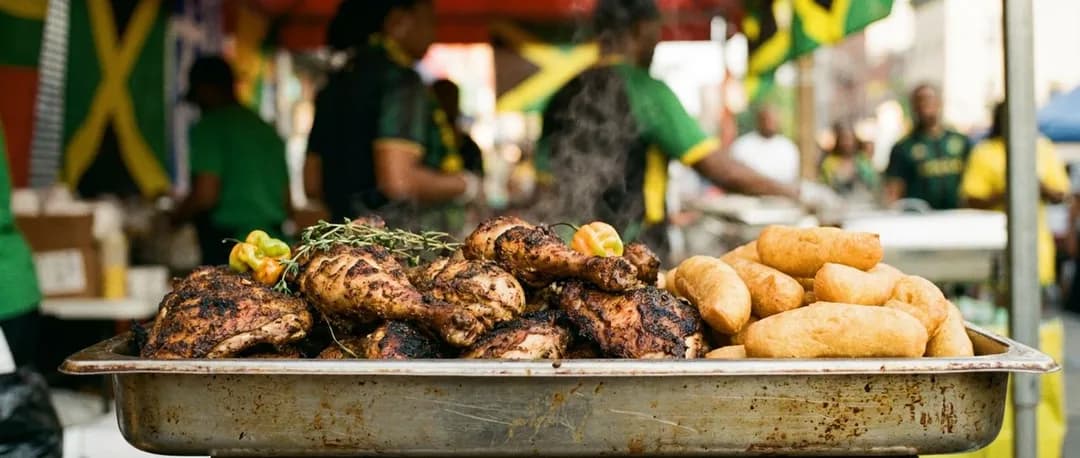
The South Bronx Builds Outdoor Viewing Blocks on Westchester Avenue
While Flatbush claims the borough's largest indoor gatherings, the South Bronx has taken the celebration outside. Along Westchester Avenue near Prospect Avenue, community organizers have secured permits to close off a two-block stretch for outdoor viewing parties during Jamaica's group stage matches. Residents have been pooling resources to rent LED screens typically used for concerts, mounting them on flatbed trucks parked at intersections. Generators hum on sidewalks, powering the screens and the reggae sound systems that fill the gaps between match commentary.
The outdoor setup draws families who spill out of apartment buildings carrying folding chairs and coolers. Local vendors have set up grills along the closed blocks, selling jerk chicken and pork by the pound, with smoke creating a haze that smells like Kingston transplanted to the Bronx. The Bronx Reggae Boyz Supporters Club, formed three months after qualification, has been coordinating the logistics—negotiating with the city, arranging security, and organizing youth soccer clinics in the hours before kickoff. Club members wear custom jerseys with "South Bronx" printed where player names would normally appear, a detail that speaks to the neighborhood's claim on this moment.
Bakeries and Cafes Become Pre-Match Ritual Spaces
In both neighborhoods, Caribbean bakeries have evolved into unofficial fan headquarters in the days leading up to matches. Alan's Bakery on Nostrand Avenue in Flatbush has been selling out of its rum cake by noon, as supporters stop by to debate lineups and tactics over coffee that's more condensed milk than caffeine. The bakery's owner has printed flyers with match schedules and has been giving away small Jamaican flags with every purchase over ten dollars—a gesture that has turned the shop into a gathering point where strangers bond over shared anticipation.
Across the Bronx, Taste of the Caribbean on Westchester Avenue has added a "Boyz Breakfast Special" that pairs festivals—fried dough dumplings—with callaloo and a commemorative sticker featuring the World Cup trophy wrapped in Jamaica's colors. The café's walls now display a timeline of Jamaican football history, with photos of the 1998 squad positioned next to images of current players like Michail Antonio and Bobby Decordova-Reid. Patrons linger over their meals, phones out, streaming training footage and pre-match press conferences that get analyzed with the intensity of political debates.
Transit Routes Fill With Colors on Match Days
The journey to viewing parties has become part of the ritual. On the 2 and 5 trains heading toward the Bronx, entire subway cars transform into mobile fan sections, with supporters in green and gold filling seats and standing room. Passengers break into chants that echo through underground stations, drawing smiles and occasional join-ins from non-Jamaican riders. The trains become louder as they approach Prospect Avenue, where groups disembark in waves, creating a procession toward Westchester Avenue that stops traffic.
In Brooklyn, the B44 bus along Nostrand Avenue operates like a fan shuttle on match days. Riders board already wearing jerseys, carrying flags, and debating whether Jamaica's defense can handle the tournament's top attackers. The bus crawls through traffic near Church Avenue as passengers crane their necks to spot which restaurants have the best viewing setups, making mental notes for future matches. Drivers, many of them Caribbean immigrants themselves, have been known to pause the bus when goals are scored, allowing passengers to celebrate before continuing the route.
Evening Rhythms Shift to Dancehall and Domino Tables
After matches—win or lose—both neighborhoods settle into extended celebrations that blur the line between sports and culture. In Flatbush, the stretch of Nostrand Avenue near Fenimore Street becomes an impromptu street party, with car stereos playing dancehall tracks from Popcaan and Skillibeng. Domino games that started before kickoff continue into the night, with players slamming tiles on folding tables set up outside corner stores. The clack of dominoes mixes with music and post-match analysis shouted between parked cars.
The South Bronx outdoor blocks stay active well past sunset, with the LED screens switching from match broadcasts to music videos once the final whistle blows. Families who arrived for the game stay for the atmosphere, kids running between vendor stalls while adults dance in circles that form spontaneously. Local DJs take over the sound systems, spinning roots reggae and dub tracks that keep the blocks alive until noise ordinances force a reluctant shutdown around midnight.
Practical Notes
• Transit: Take the 2 or 5 train to Prospect Avenue for South Bronx viewing blocks; B44 or Q or B trains to Church Avenue for Flatbush spots
• Timing: Restaurants fill ninety minutes before kickoff; arrive by 11 a.m. for afternoon matches to secure seating
• Weather: Outdoor Bronx viewings proceed rain or shine; bring umbrellas and layers for evening matches
• Reservations: Major Flatbush restaurants require advance booking for World Cup matches; walk-ins work better at smaller cafés and bakeries
Tags: #JamaicaWorldCup #ReggaeBoyz #FlatbushBrooklyn #SouthBronx #CaribbeanNYC #WorldCup2026 #ChurchAvenue #WestchesterAvenue #NYCFootball #JamaicanCommunity #BronxCulture #BrooklynNeighborhoods #SoccerCulture #NYCSports
Sources consulted: fifa.com (https://www.fifa.com) · nycgo.com (https://www.nycgo.com) · timeout.com/newyork (https://www.timeout.com/newyork)
All trademarks are the property of their respective owners.
Ask Karpo first
Looking for where New York City's Jamaican community and Reggae Boyz supporters are gathering to celebrate Jamaica's historic World Cup debut this summer?
Ask Karpo for the latest on Flatbush and South Bronx viewing spots, Jamaican community event schedules, and the best places to join the celebration around Jamaica's World Cup campaign.
Ask Karpo for more information.
Keep reading
- Haaland Has Seven Goals and Norway Runs Entirely Through Him
 World Cup Trophy Ceremony Timing Medals and Postmatch Celebrations
 Olise and France's Attack: The Semifinal Tactical Question