 Haaland Has Seven Goals and Norway Runs Entirely Through Him
⚽️2026 FIFA WORLD CUP
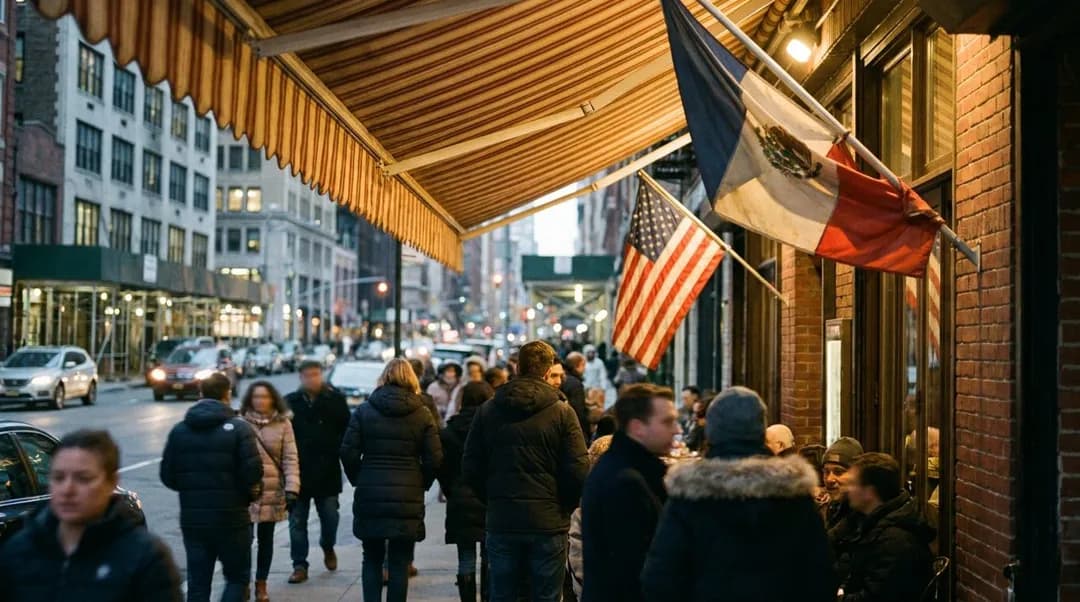
Two Diasporas, One Screen: South Korea vs El Salvador in Jackson Heights
Korean and Salvadoran fans share a Queens restaurant for a fixture that turns 74th Street into a bilingual watch party with soju and horchata on tap.
You're heading to Jackson Heights on match day not because it's the only place showing the game, but because it's the only place where the screen will be flanked by Korean banchan on one side and Salvadoran pupusas on the other, where the crowd will code-switch mid-chant, and where the pre-game tension smells like sesame oil and curtido in equal measure. When South Korea faces El Salvador in the group stage, 74th Street becomes a living experiment in what happens when two wildly different football cultures claim the same corner of Queens.
The Restaurant That Accidentally Became a Consulate
The spot sits on a stretch where Korean signage bleeds into Spanish within three storefronts, and the owners never planned to host a World Cup watch party until both communities started asking the same week. The dining room runs long and narrow, booths on one wall and a bar on the other, with a projector screen where motivational calligraphy usually hangs. By the time you arrive an hour before kickoff, the Korean contingent has claimed the left side near the kitchen, the Salvadoran crew has settled into the booths on the right, and the middle tables are a nervous no-man's-land where a few couples sit in bilingual households trying to negotiate jersey diplomacy. The air conditioning fights a losing battle against body heat and the steam rolling out every time the kitchen door swings open.
What the Regulars Ordered Three Days Ago
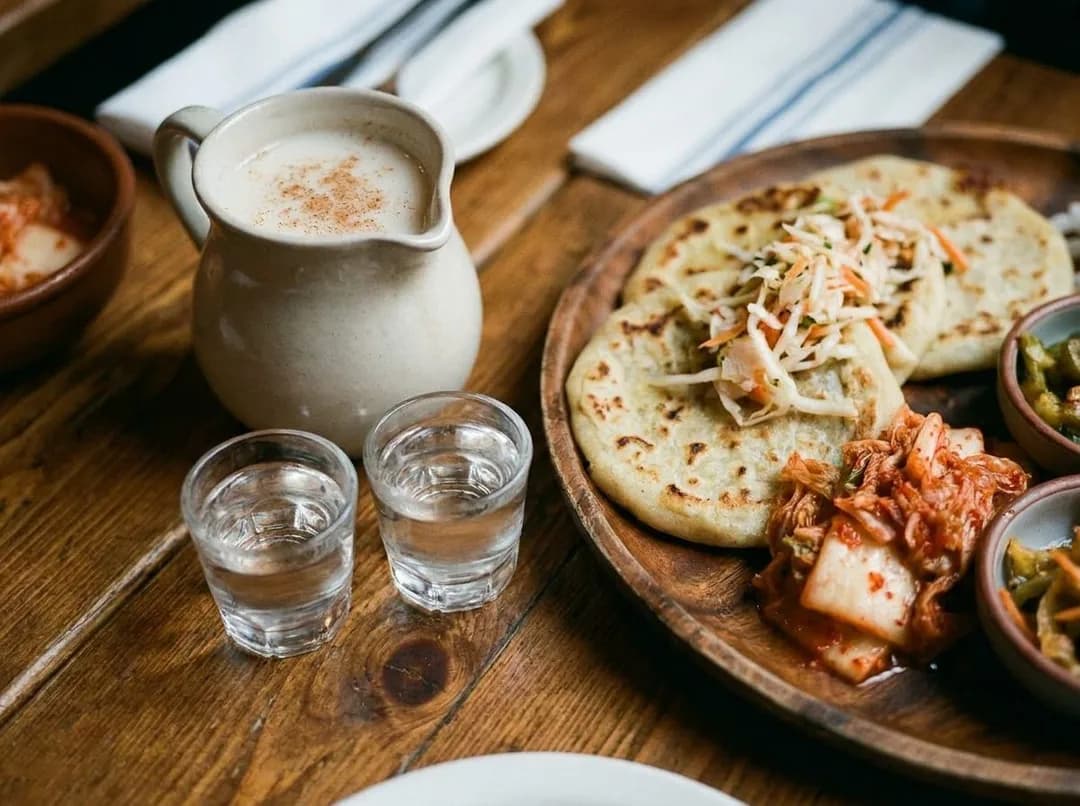
You can't just walk in on match day expecting a table. The regulars know to call ahead, and what they pre-order tells you everything about how each side preps for ninety minutes of stress. The Korean tables are loaded with anju—the drinking food that turns soju into a social contract—platters of crispy fried chicken coated in gochujang glaze, kimchi pancakes thick enough to soak up a full pour, and those little dried squid strips that take five minutes to chew. The Salvadoran side runs on carbs and pork: pupusas stuffed with loroco and cheese, yuca frita with a mountain of curtido, and tamales that someone's aunt dropped off that morning because restaurant tamales are never quite right. The bar stocks both Hite and Pilsener, and the bartender has learned to pour soju in the traditional two-hand style for one half of the room and slide Salvadoran horchata with a rum float for the other.
The Linguistic Geometry of a Shared Chant
Ten minutes before kickoff, the sound in the room starts layering in a way that shouldn't work but does. The Korean side begins a rhythmic chant—"Dae-Han-Min-Guk"—clapping on every syllable, a percussive heartbeat that's been refined over decades of tournament heartbreak. The Salvadoran side counters with "Cuscatleco," drawing out the vowels, adding a melodic lilt that turns the word into something you could almost dance to. For a moment it's pure chaos, two linguistic rhythms crashing into each other like poorly mixed tracks. Then someone in the middle—a Korean guy wearing a Salvadoran scarf because his wife's from San Salvador—starts clapping on the offbeat, bridging the two tempos, and suddenly the whole room finds a pocket. It lasts maybe thirty seconds before dissolving into laughter, but you felt it: the brief, weird harmony of two countries who've never played each other before this tournament finding common ground in a Queens restaurant.
How the Room Breathes During Play
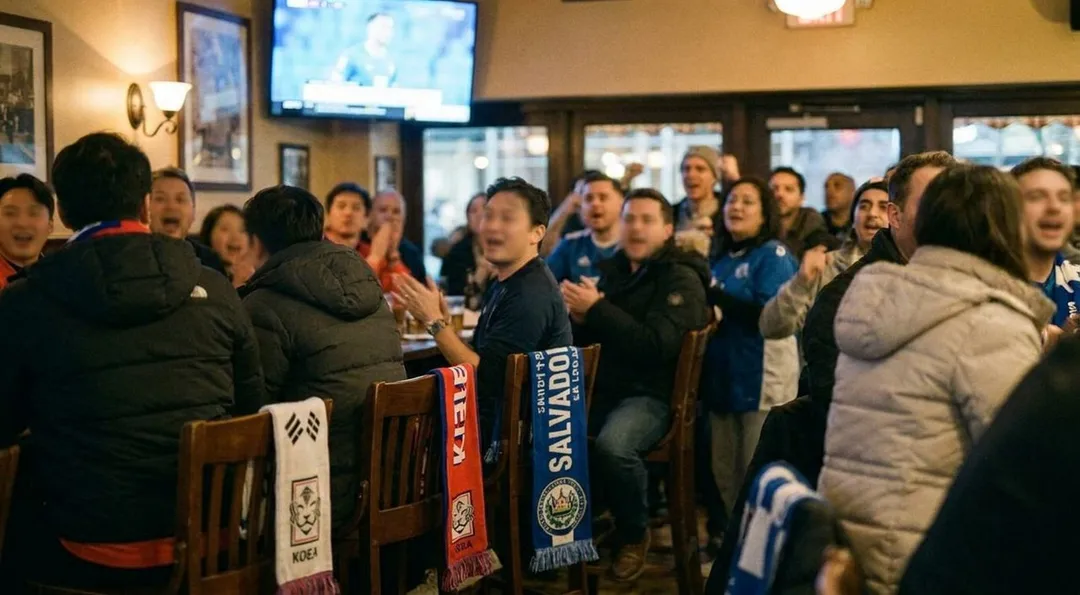
Once the whistle blows, the crowd settles into the specific tension of people who know their team is good but not great, who've been burned before by optimistic brackets and last-minute collapses. You notice how the Korean side sits forward, elbows on knees, bodies coiled like they're about to sprint onto the pitch themselves. The Salvadoran tables lean back, arms crossed, a more fatalistic posture that says we've seen worse, we'll survive this too. Every time South Korea pushes forward, the left side of the room inhales in unison—a sharp collective breath that pulls all the oxygen out of the space. When El Salvador counters, the right side erupts in a burst of Spanish so rapid you catch maybe one word in five, but the meaning is clear in the way hands fly up and chairs scrape back. The bartender stops trying to take orders during dangerous plays and just stands there, bar towel over his shoulder, eyes on the screen like everyone else.
The Halftime Diplomacy of Shared Plates
At halftime, something shifts. A Korean grandmother in a red jersey walks a plate of pajeon to the Salvadoran side, setting it down with a little bow and zero English explanation. Two minutes later, a Salvadoran guy in his twenties brings back a pupusa, pointing at the cheese and saying "queso" very slowly, like that's going to bridge the language gap, and somehow it does. You watch plates migrate across the invisible border, watch people try foods they'd normally walk past on the street, watch the room realize that both cultures have built elaborate rituals around the same basic human need: to eat something salty and fried while watching your country try not to embarrass itself on television. A Korean kid, maybe seven, ends up teaching a Salvadoran kid the clapping rhythm from the opening chant, both of them sitting cross-legged on the floor between tables, and their parents are too nervous about the second half to stop them.
When Someone Scores and the Whole Block Knows
You hear the goal before you see it—the room detonates in a split-second roar that rattles the front windows and sends every head on 74th Street turning toward the door. Doesn't matter which side scored; the sheer volume is democratic. The winning half of the room is on their feet, jumping, hugging strangers, and the losing side sits in that stunned silence that follows a gut punch, staring at the screen like they can rewind reality through sheer force of will. Outside, people start gathering on the sidewalk, pressing faces against the glass, and the restaurant doesn't stop them because this is the kind of thing Jackson Heights was built for—the spontaneous overflow of immigrant joy and heartbreak onto public streets. Someone props the door open and the noise spills out, mixing with traffic and the cumbia leaking from a car stopped at the light, and for a few minutes this one block in Queens is the center of the football universe.
The Long Walk Home on 74th Street
After the final whistle, the crowd doesn't scatter immediately. Win or lose, both sides linger, ordering one more round, swapping Instagram handles, making plans to do this again for the next match even though they have no idea if this restaurant will host again. You step outside into the early evening and 74th Street is still buzzing—clusters of jerseys on every corner, bodegas blasting post-match commentary in three languages, someone selling flags from a folding table that definitely wasn't there this morning. The Korean bakery two blocks down has a line out the door, everyone suddenly craving something sweet to cut the adrenaline. You walk past a Salvadoran pupusa cart and the smell of masa and cheese follows you for half a block, and you think about how this neighborhood just threw a party for a match that most of the world won't remember by next week, and how that's exactly the point.
Practical Notes
The restaurant sits on the main commercial stretch of 74th Street between Roosevelt and Junction, accessible via the 7 train or the Q lines. Arrive at least an hour early for major matches—seating fills fast and they don't take reservations for watch parties, only pre-orders. Expect to spend somewhere in the range of what you'd pay at any decent neighborhood spot, less than a Manhattan sports bar, more than eating at home. Cash helps move things faster when the bar is slammed. Street parking is a fantasy on match days; the subway is your friend. If you're coming from outside Queens, budget extra time—Jackson Heights doesn't run on Manhattan punctuality, and that's a feature, not a bug.
Tags: #2026FIFAWorldCup #JacksonHeightsQueens #QueensEats #NYCWorldCup #KoreanFood #SalvadoranFood #DiasporaStories #ImmigrantQueens #NYCFootball #SoccerCulture #WorldCupNYC #JacksonHeights #QueensNeighborhoods #NYCHiddenGems #FoodAndFootball
Sources consulted: fifa.com · espn.com · timeout.com
Please drink responsibly. Must be of legal drinking age.
All trademarks are the property of their respective owners.
Ask Karpo for more information.
Keep reading
- Haaland Has Seven Goals and Norway Runs Entirely Through Him
 World Cup Trophy Ceremony Timing Medals and Postmatch Celebrations
 Olise and France's Attack: The Semifinal Tactical Question