 Haaland Has Seven Goals and Norway Runs Entirely Through Him
⚽️2026 FIFA WORLD CUP
Is South Korea vs Czechia the Last World Cup for a Legend in Koreatown, Manhattan?
Koreatown's basement karaoke bars become hushed sanctuaries when fans gather to see if an aging star is playing their final World Cup tournament.
The Vinyl Booth Where Silence Becomes Communal
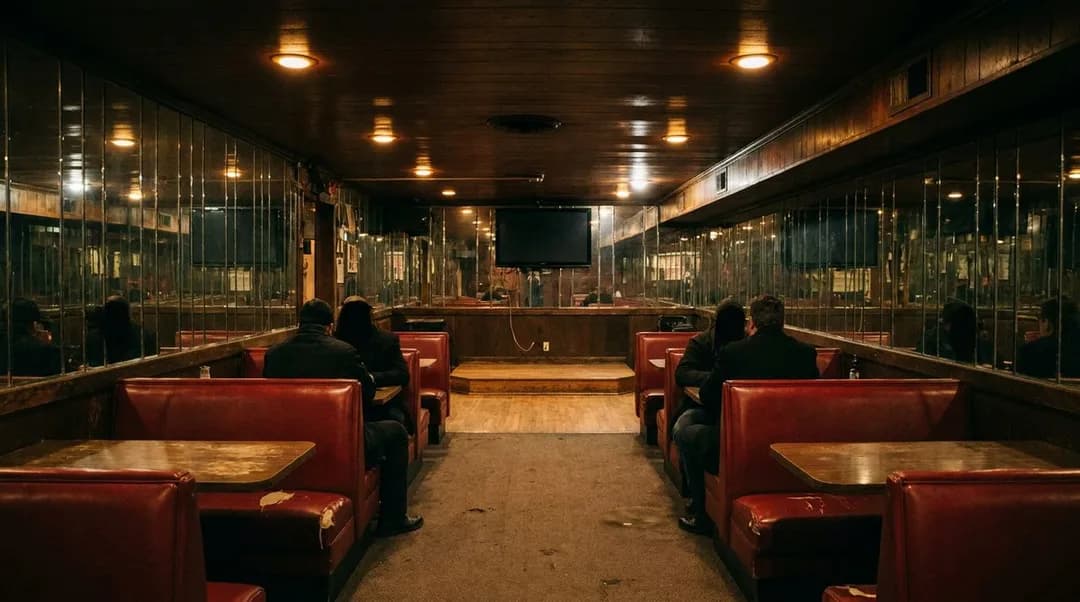
You descend a staircase off 32nd Street and the karaoke track cuts mid-chorus. Someone's paused the system. The basement room smells like stale beer and the sesame oil from the kitchen upstairs, and twenty people you've never met are holding their breath in unison. On a wall-mounted screen, a player twice your age is lining up what might be his last meaningful touch in a World Cup jersey. This is how Koreatown watches when legacy hangs in the balance—not in sports bars with craft beer menus, but in cramped noraebangs where the usual soundtrack of off-key ballads gives way to something closer to prayer. The South Korea versus Czechia match isn't just another group stage fixture. It's a potential farewell, and these rooms know how to hold space for endings.
The Geography of Gathered Grief

Koreatown's karaoke venues cluster between Fifth and Sixth Avenues, stacked vertically in buildings that house restaurants on ground level and singing rooms below. You wouldn't know they transform during major tournaments unless you've been here when it matters. The usual Friday night crowd—birthday parties, corporate outings, college kids working through their parents' song catalogs—clears out early on match days. What replaces them is quieter, older, more deliberate. You see men in their fifties wearing replica jerseys from tournaments past, the fabric pilled and faded. You see women clutching phones, texting relatives in Seoul where it's already tomorrow. The rooms get booked days in advance, not for singing but for the specific acoustics of collective anxiety. These spaces were designed to contain sound, which means they also contain emotion in a way street-level bars never could.
What the Kitchen Sends Down During Extra Time
The food arrives in waves that correspond to the match's rhythm. During the first half, it's the standard noraebang fare—plates of tteokbokki and fried chicken that people pick at absently. But if the game stays close, if the aging star is still on the pitch past the seventieth minute, the kitchen starts sending down different dishes. You'll see someone's aunt emerge from the stairwell with a tray of homemade mandu, still steaming, the kind that take an hour to fold properly. You'll see a manager who should be working the door instead circulating with a bottle of soju that isn't on any menu, pouring carefully measured shots that no one touches until the final whistle. The temperature in these rooms rises three degrees per half—body heat and anxiety and the steam from tea that people order but don't drink. By the second half, someone's cracked a window despite the noise ordinance, and the sound of 32nd Street traffic mixes with the commentator's voice in a way that makes the match feel both intimate and enormous.
The Untranslated Commentary Track
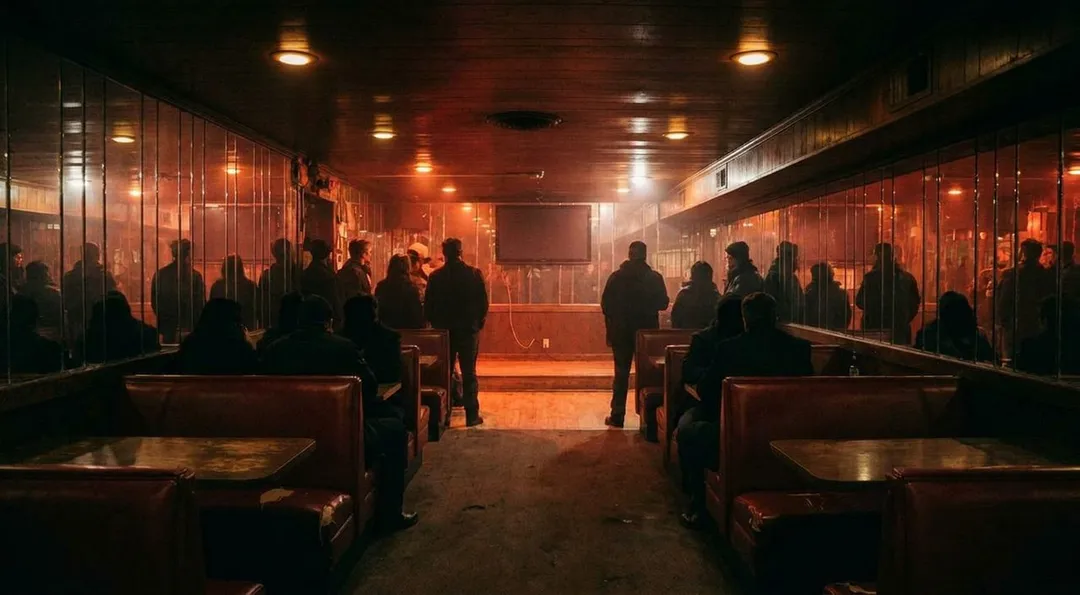
Most rooms stream Korean-language broadcasts, and even if you don't speak the language, you learn to read the commentator's cadence like a second pulse. There's a particular rise in pitch that means a dangerous ball, a drawn-out vowel that signals a near miss. When the aging star touches the ball, the commentator's voice drops half an octave—respect coded into tone. You watch the crowd more than the screen sometimes. There's a woman in the corner who brings the same framed photo to every match, propped against a soju bottle—her father in a 2002 jersey, the year Korea made the semifinals. There's a college kid who wasn't born when this player made his debut, but who's wearing the number anyway, the jersey clearly borrowed from someone older. The generational stack in these rooms is what makes the silence so heavy. Everyone's watching a different version of the same ending—the end of a career, the end of an era, the end of their own youth measured in World Cup cycles.
Where the Regulars Sit and Why It Matters
Positioning in a noraebang is usually democratic—first come, first served on the vinyl benches. But during World Cup matches, an unspoken hierarchy emerges. The people who've been coming here since the space opened get the corner booth with the clearest sightline. They're the ones who remember watching here in 2010, in 2014, in 2018, who've tracked this player's entire arc in this specific basement. Newer arrivals stand along the walls or sit on the floor near the door, which isn't disrespect—it's acknowledgment. You earn your seat over tournaments, not nights. The room's oldest regular, a man who supposedly hasn't missed a Korea match in this venue in twelve years, sits directly center, three feet from the screen. No one takes his spot. No one even considers it. When the player in question is substituted off—whether in the sixty-fifth minute or the eighty-fifth—this man will be the first to stand, and everyone else will follow, and the applause will start in that corner and spread like a wave until even the people in the stairwell are clapping for someone they can't see anymore.
The Post-Match Ritual That Isn't Celebration
When the final whistle blows, there's no immediate rush to leave. Win or lose, advance or eliminated, the room needs fifteen minutes to decompress. Someone restarts the karaoke system, but the first song is never upbeat. You'll hear ballads from the nineties, slow and aching, sung by people who suddenly remember they came here to sing. The crying, when it happens, is quiet and unremarked upon. Someone will order another round of fried chicken that no one's hungry for, because the act of ordering maintains normalcy. The manager starts collecting empty bottles with unusual care, like the glass might shatter from the wrong kind of handling. You'll overhear fragments of Korean you can't fully parse, but the tone is universal—the post-mortem of a performance, the calculus of what-ifs, the gentle arguing about whether the substitution came too early or too late. People exchange phone numbers, making plans to meet here again in four years, though everyone knows the next tournament will feel different because this player won't be in it.
Practical Notes
Most karaoke venues in Koreatown operate late morning through early morning, with match-day bookings requiring advance arrangement—call a few days ahead and specify you're reserving for the game. Rooms typically accommodate eight to twenty people depending on configuration. Expect to order food and drinks with a minimum spend that feels reasonable for the space and duration. The venues sit within a three-block radius between 31st and 33rd Streets, accessible via the N/Q/R/W trains to 34th Street-Herald Square or B/D/F/M to 34th Street. Some rooms have better screen setups than others—ask when booking if sightlines matter to you. Street parking is mythical; the subway is your friend. If you're not part of a regular group, showing up solo or as a pair on match day means you might be invited to join a larger party—this is normal and encouraged. Bring cash for tips and incidentals, though most places take cards for the main bill.
Tags: #2026FIFAWorldCup #KoreatownNYC #NoraebangsOfManhattan #SouthKoreaFootball #WorldCupWatch #KoreanDiaspora #MidtownManhattan #NYCHiddenSpots #FootballCulture #KaraokeBasements #LegacyMatches #32ndStreet #DiasporaSports #TournamentRituals #NYCNeighborhoods
Sources consulted: fifa.com · espn.com · timeout.com
Please drink responsibly. Must be of legal drinking age.
All trademarks are the property of their respective owners.
Ask Karpo for more information.
Keep reading
- Haaland Has Seven Goals and Norway Runs Entirely Through Him
 World Cup Trophy Ceremony Timing Medals and Postmatch Celebrations
 Olise and France's Attack: The Semifinal Tactical Question