 Haaland Has Seven Goals and Norway Runs Entirely Through Him
⚽️2026 FIFA WORLD CUP
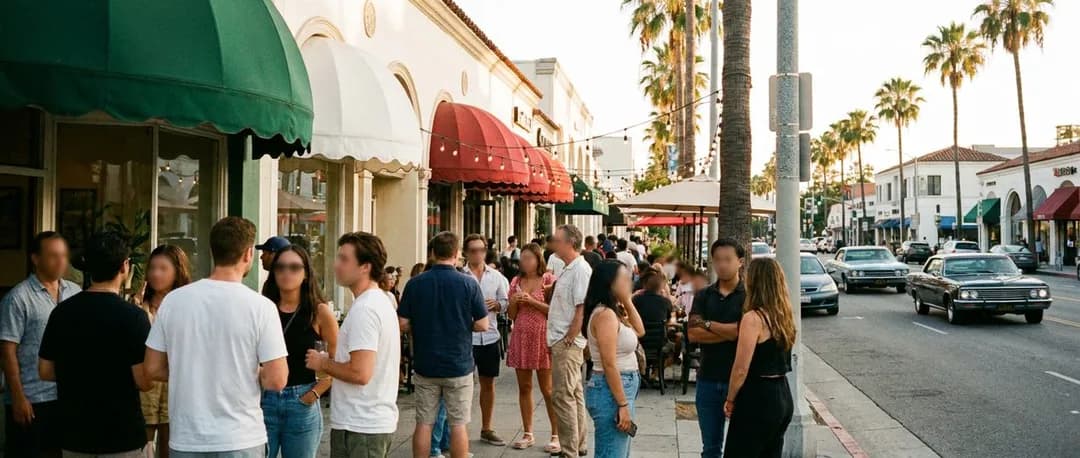
Iran's World Cup Fans Navigate Pride and Community in Los Angeles
Los Angeles's Westwood and West LA neighborhoods, long nicknamed Tehrangeles for the largest Iranian diaspora outside Iran itself, present a layered World Cup setting where a community of more than half a million navigates the space between supporting players and engaging with a national team moment that means different things to different generations.
The cafes along Westwood Boulevard fill hours before kickoff, satellite dishes angled toward signals carrying matches half a world away. In Westwood and across West Los Angeles, a community of more than half a million Iranian Americans watches World Cup football through a lens that shifts with every generation, every family story, every memory of home. The neighborhood known as Tehrangeles—the largest Iranian diaspora concentration outside Iran—transforms during tournament seasons into something between a viewing party and a referendum on identity, where supporting players wearing national colors becomes an act both simple and impossibly complex.
Cafes Become Command Centers Along Westwood Boulevard
Shamshiri Grill and Attari Sandwich Shop anchor the viewing geography, their dining rooms rearranged around mounted screens by mid-morning on match days. Owners arrive at dawn to test connections, adjust sound systems, and arrange tables so no seat lacks a clear sightline. The smell of fresh barbari bread and cardamom tea mingles with the static energy of fans claiming their spots, some arriving two hours early for high-stakes matches. Older men gather near the windows, newspapers folded beside untouched tea glasses, while younger crowds cluster around high-tops, phones out, streaming alternate angles and social media reactions simultaneously. When Iran faced Belgium in previous tournaments, these rooms erupted in ways that transcended the scoreline—every near-miss, every defensive stand became a vessel for feelings that had nowhere else to go. The cafes understand their role as neutral ground where fans can cheer for individual players without the weight of political statement, though that weight hovers in every conversation, every careful word choice about what the team represents.
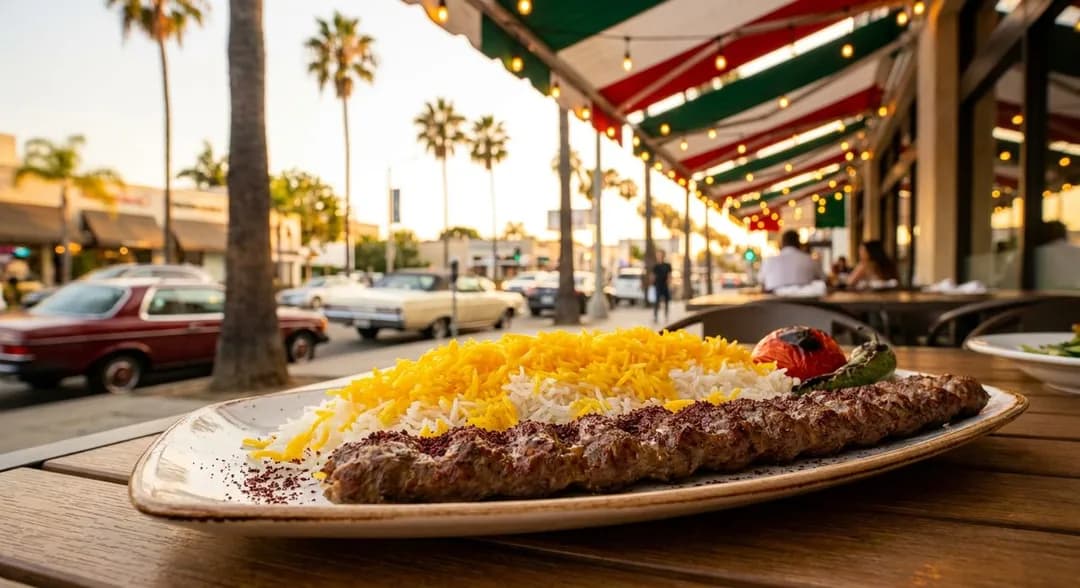
Generational Divides Play Out in Real Time
The viewing parties reveal fault lines that run deeper than football tactics. First-generation immigrants, many who left Iran in the late 1970s and early 1980s, watch with a complicated pride—cheering for players while holding grief for a country that exists now only in memory. Their children and grandchildren, raised in Los Angeles, wear jerseys and scarves with less conflicted enthusiasm, their connection to Iran filtered through family stories, summer visits, and a cultural identity that lives comfortably alongside their American lives. At Colbeh Restaurant on Westwood, three generations of the Tehrani family claim a corner table for every Iran match, the grandfather silent through most of the game, his son providing running commentary, his granddaughter live-tweeting in English and Farsi. The restaurant's manager notes that some families request separate tables—not from anger, but from the recognition that they're watching different games, projecting different meanings onto the same ninety minutes. When goals are scored, everyone celebrates, but the conversations that follow diverge immediately, younger fans analyzing tactics while their elders drift toward remembering players from decades past, from a national team that represented something else entirely.
The Westside's Persian Markets Pulse With Match-Day Energy
Super Jonoob and Elat Market transform into pre-game gathering spots, their aisles crowded with fans stocking up on pistachios, dried fruit, and the specific snacks that make watching football feel like home. The markets extend their hours on tournament days, understanding that the shopping itself becomes part of the ritual—running into neighbors, debating lineups, sharing predictions in rapid Farsi that switches to English mid-sentence. The prepared food counters do steady business in gheymeh and ghormeh sabzi, stews that simmer through the morning so families can eat together before matches begin. Younger staff members wear jerseys under their aprons, and the checkout conversations become impromptu analysis sessions, cashiers and customers trading opinions on formations and player fitness. The parking lots fill with a cross-section of the Iranian diaspora—Mercedes sedans beside aging Hondas, designer sunglasses and faded baseball caps, wealth and struggle existing side by side in a community bound by language and loss and the strange comfort of watching football together.
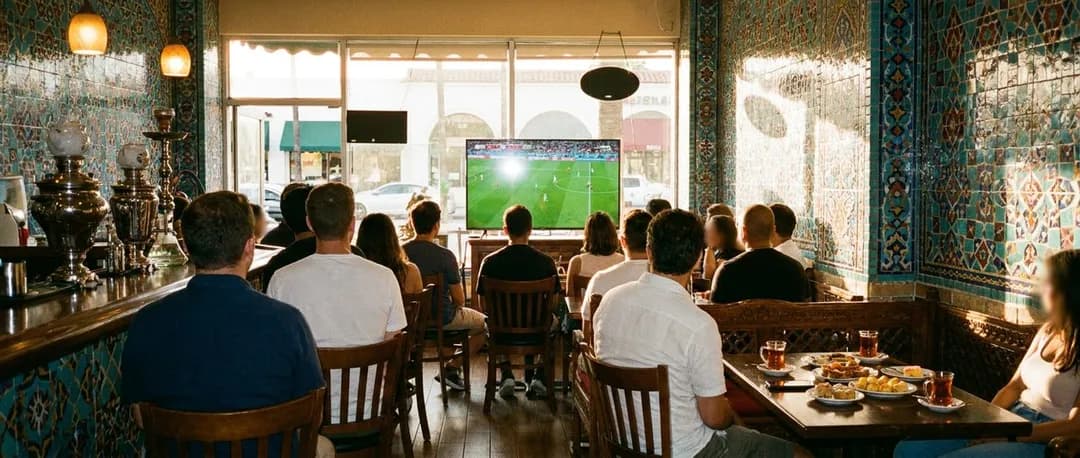
Apartment Buildings and Community Centers Organize Collective Viewing
The Iranian American Women Foundation's offices on Wilshire Boulevard host family-friendly screenings, projectors casting matches onto white walls while children play in adjacent rooms and parents navigate the complicated work of explaining why some fans in the stadium hold certain signs, why some players hesitate during national anthems. The viewing parties here skew toward families seeking shelter from the more charged atmospheres of sports bars and cafes, places where kids can ask questions without judgment and parents can process their own conflicted feelings in community. Apartment buildings throughout Westwood and West LA organize their own gatherings—the manager of a complex on Veteran Avenue props open the community room for every Iran match, residents bringing dishes and arranging chairs, creating temporary family from neighbors who might otherwise only nod in passing. These spaces become laboratories for negotiating identity, where fans practice holding multiple truths at once: pride in players' skill, grief for political prisoners back home, hope that football might somehow transcend the divisions that cleave through everything else.
Post-Match Rhythms Depend on Results and Mood
When Iran wins or draws respectably, Westwood Boulevard becomes a slow-moving celebration—cars honking, flags waving from windows, impromptu gatherings outside Shaherzad Restaurant stretching past midnight. The neighborhood police, long accustomed to these eruptions, close side streets and let the moment breathe, understanding that the celebration is about more than football. When losses come, especially painful ones, the dispersal happens quietly, families returning to apartments to process disappointment that carries echoes of larger disappointments, fans lingering in cafe parking lots for conversations that drift toward politics, family back home, the future. Saffron & Rose Ice Cream stays open late regardless of results, its line a barometer of community mood—jubilant crowds after victories, smaller groups seeking comfort in bastani sonnati after defeats. The staff learns to read the room, to know when to engage in post-match analysis and when to simply serve ice cream in sympathetic silence.
Practical Notes for Experiencing Tehrangeles During World Cup Season
• Transit and parking: Westwood Boulevard between Wilshire and Olympic becomes heavily congested on match days; the Metro E Line (Expo) to Westwood/Rancho Park station provides reliable access, with a ten-minute walk to the main cafe district
• Timing: Popular viewing spots like Shamshiri and Attari fill 90-120 minutes before kickoff for high-stakes matches; midweek group stage games offer easier entry
• Cafe protocols: Most establishments welcome walk-ins but appreciate calls ahead for groups of four or more; minimum purchases typically expected during matches, though rarely enforced
• Cultural sensitivity: The viewing environment carries emotional weight beyond typical sports fandom; observers should approach with respect for the layered meanings at play in every cheer and silence
Tags: #Tehrangeles #WestwoodLA #IranianDiaspora #WorldCupLA #IranVsBelgium #PersianCommunity #LANeighborhoods #DiasporaIdentity #WestsideLA #InternationalFootball #CulturalLA #ImmigrantCommunities #LAFoodScene #SportsAndIdentity
Sources consulted: fifa.com (https://www.fifa.com) · discoverlosangeles.com (https://www.discoverlosangeles.com) · timeout.com/los-angeles (https://www.timeout.com/los-angeles)
All trademarks are the property of their respective owners.
Ask Karpo first
Wondering where Los Angeles's Iranian community is gathering around Iran's World Cup matches this summer?
Ask Karpo for the latest on Westwood and Westside viewing spots, Iranian community event updates, and the fan culture shaping how LA's Persian diaspora engages with the World Cup.
Ask Karpo for more information.
Keep reading
- Haaland Has Seven Goals and Norway Runs Entirely Through Him
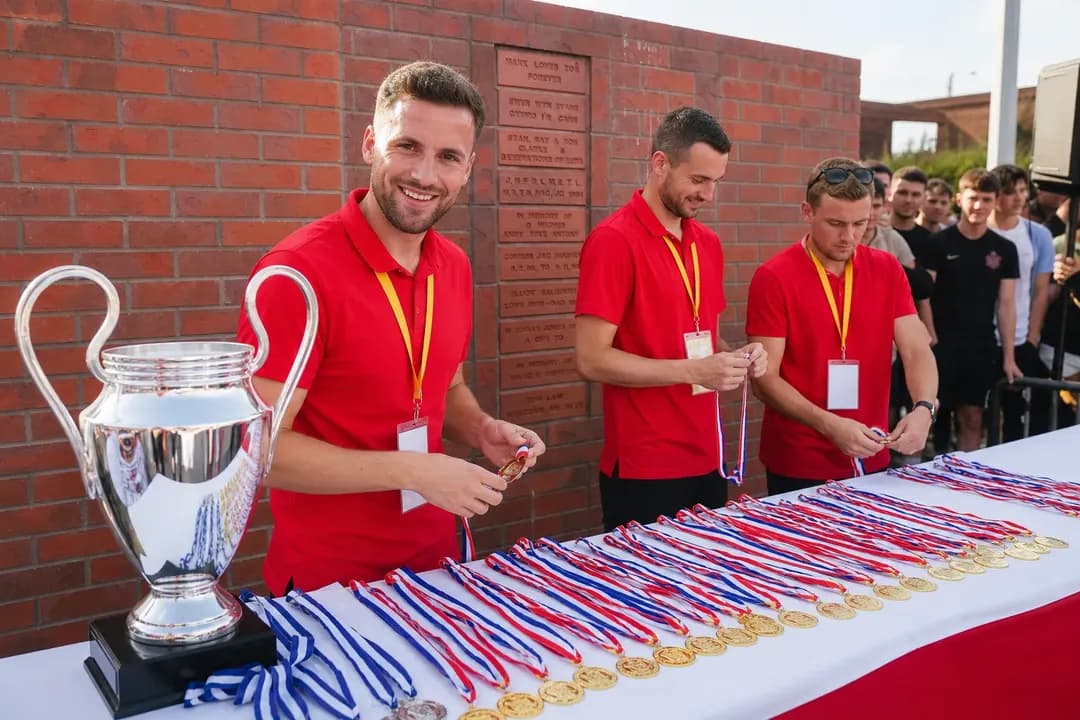 World Cup Trophy Ceremony Timing Medals and Postmatch Celebrations
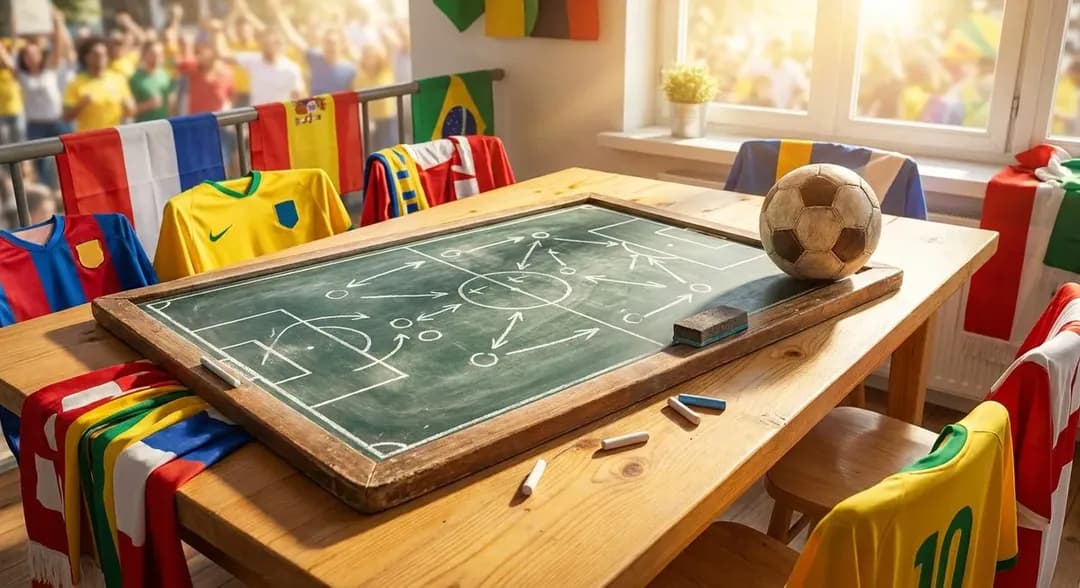 Olise and France's Attack: The Semifinal Tactical Question