 Haaland Has Seven Goals and Norway Runs Entirely Through Him
⚽️2026 FIFA WORLD CUP
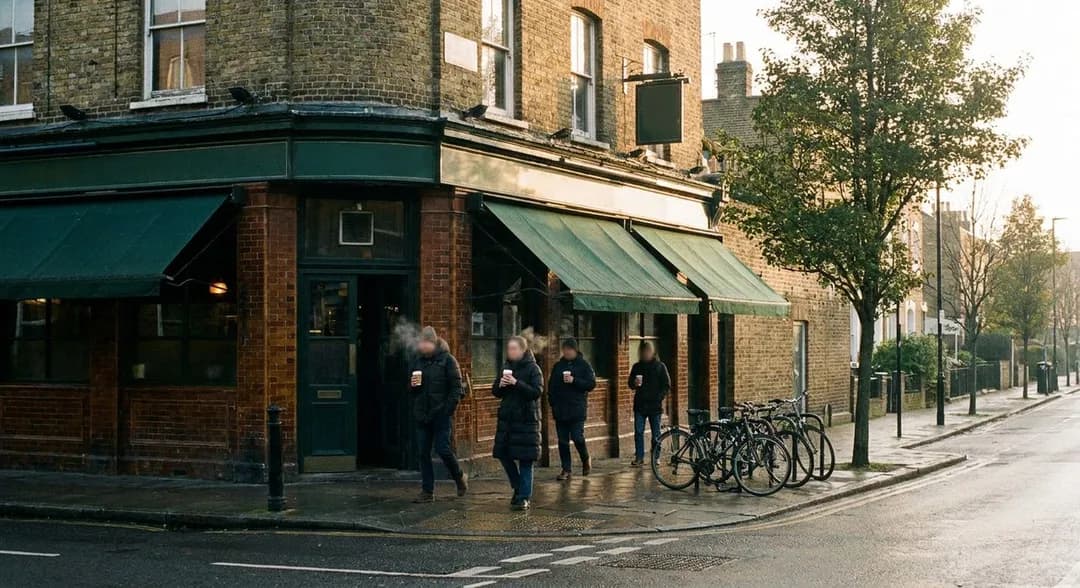
The Inwood Pub That Opens at 6AM and Screens Every World Cup Match Until Last Call
An Irish bar on Dyckman Street runs a marathon watch schedule across all group-stage fixtures, serving Guinness and full Irish breakfast from dawn through midnight kickoffs.
You walk into a corner bar on Dyckman Street at six in the morning and the room smells like rashers hitting a hot griddle, coffee brewing in industrial quantities, and stale Guinness from the night before. The television screens are already glowing with pre-match coverage, and a handful of regulars occupy the same stools they'll claim for the next eighteen hours. This is how Inwood does the World Cup—not as a tourist spectacle, but as a neighborhood endurance event where the same faces rotate through shifts, catching matches between work calls and school pickups, building a rhythm that mirrors the tournament's own relentless schedule.
The Dawn Shift Tastes Like Brown Sauce and Possibility
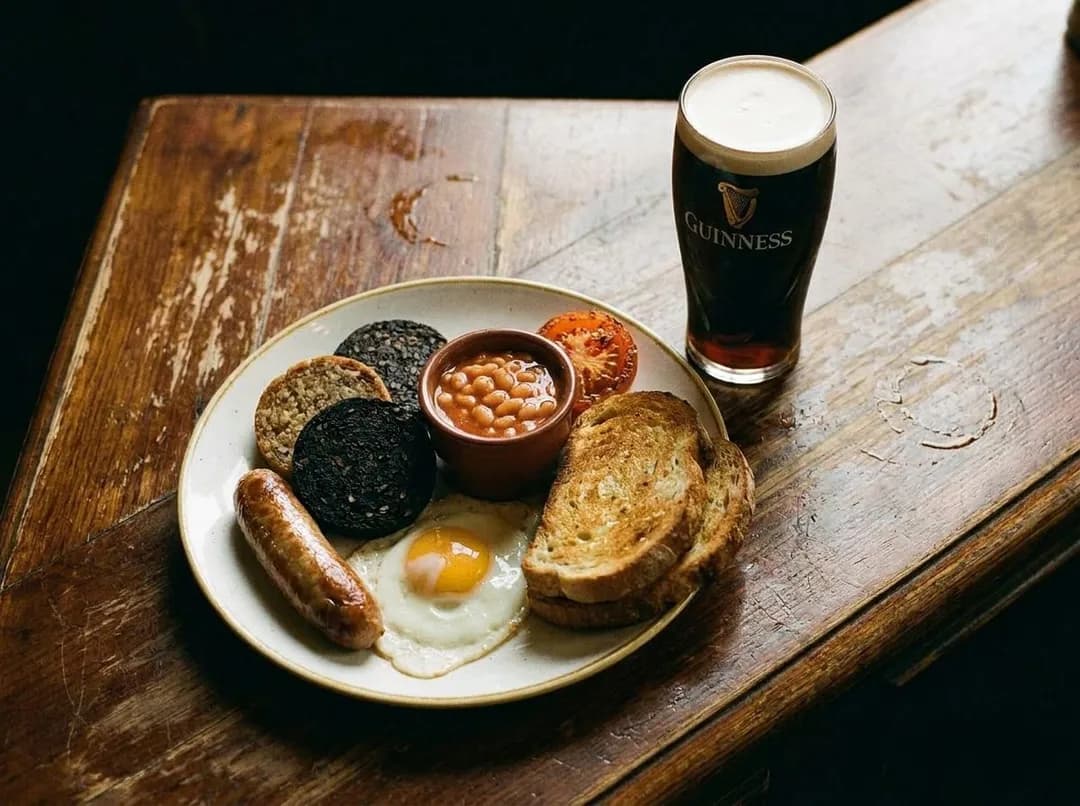
The early kickoffs draw a specific crowd. Construction workers still in their boots, nurses finishing overnight shifts, insomniacs who've given up pretending they'll sleep through a match that matters. The kitchen runs a full Irish breakfast through the morning fixtures—black and white pudding, grilled tomatoes, beans that taste like they've been simmering since the Tricolour first flew. You order at the bar, and the plate arrives dense enough to anchor you through extra time. The Guinness pours are optional this early, though you'd be surprised how many take them. The room stays quiet during play, erupting only for goals, the kind of focused silence that comes from people who actually understand what they're watching. Sunlight cuts through the front windows at an angle that makes the dust visible, and you can hear the 1 train rumbling underneath Dyckman every eight minutes, a metronome keeping time between halves.
How the Room Shifts When the Diaspora Shows Up
Certain matches transform the space completely. When a Caribbean nation plays, the bar fills with Dominicans and Jamaicans who've walked over from Vermilyea Avenue, bringing drums that security pretends not to notice and flags that drape across entire booth sections. The Irish regulars make room without complaint—there's an unspoken understanding that this tournament belongs to everyone who claims it. The jukebox goes silent during play, but between matches it cycles through bachata and reggaeton alongside The Pogues, a soundtrack that makes perfect sense only in this particular stretch of upper Manhattan. You'll see three generations of the same family claiming a corner, grandmothers in team jerseys sitting next to teenagers who keep one eye on their phones and one on the screen. The bartenders switch languages mid-sentence, and the energy level rises with each passing hour until the entire room feels like it's vibrating at a frequency slightly above normal.
The Midday Lull Nobody Talks About
There's a strange dead zone between the morning fixtures and the afternoon slate when the bar empties to maybe a dozen people. The kitchen keeps running, but the pace slows, and the staff takes turns stepping outside to smoke and check their own phones for scores from matches they missed. This is when you can actually have a conversation, when the regulars talk about previous tournaments and players who mattered before your time. The older Irish guys remember watching from different bars that no longer exist, tracking the geography of their viewing history across a Manhattan that keeps disappearing. The televisions stay on but the volume drops, and you can hear the kitchen radio playing talk radio in Spanish, the sound bleeding through the service window. If you time it right, you can claim the best seat in the house—third stool from the left at the main bar, angle that lets you see four screens without turning your head. The light through the windows goes flat and institutional, and the whole place feels suspended between the morning's intensity and whatever chaos the evening will bring.
When the Kitchen Pivots to Proper Pub Food
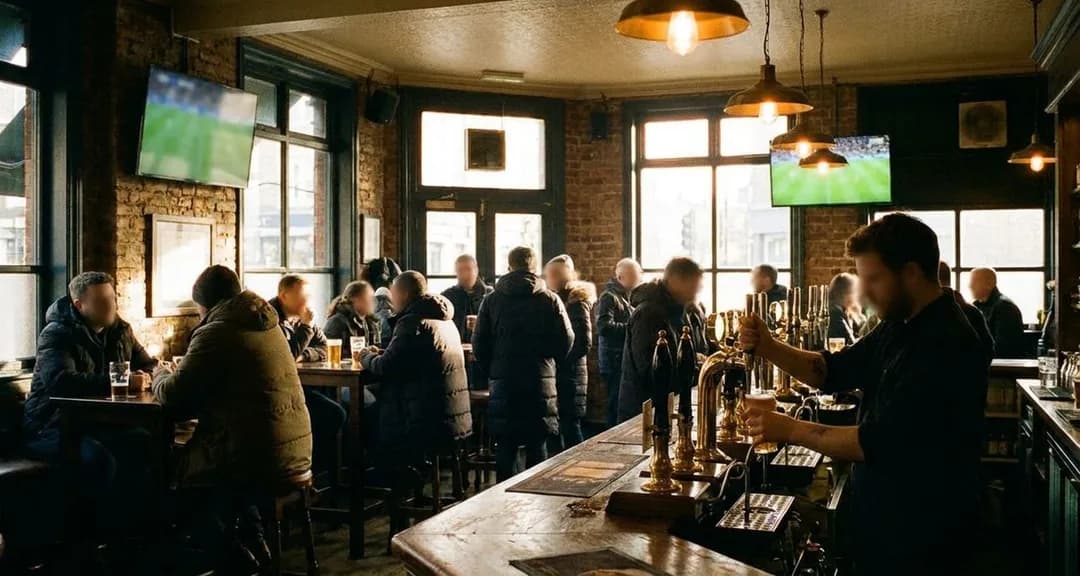
Somewhere around mid-afternoon the menu shifts. The breakfast items disappear and the kitchen starts running shepherd's pie, fish and chips, burgers that come out genuinely medium-rare if you ask. The fryer smell intensifies, mixing with whatever's been simmering in the stock pot all day, and the bar switches from coffee service to serious pint-pulling. This is when the after-work crowd starts filtering in—teachers from the schools on Seaman Avenue, hospital staff from the medical center, people still wearing their work clothes who order a Smithwick's and a basket of wings and settle in for the prime-time fixtures. The volume in the room rises with the body count, and by the time the evening matches kick off, you're standing three-deep at the bar, shouting your order over the heads of people who got here an hour before you. The bathrooms develop a line. Someone's jacket claims a stool that its owner left twenty minutes ago, and nobody touches it because everyone understands the rules.
The Late Shift Belongs to the Committed
The crowd that stays past ten at night has made a choice. They've called in favors for childcare, rearranged their morning obligations, accepted that tomorrow will hurt. These are the matches that matter most—elimination games, rivalry fixtures, the ones where a single goal changes everything. The bar's energy goes from celebratory to desperate, and you can feel the tension in how people grip their glasses, how they lean toward the screens during corner kicks. The kitchen closes but somehow bacon sandwiches still appear for regulars who know to ask. The bartenders work faster, reading orders from hand signals and familiar faces, pulling pints in clusters of four and six. When someone's team loses, they disappear immediately—no lingering, no postgame analysis, just a silent exit into the Inwood night. When someone's team wins, the celebration lasts exactly one round of drinks before everyone resets for the next fixture, because the schedule doesn't care about your emotional state and neither does this bar.
The Marathon Logic of Tournament Time
The staff runs shifts in rotations, but some of them pull doubles, and by the second week you start recognizing who's been here too long. They move with the efficiency of people who've stopped thinking about what they're doing, muscle memory taking over while their minds track scores and scenarios and tiebreaker mathematics. The regulars develop their own schedules—the guy who comes for every match involving a former British colony, the woman who only shows up when South American teams play, the couple that treats this like their daily social club regardless of who's on the pitch. You start to understand the bar's rhythm, when to arrive for a seat, which matches will pack the room, how long the bathroom line will be during halftime. The tournament becomes a shared project, a collective endurance test that bonds strangers through nothing more than proximity and parallel obsession. By the knockout rounds, the bar feels less like a business and more like a temporary autonomous zone where normal rules don't apply and sleep is negotiable.
Practical Notes
The bar opens at six in the morning on match days and runs until last call, which happens when the final fixture ends regardless of the hour. Getting here means taking the 1 train to Dyckman Street and walking a couple blocks west, or the A train if you're coming from further downtown. The neighborhood is residential and quiet except for the commercial strip along Dyckman, so you'll know you're close when you start seeing flags in windows and hearing multiple languages on the sidewalk. Seating is first-come and genuinely limited during prime fixtures—arrive at least thirty minutes before kickoff for anything involving a major nation. The kitchen runs continuously during operating hours, with the menu shifting based on time of day. Cash still works better than cards for quick service during busy periods. Street parking exists but good luck. The crowd skews local and serious about the sport, so save your casual commentary for a different venue.
Tags: #WorldCup2026 #InwoodManhattan #DyckmanStreet #IrishPubNYC #FootballCulture #SoccerBar #UpperManhattan #NYCNeighborhoods #TournamentViewing #IrishBreakfast #WorldCupMarathon #NYCNightlife #InwoodLife #DiasporaCulture #MatchDayRituals
Sources consulted: fifa.com · espn.com · timeout.com
Please drink responsibly. Must be of legal drinking age.
All trademarks are the property of their respective owners.
Ask Karpo for more information.
Keep reading
- Haaland Has Seven Goals and Norway Runs Entirely Through Him
 World Cup Trophy Ceremony Timing Medals and Postmatch Celebrations
 Olise and France's Attack: The Semifinal Tactical Question