# In Koreatown Bars the Late Screens Split Between Spurs vs Knicks and World Cup Goals
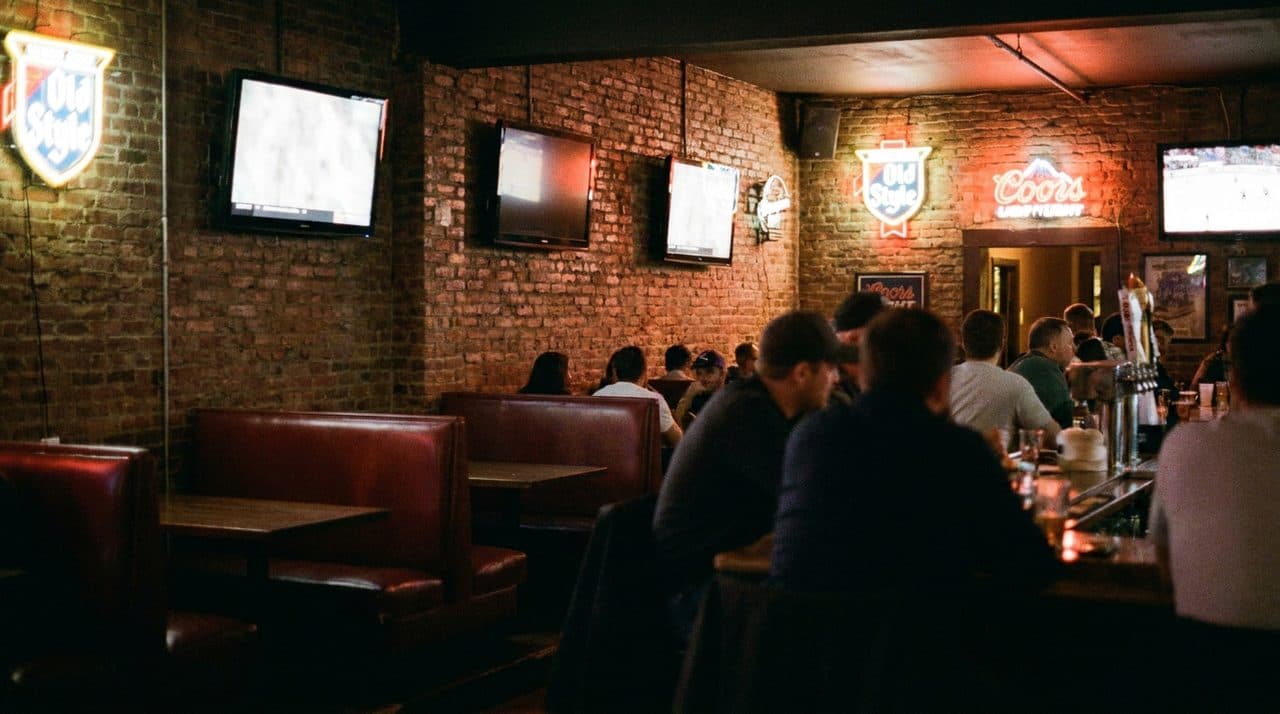
You walk into a second-floor Koreatown bar at 10 p.m. on a Tuesday and the room divides itself. Left wall: Spurs-Knicks, volume up, local crowd leaning forward. Right wall: World Cup knockout round, Korean commentary streaming, a different tension humming through the tables near the kitchen. The servers move between both worlds carrying trays of fried chicken that arrive exactly when you need them—between whistles, during injury time, when someone needs a reason to look away from a screen.
The Geography of Attention Shifts Every Twenty Minutes
The bar runs narrow and deep, booths along one side, high tables down the middle, and the two big screens positioned so neither crowd feels secondary. You sit somewhere in the middle and watch allegiances toggle. A guy in a Knicks jersey pivots his whole body when the World Cup broadcast erupts—his cousin's texting him from Seoul, he's got money on this match, he's forgotten about Julius Randle for the next eight minutes. Then the basketball game hits a run and suddenly half the soccer crowd is craning their necks. The room doesn't choose. It holds both, and you realize that's the whole point. During commercial breaks, conversations bleed across the aisle. Someone's talking about a handball call. Someone else is debating a moving screen. The bartender's splitting her attention the same way, one eye on each game, pouring soju and beer without looking down.
Fried Chicken Arrives in Waves Timed to the Chaos
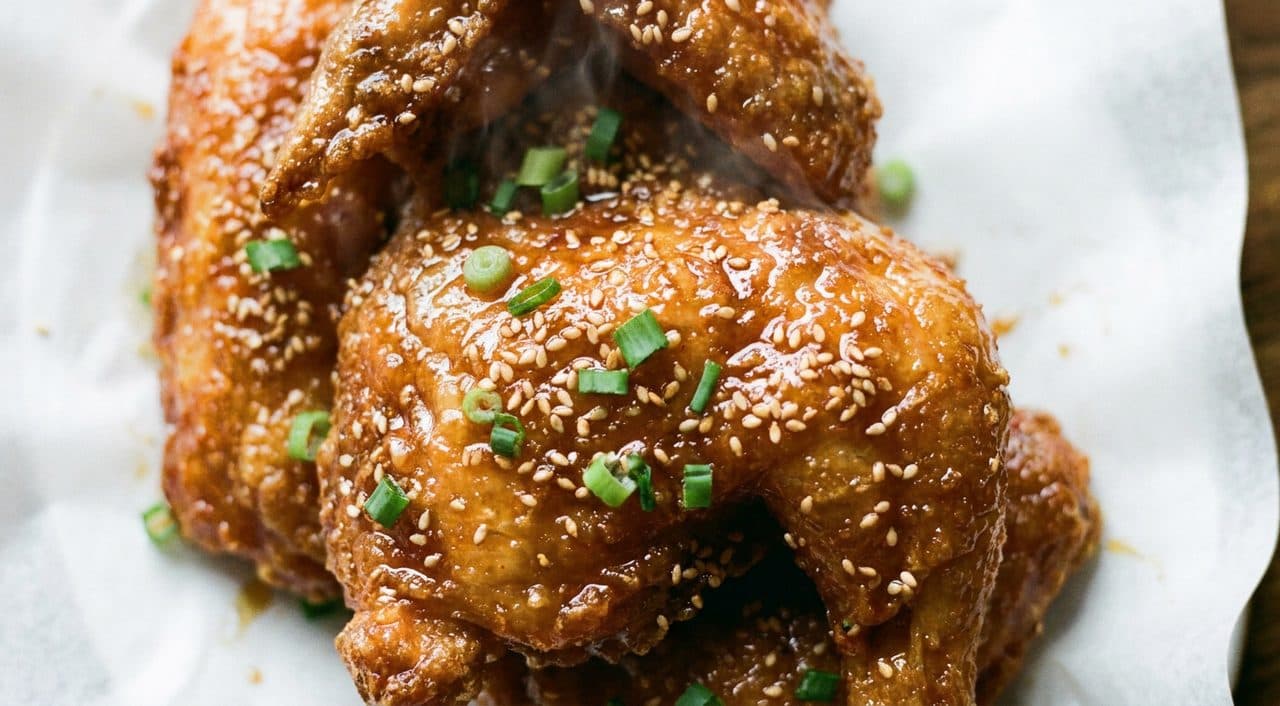
The kitchen's rhythm syncs to the match clock and the shot clock simultaneously. You order yangnyeom chicken—sticky, gochugaru-glazed, shatteringly crisp—and it lands at your table during a World Cup hydration break, right when you can actually focus on eating. The timing isn't luck. The kitchen staff watches the games too, and they know when to fire orders so the food arrives during lulls, not during penalty kicks or fourth-quarter free throws. The chicken comes out hot enough that you're shaking your fingers, reaching for pickled radish to cut the heat. Soy-garlic wings follow during halftime, and you notice the table next to you ordered the same thing at the same moment. Everyone's eating in sync, wiping their hands on wet naps, signaling for another round of Cass before the second half kicks off.
The Soundtrack Toggles Between Broadcasters and the Room Itself
Korean commentary pours from the right-side speakers, rapid-fire and rising in pitch during attacking plays. English-language basketball announcers hold the left side, that familiar cadence of play-by-play and color analysis. But the real soundtrack is the room reacting—groans that ripple through one section, then the other, cheers that overlap and create a strange harmony when both games deliver something worth shouting about. You hear a table of younger guys doing their own commentary in Korean-English hybrid, switching languages mid-sentence depending on which screen they're watching. Someone's grandmother is here, nursing a beer, muttering at the soccer match in a way that needs no translation. The bartender turns up the volume on whichever game is hitting a critical moment, and the crowd adjusts without being asked. You feel the room's attention as a physical thing, a tide that pulls one direction and then the other.
Regulars Claim Their Corners and Negotiate Screen Angles
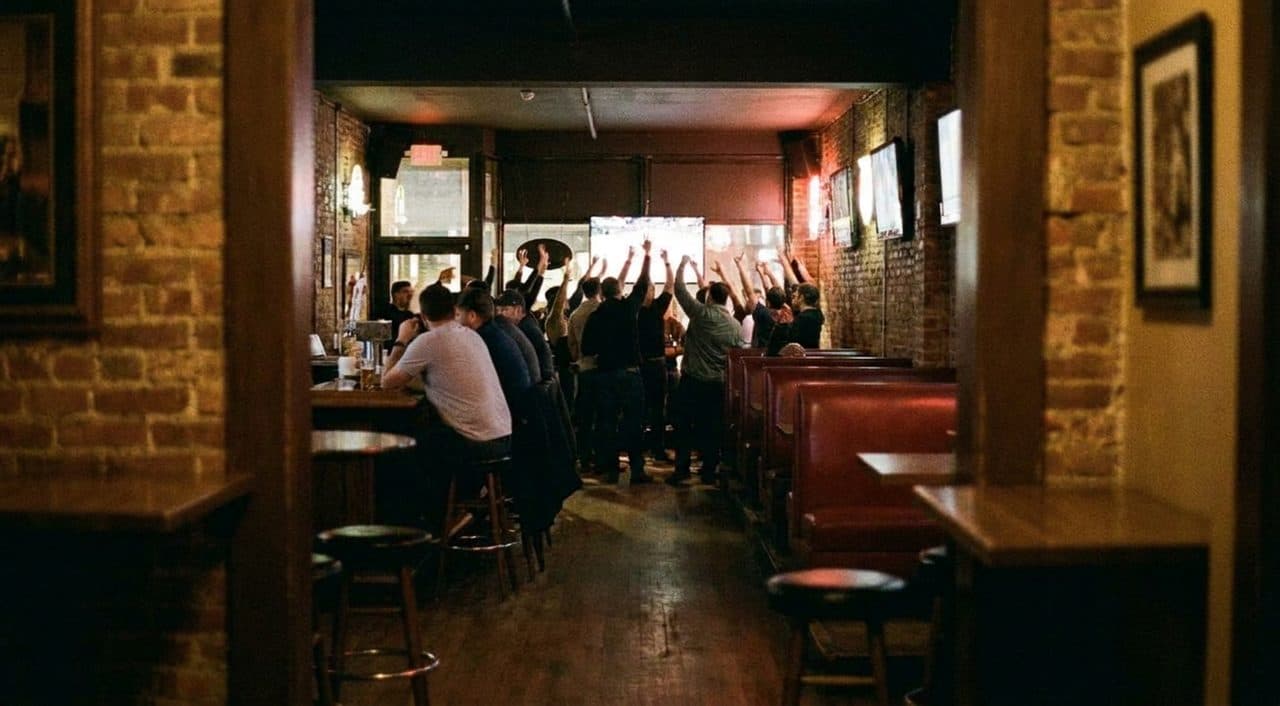
The booths near the soccer screen fill first with the World Cup faithful—guys who've been coming here since the last tournament, who know the bartender's name and have their usual table. They're older, drinking steadily, ordering anju platters that keep arriving: dried squid, spicy rice cakes, more chicken. The basketball crowd skews younger, louder during timeouts, checking their phones for stats and highlights. But there's crossover. You watch a regular in a Korea jersey lean over to ask a Knicks fan about a trade rumor. Someone's kid is wearing a Spurs hoodie and eating tteokbokki while his dad watches the World Cup. The staff knows who sits where and they've learned not to seat a die-hard soccer fan directly under the basketball screen. The angles matter. People shift their chairs mid-game, angling for a better view when their tournament heats up, then shifting back when the other one delivers drama.
Soju Rounds Appear When Either Game Delivers Heartbreak or Glory
The drinking pace follows the emotional arc of both games. A goal gets scored and a table orders a round of soju bombs—beer and soju dropped and chugged in unison. The Knicks hit a three-pointer to take the lead and another table follows suit. You're nursing a Hite and watching the pattern: collective joy or collective despair both trigger the same response. Someone's buying a round for strangers because their team just advanced. Someone else is drinking faster because their team just conceded. The bartender's pouring with both hands, green bottles and beer glasses moving in a rhythm she doesn't have to think about. You order another plate of chicken and a bottle of soju to split, and you're doing it because everyone else is doing it, because the room's energy makes it feel necessary, because both games are heading toward finishes that demand something stronger than beer.
The Staff Moves Like They're Conducting Two Orchestras at Once
Watch the servers and you see the real skill. They're tracking both games while carrying trays, timing their approaches to tables during breaks in play, reading the room's mood to know when someone needs another round without being asked. A server pauses mid-floor when the World Cup match hits a dangerous moment—she's watching, tray balanced on one hand, waiting for the play to resolve before she moves. Another server's a Knicks fan and you can tell because she winces during a turnover while setting down a plate of japchae. The bartender's calling out orders to the kitchen in Korean, switching to English to answer a question about the beer list, never losing track of either screen. They're working the room like it's a single organism with two heartbeats, and they know exactly when each pulse is about to spike.
Practical Notes
Most Koreatown bars along 32nd Street between Fifth and Sixth Avenues keep late hours, especially during major tournaments—expect them open past midnight on game nights. The vibe runs more authentic than polished, second-floor walk-ups with stairs that smell like sesame oil and chili paste. No reservations for bar seating, and tables fill fast when big matches overlap with Knicks home games. Expect to spend moderately—chicken platters and drinks won't wreck your budget but they add up over a three-hour double-header. Subway access is straightforward via the B/D/F/M/N/Q/R/W lines. Come early if you want a booth with a good angle on your preferred screen, or embrace the middle ground and watch both. The staff speaks Korean and English. Cash is appreciated though cards work fine.
Tags: #KoreatownNYC #WorldCup2026 #SportsBarCulture #KoreanFriedChicken #NYKnicks #ManhattanNights #DoublHeaderDrinking #SojuBombs #DiasporaSports #32ndStreet #MultiScreenMadness #KoreanBBQ #BasketballAndBeyond #TournamentSeason #NewYorkEats
Sources consulted: fifa.com · espn.com · timeout.com
Please drink responsibly. Must be of legal drinking age.
All trademarks are the property of their respective owners.