The Geometry of Anticipation
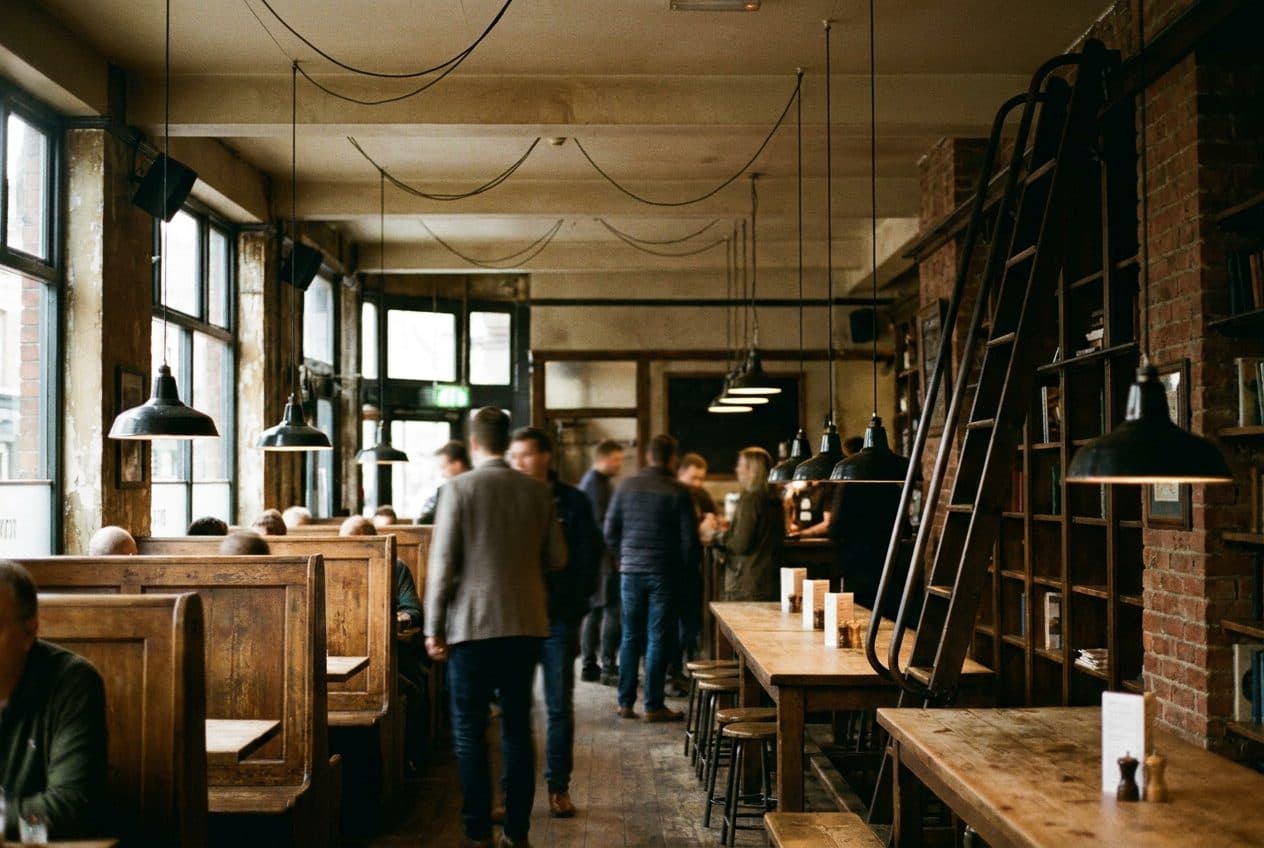
You hear the scrape of aluminum against brick before you see the climber. Inside this Capitol Hill pub, a two-story wall of exposed brick becomes a living tournament bracket every four years, and someone has to fill in those chalk lines as nations advance or bow out. The ladder wobbles slightly as the designated updater—tonight it's a regular who lost a friendly bet—reaches for the quarterfinal slot while the crowd below hoots and films on their phones. The whole room smells like spilled IPA and the particular yeast-funk of a kitchen that's been cranking out bar food since before anyone cared about artisanal anything.
When the Bracket Becomes Theater
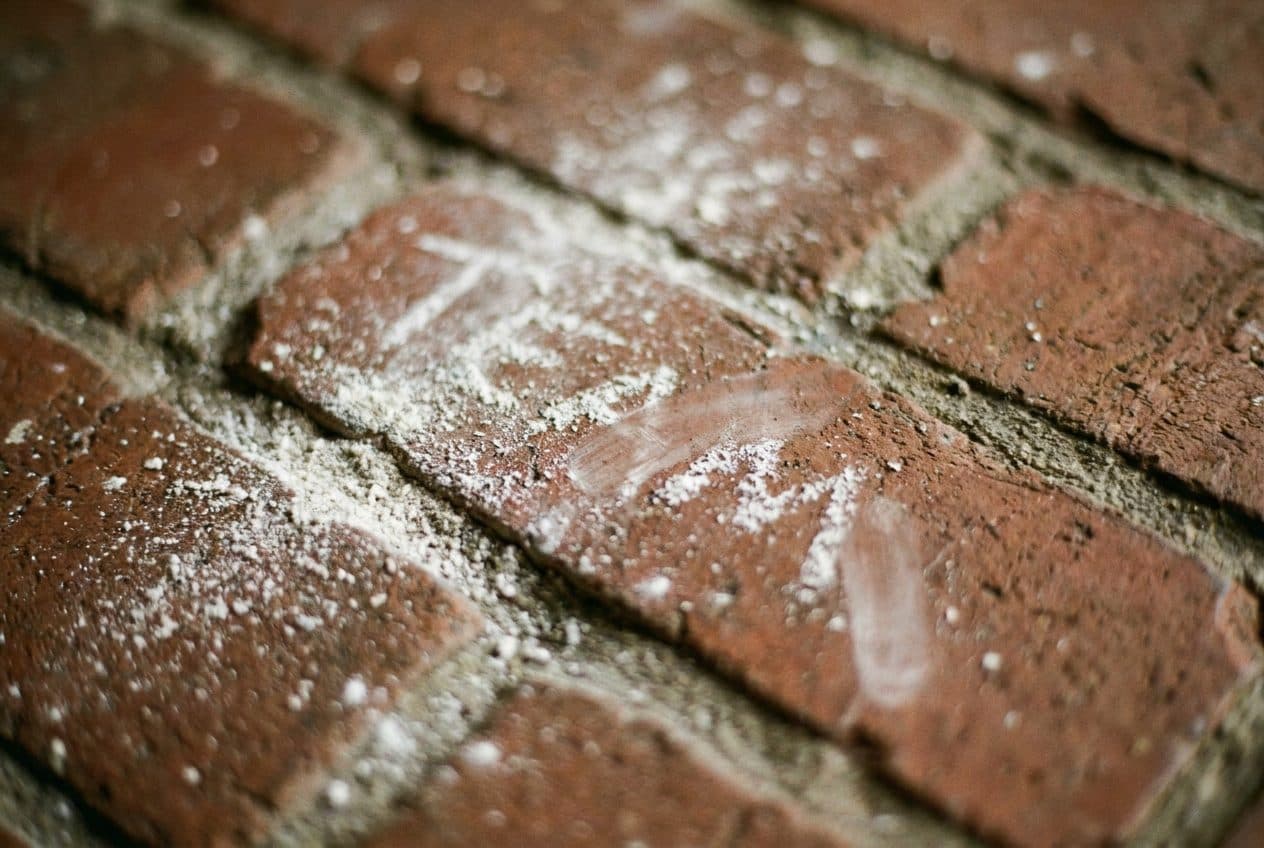
The wall itself is a patchwork of old brick in three different reds, probably salvaged from different eras of Seattle demolition. Someone measured out the tournament structure in blue painter's tape weeks before the first whistle, then traced it in thick white chalk that catches the amber light from the vintage fixtures overhead. You can still see faint ghost lines from 2022, never fully scrubbed away. The chalk dust settles into the mortar grooves and creates this archaeological record of tournaments past. When the climber reaches up to write a team name, their hand blocks one of the pendant lights and throws a shadow across half the bracket, and everyone in the back rows cranes to see which slot is getting filled. The ritual matters more than the efficiency. Someone could project this digitally, sure, but that misses the point entirely.
The Volunteer Corps Nobody Recruits
Nobody officially assigns bracket duty. It happens organically, usually lubricated by several pints and the momentum of a tight match. Someone will announce they're going up, and the bartender will drag the ladder from the back hallway where it lives between a mop bucket and cases of canned cider. The climber gets a round of applause on the way up and mock-solemn silence during the actual writing, like they're defusing something delicate. You'll see different handwriting styles emerge as the tournament progresses—some people do careful block letters, others scrawl cursively, one guy always adds tiny flags next to the country names even though it takes forever and he has to keep adjusting his grip. The ladder has that hollow rattle that makes everyone nervous, and there's always one person who insists on spotting from below with outstretched arms, as if they could actually catch a falling adult.
The Sightlines Problem and the Solution
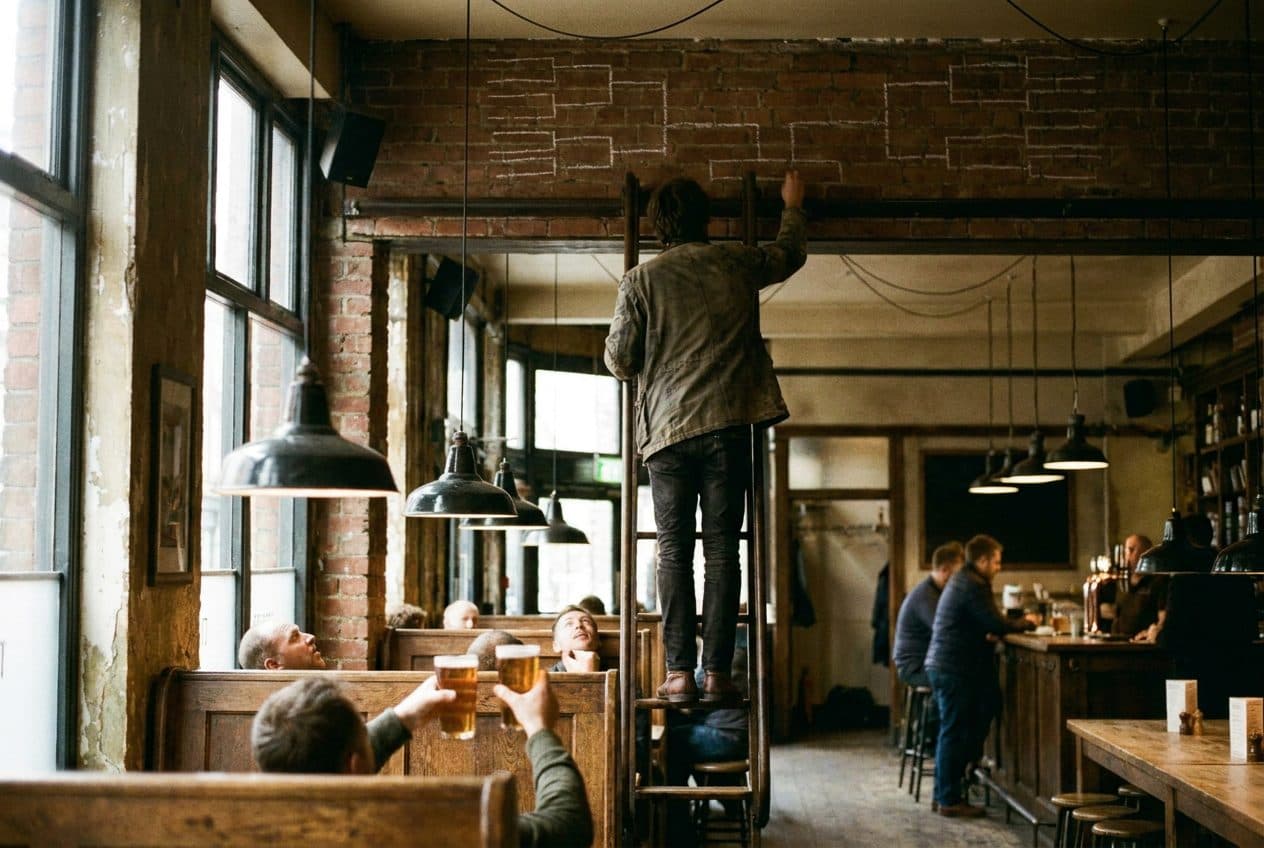
The bracket's positioning creates natural tiers of engagement. Ground floor patrons get neck strain from looking straight up at the final rounds. The narrow mezzanine wraps around two walls and puts you at eye level with the semifinals, which makes those seats prime real estate once the tournament reaches the business end. But the best spot is actually the corner booth on the main floor, tucked under the mezzanine overhang, where you can see the entire bracket at once if you slide to the outside edge of the bench. The wood table there has decades of carved initials and a particularly deep gouge that perfectly fits a pint glass, preventing spills. Regulars know to grab it early on match days. The booth also sits adjacent to the kitchen pass-through, so you get first whiff of whatever's coming out—usually some variation on loaded fries or wings with a sauce that lingers on your fingers.
When Diasporas Claim Their Corners
The pub fills differently depending on who's playing. You'll see Sounders scarves repurposed as national flags, draped over chairbacks or tied around shoulders. When a Central American team plays, the energy shifts—more families, kids in replica jerseys, someone's aunt who brings homemade tamales that she shares with strangers at the next table. The bartenders keep the volume cranked but not oppressive, so you can still hear individual reactions, the groan that ripples through one section when a shot goes wide, the explosive cheer from the opposite corner when it connects. The ladder gets more precarious updates during these packed matches, with the climber having to navigate a forest of raised arms and spilled drinks on the floor below. Someone always steadies the base now, lessons learned from a near-incident in 2018 that nobody discusses in detail but everyone references vaguely.
The Chalk Economy and Its Rituals
The pub goes through approximately one box of sidewalk chalk per knockout round, thick sticks in white and occasionally yellow for emphasis. The chalk lives in a wooden crate behind the bar, next to the bitters and the cocktail shakers nobody uses. When a climber reaches the top, someone from below will toss up a fresh stick if needed, and the catching or dropping of this chalk becomes its own minor spectacle. The brick is porous enough that the chalk adheres well but dusty enough that mistakes can be smudged away with a damp rag, though this happens less often than you'd think—there's a superstition about erasing anything once it's written, even obvious errors. Better to cross out and rewrite beside it. By the final, the lower sections of the bracket have this palimpsest quality, layers of correction and revision that tell the story of upsets and surprises.
What Remains After the Final Whistle
The bracket stays up for weeks after the tournament ends, gradually fading as the pub's humidity and the occasional brush of a passing shoulder blur the names into abstract marks. Eventually someone will take a photo for the archives—there's apparently a folder of these going back to 2006, though nobody can agree on where it's actually stored. Then the wall gets wiped down with diluted vinegar, which makes the whole place smell like a fish and chips shop for an afternoon, and the brick returns to being just a wall until the next tournament cycle begins. But if you look closely during the off-years, you can still make out the faintest grid, the ghost of structure waiting to be filled again. The ladder goes back to its hallway, the chalk box gets pushed to the rear of the shelf, and the corner booth returns to being just another seat, no longer prime real estate, until the geometry of anticipation starts over.
Practical Notes
The pub sits on Capitol Hill's main commercial stretch, walkable from several bus lines and about fifteen minutes uphill from the light rail station. They open late morning most days and stay open past midnight during tournament matches, though you'll want to arrive at least an hour before kickoff for any marquee game if you want a seat. No reservations, cash and card both work fine. The bracket tradition is informal—if you want to climb, just ask around and someone will point you toward the ladder. Expect a younger crowd on weeknights, more mixed ages on weekends. Street parking is mythical; the pay lot two blocks east is your better bet.
Tags: #2026FIFAWorldCup #SeattleBars #CapitolHillSeattle #WorldCupTraditions #SoccerCulture #SeattleNightlife #PubCulture #NeighborhoodBars #SeattleEats #FootballCulture #CapitolHill #SeattleInsider #WorldCupViewing #LocalWatering #PNWBars
Sources consulted: fifa.com · espn.com · timeout.com
Please drink responsibly. Must be of legal drinking age.
All trademarks are the property of their respective owners.