 Haaland Has Seven Goals and Norway Runs Entirely Through Him
⚽️2026 FIFA WORLD CUP
How Do Argentina vs Iceland Fans Split a Somerville Tavern Tonight?
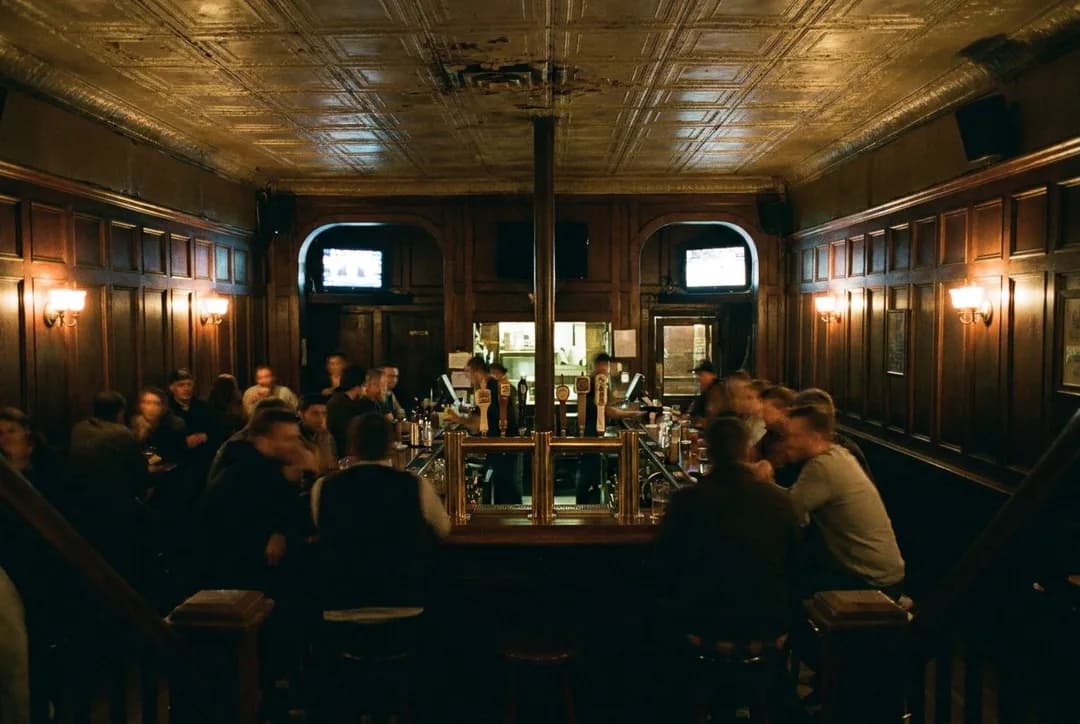
A narrow tavern with two rooms and two screens lets rival supporters claim their territory while sharing a single bar for halftime refills.
You walk into the narrow brick tavern just as the sun drops behind the triple-deckers on Somerville's east side, and you can already tell which room belongs to whom. The front bar glows blue and white, scarves knotted around coat hooks, someone's tía adjusting the volume on the left-hand screen. The back room hums with red jerseys and the low rumble of Nordic vowels. Between them, a single bartender pulls pints for both nations, and nobody's throwing punches yet.
The Geography of Allegiance Before Kickoff
The tavern splits naturally along its narrow shotgun layout. Front room holds maybe two dozen people if they're friendly, back room the same. The bar runs along the right wall, a continuous dark wood spine connecting both territories, and that's where the truce holds. You claim your space early—an hour before whistle, maybe more if it's a marquee match. Argentine fans stack into the front because it's closer to the street, closer to the empanadas someone's cousin is selling out of a cooler by the door. Icelandic supporters take the back room because it's quieter, because they can hear each other's Viking clap without drowning in someone else's drum. The bartender works the middle, pouring Quilmes and Gull for their respective sides, never mixing up who ordered what.
What the Walls Remember and the Screens Reveal

Both screens are identical, mounted high in opposite corners, same feed but the sound only plays in the front. You hear the Spanish-language commentary bleeding through, the announcer's rolled Rs and rising panic, while the back room reads the game in silence or supplies their own narration. The walls in front wear years of scuffed paint and taped-up flags from past tournaments—someone's hand-drawn Maradona, a faded poster from 2014. The back room's walls stay cleaner, less adorned, just a couple of Icelandic national team scarves and a black-and-white photo of Reykjavik that nobody can quite place. You feel the difference in decoration as much as you see it: one room lives in its history, the other shows up ready to write new chapters.
The Bartender's Neutral Zone and Halftime Diplomacy
Halftime is when the geography collapses. Both rooms empty toward the bar, and suddenly you're shoulder to shoulder with the enemy, waiting for a refill or the bathroom key. The bartender's seen this before—knows to keep the cash register between the crowds, knows to serve in the order people arrived, not the order they're yelling. You overhear a guy in an Argentina kit asking an Icelandic fan where she watched the last match, and she tells him about a place in Cambridge that closed two years ago. They laugh. Someone buys a round for a stranger. The truce is temporary but real, enforced by the shared inconvenience of a single-stall bathroom and the fact that nobody wants to be the one who ruins the vibe. You grab your beer, nod at someone wearing the wrong colors, and drift back to your claimed territory before the ref's whistle pulls everyone into their corners again.
The Acoustic Split and What You Smell at Seventy Minutes
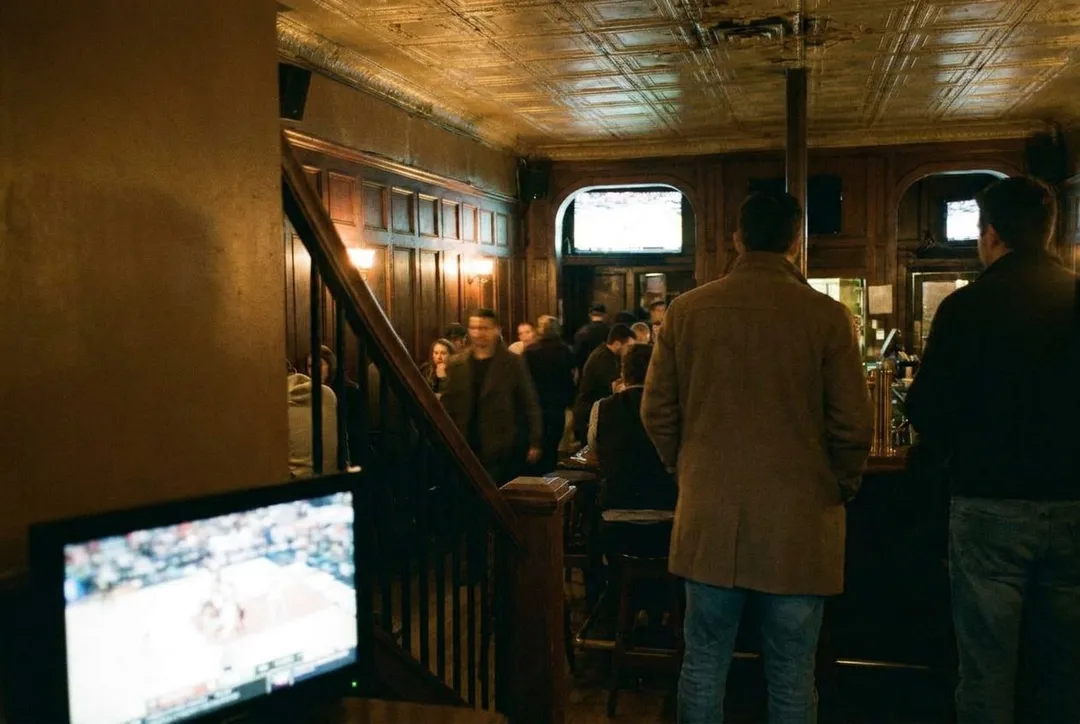
The noise in the front room operates on a different frequency. Every near-miss brings a collective groan that rattles the windows, every decent pass a rising cheer that crests and crashes. The back room stays tighter, more controlled, erupting only for the real chances. You hear them through the wall, a muffled roar that tells you something just happened even if you're facing the wrong direction. By the seventy-minute mark, the kitchen—barely more than a hot plate and a couple of pans behind a half-door—is pushing out choripán and some kind of lamb situation that smells like smoke and caraway. The smell doesn't respect borders. It drifts into both rooms, cuts through the beer and sweat, makes you realize you haven't eaten since lunch. You don't leave your spot to order, though. You send someone younger, someone who won't lose the sight line.
When the Final Whistle Splits the Building in Half
However it ends, one room erupts and one goes quiet. You feel the floor shake if Argentina scores late, feel the stunned silence if Iceland holds or nicks one. The winning side spills into the street, blocking the sidewalk, hugging strangers, singing songs you half-remember from past summers. The losing side lingers at the bar, nursing the last of their drinks, talking about what went wrong or what the ref missed. The bartender doesn't rush anyone out. This isn't that kind of place. You stay until you're ready to leave, until the adrenaline fades and you remember you've got work tomorrow. The scarves come down off the hooks. The flags get rolled up. The bartender wipes down the wood and starts counting the register, and the tavern goes back to being just a narrow room with two screens and a single bar that's seen this all before.
Practical Notes: Staking Your Claim and Getting There
The tavern doesn't take reservations for match days, so you show up early or you stand. Doors open mid-morning on weekends, earlier if there's a compelling fixture on European time. You can walk from Davis Square in about ten minutes, cutting through the residential blocks where the row houses lean close and the sidewalks buckle from old tree roots. If you're driving, good luck—street parking is a blood sport on match days, and the nearest lot is a hike. The kitchen runs until they sell out, which happens faster than you'd think. Cash moves quicker than card here, though they'll take both. Bring a scarf if you've got one. Claim your room. Respect the bartender. Don't be the one who starts trouble at the boundary.
Tags: #2026FIFAWorldCup #SomervilleMA #BostonSoccerCulture #WorldCupViewing #ArgentinaFootball #IcelandFootball #SoccerPubCulture #SportsBarDiplomacy #NeighborhoodTavern #BostonNightlife #SomervilleEats #FIFACulture #InternationalFootball #SoccerDiaspora #PubGeography
Sources consulted: fifa.com · espn.com · timeout.com
Please drink responsibly. Must be of legal drinking age.
All trademarks are the property of their respective owners.
Ask Karpo for more information.
Keep reading
- Haaland Has Seven Goals and Norway Runs Entirely Through Him
 World Cup Trophy Ceremony Timing Medals and Postmatch Celebrations
 Olise and France's Attack: The Semifinal Tactical Question