 Haaland Has Seven Goals and Norway Runs Entirely Through Him
⚽️2026 FIFA WORLD CUP
Hell's Kitchen Sports Bar Juggles Hurricanes vs Golden Knights and World Cup Knockout Stage Screens
A hockey-loyal pub adds extra feeds for the tournament, so puck fans and soccer crowds negotiate elbow room at the rail.
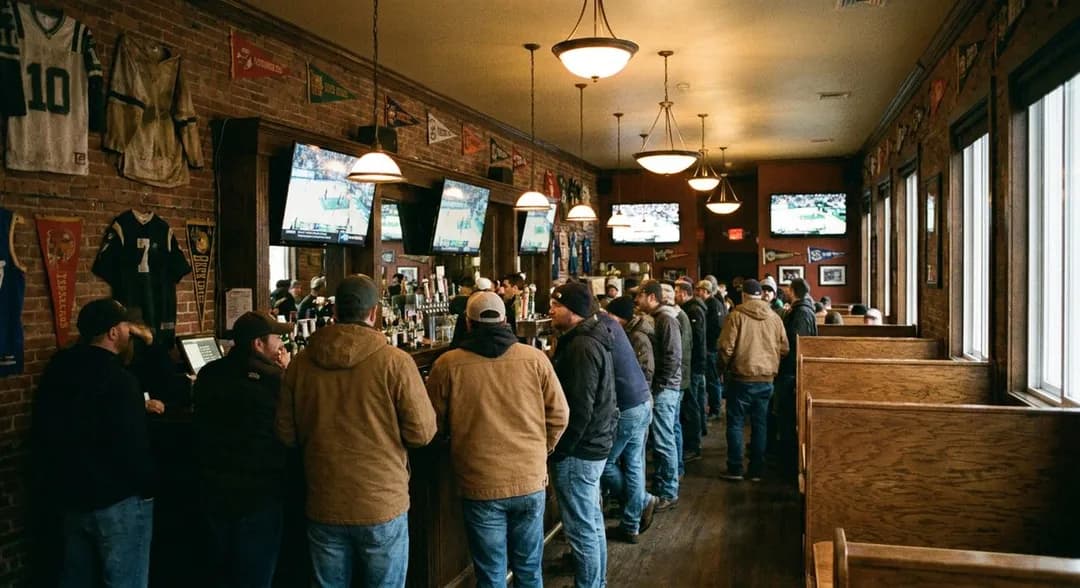
You walk into a Hell's Kitchen bar at half-past-six on a Wednesday evening and the noise hits you in two distinct waves. The first is the low roar of skates on ice and the crack of a puck against boards, broadcast in surround sound from five screens above the main bar. The second is the rising chant from a cluster of tables near the back where a dozen people in green jerseys are clapping in unison, eyes locked on two smaller monitors mounted on the exposed brick wall. This is what happens when a hockey pub decides to honor the World Cup without abandoning its core congregation. The result is less a truce than a controlled collision, and you're standing in the middle of it.
The Rail Becomes a Border Negotiation
The brass foot rail that runs the length of the bar has become disputed territory. Hockey regulars stake out the center stools by mid-afternoon, positioning themselves directly beneath the main feed where the Hurricanes and Golden Knights are locked in a tight second period. But as the knockout stage match inches toward kickoff, soccer crowds start filling in from both ends, squeezing into gaps, standing two-deep with pint glasses raised. You notice the bartender—a woman in a faded Rangers jersey—has developed a system: she takes hockey orders from the seated center, soccer orders from the standing flanks, and moves between them with the efficiency of someone defusing small fires all shift long. The trick is reading who needs another round before they start leaning over someone else's shoulder. By the time both games hit their stride, you're shoulder-to-shoulder with a guy in a Canes snapback on one side and someone wearing a scarf in colors you don't immediately recognize on the other. Nobody's moving until something decisive happens on at least one screen.
The Kitchen Exhaust Smells Like Deadline Cooking
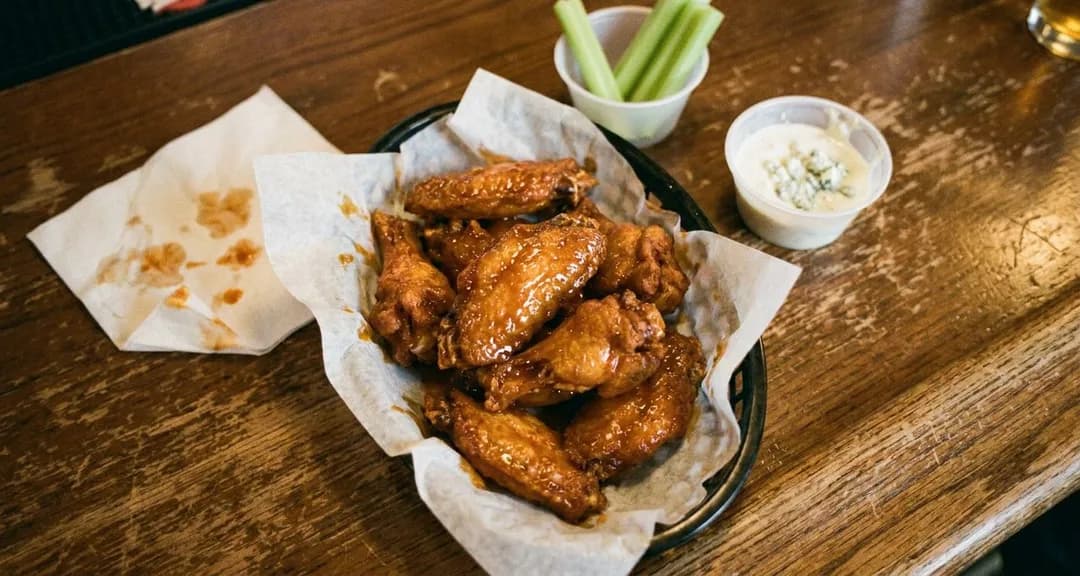
The kitchen is a narrow galley behind a half-wall, and when both crowds hit capacity the exhaust fan can't keep up. You catch the smell of fryer oil and charred beef in waves, along with something sharper—vinegar-based hot sauce, maybe, or pickled jalapeños straight from the jar. The menu is pure bar utility: wings in six heat levels, loaded fries, sliders that come out on metal trays still sizzling. What matters is the timing. The kitchen pushes orders hard right before the tournament match starts, because they know the soccer crowd will ignore food once the whistle blows. Hockey people eat throughout the game, between periods, during stoppages. You see plates of nachos sitting half-finished on the bar for twenty minutes while someone watches a power play, then demolished in ninety seconds during a commercial break. The kitchen's real skill is reading the room's rhythm and dropping baskets of fries exactly when a goal—any goal, either sport—triggers a new round of orders.
Screen Real Estate Is a Passive-Aggressive Art Form
The bar runs eight screens total, but they're not equal. The five above the main bar are large, high-definition, positioned for optimal sightlines from every stool. Those belong to hockey, non-negotiable. The two on the side wall are smaller, older, mounted at an angle that requires you to stand in a specific zone near the back tables to see them clearly. That's where the World Cup lives. The eighth screen is above the door, an afterthought, and it flips between both games depending on which one is at a critical moment. You watch the bartender use a remote to switch it during a hockey intermission, and a guy at the bar mutters something about "participation trophies." Ten minutes later, when the knockout match goes to extra time and the hockey game is in a commercial break, she switches it back. Nobody complains out loud, but you see the body language—arms crossed, heads shaking, the universal semaphore of people who feel their territory shrinking. The genius of this setup is that it forces both crowds to coexist without pretending they're equally served. Everyone knows where they stand.
The Diagonal Crowd Migration Starts at Halftime
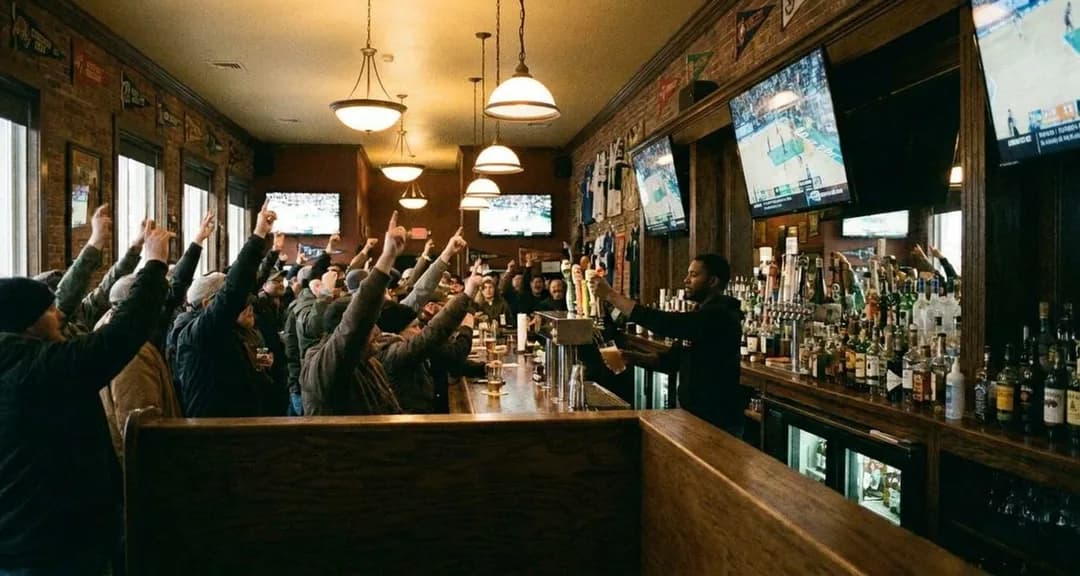
When the soccer match hits halftime, something choreographed happens. A third of the soccer crowd migrates diagonally toward the bar, filling gaps left by hockey fans who've stepped outside to smoke or check their phones. They order quickly—beer, shots, nothing complicated—and the bartender moves faster because she knows this window is short. You overhear a conversation in what sounds like Portuguese, another in French, a third in accented English debating a substitution that should have happened ten minutes ago. The hockey crowd mostly ignores this incursion, but you notice a few glancing at the side screens, suddenly curious. One guy asks what the score is. Someone answers. For five minutes the room feels less divided, just a bar full of people watching sports and drinking beer. Then the second half starts and everyone returns to their assigned zones. The battle lines redraw themselves without a word.
The Regulars Have a Corner Table with Sightlines to Both
There's a four-top in the back corner, near the restrooms, that offers a clean view of both the main hockey screens and the side-mounted soccer feeds. It's occupied by the same group every time a scheduling conflict like this arises: four people in their thirties and forties, no jerseys, no scarves, just civilians who seem to know exactly when to arrive and how to hold this strategic position. You realize they're not die-hards for either sport—they're die-hards for the bar itself, for the specific chaos of nights like this. They rotate attention between games, commenting on both, ordering steadily without ever getting loud. They're the control group, the baseline against which everyone else's partisanship gets measured. When something big happens—a goal in either game—they react proportionally, applaud politely, then return to their conversation. They're the reason the bar can pull this off at all: proof that the two crowds can share space without combusting.
Closing Time Depends on Which Game Runs Longer
The bar's closing time is theoretically fixed, but in practice it bends to accommodate whichever game is still live. Hockey has overtime and shootouts; knockout stage soccer has extra time and penalties. On a night when both go long, the bartender stops calling last call and just starts making judgment calls about who's too far gone to serve. You see people who came for one game stay for the other, not because they care but because leaving feels wrong when the room is still electric. The lights stay low, the music stays off, and the only sound is the broadcast feeds and the crowd's reaction to them. By the time the final whistle or buzzer sounds, it's late enough that the subway platform will be empty and the streets outside will smell like restaurant grease and summer humidity. You step out into the heat and realize you've been in a climate-controlled room with a hundred strangers for four hours, and your shirt is damp and your voice is hoarse even though you barely said a word.
Practical Notes
The bar sits on the western edge of Hell's Kitchen, close enough to the theater district that you'll see pre-show crowds early in the evening, but far enough that it stays neighborhood-loyal after curtain time. You can reach it via the Eighth Avenue subway lines; get off a few stops south of the park and walk north. It's a ground-floor spot with big windows that stay open when the weather cooperates, so you can usually gauge the crowd size from the sidewalk. No reservations, no cover, cash and card both accepted. The kitchen runs until late on game nights, and the bar stays open as long as something's still on. Arrive early if you want a seat during overlapping broadcasts—an hour before kickoff is safe, two hours if it's a weekend. The crowd skews local and loyal, with enough transplants and tourists mixed in to keep things from feeling insular. Dress code is nonexistent; jerseys are common but not required.
Tags: #HellsKitchen #NYCSportsBars #WorldCup2026 #HockeyAndSoccer #KnockoutStage #HurricanesVsGoldenKnights #MidtownWest #NewYorkNightlife #BarCulture #SportsBarLife #NYCBars #WorldCupNYC #HockeyBar #DualScreenLife #CityFinds
Sources consulted: fifa.com · espn.com · timeout.com
Please drink responsibly. Must be of legal drinking age.
All trademarks are the property of their respective owners.
Ask Karpo for more information.
Keep reading
- Haaland Has Seven Goals and Norway Runs Entirely Through Him
 World Cup Trophy Ceremony Timing Medals and Postmatch Celebrations
 Olise and France's Attack: The Semifinal Tactical Question