 Haaland Has Seven Goals and Norway Runs Entirely Through Him
⚽️2026 FIFA WORLD CUP
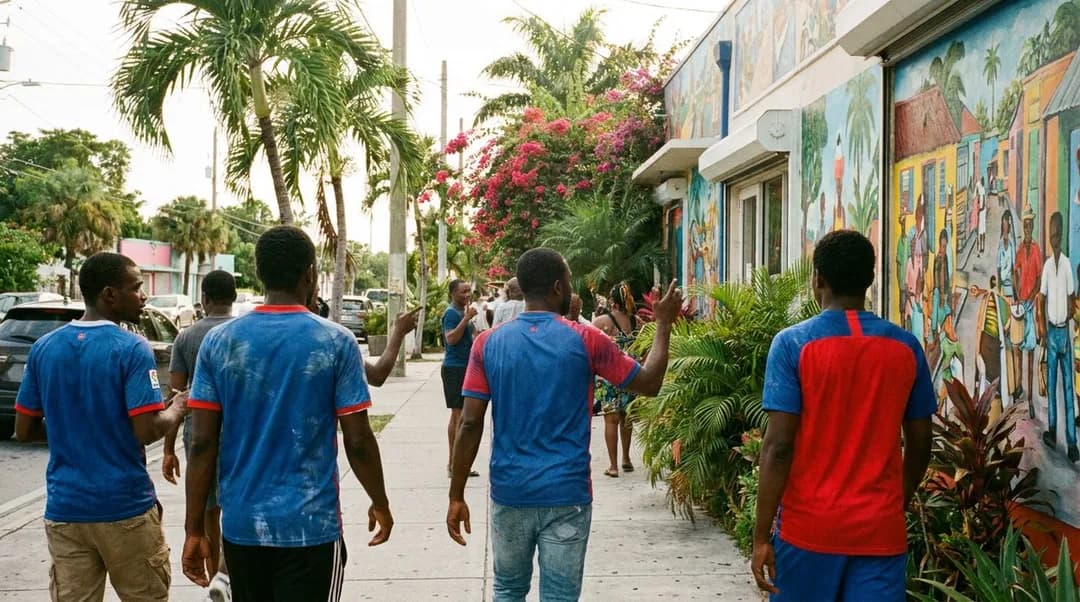
Haiti's World Cup Fans Bring Little Haiti Into the Game
Miami's Little Haiti neighborhood, centered along NE 54th Street and 2nd Avenue, has long been one of the most culturally distinct pockets of the city, and Haiti's World Cup presence is giving the community a moment of collective visibility, with viewing setups in local restaurants, cultural centers, and street corners that reflect both the Haitian national team's journey and the diaspora's complicated pride.
The blue and red flags begin appearing on lampposts along NE 54th Street days before kickoff, and by match morning, Little Haiti transforms into something between a street festival and a pilgrimage site. Miami's Haitian community—estimated at over 300,000 across the metro area—has waited generations for this moment, and the neighborhood's cafés, cultural centers, and corner markets become impromptu stadiums where diaspora pride collides with the complicated politics of representing a nation from thousands of miles away. The air smells of griot and pikliz, and the sound systems tested at dawn will carry every whistle, every chant, every collective gasp through open doorways and into the humid morning.
The 54th Street Corridor Becomes Match Day Central
By 8 a.m. on game days, the stretch between NE 2nd Avenue and Miami Avenue fills with supporters in national team jerseys—some vintage from qualifying campaigns decades past, others fresh from vendors who've set up folding tables on every available corner. Chef Creole, the longtime restaurant at 200 NE 54th Street, opens its courtyard early and positions three large screens under the mango trees, with benches filling two hours before kickoff. Families arrive with grandmothers in church hats and teenagers in custom-painted face masks, claiming tables that will hold three generations through ninety minutes of collective anxiety. The kitchen runs nonstop, sending out plates of diri ak djon djon and lambi in Creole sauce to tables where fans barely look down from the screens.
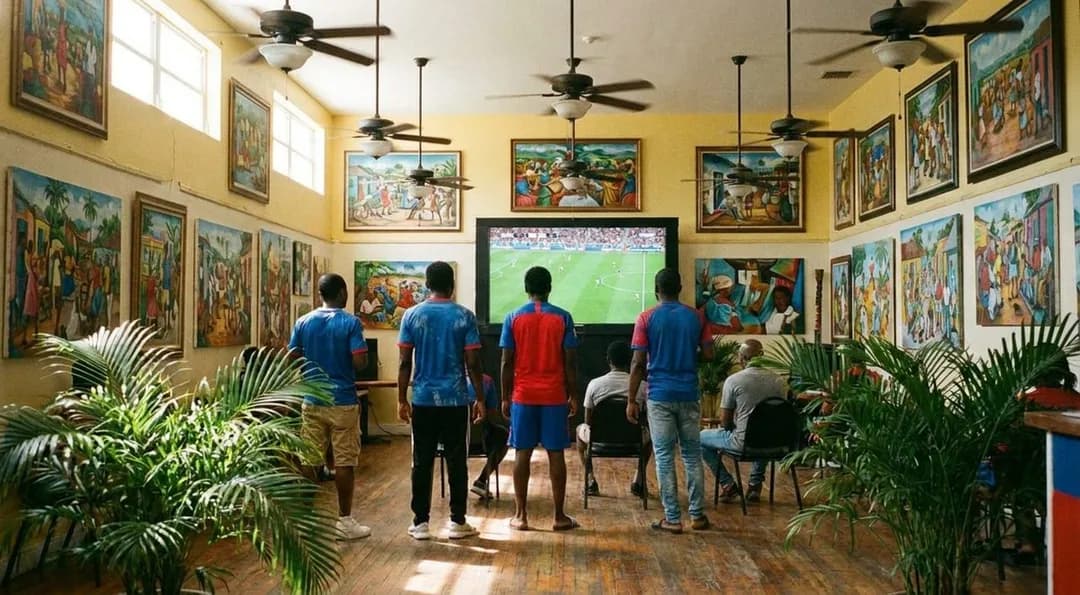
Further east, Libreri Mapou—the cultural bookstore and gathering space at 5919 NE 2nd Avenue—sets up projectors in both its indoor reading room and outdoor garden, creating dual viewing zones that accommodate the overflow from nearby restaurants. The walls, lined with Haitian art and literature, provide a backdrop that frames the match as something larger than sport: a moment of national assertion for a diaspora that has spent decades building community infrastructure in a neighborhood that Miami's development boom has repeatedly threatened to erase.
Viewing Parties Layer History and Hope
The cultural centers coordinate their setups with the precision of election-day operations. Little Haiti Cultural Complex, the city-run facility at 212 NE 59th Terrace, opens its main theater and courtyard to accommodate hundreds, with volunteers managing entry flows and local radio stations broadcasting live from the plaza. Inside, the crowd skews older—men and women who remember Haiti's near-miss qualifications in the 1970s and the heartbreak of campaigns that fell short. They sit in folding chairs with transistor radios pressed to ears, following Creole commentary even as the televised match plays ten feet away, preferring the cadence and context of voices from Port-au-Prince.
Younger fans gravitate toward Caribbean Marketplace, the shopping plaza at 5927 NE 2nd Avenue, where the anchor restaurant streams the match on outdoor screens and the crowd spills into the parking lot, creating a standing-room atmosphere that feels more like a concert than a viewing party. The energy here runs hotter—drums appear, air horns punctuate every Haitian touch, and the celebrations after goals become street-wide eruptions that stop traffic on 2nd Avenue for minutes at a time. Vendors work the crowd with flag capes and commemorative scarves, and the informal economy that sustains the neighborhood operates at festival pace.
The Food Scene Feeds the Moment
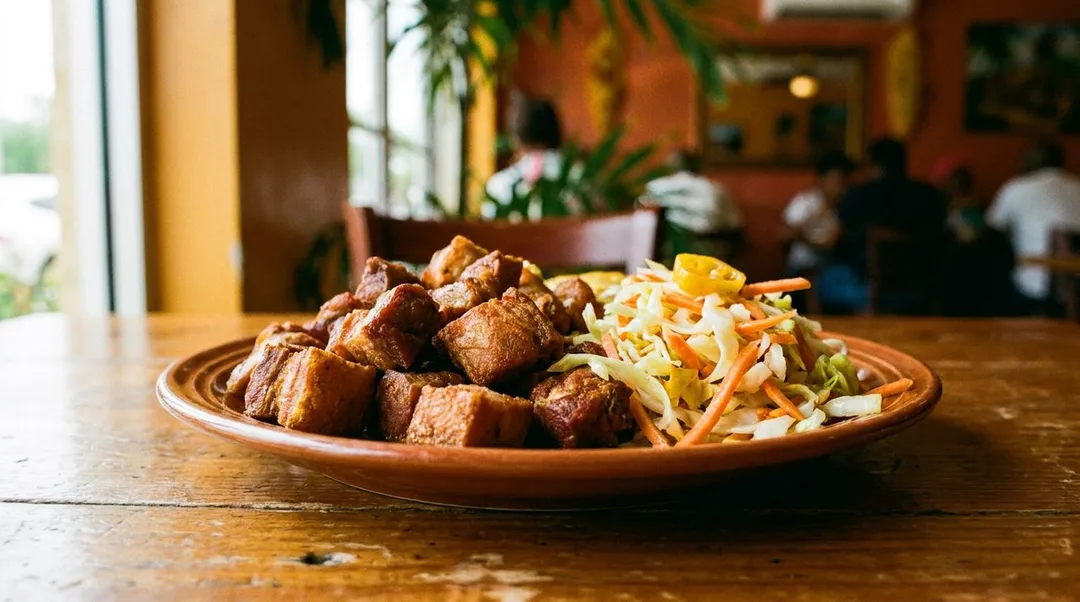
The bakeries along 54th Street run through their morning inventory by 10 a.m., restocking pain patate and tablet kokoye for the post-match rush that everyone knows is coming regardless of the result. At Naomi's Garden Restaurant, a few blocks south at 4700 NE 2nd Avenue, the kitchen preps double portions of poulet aux noix and tassot, anticipating the families who will arrive after the final whistle looking for comfort food and conversation space. The dining room, normally quiet on weekday mornings, becomes a secondary gathering point for fans who prefer smaller crowds and the ability to actually hear the commentary.
Street vendors set up grills on side streets, selling griot and fried plantains from coolers and makeshift tables, the smoke drifting through the neighborhood and marking the blocks where the largest crowds have gathered. The informal food economy—always present but usually more dispersed—concentrates around the viewing sites, creating ad hoc food courts that feed hundreds and generate the kind of cash-basis commerce that has sustained Little Haiti through decades of economic marginalization.
Transit Patterns Reveal Regional Pull
The 9 and 10 bus lines, which run along 2nd Avenue, see ridership spike on match days, with standing-room loads arriving from North Miami, Aventura, and even Broward County as Haitian families from across South Florida converge on the neighborhood. Drivers report delays as passengers board in groups, often debating whether to get off at 54th or push north to 62nd Street depending on where they've heard crowds are gathering. The Metromover's Omni station, a mile and a half south, becomes an unofficial park-and-ride for fans who drive in from the suburbs and prefer the free transit connection over hunting for parking in the neighborhood's narrow residential streets.
Ride-share drop-offs cluster around the Cultural Complex and Chef Creole, with drivers navigating street closures and double-parked cars that multiply as kickoff approaches. The neighborhood, which typically sees modest weekday traffic, experiences congestion that mirrors festival days, and the Miami Police Department stations officers at key intersections more to manage celebration than concern.
Evening Rhythms Stretch Past Final Whistle
When the match ends—win, lose, or draw—the neighborhood doesn't empty. Instead, the energy shifts from focused tension to diffuse socializing, with crowds migrating between venues, sharing reactions, and replaying key moments on phone screens. The domino tables outside Libreri Mapou fill with men dissecting tactical decisions, while younger fans gather in the Cultural Complex courtyard, where DJs sometimes set up for impromptu dance sessions that extend the communal mood into evening.
Restaurants stay open late, kitchens continuing to serve as long as tables remain occupied, and the staff—many of whom watched the match in shifts—join the post-game conversations during lulls. The neighborhood, which has fought for recognition and resources for decades, claims these hours as a form of cultural assertion, a visible demonstration that Little Haiti remains a living community and not just a heritage district awaiting redevelopment.
Practical Notes
• Transit access: The 9, 10, and 62 bus routes serve NE 2nd Avenue; nearest Metromover station is Omni (1.5 miles south); limited street parking—arrive early or use ride-share
• Timing: Viewing sites open 2-3 hours before kickoff; arrive early for seating at popular venues; post-match gatherings often extend 3-4 hours past final whistle
• Weather considerations: Most viewing areas offer mix of indoor and outdoor seating; Miami heat and afternoon thunderstorms can affect outdoor setups
• Cultural etiquette: This is a community event with deep diaspora significance; visitors should respect the emotional weight and avoid treating it as tourism spectacle
Tags: #LittleHaiti #Miami #WorldCup #HaitianDiaspora #CaribbeanCulture #SouthFlorida #NeighborhoodCulture #SoccerCulture #DiasporaCommunity #MiamiNeighborhoods #CulturalIdentity #54thStreet #CaribbeanMiami #FoodAndCommunity
Sources consulted: fifa.com (https://www.fifa.com) · miamiandbeaches.com (https://www.miamiandbeaches.com) · timeout.com/miami (https://www.timeout.com/miami)
All trademarks are the property of their respective owners.
Ask Karpo first
Wondering where Miami's Haitian community and Les Grenadiers fans are gathering for World Cup viewing this summer?
Ask Karpo for the latest on Little Haiti viewing spots, Haitian community event schedules, and the neighborhood scene around Haiti match days in Miami.
Ask Karpo for more information.
Keep reading
- Haaland Has Seven Goals and Norway Runs Entirely Through Him
 World Cup Trophy Ceremony Timing Medals and Postmatch Celebrations
 Olise and France's Attack: The Semifinal Tactical Question