 Haaland Has Seven Goals and Norway Runs Entirely Through Him
⚽️2026 FIFA WORLD CUP

Ghana's Black Stars Bring World Cup Buzz to Atlanta's West African Scene
Atlanta and its eastern suburbs, especially Clarkston, host a substantial Ghanaian community that has been quietly building its World Cup watch culture, drawing on ties between established community organizations and newer arrivals who bring fresh energy to the Black Stars supporter tradition.
The scent of groundnut soup and jollof rice drifts through Clarkston's Market Street long before kickoff, mingling with the humid Georgia air as supporters in red, gold, and green stream toward viewing parties that transform restaurants and community centers into roaring stadiums. Atlanta's eastern corridor, stretching from Clarkston through Stone Mountain, has become the heartbeat of Black Stars fandom in the American South—a place where established Ghanaian families and recent arrivals gather to watch their national team with an intensity that rivals any stadium in Accra or Kumasi. The community's World Cup watch culture reflects decades of careful institution-building, from the Ghana Association of Georgia to informal networks of supporters who text match times and venue details hours before kickoff, creating a parallel sports infrastructure that operates largely outside mainstream Atlanta's sports consciousness.
Red Gold Green Takes Over Market Street
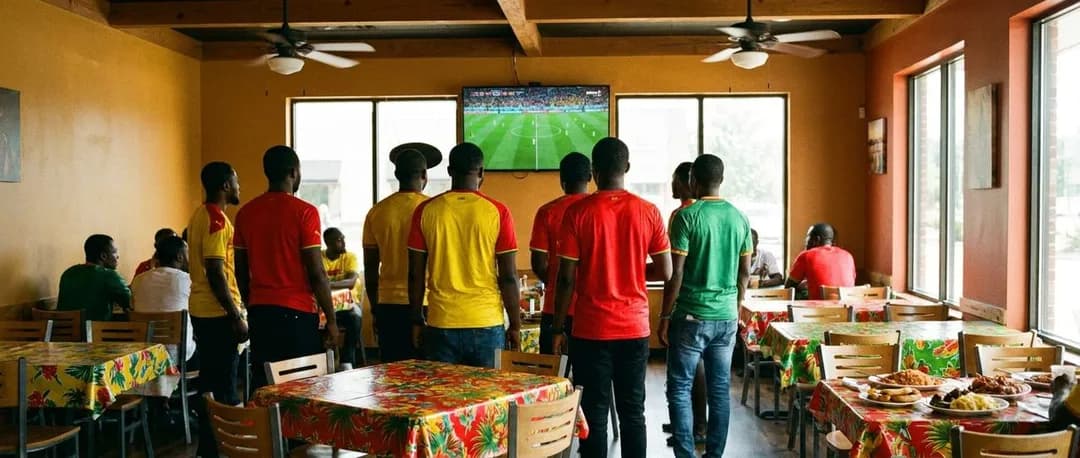
Clarkston's compact downtown core becomes unrecognizable on match days, with Ghanaian flags draped across storefronts and car windows, vendors selling replica jerseys from folding tables, and groups of supporters claiming sidewalk space outside African Supermarket and New Life Restaurant hours before scheduled kickoffs. The neighborhood's transformation reflects its demographic reality—Clarkston has resettled more refugees per capita than almost any American city, and while the community includes families from across Africa and Asia, Ghanaians have built particularly visible cultural infrastructure. Restaurants switch their dining room televisions from news channels to international sports feeds, pushing tables together to accommodate groups of twenty or thirty. At Taste of Africa on Church Street, owner Kwame Mensah reports running out of kelewele—spicy fried plantains—by halftime during Ghana's recent qualifiers, as fans order round after round of small plates between moments of collective anxiety and celebration.

Stone Mountain's Living Room Gatherings Expand
Further east in Stone Mountain, the watch party culture takes a more residential character, with supporters gathering in basement rec rooms and converted garages that have been outfitted with projection screens and sound systems worthy of commercial venues. The Nkrumah family's home on Memorial Drive has become legendary among local supporters, hosting upwards of fifty people for major matches, with folding chairs arranged in concentric semicircles and coolers of Supermalt and Club beer lining the driveway. These house parties operate on invitation and word-of-mouth, creating intimate atmospheres where multi-generational families watch together—grandparents who remember Ghana's independence alongside teenagers who've never visited Accra but wear Black Stars scarves with fierce pride. The residential gatherings also serve practical purposes: parents can bring young children without worrying about late-night bar environments, and community elders control the narrative, offering historical context about Ghana's football legacy during commercial breaks.
Waakye and Match-Day Menus Draw Morning Crowds
The food dimension of match-day culture begins well before kickoff, particularly for early morning games that align with African and European time zones. At Papaye Restaurant near the Clarkston MARTA station, breakfast service on match days shifts entirely toward traditional Ghanaian fare—waakye (rice and beans) with shito pepper sauce, kenkey with fried fish, and pots of banku that steam in the kitchen from 5 a.m. onward. Supporters arrive in waves, some coming straight from night shifts at Hartsfield-Jackson Airport or Emory University Hospital, others dressed in full supporter regalia despite the pre-dawn hour. The restaurant's owner, Abena Osei, has learned to triple her usual weekend food prep when Ghana plays, and still frequently runs out by mid-morning. The communal eating becomes part of the ritual—strangers share tables, debate lineup choices in Twi and English, and forge connections that extend beyond the ninety minutes of play.
Transit Corridors Connect Scattered Supporters
Getting to watch parties requires navigating Atlanta's challenging transit landscape, though the Ghanaian community has developed informal transportation networks that supplement MARTA's limited reach. The Blue Line to Indian Creek station serves as a gathering point for supporters heading to Clarkston venues, with informal carpools forming in the parking lot as fans recognize each other's jerseys and flags. WhatsApp groups coordinate rides from neighborhoods in South DeKalb and Gwinnett County, where significant numbers of Ghanaian families have settled in recent years. On major match days, supporters report seeing caravans of cars—five or six vehicles traveling together, horns honking, flags streaming from windows—making their way down Memorial Drive or Ponce de León Avenue toward established viewing venues. The journey itself becomes part of the experience, with car stereos blasting highlife music and hiplife tracks, building anticipation before the opening whistle.
Post-Match Streets Pulse With Victory or Consolation
The hours after final whistles bring their own rhythms to Clarkston's streets, depending on match outcomes. Victories send supporters spilling onto sidewalks, impromptu dance circles forming outside restaurants as someone's car stereo provides the soundtrack—Sarkodie or Shatta Wale or classic highlife from the 1970s. Drivers cruise Market Street with hazard lights flashing, passengers leaning from windows to exchange chants with pedestrians. Local police have learned to expect the celebrations, generally taking a hands-off approach as long as traffic keeps moving. Defeats bring quieter but no less communal responses—supporters lingering over late meals, conducting detailed post-mortems of tactical decisions, already looking ahead to the next qualifier or friendly. Either way, the restaurants stay open late, understanding that the community needs space to process together, to reinforce bonds that extend far beyond football into shared experiences of migration, adaptation, and maintaining cultural identity in the American South.
Practical Notes
• Transit access: MARTA Blue Line to Indian Creek or Avondale stations provides closest rail access to Clarkston; most venues require short bus connection or rideshare from stations
• Timing considerations: Early kickoffs (7-10 a.m. EST) common for matches in African or European time zones; restaurants begin serving by 6 a.m. on major match days
• Weather planning: Summer matches coincide with Atlanta's peak heat and afternoon thunderstorms; indoor venues fill quickly, so supporters arrive 60-90 minutes before kickoff to secure spots
• Community connections: Many viewing parties operate through informal networks; visitors can connect through Ghana Association of Georgia social media or by visiting Clarkston restaurants on match days to inquire about public gatherings
Tags: #AtlantaSoccer #GhanaBlackStars #ClarkstoneAtlanta #WestAfricanCuisine #WorldCupCulture #ImmigrantAtlanta #StoneMountain #AfricanDiaspora #SoccerCommunity #MarketStreetEats #GhanaianAtlanta #DeKalbCounty #SupporterCulture #AtlantaNeighborhoods
Sources consulted: fifa.com (https://www.fifa.com) · atlanta.net (https://www.atlanta.net) · timeout.com/atlanta (https://www.timeout.com/atlanta)
All trademarks are the property of their respective owners.
Ask Karpo first
Wondering where Atlanta's Ghanaian community and Black Stars fans are gathering for World Cup matches this summer?
Ask Karpo for the latest on Clarkston and Stone Mountain viewing spots, Ghanaian community events, and the best places to follow Ghana's World Cup run in the Atlanta area.
Ask Karpo for more information.
Keep reading
- Haaland Has Seven Goals and Norway Runs Entirely Through Him
 World Cup Trophy Ceremony Timing Medals and Postmatch Celebrations
 Olise and France's Attack: The Semifinal Tactical Question