 Haaland Has Seven Goals and Norway Runs Entirely Through Him
⚽️2026 FIFA WORLD CUP
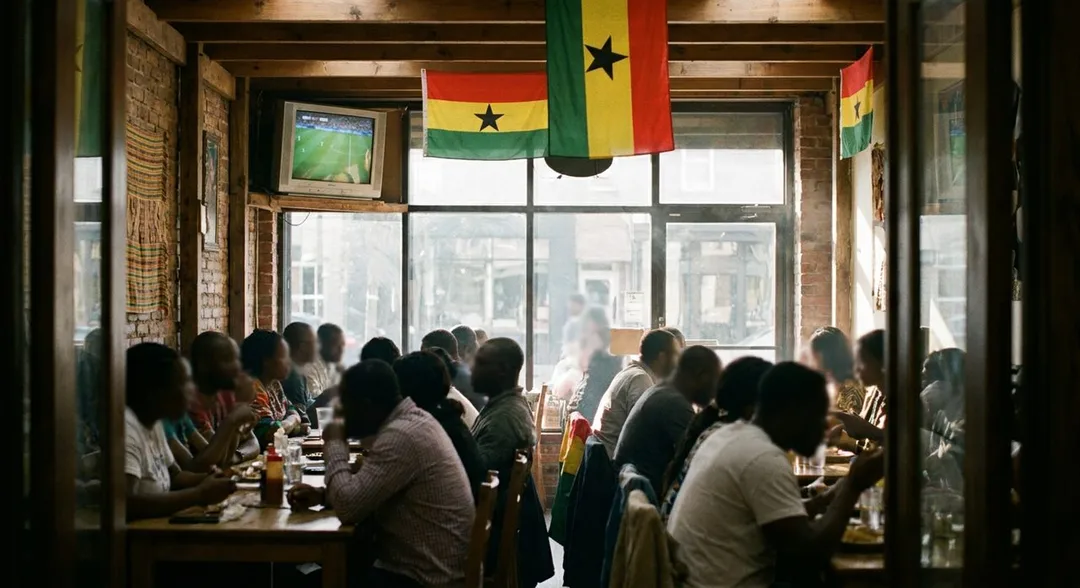
Fordham Road's Ghanaian Watch House: Where the Black Stars Shine in the Bronx
A West African restaurant near Fordham University turns into a standing-room fan zone for Ghana matches, with jollof and kelewele served until the final whistle.
You find the place by following the roar. Two blocks south of Fordham Road's main strip, tucked between a Caribbean bakery and a phone repair shop, a narrow storefront with hand-painted lettering transforms into something between a living room and a stadium whenever Ghana takes the pitch. The scent of frying plantains drifts into the street, mixing with the diesel exhaust and sidewalk steam, and through the window you can already see bodies pressed shoulder to shoulder, scarves lifted overhead, everyone's eyes locked on the same flickering screen.
The Geography of Belonging
This part of Fordham doesn't make it into most Bronx guides, which is exactly why it works. The blocks just off the university campus hold a dense constellation of West African businesses—money transfer spots, fabric shops, halal butchers—that have been here long enough to feel permanent but not so long that anyone's gotten comfortable. The restaurant itself occupies a former diner space, and you can still see the outline of the old counter beneath new paint. During non-match days it runs quiet, serving lunch specials to students and construction workers. But when Ghana plays, the transformation is total. Someone props the door open even in winter because the body heat becomes unbearable. The sidewalk fills with overflow crowd, people watching through the window, texting updates to friends still on the train.
What the Kitchen Does Under Pressure
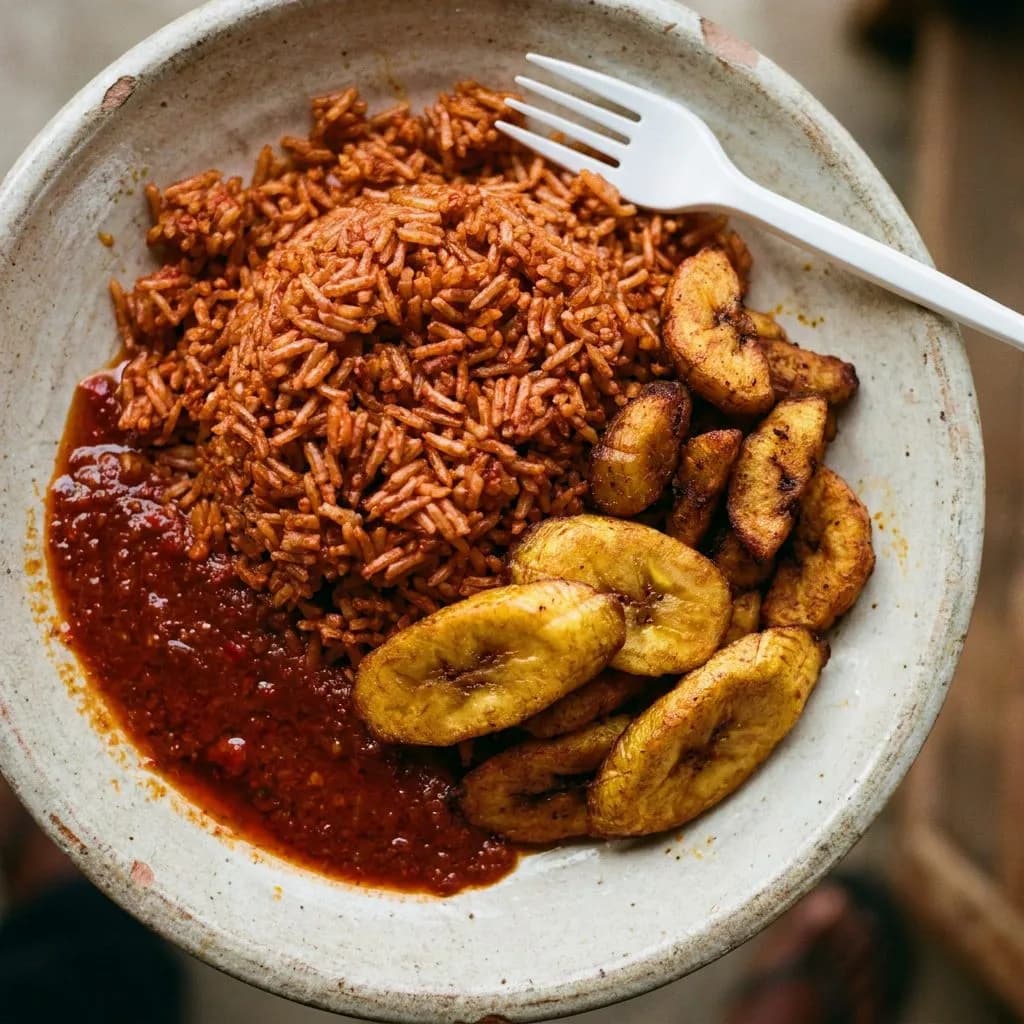
The kitchen is a narrow galley you can see straight into from most angles in the room. During matches, two women work in synchronized rhythm, one at the fryer, one plating, moving faster than seems possible in that tight space. The jollof rice comes out in aluminum containers lined with banana leaves—not for authenticity's sake but because they ran out of bowls an hour ago and adapted. The kelewele arrives so hot you have to wait, the ginger and pepper heat cutting through the fried sweetness of the plantain. Between halves, someone's aunt emerges with a tray of meat pies, still glistening, and they disappear in minutes. No menus during match days. You eat what's ready, and what's ready is whatever can be prepared in bulk without losing its soul. The rice holds its bright orange-red color even under the fluorescent lights, each grain distinct, the tomato and pepper base cooked down until it's almost jammy.
The Regulars and Their Territories
By the second match of the group stage, you start recognizing faces. The older man in the Asamoah Gyan jersey who always stands in the back left corner, never sitting, arms crossed until Ghana scores. The university students who arrive in a pack, wearing matching scarves they clearly bought that morning from the vendor outside. The woman who brings her own cushion because she knows the metal folding chairs get brutal after an hour. There's an unspoken hierarchy to the seating—the tables closest to the main screen fill first, claimed by people who arrived when the doors opened. Latecomers stand along the walls or perch on the window ledge, craning their necks. During tense moments, everyone stands anyway. The room breathes as one organism, the collective inhale when Ghana pushes forward, the explosion when the ball hits the net. Someone's always on their phone, streaming commentary in Twi for the people in back who can't hear the broadcast over the noise.
When the Whistle Blows and What Happens After
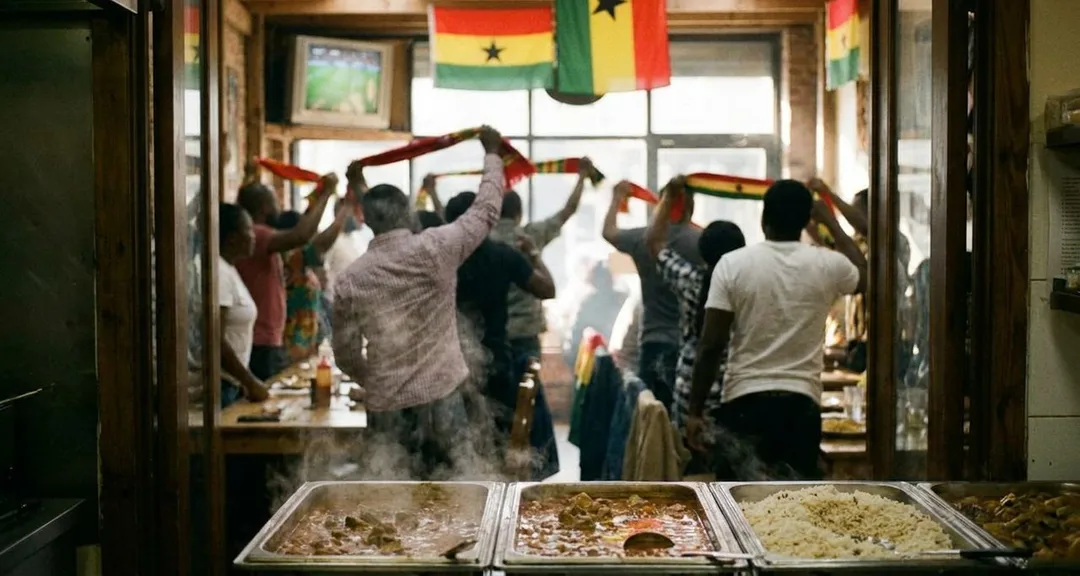
The final whistle produces two entirely different atmospheres depending on the result. After a win, the place stays packed for another hour, music replaces the broadcast audio, and someone inevitably starts dancing in the two-foot clearing near the door. The kitchen keeps serving even though they've technically run out of everything, scraping together plates from whatever's left. After a loss, the room empties in minutes, silent except for chair legs scraping tile. The staff starts cleaning while the last few people sit motionless, staring at the screen even though it's switched to post-match analysis they're not processing. Either way, the smell lingers for hours—palm oil, scotch bonnet, the particular char of plantains fried in batches too large for optimal heat control. You'll catch it on your clothes later, on the train ride home, and it'll trigger the whole sense memory: the pressure of bodies, the percussion of feet on floor, the way the room's temperature climbed degree by degree until the air felt solid.
The Economics of Temporary Community
Nobody's getting rich here. The math doesn't work—you can't charge stadium prices in this neighborhood, and the overhead of staffing up for unpredictable match schedules cuts into already thin margins. But the place fills a function that transcends profit. It's a coordinate point, a guaranteed location where you'll find your people during the tournament's compressed timeline. The owner—you'll never catch their name, they're always in motion—treats it like hosting an extended family gathering where some guests happen to pay. The suggested donation for food hovers around what you'd spend on fast food, maybe less. Nobody checks if you ordered enough to justify your seat. The business model is less restaurant and more communal infrastructure, sustained by the understanding that these gatherings matter more than the balance sheet. Between matches, the place reverts to its regular operation, quiet enough to study in, cheap enough for students' budgets.
Reading the Room's Temperature
You learn to arrive early or accept standing. Doors open roughly two hours before kickoff, and the serious fans claim their spots immediately. By one hour out, you're looking at standing room only. Thirty minutes before whistle, you're negotiating shoulder space with strangers who'll become temporary family once the match starts. The room's emotional temperature is legible in the volume—a steady murmur during possession in midfield, rising to shouts when Ghana enters the attacking third, erupting into chaos that drowns out the broadcast during any serious scoring chance. The collective groan of a missed opportunity physically moves through the space like a wave. During halftime, the volume drops but never disappears entirely, everyone processing, analyzing, arguing about substitutions that haven't happened yet. The bathroom line becomes its own social space, people trading predictions and complaints in a mix of English and Twi and whatever hybrid emerges under pressure.
Practical Notes
The restaurant operates on Fordham's south side, a short walk from the Metro-North Fordham station or the D train. During tournament matches involving Ghana, arrive at least ninety minutes early if you want a seat. No reservations, no advance tickets—it's first-come, cash-preferred, and subject to fire code capacity that everyone cheerfully ignores. The space stays open through the final whistle and usually an hour beyond, longer if Ghana advances. Between matches, regular hours run late morning through evening, serving the same menu at a more relaxed pace. Check social media or ask around the neighborhood for exact match-day schedules—information spreads through community networks faster than any official announcement could.
Tags: #2026FIFAWorldCup #GhanaBlackStars #FordhamBronx #WestAfricanFood #JollofRice #NYCHiddenGems #BronxEats #WorldCupWatch #DiasporaCommunity #AuthenticEats #NeighborhoodSpots #NYCFootball #GhanaianCuisine #FordhamRoad #SoccerCulture
Sources consulted: fifa.com · espn.com · timeout.com
All trademarks are the property of their respective owners.
Ask Karpo for more information.
Keep reading
- Haaland Has Seven Goals and Norway Runs Entirely Through Him
 World Cup Trophy Ceremony Timing Medals and Postmatch Celebrations
 Olise and France's Attack: The Semifinal Tactical Question