 Haaland Has Seven Goals and Norway Runs Entirely Through Him
⚽️2026 FIFA WORLD CUP
Flushing Hand-Pulled Noodles Before Wings vs Lynx Tipoff and World Cup
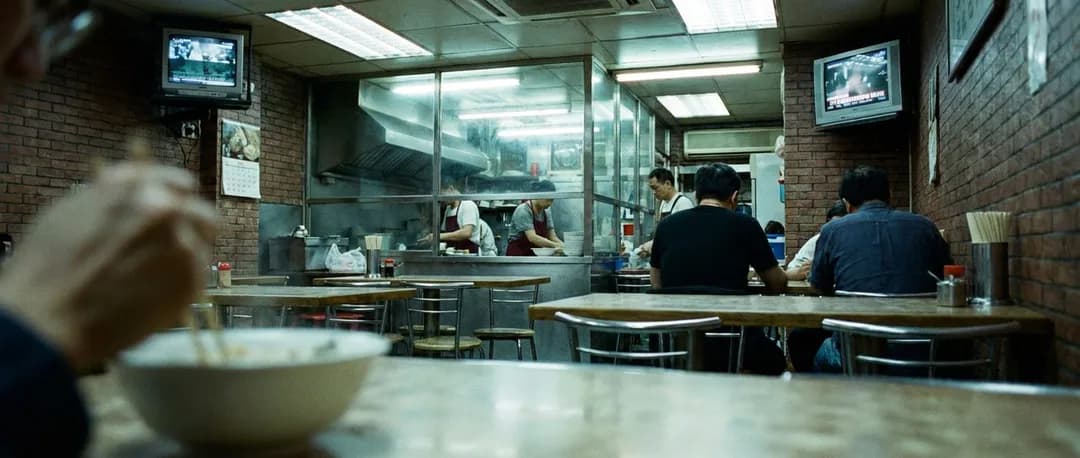
Flushing noodle shops host overlapping sports crowds, WNBA and World Cup fans shoulder-to-shoulder at counters waiting for their respective kickoffs.
The steam hits you first — thick, wheaty clouds rolling off boiling pots — then the sound: the rhythmic thwack of dough against stainless steel as cooks stretch noodles in open kitchens along Main Street. It's two hours before tipoff at Barclays and three before a World Cup match streams on every screen in Flushing, and the noodle shops are already filling with people wearing jerseys from two entirely different sports, all of them hungry, all of them checking their phones for start times.
When Two Crowds Become One Counter
You'll spot them immediately: the Liberty jerseys mixed with national team colors, the split-screen energy of people who've planned their entire Saturday around overlapping kickoffs. The noodle shops between Roosevelt and Main don't care which game you're watching — they're set up for this exact convergence. Small tables pushed close together, stools that swivel so you can see both the kitchen and the mounted screens, and a pace that understands you need to eat fast but not feel rushed. The woman next to you is wearing a Sabrina Ionescu jersey and scrolling through World Cup brackets. The guy behind her has a scarf draped over his chair and a Barclays ticket poking out of his jacket pocket. Nobody's talking yet, but you can feel the anticipation building like pressure in a dumpling steamer.
The Pull and Stretch Economics
Watch the noodle makers through the kitchen window and you'll understand why this neighborhood became the pre-game ritual for both crowds. One cook can pull enough noodles for eight bowls in the time it takes you to find your seat. The dough gets stretched, folded, stretched again — each pull doubling the strands until they're thin enough to slurp but thick enough to hold onto the chili oil pooling at the bottom of your bowl. It's not theater, though it looks like it. It's pure efficiency, the kind that feeds a neighborhood where people are always on their way to something else. The shops that survive here are the ones that figured out how to turn over tables without making you feel turned out. You'll be done in twenty minutes if you need to be, forty if you want to linger over a second bowl.
What to Order When You're Racing the Clock
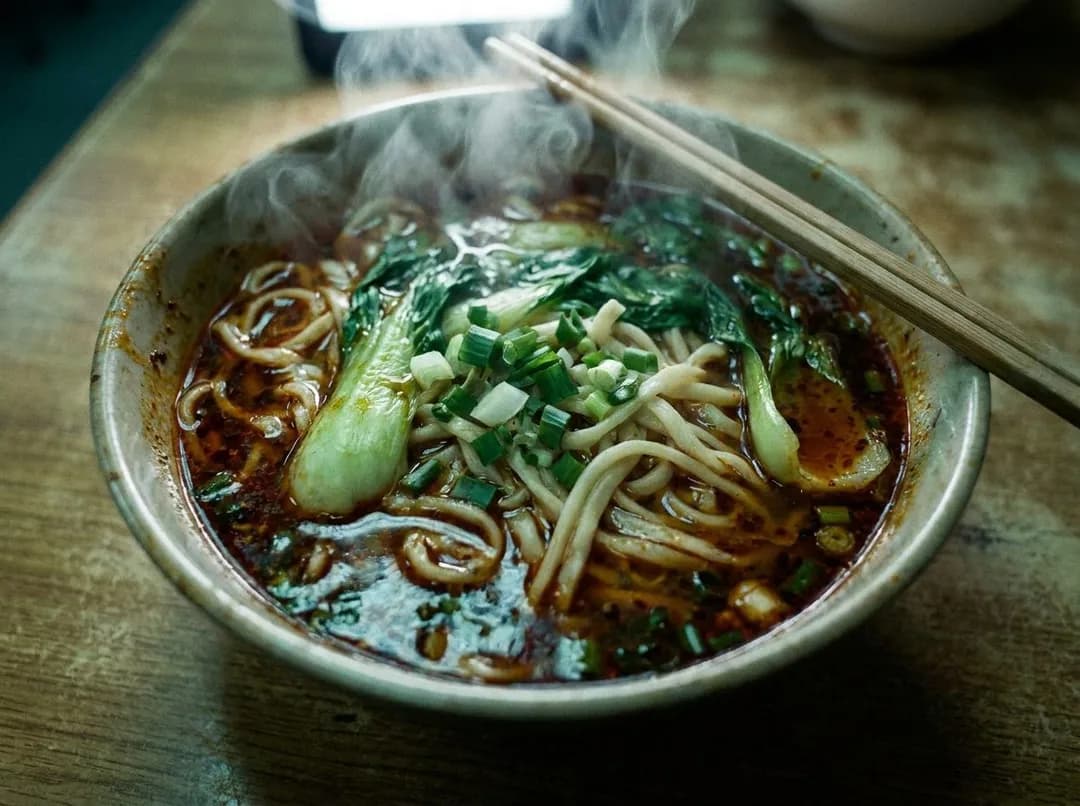
The hand-pulled noodles in chili oil and vinegar are what you came for — wide, slippery, coated in a sauce that's more complex than it looks. Garlic, Sichuan peppercorn, black vinegar that cuts through the oil with a sharp tang. Some shops add a spoonful of peanut butter to the mix, which sounds wrong until you taste how it rounds out the heat. Get it with beef shank if you want something substantial, or keep it vegetarian and add extra bok choy and wood ear mushrooms. The cold sesame noodles are the move if you're eating fast — they come already dressed, no waiting for the kitchen to plate hot broth. A few regulars order the knife-cut noodles instead, which are thicker and more irregular, better for soaking up soup if you're getting the tomato-egg or the lamb broth. Skip the dumplings unless you have time. They're good, but they take longer, and you're here for the noodles.
The Rhythm of Roosevelt Avenue
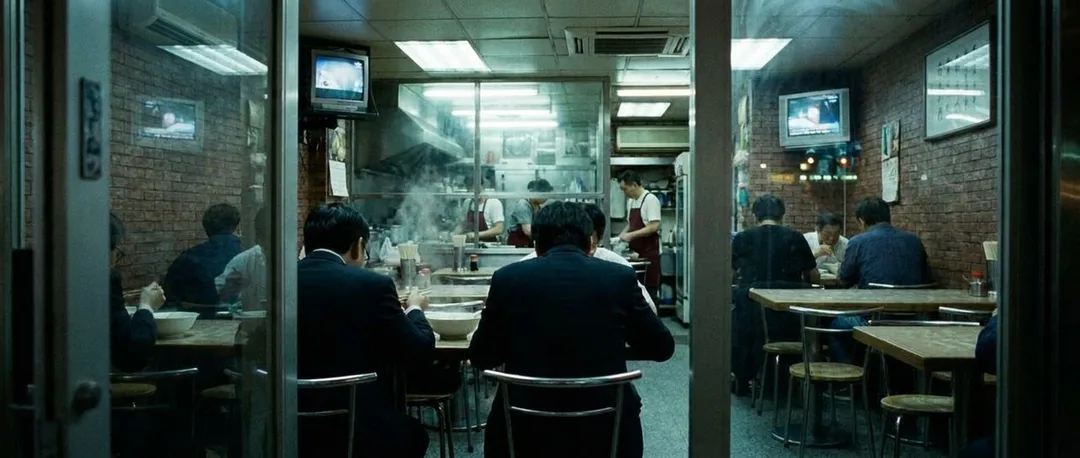
The 7 train rumbles overhead every few minutes, close enough that you feel it in your chest if you're sitting near the window. That's your clock. Each train brings another wave of people — some heading to the Long Island Rail Road connection, some walking toward the shops, some just passing through with rolling suitcases and confused expressions. The noodle shops sit in this constant flow, doors propped open even in winter, kitchen heat spilling onto the sidewalk. You'll see delivery drivers double-parked, engines running, ducking in for a quick bowl between shifts. You'll see families with kids who are fluent in the menu, pointing at dishes before their parents finish ordering. And today, you'll see the sports crowds layering in, checking the time, doing the math on whether they can make it to Brooklyn or whether they're staying in Flushing to watch on the big screens at the Taiwanese bakery down the block.
The Spillover Screen Strategy
Not everyone's going to the arena. Half the people in here are planning to stay in the neighborhood, where the bars and bakeries have figured out how to show multiple games on multiple screens without anyone complaining about the remote. The Korean fried chicken spot two blocks over has three TVs and a projector. The bubble tea place on the corner streams games on a tablet propped against the register. Even the supermarket has a screen above the checkout lanes. Flushing doesn't need you to go to the official venue to be part of the event — the whole neighborhood becomes the venue, with noodles as the anchor meal that gets everyone in position. You'll finish your bowl, pay in cash because half these places still don't take cards reliably, and then make the call: train to Barclays or walk to the next spot with better sight lines.
The Language of Parallel Traditions
What's striking isn't that two different sports crowds are eating in the same place — it's how similar the rituals are. Both groups arrive early, eat quickly, talk strategy. Both have people wearing replica jerseys that cost more than the meal. Both have the same superstitious energy, the same way of checking their phones for lineup news, the same nervous leg-bouncing under the table. The World Cup fans have been doing this longer in Flushing, using these noodle shops as pre-match staging grounds for decades. The WNBA crowd is newer but learning fast, figuring out which shops are closest to which subway lines, which ones have the best turnover speed. You'll overhear conversations in Mandarin, Spanish, Korean, English, often at the same table, everyone united by the same pre-game hunger and the same awareness that they need to move soon.
Practical Notes
The noodle shops along Main Street and around Roosevelt Avenue are generally open from late morning through late evening, with some staying open past midnight on weekends. Get there at least ninety minutes before you need to leave for the arena if you want to eat without stress. Most bowls run cheap enough that you can afford to add extra toppings or a side of scallion pancakes. Cash is safer than cards, though more places are adding digital payment options. The 7 train from Flushing-Main Street to Barclays is about forty minutes with one transfer, so factor that into your timing. If you're watching in the neighborhood instead, scout your screen location before you order — the best spots fill up fast once the pre-game shows start.
Tags: #FlushingQueens #HandPulledNoodles #NYCFoodCulture #2026FIFAWorldCup #WNBAFans #PreGameRituals #MainStreetEats #QueensEats #SportsAndNoodles #NeighborhoodTraditions #NewYorkDiaspora #AuthenticEats #NYCInsider #FoodBeforeTheGame #KarposFinds
Sources consulted: fifa.com · espn.com · timeout.com
All trademarks are the property of their respective owners.
Ask Karpo for more information.
Keep reading
- Haaland Has Seven Goals and Norway Runs Entirely Through Him
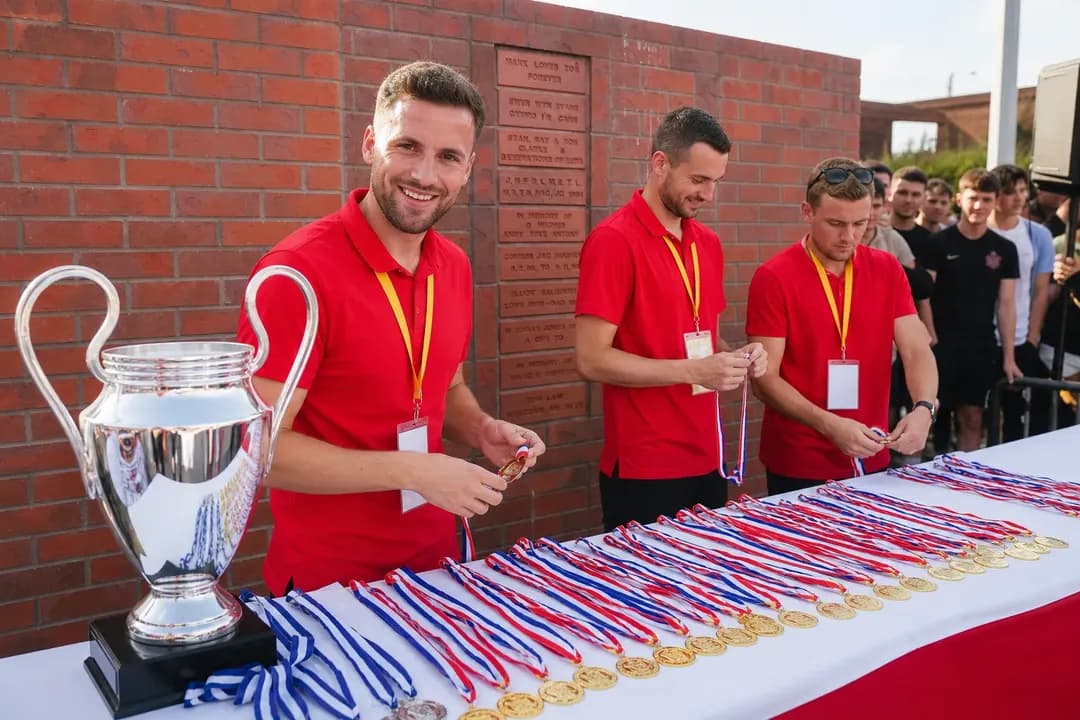 World Cup Trophy Ceremony Timing Medals and Postmatch Celebrations
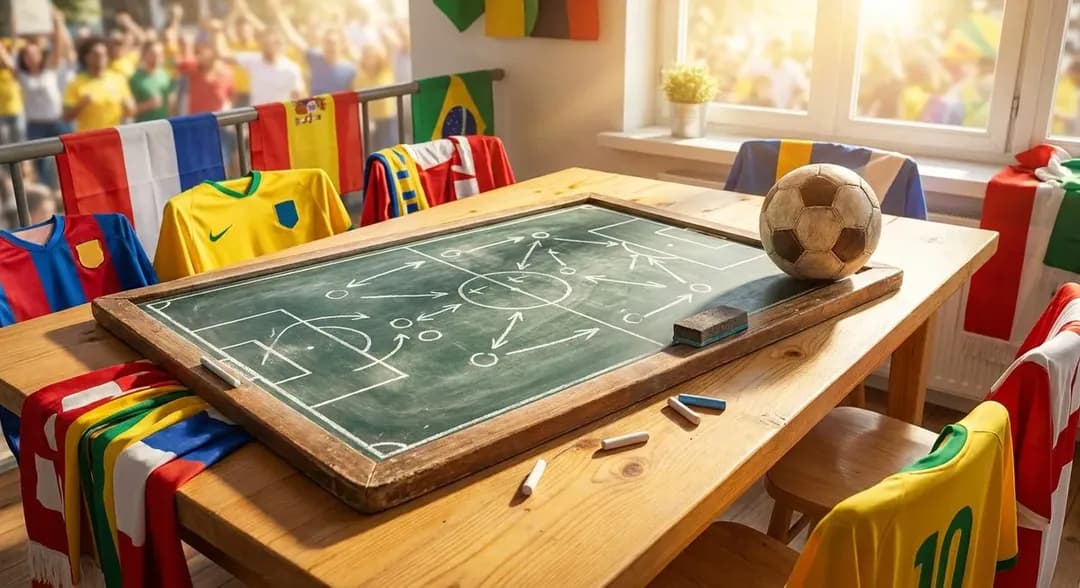 Olise and France's Attack: The Semifinal Tactical Question