 Haaland Has Seven Goals and Norway Runs Entirely Through Him
⚽️2026 FIFA WORLD CUP

El Salvador's World Cup Fans Animate Los Angeles's Pico-Union
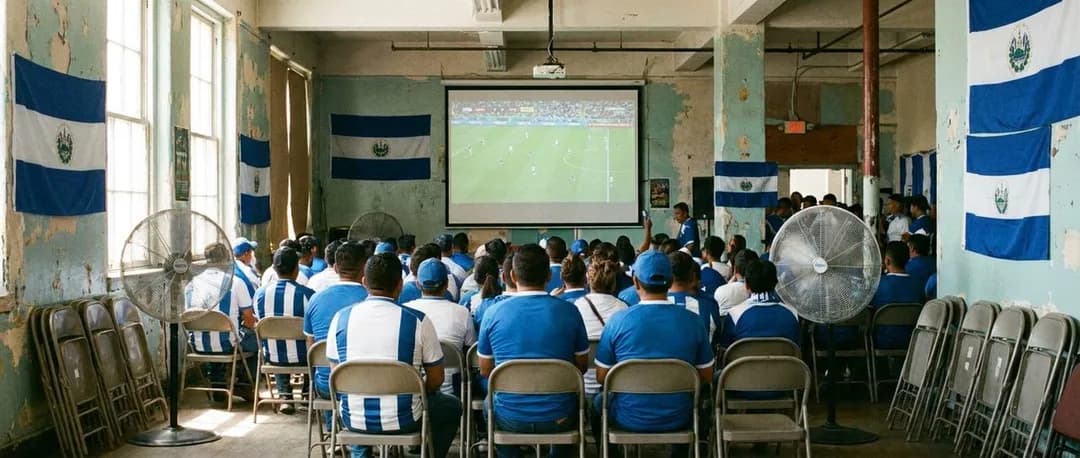
Los Angeles's Pico-Union neighborhood, home to one of the largest Salvadoran communities in the world, is living its biggest soccer moment in years as El Salvador competes in the World Cup, with watch parties, street food vendors, and community viewing spaces turning the MacArthur Park corridor into a non-stop match day scene.
The blue and white flags of El Salvador have multiplied across Pico-Union's storefronts and apartment balconies as the neighborhood enters its most electric soccer moment in a generation. From dawn until well past midnight, this densely packed corridor west of downtown Los Angeles pulses with World Cup fervor, transforming ordinary sidewalks into impromptu viewing galleries and turning every café with a television into a packed arena. The community that has made this neighborhood the heart of Salvadoran Los Angeles—home to more than 500,000 people of Salvadoran descent across the metro area—has been waiting decades for this moment, and the streets reflect that accumulated anticipation in every horn blast and painted storefront.
Watch Party Epicenters From Alvarado to Vermont
The heaviest concentration of viewing parties clusters along Pico Boulevard between Alvarado Street and Vermont Avenue, where restaurants and community centers have installed projection screens that spill light onto crowded sidewalks. Restaurante Izalco, a fixture since 1985, opens its doors at 5 AM on match days, filling immediately with fans in national team jerseys who order platters of pupusas and horchata before kickoff. The restaurant's owner has mounted three screens—one facing the dining room, one angled toward the bar, and a third visible through the front windows to the gathering crowd outside. Similar setups appear at Balompié Café on West Pico and at the Salvadoran American Leadership and Educational Fund's community space on South Bonnie Brae Street, where folding chairs fill every available corner and late arrivals watch standing from the doorway. MacArthur Park itself has become an unofficial overflow venue, with fans clustering around portable speakers streaming radio commentary in Spanish, their reactions echoing across the lake.

Pupusa Vendors and Match Day Fuel
The neighborhood's food vendors have synchronized their operations to World Cup scheduling, with pupusa carts appearing on corners hours before matches begin. The vendors work from mobile griddles, pressing masa and filling each pupusa to order—cheese and loroco, revueltas with pork and beans, chicharrón with extra curtido. Lines form early at the cart stationed outside the Pico-Union branch library and at the semi-permanent setup on the southeast corner of Pico and Union, where a vendor family has operated for seventeen years. Between matches, the taquerías and Salvadoran bakeries along Burlington Avenue do steady business, their windows fogged from the heat of ovens producing semitas and quesadillas. The Pollo Campero on West Pico, part of the Guatemalan-Salvadoran chain, has extended its hours, its dining room remaining full through afternoon matches with families sharing fried chicken and watching replays on loop. Street vendors selling flag capes, foam fingers, and blue-and-white face paint have claimed the busiest intersections, their inventory turning over completely on match days.
The MacArthur Park Corridor Transforms
MacArthur Park's western edge, traditionally quieter than its eastern side, has become the neighborhood's unofficial fan zone. The park's western lawn fills with blankets and portable chairs hours before evening matches, families staking out spots near anyone with a decent-sized tablet or phone. Vendors circulate selling chicha, cold coconuts, and bags of chicharrones. The scene intensifies after goals, when celebrations ripple outward from multiple viewing clusters simultaneously, creating waves of noise that reach the Metro station three blocks away. The streets immediately surrounding the park—Wilshire Boulevard's southern side, Alvarado Street between 6th and 7th—see foot traffic triple on match days, with fans moving between viewing locations and checking scores at every business with a screen in the window. The neighborhood's evangelical churches have adjusted their schedules, several moving evening services earlier or later to avoid match conflicts, acknowledging the practical reality of empty pews during games.
Generational Layers in the Crowd
The viewing parties draw clear generational lines, visible in jersey choices and language patterns. Older fans, many of whom left El Salvador during the civil war years of the 1980s, wear replica jerseys from previous World Cup campaigns or faded shirts from the CONCACAF qualifying rounds. They gather in the restaurants and community centers, where Spanish dominates and conversations reference players and matches from decades past. Younger fans—second-generation Salvadoran Americans in their twenties and thirties—claim the outdoor spaces and bars, their jerseys newer, their commentary mixing Spanish and English, their phones constantly documenting the scene for social media. The youngest attendees, children in oversized national team gear, chase each other between viewing locations, their World Cup experience mediated through face paint and flag capes rather than historical context. This layering creates a distinctive atmosphere where celebration styles vary by age but unite in volume, the neighborhood's demographic complexity visible in every crowd shot.
Post-Match Rhythms and Evening Celebrations
The neighborhood doesn't empty after final whistles—it reconfigures. Following victories, car caravans form spontaneously on Pico Boulevard, horns blaring, flags streaming from windows, traffic slowing to a celebratory crawl that extends for blocks. Police presence increases but remains observational, officers stationed at major intersections to manage the flow rather than disperse it. The restaurants stay packed, fans lingering over late meals and dissecting every play. Street vendors shift their offerings toward evening inventory—elotes, fruit cups with chile, cold drinks—as the crowd's energy transitions from focused viewing tension to diffuse celebration. Even after defeats, the community remains visible, fans gathering in smaller groups outside cafés and bars, processing the loss collectively rather than dispersing into private disappointment. The neighborhood's soccer shops—three clustered within four blocks of each other on Pico—stay open late, selling jerseys and scarves to fans who want to mark the moment regardless of results. By midnight, the crowds thin but don't disappear entirely, the most dedicated supporters still clustered around late-night taquerías, replaying highlights on phones and debating lineups for the next match.
Practical Notes
• Metro Purple Line's Westlake/MacArthur Park station puts visitors at the neighborhood's eastern edge; most viewing locations sit within a ten-minute walk west along Pico Boulevard
• Peak crowding occurs 90 minutes before kickoff through one hour after final whistle; street parking becomes nearly impossible, and ride-share drop-offs face delays
• Afternoon matches in summer mean full sun exposure with limited shade along commercial corridors; the park's trees offer relief but fill quickly
• Cash remains essential—many vendors and smaller restaurants don't accept cards, and ATM lines grow long on match days
Tags: #PicoUnion #LosAngelesSoccer #ElSalvadorWorldCup #MacArthurPark #SalvadoranCommunity #LANeighborhoods #WorldCupLA #PupusaScene #StreetsOfLA #SalvadoranDiaspora #CentralAmericanLA #LAFoodCulture #SoccerCulture #CommunityViewing
Sources consulted: fifa.com (https://www.fifa.com) · discoverlosangeles.com (https://www.discoverlosangeles.com) · timeout.com/los-angeles (https://www.timeout.com/los-angeles)
All trademarks are the property of their respective owners.
Ask Karpo first
Looking for where Los Angeles's Salvadoran community and La Selecta fans are gathering for World Cup viewing this summer?
Ask Karpo for the latest on Pico-Union and MacArthur Park viewing spots, Salvadoran community event schedules, and the best LA places to follow El Salvador's World Cup campaign.
Ask Karpo for more information.
Keep reading
- Haaland Has Seven Goals and Norway Runs Entirely Through Him
 World Cup Trophy Ceremony Timing Medals and Postmatch Celebrations
 Olise and France's Attack: The Semifinal Tactical Question