 Haaland Has Seven Goals and Norway Runs Entirely Through Him
⚽️2026 FIFA WORLD CUP
Egypt Won a World Cup Match for the First Time in 92 Years and Salah Made Sure Everyone Saw It
Egypt's 3-1 victory over New Zealand was the country's first World Cup win since 1934, and Mohamed Salah delivered a performance that justified every year of the wait.
Ninety-two years between victories
The last time Egypt won a World Cup match, the year was 1934, the host country was Italy, and the tournament featured 16 teams instead of 48. Egypt beat Hungary 4-2 in a qualifying playoff on May 27, 1934, and then lost to Hungary again in the first round proper. For the next 92 years, through political upheaval, regional conflicts, near-misses in qualification, and one heartbreaking group-stage exit in 2018, Egypt did not win another World Cup match.
On June 22, 2026, in Miami, that drought ended. Egypt defeated New Zealand 3-1, and Mohamed Salah — the Liverpool legend, the Egyptian king, the most decorated footballer the country has ever produced — scored twice to ensure the occasion matched the historical weight.
How the goals came
Salah's first goal arrived in the 28th minute. A through ball from Trezeguet split New Zealand's center-backs, and Salah — running from a slightly deeper position than his usual right-wing role — latched onto it, rounded the goalkeeper, and finished into an empty net. He did not celebrate wildly. He placed his index finger to his lips in a shushing gesture aimed at no one in particular, then pointed to the sky.
His second came from the penalty spot in the 63rd minute after he was fouled inside the box following a trademark cut from right to left. The penalty was struck low to the goalkeeper's left — Salah's favored side — and the net bulged for the 53rd time in his international career. This time he celebrated, sliding on his knees toward the corner flag where a small but deliriously loud section of Egyptian fans were draped in red, white, and black flags.
The third goal, scored by Omar Marmoush in the 78th minute, was the exclamation point. New Zealand pulled one back through a consolation header in stoppage time, but the result was never in doubt.
What 92 years of waiting feels like
To understand the significance, consider the context. Egypt has a population of over 110 million people. Football is the national obsession, played on every street corner, debated in every café, and followed with a passion that rivals any country in the world. The national team has won the Africa Cup of Nations seven times — more than any other nation. Yet at the World Cup, the record has been one of persistent underachievement.
The 2018 World Cup in Russia was supposed to be different. Egypt qualified for the first time in 28 years, Salah was at the peak of his powers, and the country believed. Then Salah arrived injured after Sergio Ramos's challenge in the Champions League final, played through the pain, and Egypt lost all three group matches. The disappointment was crushing.
Salah at 34: still the sharpest blade
Salah is now 34, and his pace has declined by the fraction of a second that only data analysts can measure. What has not declined is his positioning, his decision-making, and his ability to find the angle that no defender expects. Against New Zealand, he completed 91 percent of his passes, created three chances, and had five shots — two of which found the net. He also pressed higher and more frequently than he has in recent Liverpool seasons, suggesting a player who arrived at this World Cup with a specific physical preparation plan.
The question of whether this is Salah's last World Cup looms over every performance. At 34, he would be 38 by the time the 2030 tournament arrives in Morocco, Spain, and Portugal. It is possible but unlikely that he will be selected. If this is the end, the 92-year breakthrough gives the story a cinematic conclusion that few sporting careers receive.
The seven-star controversy
Egypt's World Cup campaign has been accompanied by a peculiar bureaucratic dispute with FIFA. The Egyptian Football Association displays seven stars above its crest on the national team jersey, representing seven Africa Cup of Nations titles. FIFA informed Egypt before the tournament that only World Cup winners are permitted to display stars on their shirts during FIFA competitions and ordered the stars removed.
The decision was met with outrage in Egypt. Social media campaigns demanded FIFA reverse the ruling, arguing that the AFCON titles are a legitimate source of national pride and that FIFA's policy unfairly privileges World Cup success over continental achievements. Egypt complied but did so under protest, and the controversy added an extra layer of motivation to a squad already determined to make history.
What the win means for African football
Egypt's victory is part of a broader story about African representation at the 2026 World Cup. With nine teams in the tournament — up from five in 2022 — Africa has its largest ever World Cup delegation, and the results have been encouraging. Morocco advanced comfortably from their group. South Africa beat South Korea. Cape Verde drew Spain and Uruguay. And now Egypt have their first win since the Roosevelt administration.
The expanded format has given African teams more opportunities, and they have seized them. The old narrative about African teams being talented but tactically naive has been comprehensively dismantled at this tournament. These are well-organized, physically prepared squads competing on equal terms with established footballing nations.
Practical notes
Egypt's group matches have been played in Miami at Hard Rock Stadium and in venues along the Southeast corridor. Egyptian fan communities in Jersey City (specifically along Kennedy Boulevard) and in the Bay Ridge neighborhood of Brooklyn have organized large-scale viewing events with Egyptian food, music, and collective celebrations. The FIFA Fan Festival at Bayfront Park in Miami has been a popular gathering point for Egyptian supporters. For upcoming knockout-round matches, the FIFA app provides real-time venue and transit information.
Tags: #Buzz #Egypt #Salah #FIFAWorldCup2026 #WorldCup2026 #92Years #AfricanFootball #MohamedSalah #WorldCupHistory #FirstWin #EgyptFootball #MiamiGardens #KarpoFinds
Sources consulted: aljazeera.com · espn.com · en.wikipedia.org
All trademarks are the property of their respective owners.
Ask Karpo first
Want to know when to show up, where to wait, and what's actually open to the public?
Ask Karpo for the latest Egypt updates, a fan community viewing plan, and a live route around Miami before you head out.
Ask Karpo for more information.
Keep reading
- Haaland Has Seven Goals and Norway Runs Entirely Through Him
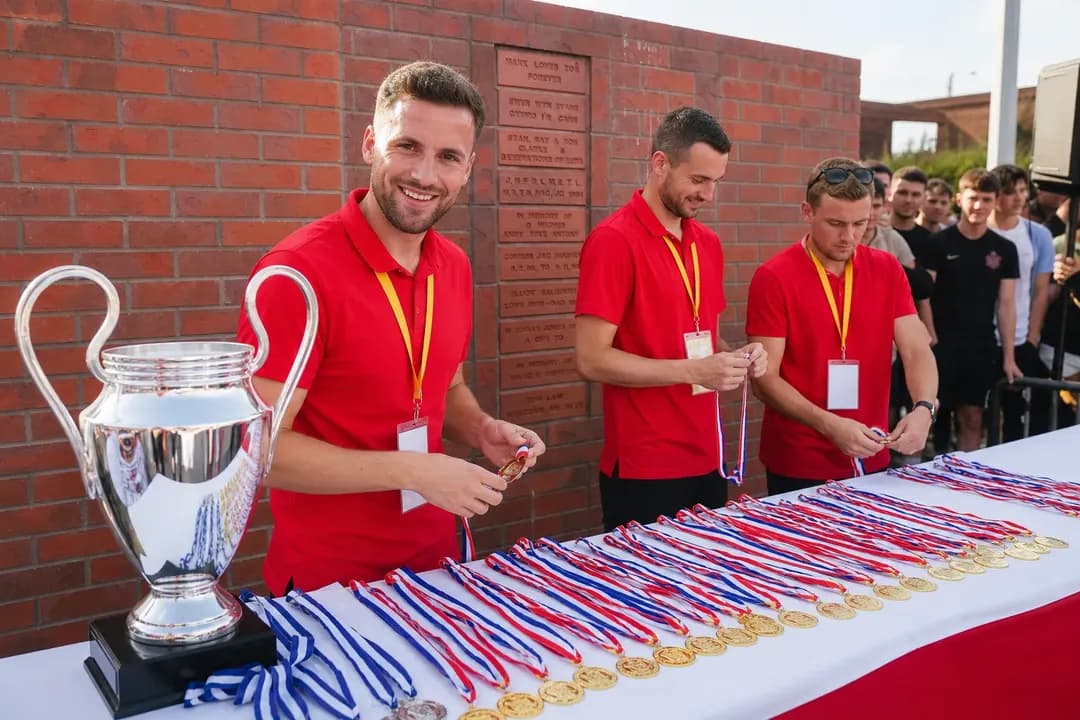 World Cup Trophy Ceremony Timing Medals and Postmatch Celebrations
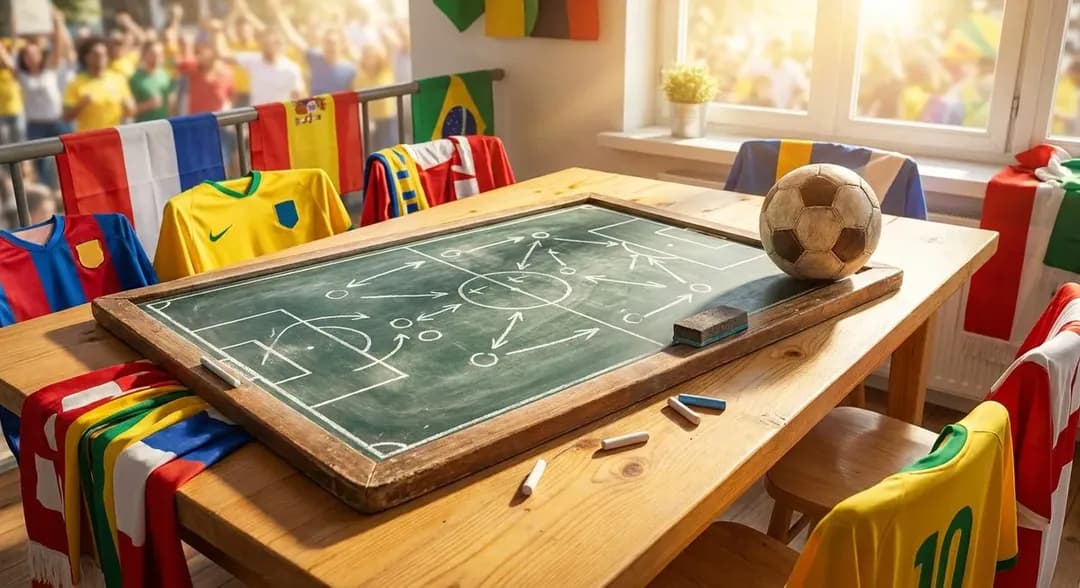 Olise and France's Attack: The Semifinal Tactical Question