 Haaland Has Seven Goals and Norway Runs Entirely Through Him
⚽️2026 FIFA WORLD CUP
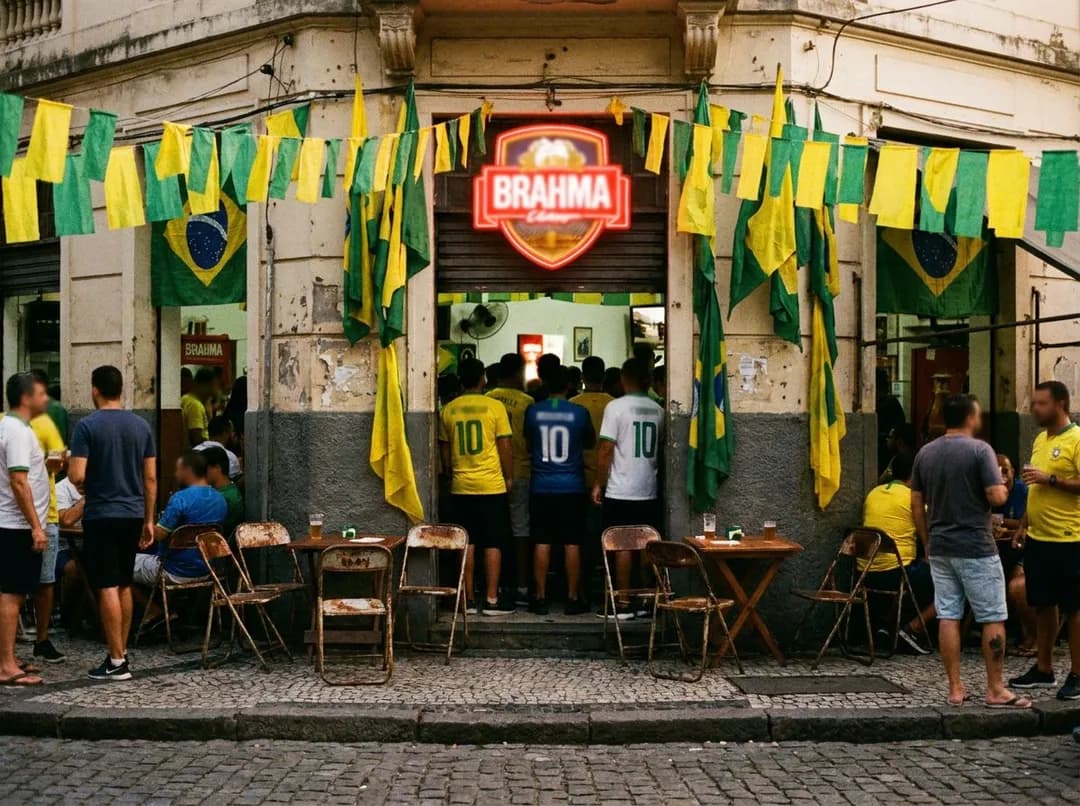
The East Williamsburg Boteco That Becomes Brazil's Living Room Every Match Day
A Brazilian bar on Knickerbocker Avenue draws the Seleção faithful with caipirinhas, feijoada, and a sound system loud enough to hear from the L train platform.
You walk into the narrow storefront on Knickerbocker and the first thing that hits you is the smell of dendê oil and garlic hitting a hot pan, followed immediately by the percussion of a samba drum loop competing with ESPN Brasil on three mounted screens. The second thing you notice is that you're the only person not wearing some variation of yellow and green. This is Boteco do Gol, and on match days it stops being a bar and becomes a consulate of nervous energy, where Brooklyn Brazilians gather to watch their national team with the kind of focus usually reserved for religious ceremonies.
The Corner Where Portuguese Drowns Out English
The bar occupies a former bodega space wedged between a tire shop and a shuttered laundromat, the kind of block where industrial Williamsburg bleeds into residential Bushwick without asking permission. Inside, the walls are papered with faded Pelé posters, a tattered Flamengo banner, and Polaroids of customers kissing the screen after famous goals. The bar top is scarred wood that's absorbed a decade of spilled Skol and cachaça, sticky in spots no matter how many times they wipe it down. During matches, the volume cranks high enough that the bass rattles the bottles behind the bar, and you can genuinely hear the roar from the sidewalk when someone scores. Regulars claim they've heard it from the elevated L train platform two blocks south, though that might be the caipirinhas talking.
What Happens Two Hours Before Kickoff
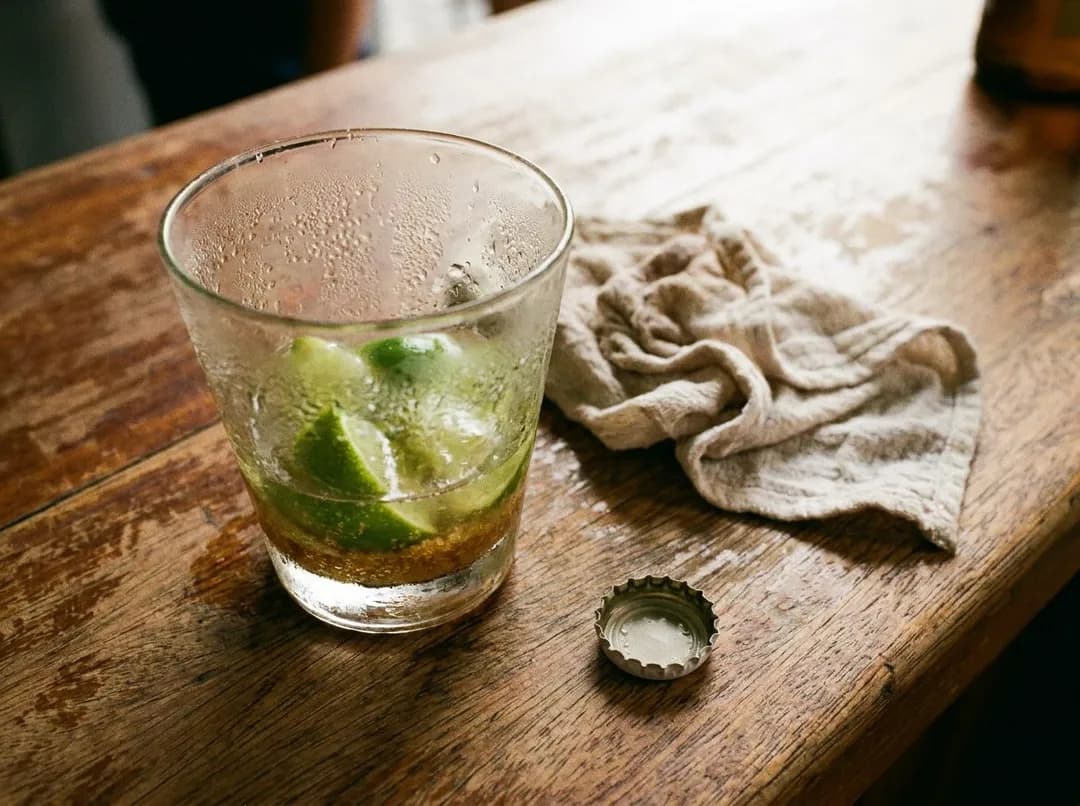
You want the real experience, you arrive early. Not fashionably late, not right as the anthems play, but a solid two hours before kickoff when the kitchen is still catching up with orders and the owner's wife is arguing with the supplier on a cell phone wedged between her shoulder and ear. This is when you can actually get a seat at one of the six small tables, when the bartender has time to muddle your lime properly instead of just shaking everything together in a plastic cup. The early crowd is different too—older guys in work boots who've taken the afternoon off, mothers with kids who'll be gone by halftime, the homesick graduate students from Pratt who come for the feijoada and stay for the belonging. They're setting up the emotional infrastructure of the room, the call-and-response patterns that'll kick in later when things get tense.
The Feijoada That Runs Out By Three
The kitchen is technically a hallway with a stove, but what comes out of it tastes like someone's grandmother is back there channeling decades of Saturday lunches. The feijoada appears in a clay pot, black beans and pork swimming in a broth that's been cooking since dawn, served with rice, collard greens, orange slices, and farofa that adds the exact texture contrast you need. They make one giant batch for match days and when it's gone, it's gone—usually by mid-afternoon if Brazil's playing a morning slot. The pastéis are fried to order, grease-heavy pockets of cheese or ground beef that burn your tongue if you're impatient. You'll see people ordering them in rounds of six, setting them in the middle of the table like communal currency. The smell of the fryer mixes with the dendê oil and creates this heavy, carb-loaded atmosphere that makes you understand why everyone's drinking beer instead of cocktails.
The Caipirinha Situation and What to Order Instead
Yes, they make caipirinhas, and yes, they're strong enough to make you forget you have to work tomorrow. But here's what the regulars know: the batida de coco is cheaper, sweeter, and doesn't require the bartender to stop watching the game to muddle fresh limes. It comes pre-mixed in a pitcher behind the bar, coconut milk and cachaça in proportions that taste like a beach vacation, served over ice in plastic cups that sweat immediately. The draft beer is Brahma, served cold enough to hurt your teeth, and it's what most people switch to after the first caipirinha because you can't sustain that sugar content for ninety minutes plus stoppage time. If you're not drinking, the guaraná Antarctica is the move—Brazilian soda that tastes like apple and bubble gum had a baby, sickeningly sweet but somehow perfect with fried food.
When the Whole Room Becomes One Organism
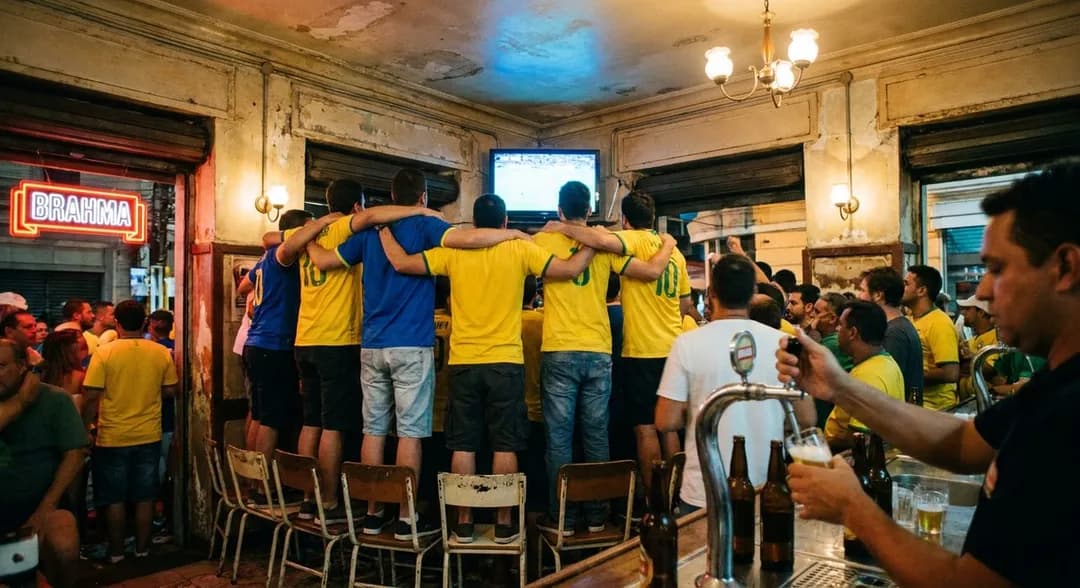
There's a moment in every important match when the bar transcends its physical limitations and becomes something else entirely. It usually happens after a near-miss or a controversial call, when everyone's standing now, chairs pushed back, and the collective inhale before a corner kick sounds like a room holding its breath underwater. You'll see grown men with their hands clasped in prayer position, women with their faces buried in their partners' shoulders, unable to watch. The call-and-response chants start organically, someone begins and the room picks it up, and suddenly you're part of a choir you didn't audition for. When Brazil scores, the eruption is physical—beer goes airborne, strangers are hugging, someone's always crying. The goal replay happens three times on three different screens at slightly different delays, so the room celebrates in waves, each screen triggering a new round of shouting.
The Regulars Who Keep the Rhythm
There's a core group who show up for every match regardless of opponent or time slot, the ones who have their unspoken assigned seats and their drinks poured before they ask. You'll recognize them by how they interact with the space—the guy who props the front door open with a cinder block when it gets too hot, the woman who adjusts the middle TV's angle without asking permission, the teenager who busses tables without being asked because his uncle owns the place. These are the people who maintain the bar's emotional temperature, who know when to start a chant or when to let the silence breathe after a bad call. They're the ones who stay after the final whistle to dissect every play, who turn the post-match analysis into its own event, nursing warm beers and cold fries while the screens switch to whatever game is next.
Practical Notes
The bar operates on match-day hours that shift depending on the World Cup schedule, so check their social media before you trek out. Getting there is straightforward—take the L train to Morgan Avenue and walk north on Knickerbocker, or the M train to Flushing Avenue and walk east. The area's got that transitional Brooklyn energy where you're never quite sure which neighborhood you're in, but you'll know you're close when you start seeing Brazilian flags in windows. No reservations, no table service, cash preferred though they'll take cards with a minimum. If Brazil's playing a major opponent, arrive at least ninety minutes early or accept that you'll be watching from the sidewalk through the open door. The crowd skews heavily Brazilian expat, Portuguese-dominant, and fiercely partisan, so maybe save your Argentina jersey for another day.
Tags: #2026FIFAWorldCup #BrazilianFood #EastWilliamsburg #BushwickBars #BrooklynEats #WorldCupNYC #BotecoLife #Feijoada #Caipirinha #BrazilianCulture #KnickerbockerAvenue #SoccerBars #NYCHiddenGems #DiasporaDining #WilliamsburgFood
Sources consulted: fifa.com · espn.com · timeout.com
Please drink responsibly. Must be of legal drinking age.
All trademarks are the property of their respective owners.
Ask Karpo for more information.
Keep reading
- Haaland Has Seven Goals and Norway Runs Entirely Through Him
 World Cup Trophy Ceremony Timing Medals and Postmatch Celebrations
 Olise and France's Attack: The Semifinal Tactical Question