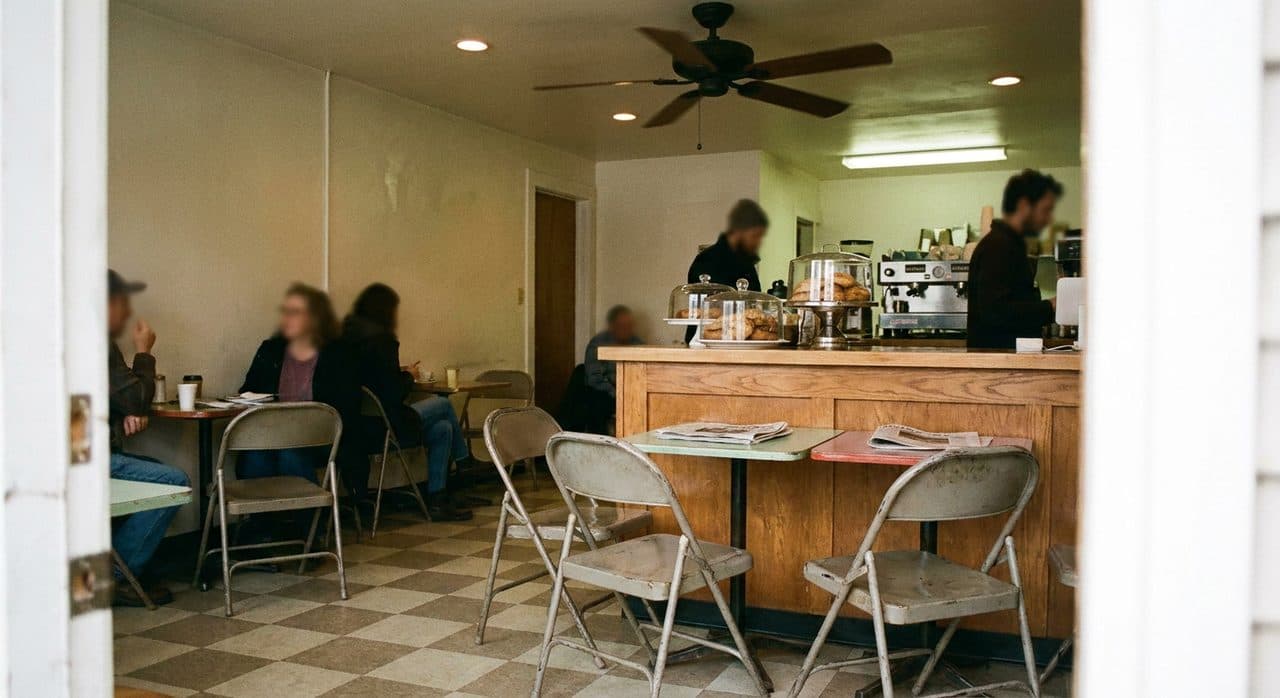
You walk up to the counter, order baleadas and a licuado, and when the receipt prints, there's something extra curling out below your total. Not a coupon or survey code—a full grid of World Cup qualifier dates, kickoff times, and matchups, printed in that faint thermal ink that'll fade by summer but matters right now. The woman at the register tears it off without ceremony, hands it over with your change, and you realize half the people at the tables around you are holding the same slip of paper, some already folded into wallet creases.
The Register as Town Crier
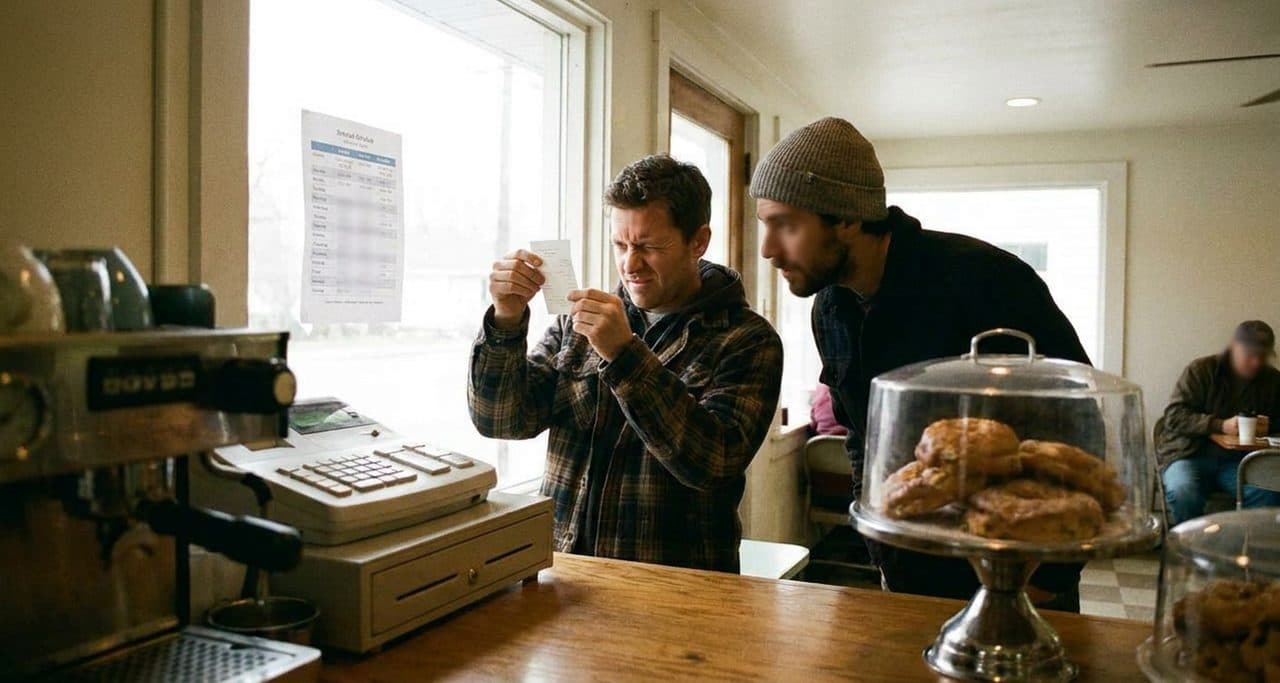
The cafe sits on a stretch of Gulfton where the signage shifts from English to Spanish mid-block, and the parking lot fills with work trucks around dawn. Inside, the thermal printer is louder than the radio some mornings, spitting out these hybrid receipts that double as fixture lists. No one explains the system because no one needs to—if you're here, you already know which matches matter. The printer runs through a roll every few days during qualifying season, and when it does, someone tapes a sample receipt to the front window so you can check the upcoming schedule before you even walk in. The tape yellows in the Houston sun, but the dates stay legible enough.
What the Paper Holds
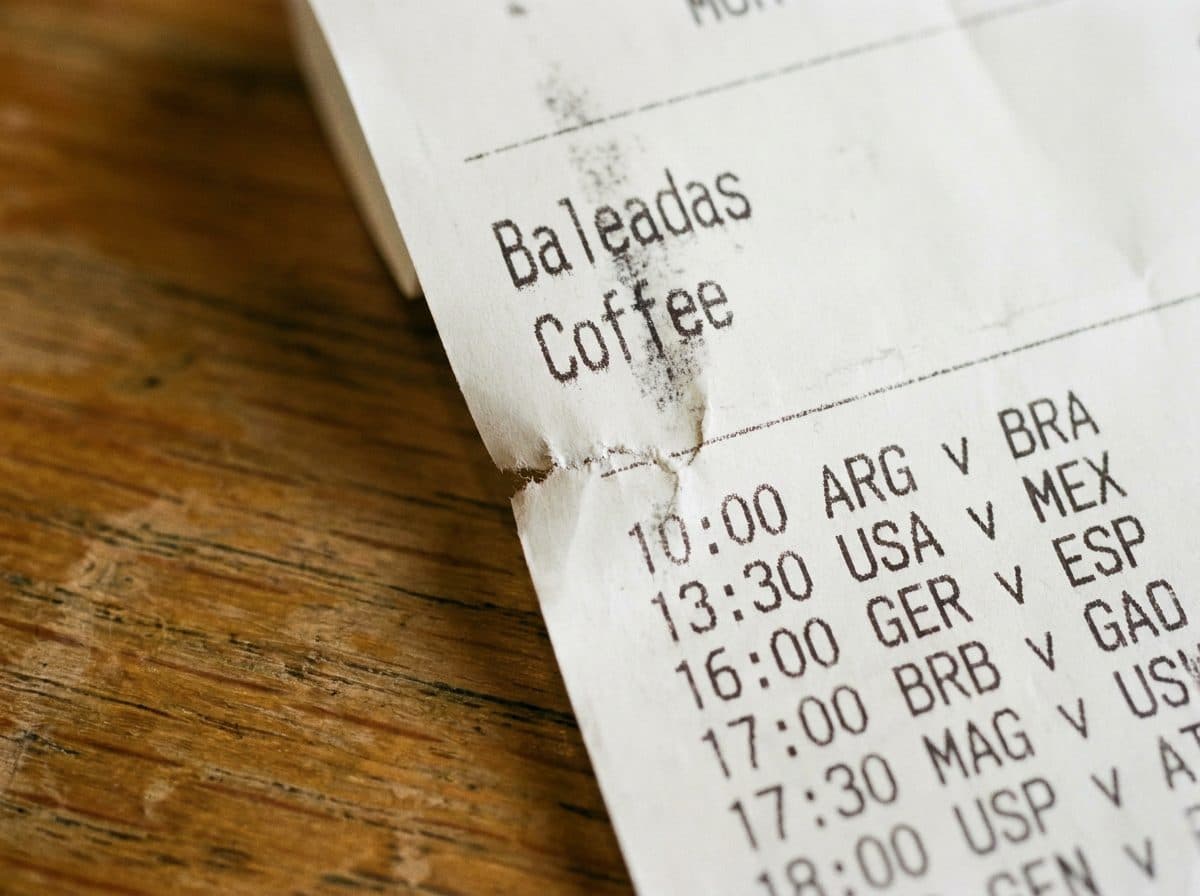
Your itemized order takes up maybe four lines. Below that, a horizontal rule, then the grid: dates, opponents, times converted to Central. The formatting is tight, almost stubborn in how much information it crams into two inches of paper. You see people squinting at it under the fluorescent lights, cross-referencing with their phones, debating whether the print is right about a kickoff time. Sometimes it is, sometimes the federation changes things, but the effort is what counts. The receipt becomes a talisman, a physical object that says someone here is tracking this, that the outcome matters enough to spend the ink.
The Breakfast Regulars Who Never Leave Before Kickoff
Come in on a match morning and the rhythm changes. Tables stay occupied longer, coffee gets refilled without asking, and the TV mounted in the corner—usually showing novelas or news—gets switched over. You'll see the same cluster of men in hi-vis vests who time their breakfast so the final bites of platanos fritos coincide with the national anthems. They don't cheer loudly, but they watch with the kind of focus that makes the rest of the room go quiet. The receipt in someone's hand becomes a shared reference point: someone holds it up, taps a date two weeks out, and a conversation starts about whether the squad will hold together, whether the striker's ankle will heal, whether the referee assignment is fair.
The Kitchen's Relationship with Match Days
The kitchen window opens directly into the dining area, no partition, so you can watch hands working masa and flipping tortillas while the game plays. On qualifier days, the cooking pace adjusts to the broadcast—faster during buildup, then a slight slowdown when play gets tense. You can smell the mantequilla hitting the plancha, the sweetness of platanos maduros caramelizing, the sharpness of curtido being spooned into containers. When something significant happens on screen—a goal, a controversial call—the sounds from the kitchen shift too, a clatter of agreement or frustration that doesn't need translation. The food tastes the same as any other day, but it arrives with a different energy, like the cook's attention is split between the stove and the scoreline.
Why the Receipt System Started
No one working here will give you a formal origin story, but the regulars have theories. Some say it started because people kept calling to ask about match times, tying up the line during rushes. Others say it was a customer's idea, someone who worked in print shops and knew how to program the receipt template. The most likely version is simpler: someone got tired of writing the schedule on a whiteboard that kept getting smudged, and the printer was already there, already running. What matters now is that it's become infrastructure, a piece of the cafe's identity that operates without fanfare. You'll overhear someone at the grocery store mention "the place that prints the schedule," and everyone knows which place.
The Fading Ink as Metaphor
Thermal paper doesn't last. Leave your receipt on the dashboard for a week and the text ghosts out, the dates becoming unreadable gray smudges. But that's almost the point—these aren't keepsakes, they're functional objects for right now, for the next match, for the narrow window when qualification is still uncertain and every result shifts the table. By the time the ink fades completely, the information is obsolete anyway, replaced by a new set of fixtures, a new receipt with new stakes. Some people tape theirs to the fridge, others tuck them into sun visors or work binders. You see them everywhere in Gulfton if you know to look: curled scraps of thermal paper marking time in a language that isn't quite English or Spanish but something in between, a pidgin of dates and abbreviations and hope.
Practical Notes
The cafe operates on an early schedule, opening well before most of the neighborhood stirs and running through late afternoon. You'll find it in the heart of Gulfton, where the streets are numbered and the strip centers all look similar until you learn the landmarks. No reservations, no table service—you order at the counter, pay, and take a number. The food is low-key cheap, a few bucks for baleadas, not much more for a full breakfast plate. Most people pay cash, though cards work fine. On match days, arrive early if you want a seat with a sightline to the TV. The receipts print automatically with every order, no need to ask. Parking is shared with neighboring businesses, tightest on weekend mornings. The nearest bus line runs along the main corridor a block over, frequent enough that you don't need to check the schedule.
Tags: #2026FIFAWorldCup #HoustonEats #Gulfton #HonduranFood #WorldCupQualifiers #ReceiptCulture #ImmigrantHouston #SoccerCulture #NeighborhoodSpots #DiasporaDining #ThermalPaperChronicles #ConcacafQualifiers #HoustonHiddenGems #BalaedasAndBeyond #QualifyingRoad
Sources consulted: fifa.com · espn.com · timeout.com
All trademarks are the property of their respective owners.