 Haaland Has Seven Goals and Norway Runs Entirely Through Him
⚽️2026 FIFA WORLD CUP
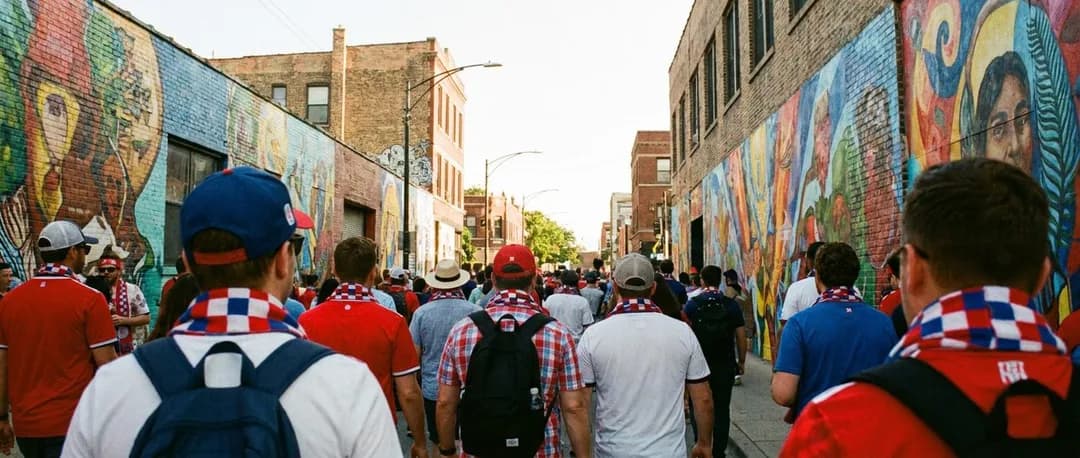
Croatia Supporters Route Through Chicago's Pilsen to Find Their World Cup Scene
Chicago has one of the largest Croatian-American communities in North America, spread across Pilsen's art district and the older Norridge corridor, and the World Cup summer is drawing both generations out, from newer transplants in Pilsen cafes to longtime supporters clubs that have been watching Croatian national team matches for decades.
The red-and-white checkerboard fills windows along 18th Street before dawn on match days, and by mid-morning, the cafes in Pilsen have already switched their usual playlists to Croatian folk anthems mixed with stadium chants. Chicago's Croatian-American community, one of the largest concentrations outside the Balkans, stretches across two distinct corridors—the younger, artsy Pilsen neighborhood and the traditional Norridge enclave northwest of the city—and when the World Cup arrives, both zones light up with a fervor that transforms ordinary June mornings into festivals of national pride. The scene reflects decades of immigration waves: postwar families who built social clubs in the suburbs now watch alongside recent arrivals who've claimed corner tables in Pilsen's revitalized cafe district, united by the Vatreni—the Blazers—and their improbable runs through international tournaments.
Pilsen's Cafe Strip Becomes Match-Day Theater
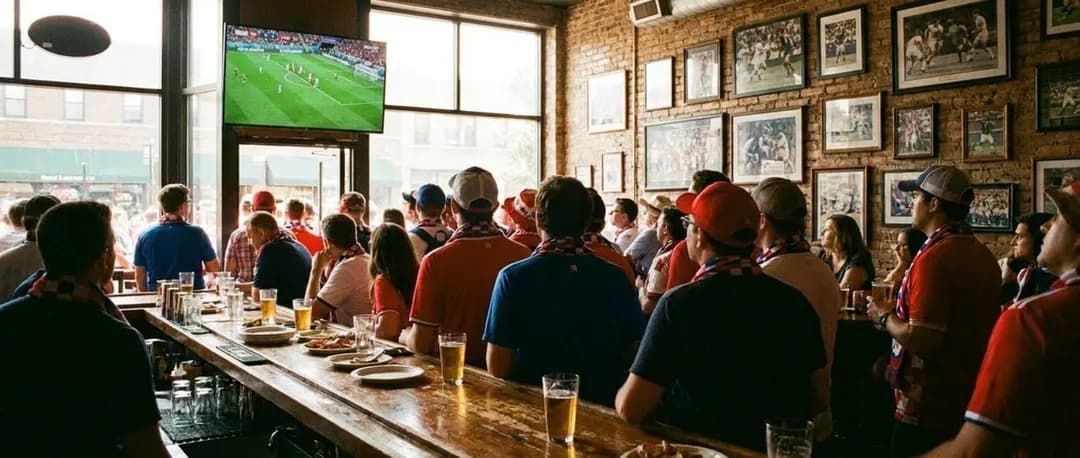
The intersection of 18th and Ashland transforms into an outdoor living room when Croatia plays. Café Jumping Bean, normally a quiet spot for local artists and students, opens its doors at 7 a.m. for European kickoffs, projector screen already glowing against the brick wall. Regulars arrive with their own coffee thermoses and pastries from nearby bakeries, staking out the mismatched chairs and worn couches that face the screen. The owner, a second-generation Croatian whose grandparents settled in Pilsen in the 1960s, keeps the volume high enough that passersby on the sidewalk pause to watch through the windows.
Three blocks east, Simone's Bar sets up additional screens in its beer garden, where the scent of ćevapi and grilled peppers drifts from a makeshift outdoor kitchen. Fans spill onto the patio by halftime, jerseys from every era of Croatian football visible in the crowd—Šuker's '98 kit, Modrić's recent designs, even a few Yugoslavia throwbacks worn by older supporters who remember when the national team didn't yet exist. The neighborhood's murals provide the backdrop: vibrant street art celebrating Mexican and Eastern European heritage side by side, a visual reminder of Pilsen's layered immigrant history.

Norridge's Croatian Cultural Center Holds the Old Guard
Twenty minutes northwest by car, the Croatian Cultural Center of Greater Chicago sits on a residential block in Norridge, its parking lot filling two hours before kickoff. This is where the community's roots run deepest—families who arrived in the 1950s and '60s, building a social infrastructure that has outlasted waves of demographic change. The center's main hall, with its parquet floors and stage draped in Croatian flags, seats 300, and for major matches, every chair fills.
The atmosphere here carries a different weight than Pilsen's cafe energy. Supporters stand for the national anthem, hands over hearts, many singing every word. The center's kitchen serves traditional fare—sarma, strukli, and trays of walnut potica—prepared by volunteers who've been cooking for these gatherings for thirty years. Between halves, older men gather in the side room where photographs line the walls: community soccer teams from the 1970s, Croatian independence celebrations from the '90s, previous World Cup viewing parties frozen in time.
The generational divide shows in subtle ways. Younger fans check their phones for real-time stats and social media reactions; their parents and grandparents watch in focused silence, occasionally erupting in Croatian exclamations that need no translation.
Transit Lines Connect the Two Scenes
The Pink Line runs directly through Pilsen, with the 18th Street stop depositing arriving fans within two blocks of the main cafe corridor. On match mornings, the train cars heading west from the Loop fill with supporters wearing national colors, some carrying folded flags, others with face paint already applied. The ride takes fifteen minutes from downtown, and the platform itself becomes a gathering point—strangers compare jersey vintages and debate lineup choices in a mix of English and Croatian.
Reaching Norridge requires a different approach. Most supporters drive, though the 85 North bus from Jefferson Park provides a public transit option for those willing to navigate the transfer. The parking situation around the Cultural Center becomes tight an hour before kickoff, with overflow vehicles lining the residential streets. Some families coordinate carpools from Pilsen, bridging the geographic gap between the two community hubs.
For fans moving between neighborhoods throughout the day—watching an early match in Pilsen before heading to Norridge for an evening gathering—rideshare services see heavy traffic along the corridor. The twenty-minute drive traces the evolution of Chicago's Croatian presence, from the gentrifying arts district to the stable suburban enclave.
Food Traditions Anchor the Viewing Experience
The matchday menu matters as much as the screen setup. In Pilsen, newer restaurants like Café Mustache incorporate Croatian pastries alongside their regular offerings during tournament season—strukli filled with cheese, honey-drizzled fritule, and strong Turkish coffee served in small cups. The owners, many of whom arrived in Chicago within the last decade, bring contemporary Zagreb cafe culture to the neighborhood, creating spaces that feel equally comfortable for watching football and discussing art exhibitions.
Norridge's food scene runs deeper and more traditional. The Croatian Cultural Center's kitchen operates like a family gathering, with recipes passed down through generations. Supporters arrive early not just for good seats but for the sarma—cabbage rolls stuffed with rice and meat, simmered in tomato sauce—that disappears by halftime. The center's bakery counter sells loaves of pogača, a savory bread studded with bits of bacon, alongside sweet kolači cookies arranged in decorative patterns.
Between the neighborhoods, Europa Food Market on Lawrence Avenue stocks everything needed for home viewing parties: Karlovačko beer, ajvar spread, and Croatian chocolates. The store sees a rush in the days before major matches, families stocking up for gatherings that will stretch from breakfast through evening.
Post-Match Rhythms Shift with Results
Victory sends both neighborhoods into the streets. In Pilsen, car horns echo off the brick buildings as drivers cruise 18th Street with flags streaming from windows, the celebration spilling into impromptu gatherings at corner bars. The scene extends past midnight, merging with the neighborhood's existing nightlife—Croatian fans mingling with the broader Pilsen community in a shared moment of neighborhood energy.
Norridge's celebrations take a more contained form. Supporters linger in the Cultural Center's parking lot, discussing the match in detail, making plans to reconvene for the next game. Some families head to nearby restaurants, extending the gathering over dinner, while others drive back toward the city, flags still flying.
Losses bring quieter dispersal. Pilsen's cafes empty quickly, supporters drifting back to apartments or heading to work if the match fell on a weekday morning. The Cultural Center sees its older members staying longer, processing the defeat over coffee and conversation, the weight of investment in a small nation's football fortunes evident in their measured discussions.
Practical Notes for Match-Day Navigation
Transit timing: Pink Line trains run every 10 minutes during morning hours; allow 30 minutes total from downtown Loop to Pilsen cafes. Norridge requires driving or the 85 bus from Jefferson Park (30-40 minutes).
Arrival strategy: Pilsen cafes reach capacity 45 minutes before European kickoff times (typically 8-9 a.m. Central). Norridge Cultural Center opens doors 90 minutes early; parking fills by one hour before kickoff.
Weather considerations: June matches mean Chicago heat; Pilsen's outdoor beer gardens offer shade structures, while Norridge's air-conditioned hall provides relief. Afternoon matches can see temperatures reaching the upper 80s.
Evening viewing: For matches with later kickoffs, Simone's Bar in Pilsen and the Cultural Center both stay open through evening, with full food service continuing through final whistle.
Tags: #CroatianCommunity #ChicagoNeighborhoods #PilsenChicago #WorldCupViewing #CroatianAmerican #ChicagoSoccer #NorridgeIL #18thStreet #ImmigrantCommunities #ChicagoTransit #NeighborhoodCulture #ChicagoCulture #SoccerCulture #ChicagoFood
Sources consulted: fifa.com (https://www.fifa.com) · choosechicago.com (https://www.choosechicago.com) · timeout.com/chicago (https://www.timeout.com/chicago)
All trademarks are the property of their respective owners.
Ask Karpo first
Wondering where Chicago's Croatian fan community is gathering to watch World Cup matches this summer?
Ask Karpo for the latest on Pilsen viewing spots, Croatian supporters club events, and the neighborhood route connecting both sides of Chicago's Croatia fan base.
Ask Karpo for more information.
Keep reading
- Haaland Has Seven Goals and Norway Runs Entirely Through Him
 World Cup Trophy Ceremony Timing Medals and Postmatch Celebrations
 Olise and France's Attack: The Semifinal Tactical Question