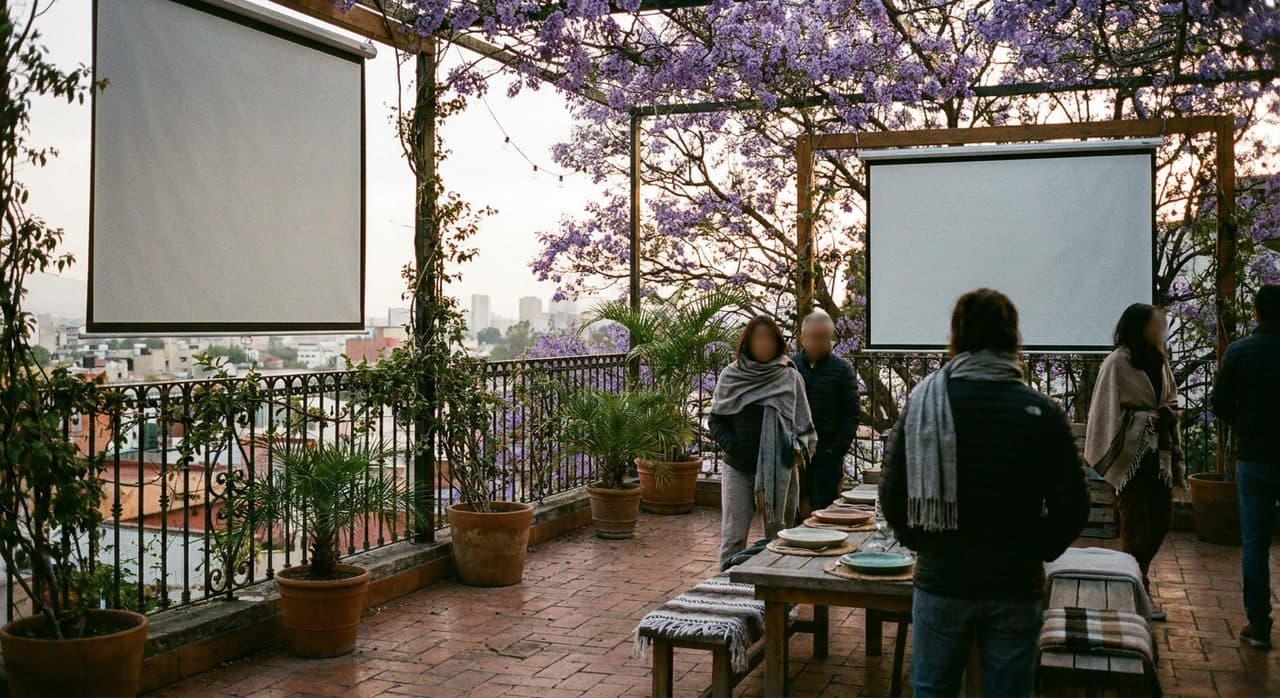
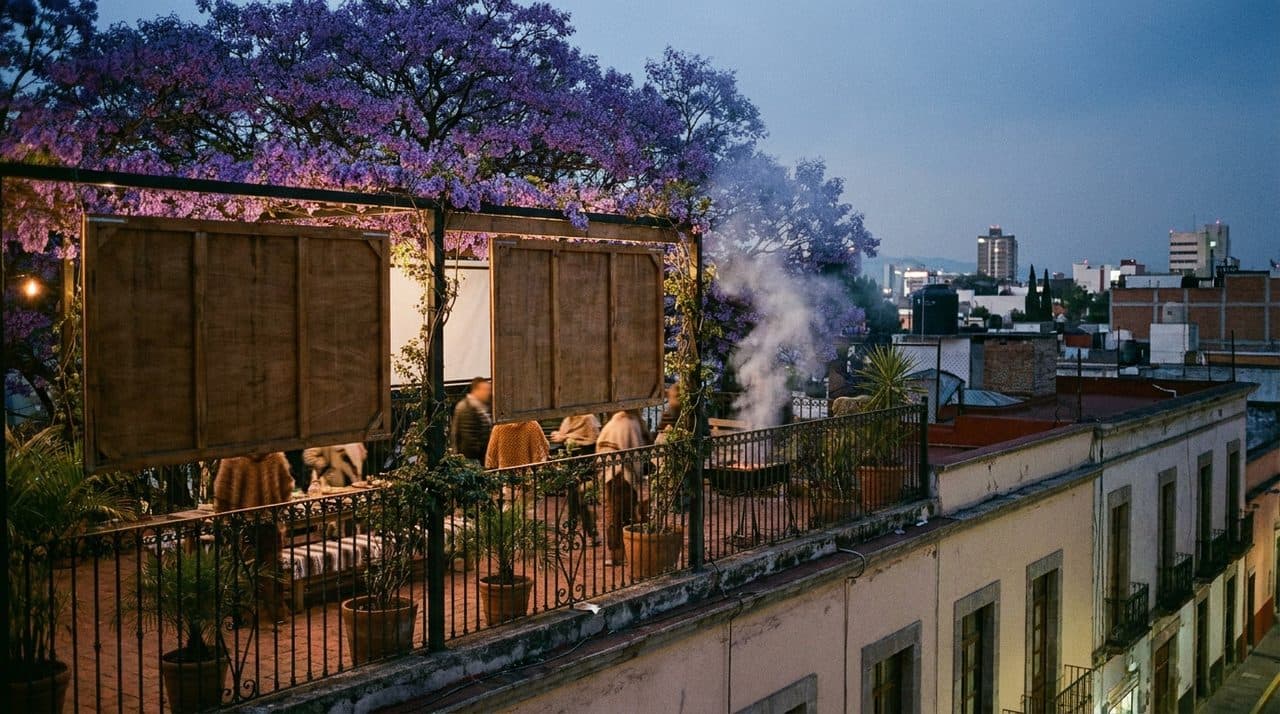
You walk up four flights of narrow stairs, push through a door that's half-open anyway, and step onto a rooftop where two crowds have divided themselves without anyone drawing a line. Left side: basketball jerseys and craft beer. Right side: soccer scarves and mezcal. Both sides watching different games on different screens, both erupting at different moments, and somehow the chaos works. This is Condesa during tournament season, where the jacaranda petals stick to wet tables and nobody minds sharing space with fans of a completely different sport.
The Geography of Fandom After Sunset
The terrace runs long and narrow, squeezed between neighboring buildings that lean close enough to hear their conversations. String lights crisscross overhead, tangled with branches from trees in adjacent courtyards. The basketball screen anchors the western end, mounted on a brick wall that still holds warmth from the afternoon sun. The soccer screen faces east, propped on a scaffold setup that looks temporary but has been there for months. Between them, a stretch of mismatched tables where allegiances blur. You sit in the middle and swivel your head like you're watching tennis, catching highlights from both games, reading the room by which side groans louder. The metal chairs scrape against uneven tile when someone jumps up to celebrate, and the sound becomes its own rhythm as the night stretches on.
When the WNBA Playoffs Meet World Cup Qualifying
The overlap wasn't planned, but it's become the terrace's accidental identity. Basketball fans started claiming the west side during playoff season, drawn by the projection quality and the fact that the bar stocks proper ice for bourbon. Soccer fans have always owned the east, especially when Mexico plays or when diaspora communities show up in numbers for their national teams. Now both tournaments run parallel, and the rooftop has stopped trying to choose. You watch a point guard drive the lane while someone behind you shouts about an offside call. The bartender toggles audio between screens based on game intensity, a subjective call that sometimes sparks friendly arguments. When both games hit critical moments simultaneously, they mute everything and let the crowds provide the soundtrack.
What the Kitchen Sends Up the Back Stairs
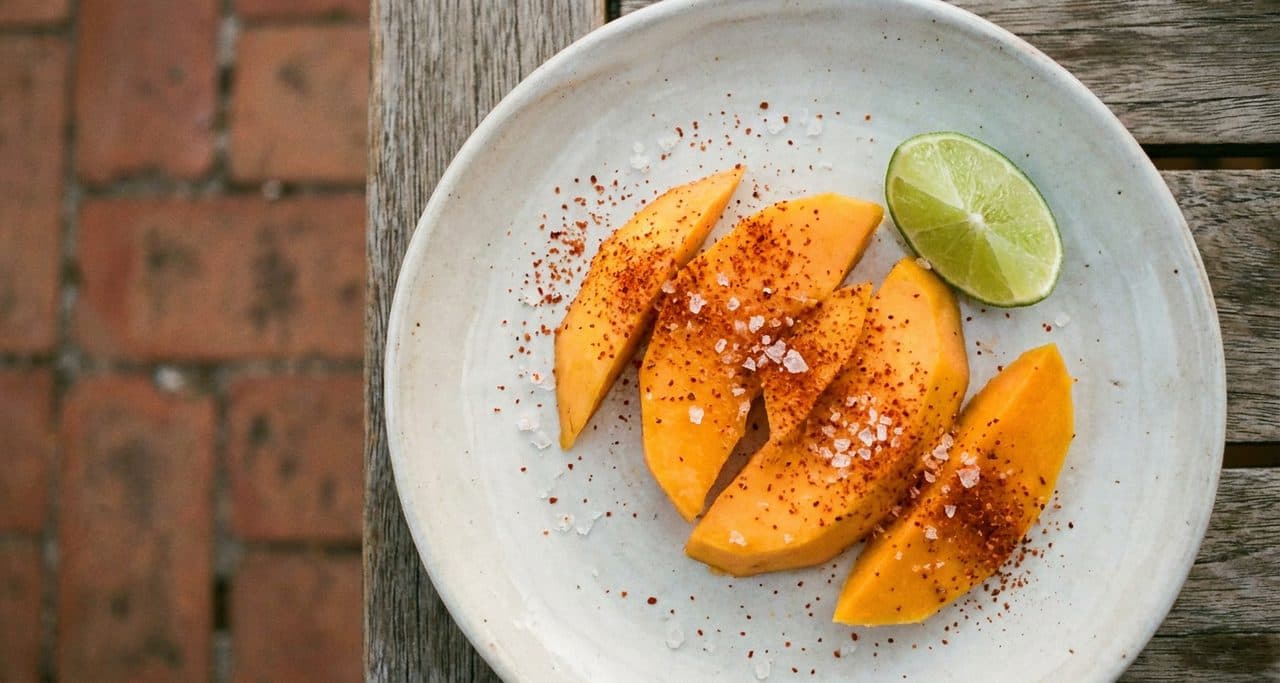
Food arrives on trays carried by a teenager who navigates the crowd like he's done this a thousand times, never spilling. The kitchen operates one floor down, and you smell the chicharrón prensado before you see it—pork fat rendering with salsa verde, the smoke drifting up through a gap in the floorboards. Tlacoyos come stuffed with requesón and beans, griddle-marked and still too hot to hold comfortably. The menu doesn't change for the tournaments; this isn't a sports bar trying to theme itself. It's a neighborhood spot that happens to have screens, and the food reflects that. Quesadillas with huitlacoche and epazote. Sopes topped with shredded chicken and crema. Everything arrives on paper plates with lime wedges and radish slices, and you eat with one hand while holding your drink with the other. The teenager returns every few minutes to collect empties, moving through the space with the efficiency of someone who knows exactly when a table will be ready to order another round.
The Regulars Who Translate Between Sports
Certain faces appear regardless of which game matters more that night. There's a woman in her fifties who wears a Sparks jersey over a Mexico scarf, seated permanently at a corner table with sight lines to both screens. A group of guys in their thirties who argue basketball strategy in Spanish and soccer tactics in English, code-switching mid-sentence without noticing. They're the bridge crowd, the ones who explain a pick-and-roll to the soccer purists and break down a counter-attack for the basketball converts. You overhear these conversations while waiting for the bathroom or standing at the bar, and they're better than any commentary track. Someone draws plays on napkins with a pen borrowed from the bartender. Someone else pulls up stats on a phone with a cracked screen, holding it at an angle to avoid the glare from the string lights. These aren't casual fans; they're people who've thought deeply about movement and space in both sports, who see the patterns that connect them.
How the Terrace Shifts When a Game Goes Tight
The energy changes when a match or game enters its final minutes with the outcome uncertain. The west side goes quieter during free throws, a collective held breath that breaks into either celebration or groans. The east side gets louder as the clock winds down, a rising chant that pulls in even the basketball fans who glance over to see what they're missing. The bartender stops pouring and watches. The teenager with the trays stands still against the wall. For those few minutes, the rooftop becomes a single organism, everyone aware of everyone else's tension. Then the moment breaks—a basket, a goal, a whistle—and the terrace splits again into its two camps, each processing their own drama. The relief or disappointment spreads through the crowd in waves, and within seconds the noise level resets, conversations resume, and someone flags down the teenager for another round.
The Light That Comes Through When Jacarandas Drop
Late in the evening, after the first games finish and before the late matches start, the terrace enters a quiet phase. The jacaranda trees in the neighboring courtyards shed purple petals that drift onto tables and into drinks. The string lights seem brighter as the sky deepens to full dark. You can see into apartments across the way—people cooking dinner, kids doing homework, someone practicing guitar. The terrace crowd thins but doesn't empty. People stay for the atmosphere as much as the games, for the feeling of being part of something that only exists in this specific configuration of space and timing. The bartender wipes down the counter and restocks the coolers. The teenager sweeps petals off the main walkway. The screens glow in their respective corners, waiting for the next tip-off or kickoff, and you realize this setup will only last as long as the tournaments overlap—a temporary convergence that feels permanent while you're in it.
Practical Notes
The rooftop operates most evenings, with extended hours when major games are scheduled. Getting there involves finding the right unmarked door in a Condesa side street and climbing the stairs until you run out of floors. No reservations, no cover charge, just show up and find a spot. The crowd skews local with a mix of expats who've been in the neighborhood long enough to know where the good terraces hide. Transit-wise, you're walking distance from Parque México if you're already in the area. Bring cash for drinks and food—the bar doesn't always process cards reliably. If you're coming for a specific game, arrive at least thirty minutes early to claim a seat with a decent view. The terrace fills fast when Mexico plays or when playoff games matter. Dress for cooler evening temperatures and possible drizzle; the covering is partial at best.
Tags: #CondesaNightlife #MexicoCityRooftops #WorldCup2026 #WNBAPlayoffs #BasketballAndSoccer #CDMXHiddenGems #NeighborhoodBars #JacarandaSeason #SportsBarCulture #TournamentSeason #LocalMexicoCity #CondesaEats #DualScreenLife #RooftopVibes #MexicoCityInsider
Sources consulted: fifa.com · espn.com · timeout.com
Please drink responsibly. Must be of legal drinking age.
All trademarks are the property of their respective owners.