 Haaland Has Seven Goals and Norway Runs Entirely Through Him
⚽️2026 FIFA WORLD CUP
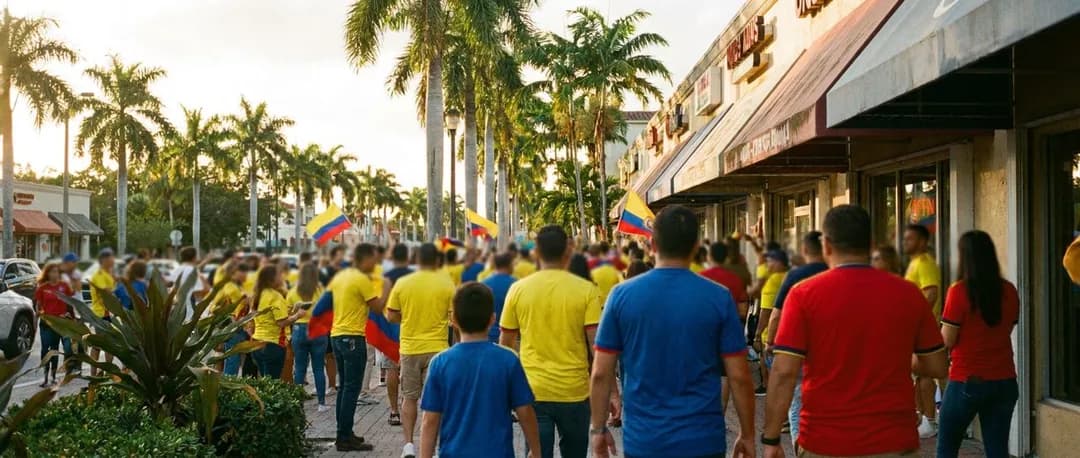
Colombia Training Sessions Pull Miami's Cafecito Circuit Into World Cup Mode
Miami's Colombian community, concentrated in Doral and stretching into the Brickell and Kendall corridors, is layering World Cup energy onto an already active fan scene as Colombia's national team training sessions bring fresh momentum to neighborhood cafes, arepas counters, and the community viewing setups that define the city's cafecito circuit.
The Colombian tricolor appears on storefronts along Northwest 36th Street before dawn, and by mid-morning, the cafecito counters in Doral are running triple-strength shots as fans gather around phones streaming training footage from Hard Rock Stadium. Miami's Colombian community, which has transformed pockets of Doral into one of the largest Colombian enclaves outside Bogotá, is experiencing a particular kind of electricity this season—the kind that arrives when a national team brings World Cup preparation to the neighborhood's doorstep. Training sessions scheduled at nearby facilities have activated the city's cafecito circuit, that informal network of ventanitas, bakeries, and corner cafes where community news travels faster than any push notification, and where match analysis begins hours before kickoff and extends well past midnight.
Doral's Ventanitas Become Unofficial Press Boxes
The ventanitas—those walk-up coffee windows that define Miami's street-level cafe culture—transform into impromptu broadcast centers when Colombia trains locally. At Bread & Butter Bakery on 107th Avenue, the morning crowd swells from a dozen regulars to forty or fifty fans by 8 a.m., phones propped against napkin dispensers, replaying clips of midfield drills and tactical formations. The owner has stopped trying to manage the sidewalk overflow; instead, he's added a second espresso machine. Conversations ricochet between Spanish and English, analyzing player form with the same intensity usually reserved for family gossip. A retired engineer from Medellín sketches formations on bakery tissue paper. A server from Brickell, still in her restaurant blacks from the overnight shift, debates striker rotations with a Uber driver between fares. The ventanita becomes a place where professional analysts and passionate amateurs occupy the same square footage, united by the understanding that training footage deserves the same scrutiny as match highlights.
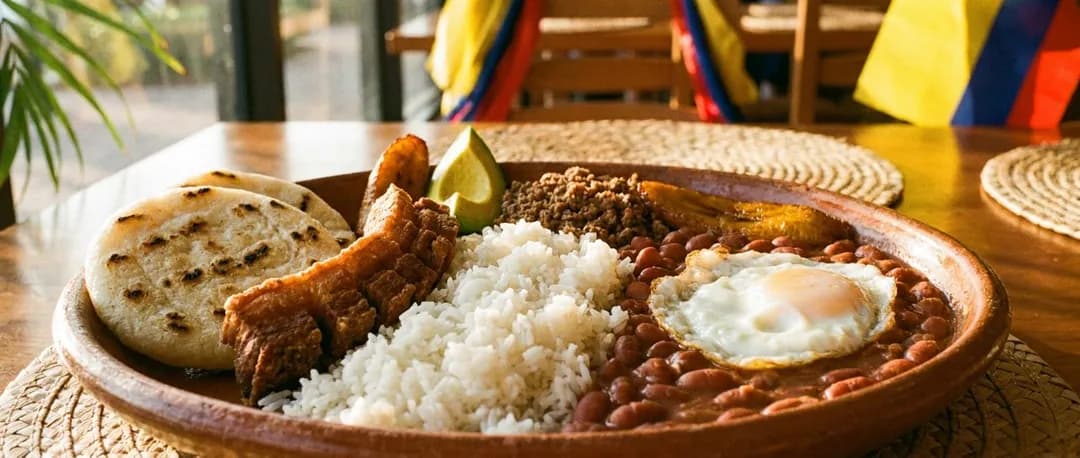
Little Havana's Crossover Energy Shifts South
While Doral anchors the Colombian fan base, Little Havana's cafes are experiencing an unusual crossover moment. Versailles Restaurant on Calle Ocho, traditionally the heartbeat of Cuban exile culture, now sees Colombian jerseys mixed among the guayaberas at lunch service. The restaurant's management has learned to navigate the friendly territorial dynamics—Colombian flags claim the eastern dining room on training days, while the Cuban regulars maintain their western corner. But the boundaries blur at the ventanita, where both communities queue together for cortaditos and croquetas, trading good-natured trash talk about upcoming qualifiers. At Ball & Chain, the live music venue that usually leans into Cuban son and salsa, Colombian vallenato sets have started appearing on the weekend schedule, a programming choice that reflects the neighborhood's evolving demographic reality. The cultural cross-pollination creates a particular Miami texture: a place where national identities remain fierce but neighborhood proximity forces a kind of convivial coexistence.
Kendall's Arepas Counters Clock Post-Training Rushes
South along the Kendall corridor, the arepas counters track training schedules with restaurant-industry precision. Arepa Burger on Southwest 117th Avenue sees its biggest weekday crowds in the two-hour window after morning training sessions wrap. Fans stream in wearing replica jerseys, faces still flushed from shouting at screens, ordering arepas de queso and patacones while dissecting what they've just watched. The kitchen has adjusted prep schedules accordingly—extra cheese grated by 11 a.m., double batches of hogao sauce, plantains sliced in advance. The owner, who immigrated from Cali fifteen years ago, notes that World Cup cycles always boost business, but having the team train locally creates a different rhythm. It's not just match days anymore; it's training days, travel days, rest days—a sustained energy that keeps the dining room full and the conversations animated. Fans linger over second and third cups of tinto, the strong Colombian coffee that fuels these extended tactical debates.
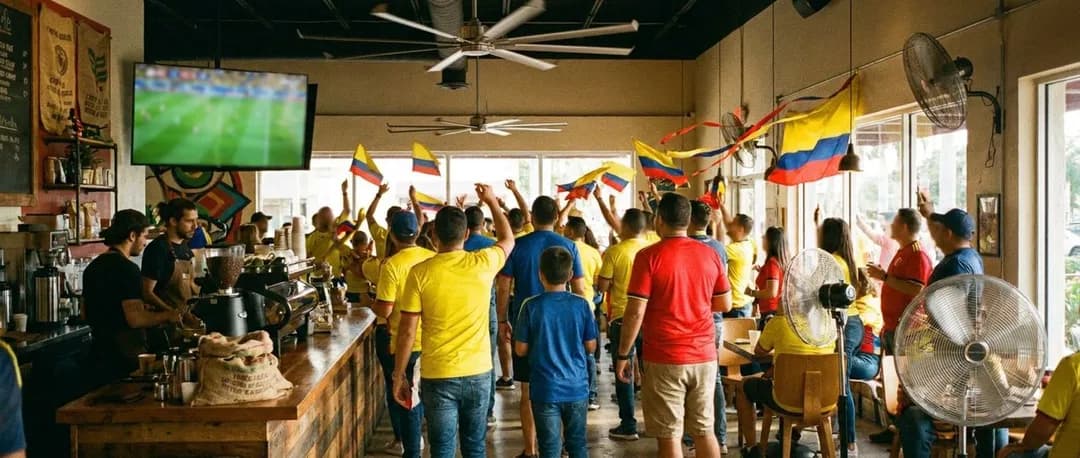
Brickell's High-Rise Viewing Parties Test Condo Rules
In Brickell's glass towers, Colombia's training presence has sparked creative interpretations of condo association rules. Residents are organizing "training watch" gatherings in amenity lounges, technically within the buildings' event policies but testing noise ordinances when thirty fans erupt over a particularly sharp passing drill. One building on Brickell Avenue has seen its pool deck become an unofficial fan zone, residents dragging tablets poolside to stream sessions while their kids splash nearby. The condo board sent a memo about "appropriate use of common areas," which residents have largely ignored. These high-rise gatherings reveal a different dimension of Miami's Colombian community—young professionals, many in finance and tech, who've traded Bogotá's mountains for Biscayne Bay views but maintain fierce national team loyalty. The viewing parties blend Colombian snacks with Miami's cosmopolitan food culture: arepas alongside poke bowls, Club Colombia beer next to craft IPAs from Wynwood breweries.
Transit Patterns Reveal the Fan Geography
The Metrorail and bus routes connecting Doral, Little Havana, and Kendall show visible fan traffic on training days. The Orange Line sees clusters of Colombian jerseys heading north toward the airport and stadium area during morning hours, fans hoping to catch glimpses of players arriving at facilities. Bus Route 36, which runs along Flagler Street through Little Havana into downtown, becomes a mobile fan club, passengers comparing photos and videos captured outside training grounds. Some fans make the drive to Hard Rock Stadium in Hialeah, parking in distant lots just to watch team buses arrive, a pilgrimage that speaks to the intensity of this moment. The transit patterns map Miami's Colombian geography in real time—Doral as the residential anchor, Little Havana as the cultural crossroads, Kendall as the commercial spine, and Brickell as the professional hub, all connected by fans in motion.
Practical Notes
Transit considerations: Metrorail Orange Line connects key neighborhoods; allow 45-60 minutes between Dadeland South and Doral stations. Rideshare costs surge during training hours and match days. Street parking in Doral fills quickly near popular cafes; side streets west of 107th Avenue offer better options.
Timing: Cafes and ventanitas see peak crowds 7-9 a.m. on training days and two hours post-session. Little Havana's Calle Ocho is most walkable before 11 a.m. and after 7 p.m., avoiding midday heat and traffic.
Weather awareness: Summer training cycles mean afternoon thunderstorms; outdoor viewing setups often shift indoors by 3 p.m. Cafes with covered ventanitas (Bread & Butter, La Carreta) maintain service through weather.
Evening rhythm: Post-training analysis extends into dinner service; arepas counters stay busy until 10 p.m., while Brickell lounges host informal gatherings past midnight on weekends.
Tags: #MiamiColombian #DoralFL #LittleHavana #CafecitoCircuit #ColombiaFutbol #WorldCupMiami #MiamiFood #ArepasMiami #BrickellMiami #KendallFL #MiamiCulture #SouthFloridaSoccer #TricolorMiami #MiamiNeighborhoods
Sources consulted: fifa.com (https://www.fifa.com) · miamiandbeaches.com (https://www.miamiandbeaches.com) · timeout.com/miami (https://www.timeout.com/miami)
All trademarks are the property of their respective owners.
Ask Karpo first
Wondering where Miami's Colombian community is gathering to follow the national team's World Cup preparation and match days this summer?
Ask Karpo for the latest on Doral and Little Havana viewing spots, Colombian community events, and the neighborhood stops defining Miami's Colombia fan scene.
Ask Karpo for more information.
Keep reading
- Haaland Has Seven Goals and Norway Runs Entirely Through Him
 World Cup Trophy Ceremony Timing Medals and Postmatch Celebrations
 Olise and France's Attack: The Semifinal Tactical Question