 Haaland Has Seven Goals and Norway Runs Entirely Through Him
⚽️2026 FIFA WORLD CUP
Cameroon's Indomitable Lions Draw DC Fans Into a World Cup Summer Routine
Washington DC's Petworth and Takoma Park neighborhoods have seen significant Central African community growth over the past decade, and Cameroonian supporters are among those building World Cup viewing traditions that reflect the area's layered community identity, from match-day cafe gatherings to informal street celebrations after goals.
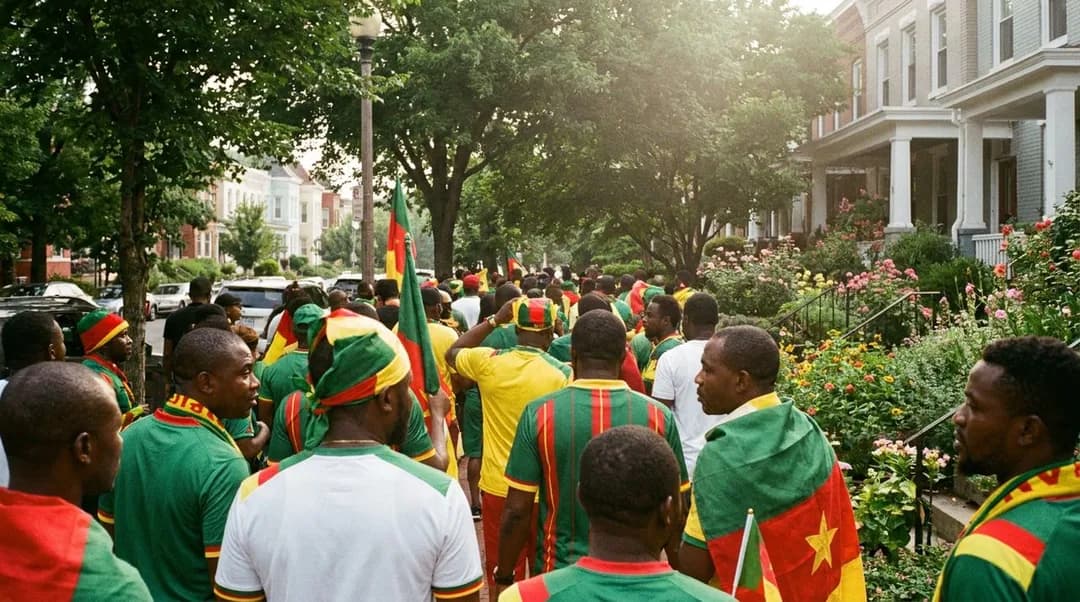
The pre-dawn light filters through the windows of Chez Afrik Café on Georgia Avenue as the first supporters arrive, claiming tables near the mounted television screens. By 8 a.m., when Cameroon takes the pitch halfway around the world, the café transforms into something between a living room and a stadium, where regulars order plantain omelets and café au lait while settling in for ninety minutes that will dominate conversation for days. Washington's Petworth and Takoma Park neighborhoods have become unofficial home territory for Cameroon's World Cup campaign, where the green, red, and yellow tricolor appears in storefront windows, on car mirrors, and draped across shoulders of fans moving between viewing parties that stretch from early morning through afternoon replays.
Georgia Avenue Becomes Match-Day Boulevard
The commercial spine running through Petworth fills with a particular energy on match days, as Cameroonian supporters claim their spots hours before kickoff. Chez Afrik anchors the northern end of the viewing circuit, but Le Baobab Restaurant three blocks south draws its own crowd, families who arrive with children in miniature national team jerseys. The restaurants coordinate informally—owners know each other, share suppliers, sometimes text updates about crowd size—creating a network of venues where fans can move between locations if one fills beyond capacity.
Outside these anchors, smaller cafes and carryouts tune their screens to African sports channels, and the neighborhood's texture shifts. Sidewalk traffic thickens. Fans in Indomitable Lions gear pause mid-errand to check scores on phones, calling updates to friends across the street. The barbershop on Quincy Street Northwest props its door open, sound from its television spilling onto the sidewalk. Regulars getting shape-ups find their appointments extended as barbers pause, clippers hovering, when Cameroon presses toward goal. The rhythm of the neighborhood bends around the match schedule, business hours becoming fluid, the usual morning routine suspended.
Takoma Park's Quieter Watch Parties Build Community
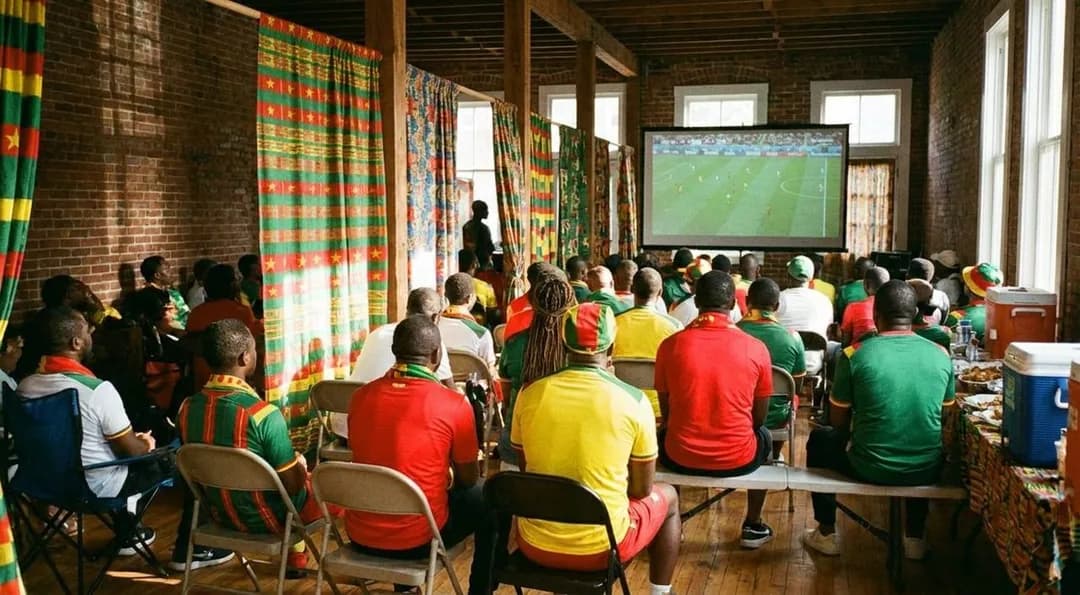
East toward Takoma Park, the viewing culture takes on different character. Here, apartment buildings with significant Central African populations host smaller gatherings, living rooms packed with neighbors who've brought dishes to share. The community center on Philadelphia Avenue opens its doors for major matches, projecting games on a pull-down screen while volunteers sell beef brochettes and puff-puff from folding tables. These gatherings skew toward families—young children color in team logos on printouts while parents watch, older kids dart between rooms, their excitement building with each Cameroonian attack.
The neighborhood's residential character means celebrations stay more contained than along Georgia Avenue's commercial strip, but the energy runs just as deep. When Cameroon scores, car horns sound in parking lots. Apartment windows fly open. Voices carry across courtyards in French, English, and Ewondo, neighbors leaning out to share the moment with whoever's listening. The local library reports increased requests for books about Cameroonian history and culture during tournament years, librarians noting how World Cup runs spark broader interest in the country's regions, languages, and traditions among both immigrant families and longer-term residents curious about their neighbors' passion.
Cafes Stock Up on Ndolé and Tournament Provisions
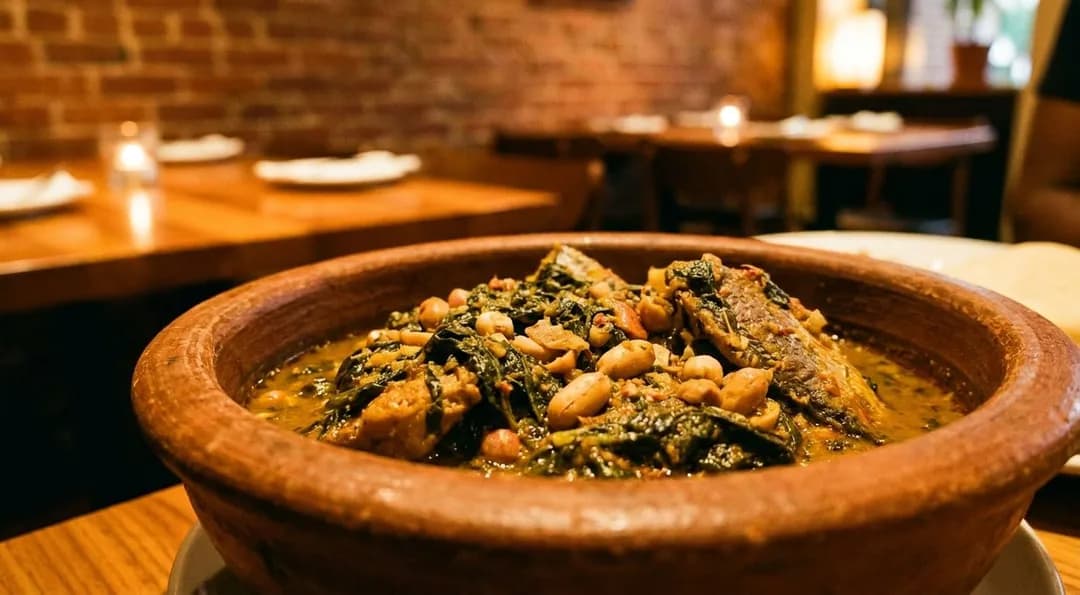
Restaurant owners in both neighborhoods adjust their operations around the tournament calendar. Chez Afrik's kitchen starts prep work at 5 a.m. on match days, knowing the crowd will want more than coffee. Ndolé—the bitter leaf stew considered Cameroon's national dish—requires hours of preparation, and the restaurant triples its usual batch. Plantains arrive by the crate. The bakery delivers extra baguettes for sandwiches. By kickoff, the kitchen runs like a well-drilled team, pushing out orders while staff members steal glances at screens between tickets.
Le Baobab switches to a modified menu for tournament days, focusing on dishes that hold well and can be served quickly. Grilled fish with attiéké, chicken yassa, rice and beans—foods that satisfy without requiring elaborate plating. The restaurant's owner, a Douala native who arrived in Washington fifteen years ago, describes the World Cup as both opportunity and obligation. The business boost matters, but so does creating space where the community can gather. Tables that usually turn twice during lunch service stay occupied for three hours straight, and nobody rushes anyone to leave.
Metro Riders Carry Match-Day Energy Underground
The Green Line platforms at Georgia Avenue-Petworth station fill with supporters wearing national colors, heading downtown after morning matches or arriving from other neighborhoods to join the viewing parties. Transit operators grow accustomed to the tournament rhythm—trains arriving around 7:30 a.m. carrying fans who've made early starts, post-match crowds heading home around 11, then another wave for afternoon replays or analysis sessions that stretch into evening.
Riders transform Metro cars into mobile fan sections, strangers striking up conversations about formation changes and referee decisions. A man in a vintage Cameroon jersey from the 1990 World Cup—when Roger Milla's corner-flag dance became global iconography—finds himself surrounded by younger fans asking about that tournament, about watching matches in Yaoundé, about how it felt when the team reached the quarterfinals. The stories flow between stations, creating temporary communities that dissolve at transfer points but leave participants energized, connected to something larger than their individual commutes.
Street Celebrations Erupt in Controlled Bursts
When Cameroon scores, Georgia Avenue experiences coordinated chaos. Fans pour from restaurants onto sidewalks, strangers embracing, cars stopped in traffic honking in rhythm. The celebrations last minutes rather than hours—people understand the game continues—but those moments remake the street. Drivers abandon any pretense of hurry. Pedestrians pause to film on phones. Shop owners step outside to witness the scene, some joining in, others simply smiling at the spectacle.
The Metropolitan Police Department's Fourth District has developed an informal protocol for tournament days, officers positioned along Georgia Avenue not to suppress celebration but to keep it from spilling into dangerous territory. Mostly they watch, occasionally redirecting traffic, understanding that attempting to shut down organic joy would accomplish nothing useful. After particularly significant wins, the celebrations extend into evening, fans gathering outside restaurants even after matches end, replaying goals on phones, debating what the result means for advancement scenarios.
Practical Notes
• Transit access: Georgia Avenue-Petworth Metro (Green/Yellow lines) puts visitors within three blocks of main viewing venues; Takoma station serves the eastern neighborhood gathering spots
• Timing considerations: Popular cafes fill 45-60 minutes before major matches; arriving earlier guarantees seating, though standing room usually available
• Weather planning: Summer tournament schedules mean afternoon heat; indoor venues offer air conditioning, but some fans prefer outdoor screens at community spaces despite temperatures
• Evening options: Post-match gatherings continue 2-3 hours after final whistle, with restaurants serving dinner and replay analysis creating second wave of neighborhood energy
Tags: #WashingtonDC #Petworth #TakomaPark #CameroonSoccer #IndomitableLions #WorldCupDC #AfricanDiaspora #DCNeighborhoods #GeorgiaAvenue #SoccerCulture #CentralAfrican #DCFood #CommunityGathering #MatchDay
Sources consulted: fifa.com (https://www.fifa.com) · washington.org (https://www.washington.org) · timeout.com/washington-dc (https://www.timeout.com/washington-dc)
All trademarks are the property of their respective owners.
Ask Karpo first
Looking for where Washington DC's Cameroonian community and Indomitable Lions fans are gathering for World Cup viewing this summer?
Ask Karpo for the latest on Petworth and Takoma Park viewing spots, Cameroonian community event updates, and the neighborhood rhythm around Cameroon match days in DC.
Ask Karpo for more information.
Keep reading
- Haaland Has Seven Goals and Norway Runs Entirely Through Him
 World Cup Trophy Ceremony Timing Medals and Postmatch Celebrations
 Olise and France's Attack: The Semifinal Tactical Question