 Haaland Has Seven Goals and Norway Runs Entirely Through Him
⚽️2026 FIFA WORLD CUP
Australia Weren't Supposed To Make the Round of 32 and Now Nobody Wants To Play Them
The Socceroos entered the 2026 World Cup as underdogs with limited expectations but have emerged from the group stage as one of the tournament's most dangerous dark horses through sheer tactical discipline and collective effort.
Nobody Gave Them a Chance — and They Didn't Care
When the 2026 World Cup draw was made, Australia found themselves in a group that pundits described as "manageable but ultimately fatal." The consensus was clear: the Socceroos would compete, they would be organized, and they would exit in the group stage with dignity intact but progress denied. That consensus was wrong.
Australia have not just qualified for the Round of 32 — they have done so with a brand of football that is simultaneously pragmatic and thrilling. Two wins and a draw from three group matches, achieved through a defensive structure that concedes nothing cheaply and an attacking approach that maximizes every transition opportunity. The Socceroos are nobody's idea of a glamour team, but they are rapidly becoming everybody's nightmare matchup.
The Tactical Blueprint That Keeps Working
Australia's system under their current coaching setup is built on a simple principle: be harder to beat than any team in the tournament. The defensive block sits deep and narrow, with midfielders doubling as auxiliary defenders when out of possession. The full-backs rarely venture beyond the halfway line. The pressing triggers are conservative — only engaging when the ball enters Australia's defensive third.
This sounds negative on paper. In practice, it creates a springboard for devastating counter-attacks. When Australia win the ball, the transition is immediate — long passes into channels, runners from deep exploiting the spaces that the opposition's attacking shape has vacated. Three of Australia's five tournament goals have come from these exact situations, each one a clinical finish at the end of a rapid break.
Paraguay Was the Biggest Test — and Australia Passed It
The Australia vs Paraguay match was billed as a coin-flip contest between two evenly matched sides competing for the group's second qualification spot. In reality, Australia controlled the match more comfortably than the 2-0 scoreline suggests. Paraguay's physical approach — which had troubled other opponents in the group — was neutralized by Australia's willingness to match them in every challenge and compete for every loose ball.
The two goals came from set pieces, an area where Australia have been meticulously prepared. Both were near-post flick-ons from corners that found teammates arriving late at the far post. The pattern was identical. The execution was precise. Paraguay knew what was coming after the first goal and still could not stop the second. When a team can score the same way twice in one match against an opponent who is actively trying to prevent it, the preparation has been elite.
The Socceroos' Secret Weapon Is Chemistry
There is no individual star in this Australian squad who would command a place in most World Cup favorites' starting elevens. No one in the team plays for a Champions League club. Several are based in the A-League or lower-tier European leagues. On individual talent alone, Australia should be among the weakest teams at the tournament.
But collective intelligence more than compensates. These players have been together through a long qualifying campaign, building relationships and understanding that no amount of individual talent can replicate. They communicate constantly on the pitch — verbal cues, hand signals, glances that trigger coordinated movements. It is a team in the truest sense of the word.
Australia's Knockout Opponent Should Be Nervous
The Round of 32 draw has given Australia a beatable opponent — a team that advanced as a third-place qualifier with mixed group stage form. The Socceroos will enter that match as marginal underdogs in the betting markets but as a team that has already exceeded every external expectation placed upon them.
The knockout format suits Australia perfectly. Their defensive solidity means they rarely concede early goals, and their ability to absorb pressure for long periods without cracking makes them ideal for the kind of tight, cagey matches that characterize World Cup knockout rounds. They may not have the quality to win the tournament, but they absolutely have the structure and mentality to cause a genuine upset in the Round of 32 — and possibly beyond.
Back Home, a Nation Is Waking Up at 4 AM
The time difference between Houston and the Australian east coast means most matches kick off in the early hours of the morning. Despite this, Australian cities have reported record-breaking viewership numbers, with pubs in Sydney, Melbourne, and Brisbane applying for special late-night licenses to show games. The national mood around the Socceroos has shifted from mild interest to genuine excitement in the space of three group matches.
Australia's complicated relationship with football — a sport that has always existed in the shadow of cricket, rugby league, and Australian rules — is being tested by this World Cup run. Whether the momentum sustains beyond the tournament depends on results, but right now, at four in the morning, thousands of Australians are setting alarms and painting their faces green and gold. That alone is a victory.
Tags: World Cup 2026, Australia, Socceroos, Paraguay, dark horse, Round of 32, NRG Stadium, Houston, tactical discipline, underdog story
All trademarks, team names, and player likenesses mentioned in this article are the property of their respective owners and are used here for informational and editorial purposes only.
Ask Karpo First
Want to know when Australia plays next and where to catch the action in Houston? Ask Karpo for the latest Socceroos schedule, NRG Stadium tips, and nearby fan-friendly spots to watch the knockout rounds.
Ask Karpo for more information.
Keep reading
- Haaland Has Seven Goals and Norway Runs Entirely Through Him
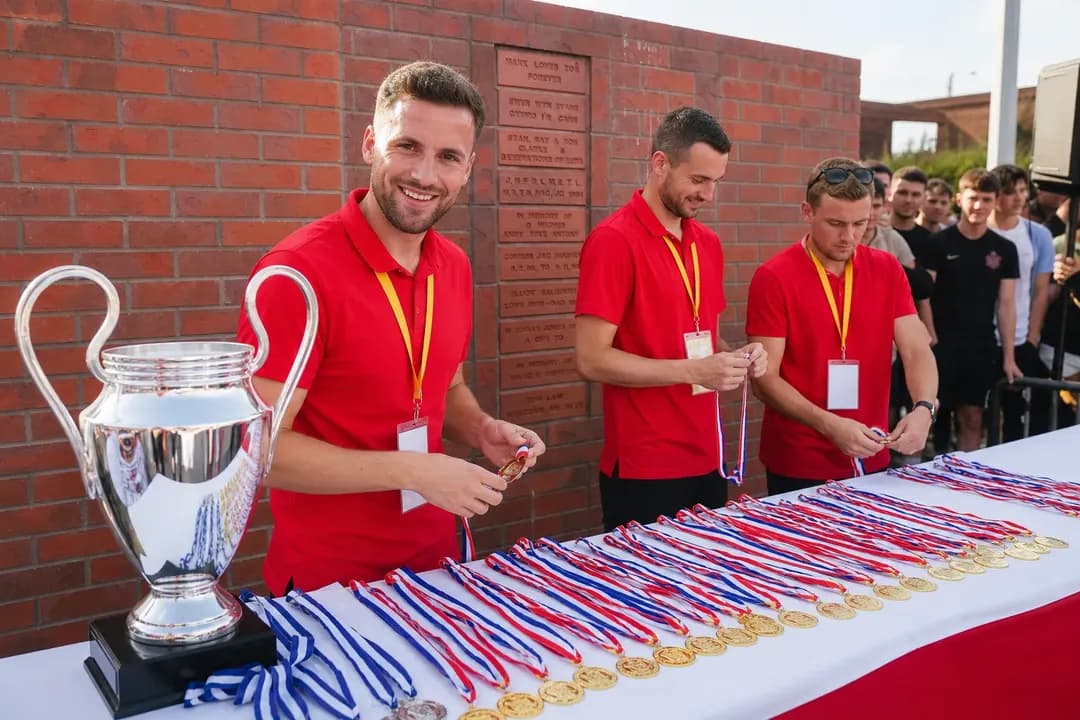 World Cup Trophy Ceremony Timing Medals and Postmatch Celebrations
 Olise and France's Attack: The Semifinal Tactical Question