Culture / Collection
The Ferry Is a Crossing, Not a Loophole
A Staten Island culture route starts by reading the address, then letting the borough speak for itself.
 Sally Abrams
The first test for any borough guide is embarrassingly simple: read the address.
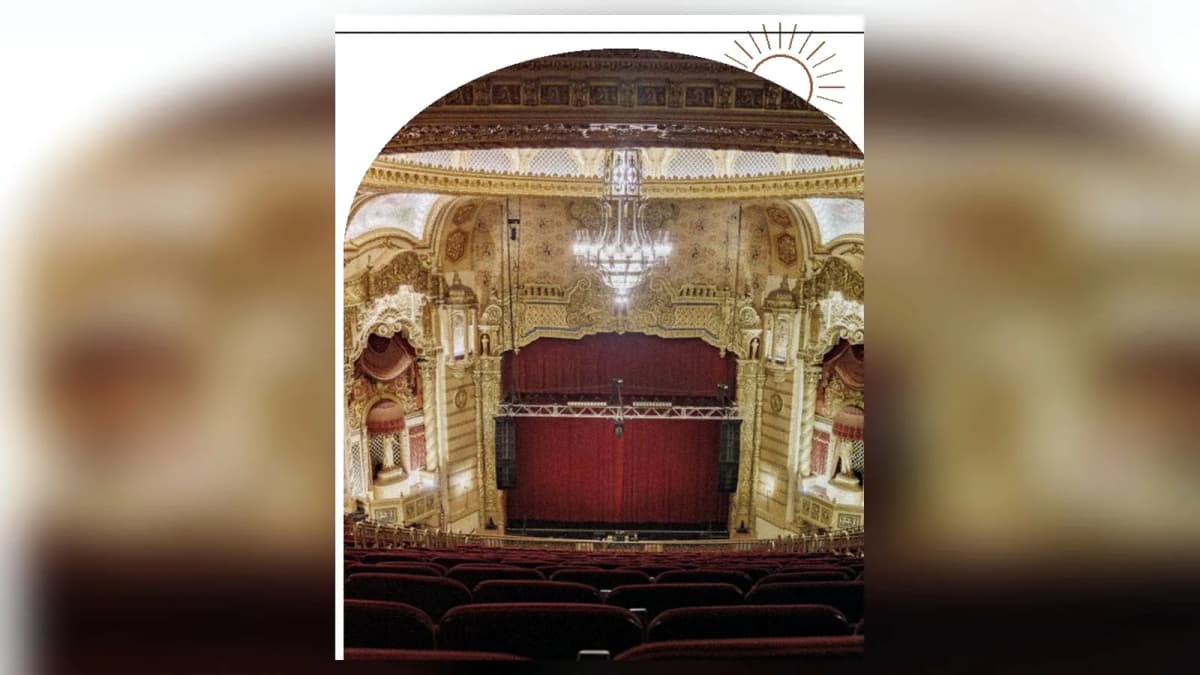
Gerald Schoenfeld Theatre is a real Broadway house. It belongs at 236 West 45th Street in Manhattan. That is not a moral problem. It is a map problem. The mistake begins when a Midtown theatre is used as borrowed authority for a Staten Island culture plan, as if the ferry were a decorative transfer and the borough were a spare label waiting to be filled.
I am not anti-Broadway. I am anti-erasure with good typography.
Staten Island does not need Manhattan to certify its culture. It needs a route that understands the crossing, the terminal, the neighborhood, the local stage, and the second stop you choose when you have enough time to stay. The better plan starts at Whitehall, lands in St. George, and asks what becomes visible when you stop treating the ferry as a shortcut.
Start With The Crossing
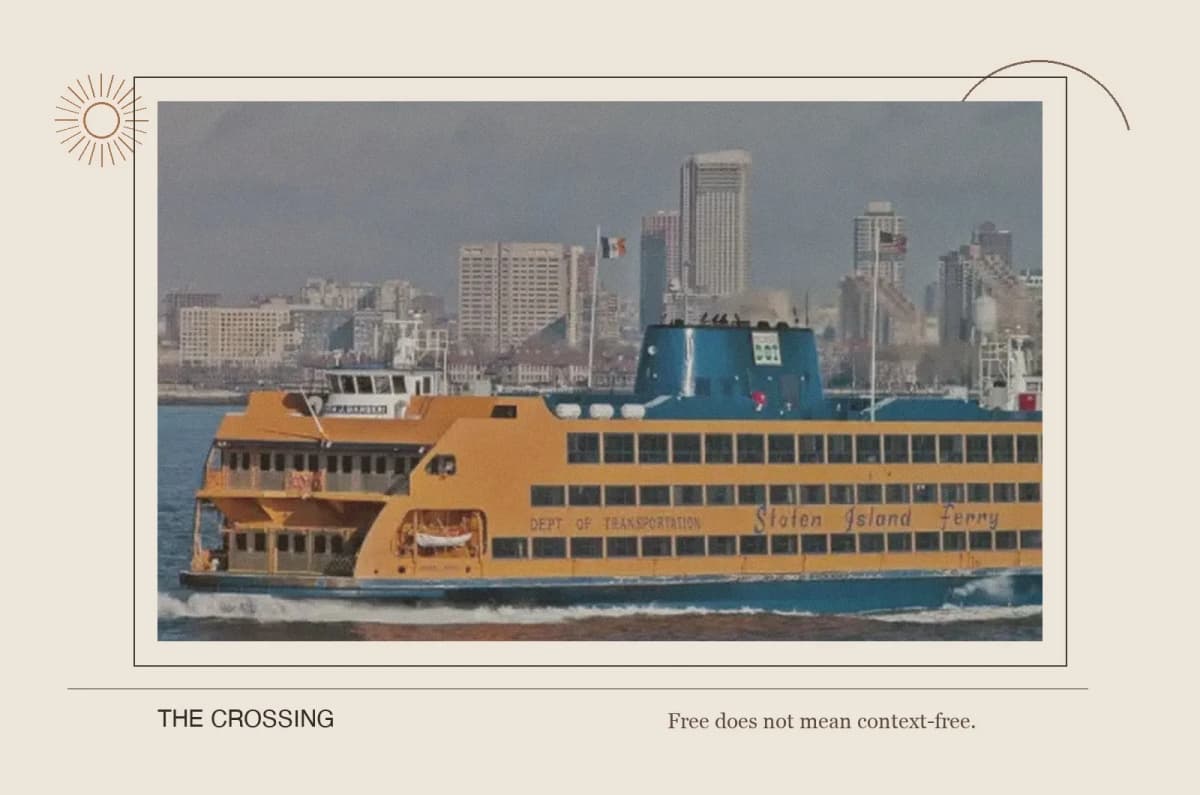
Staten Island Ferry on the harbor. Image via Staten Island Ferry.
The ferry is not a Broadway shuttle. It is the first room of the route.
It runs between Whitehall Terminal in Manhattan and St. George Ferry Terminal on Staten Island. It is free, ticketless, and part of the city's everyday public infrastructure. Weekday rush hours bring more frequent service; weekends generally settle into a 30-minute rhythm. The ride itself is about 25 minutes, which is just long enough for the city to rearrange itself in your head.
That matters. A culture route is not only a list of venues. It is a sequence of permissions: where you enter, what you are asked to notice, how much effort the transfer requires, whether the place is being treated as a destination or a footnote.
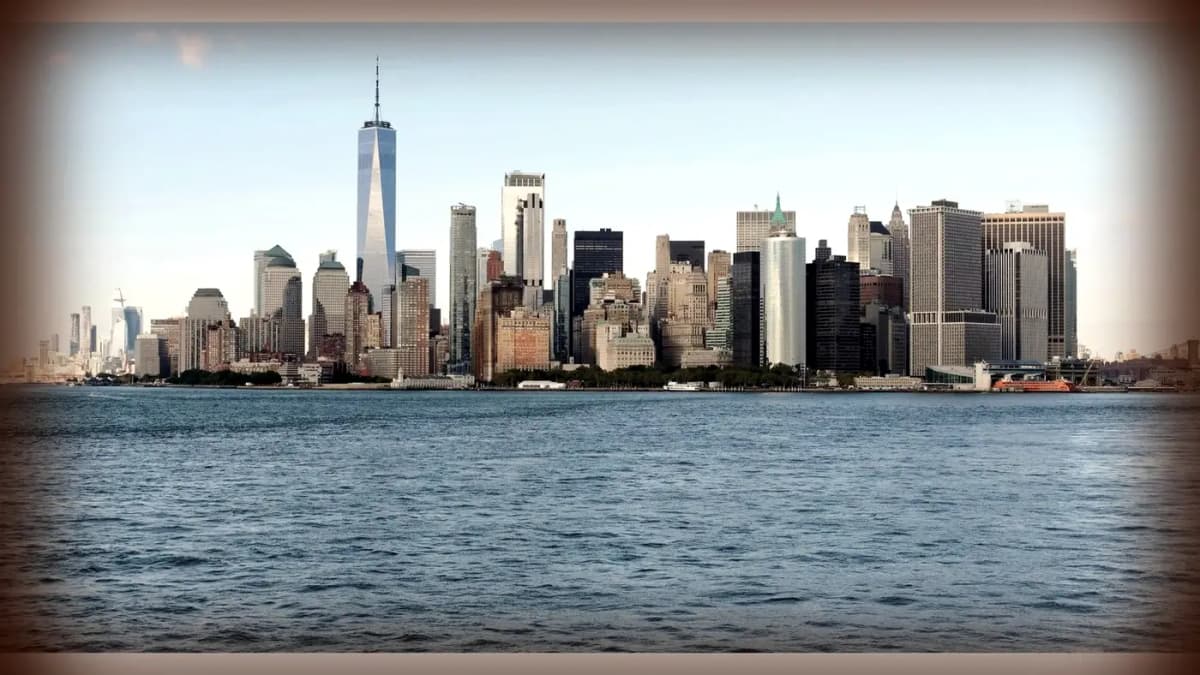
So do not rush through the crossing. Let the harbor do its quiet administrative work. Manhattan becomes a skyline. St. George becomes the next address. That is the point.
First Address: St. George
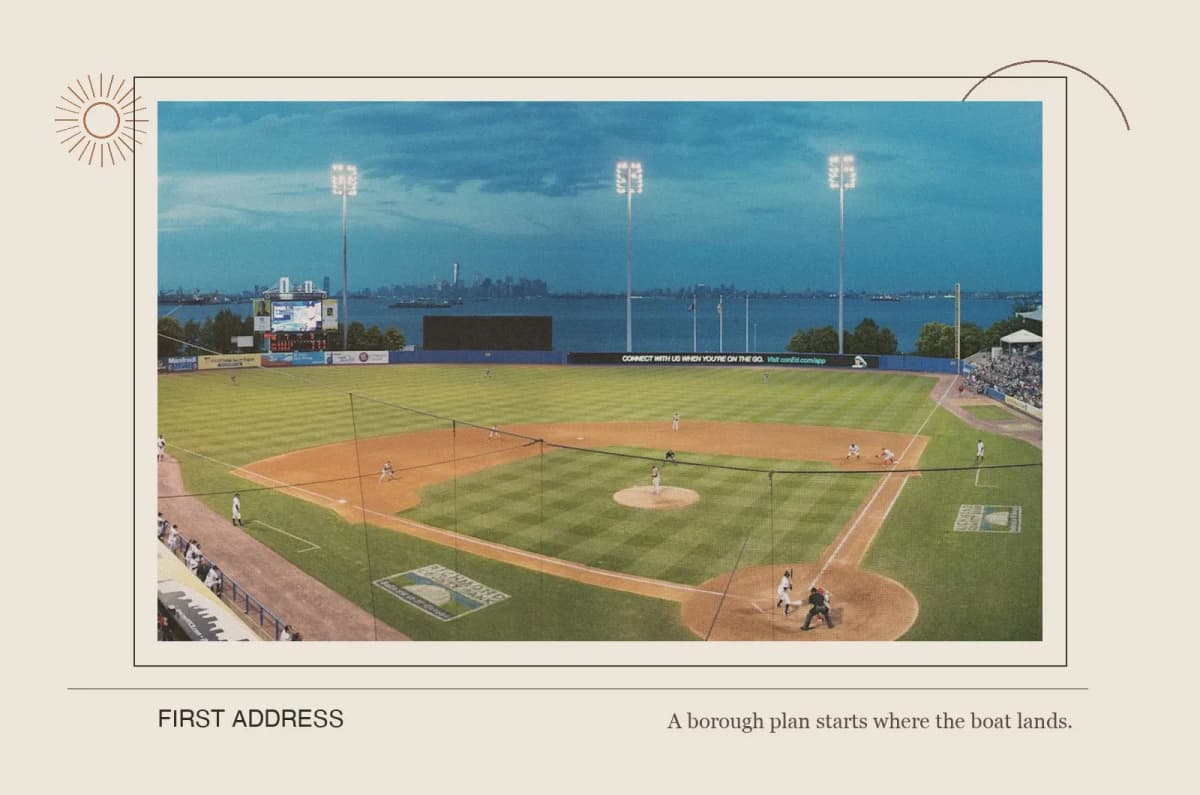
St. George waterfront view. Image via NYC Tourism.
St. George is not a waiting room outside the ferry terminal.
It is the part of Staten Island where the boat lands and the borough starts answering back: a waterfront edge, civic buildings, small arts institutions, a baseball field looking toward the harbor, neighborhood restaurants, and enough cultural infrastructure to punish anyone who only came looking for a transfer.
If you want a short version, begin within walking distance of the terminal. The National Lighthouse Museum is a 3-to-5-minute walk from the ferry. It is open Thursday through Sunday from 11am to 4pm, with adult admission at 7 dollars. That makes it useful for a low-friction first stop: not huge, not performative, not trying to sell you a skyline. It gives the harbor a working memory.
This is the part of the route where you decide what kind of culture day you are actually making. If you want an easy half day, keep it close: ferry, museum, waterfront, food, ferry back. If you want a show night, keep the museum light and let the theatre carry the evening. If you want a broader Staten Island plan, save energy for Snug Harbor.
The wrong move is to overpack the borough because you feel guilty for finally naming it. Staten Island is not homework. It is a place.
The Local Stage Is The Argument
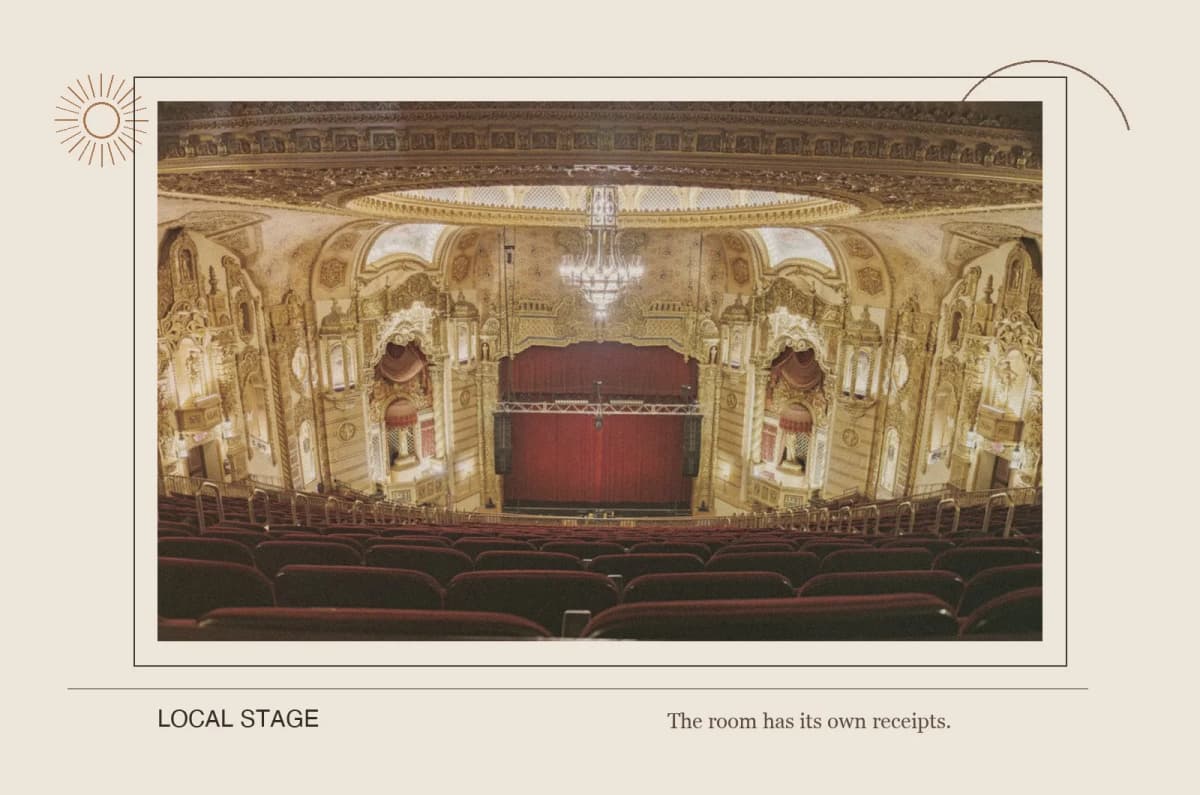
St. George Theatre interior. Image via St. George Theatre.
St. George Theatre is the route's strongest correction.
It is at 35 Hyatt Street, not in the Theater District. It opened on December 4, 1929, after ground was broken in 1928 for a 2,800-seat venue. Its early life places it in direct conversation with Manhattan's movie palaces and vaudeville houses, but the important distinction is ownership of the story: this was not a borrowed Broadway room. It was a Staten Island dream house built to hold its own scale.
The architecture makes that argument before the calendar does. Spanish and Italian Baroque interiors, stained-glass chandeliers, grand staircases, murals, niches, fountains, balconies: the room is not subtle, and subtle is not always a virtue. Some spaces whisper their legitimacy. This one brought a chandelier.
Today the theatre operates as a 1,900-seat performing arts center with more than 150 performances and special events a year across headline shows, classic movies, arts education, family programming, sensory-friendly events, workshops, recitals, and community gatherings. That range is the thing to notice. A real borough cultural anchor is not just a marquee; it is a calendar, a school-day matinee, a fundraiser, a restored lobby, a place where the same room has to serve different publics without pretending they are all the same audience.
That is why the Broadway comparison falls apart. Broadway sells concentration: a few blocks, a global machine, a ticket economy. St. George Theatre asks a different question: what happens when a historic room becomes civic infrastructure?
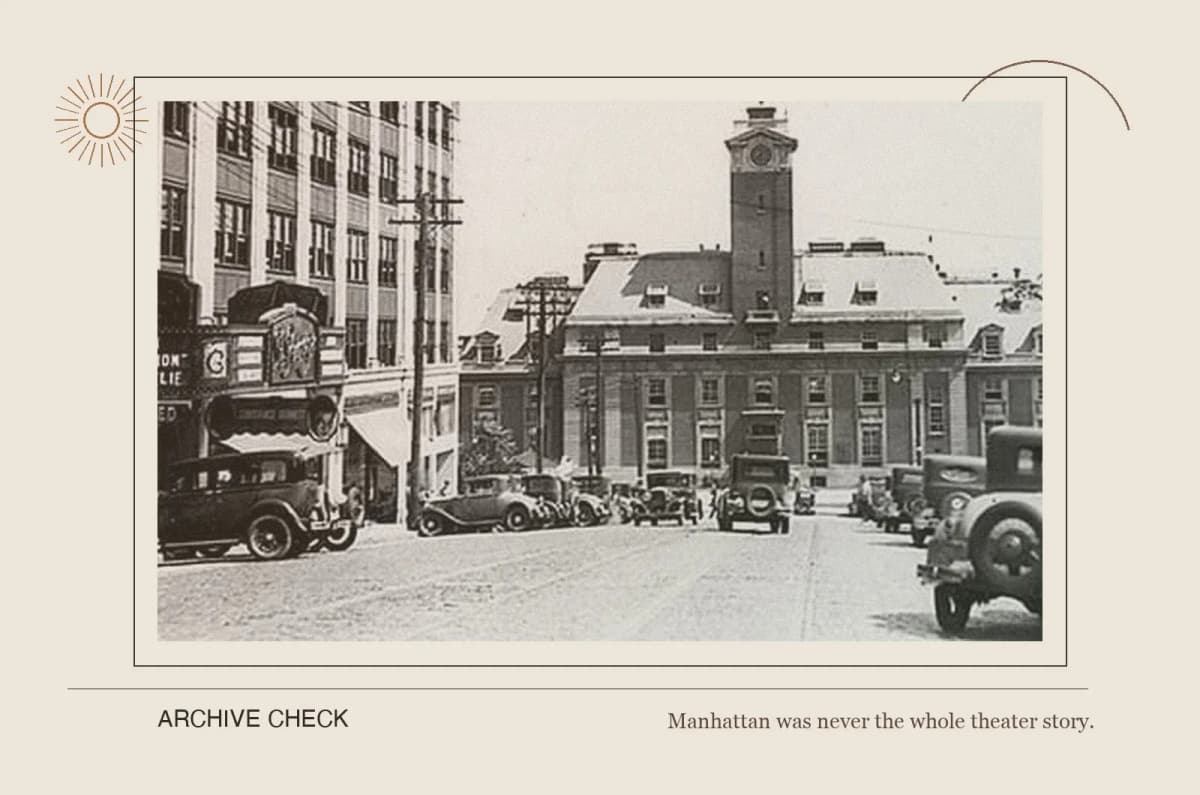
Archive Check: Manhattan Was Never The Whole Theatre Story
St. George Theatre exterior, 1935. Image via St. George Theatre.
The archive is useful because it keeps us from writing Staten Island as a recent discovery.
The St. George Theatre spent decades as a movie and vaudeville house, went through failed reincarnations, and sat mostly dark for more than 30 years before its 2000s restoration. That is not a cute comeback paragraph. It is a reminder that cultural value is often visible before capital agrees to maintain it.
Sally rule: if a place has survived abandonment, reinvention, and civic neglect, do not reduce it to "near the ferry."
The theatre's restoration has included seating, flooring, doors, rigging, lighting, audio systems, restrooms, dressing rooms, lobbies, murals, dome, chandeliers, and a lower-level lounge. The details matter because restoration is not a mood. It is labor, funding, local insistence, and a long argument against disappearance.
This is also where the route earns its politics. A reader who goes to St. George Theatre is not choosing the anti-Broadway option. They are choosing to see how culture survives outside the city's most obvious spotlight.
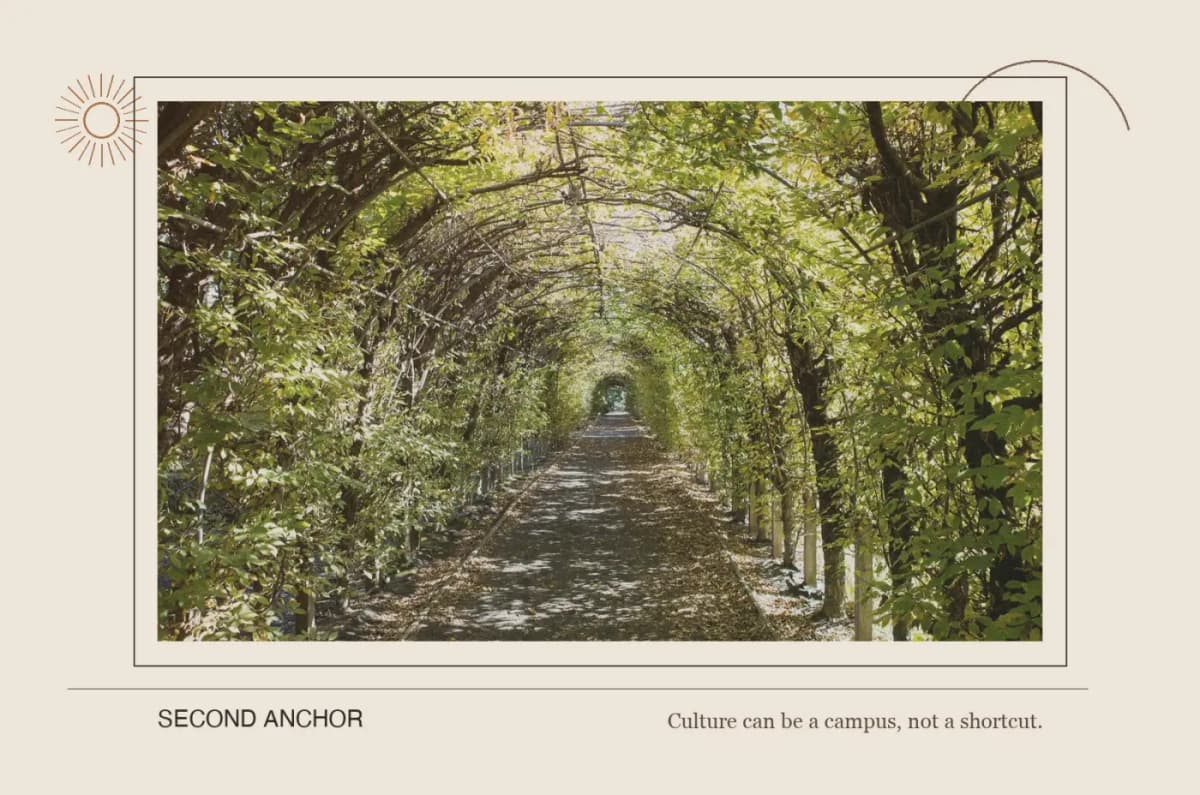
If You Have More Day, Go To Snug Harbor
Snug Harbor garden path. Image via I LOVE NY.
Snug Harbor is the second anchor, not a consolation prize.
At 1000 Richmond Terrace, the campus gives the route a different tempo: 83 acres, 23 historical buildings, nine botanical gardens, and 10 acres of wetlands. Its institutions include the Newhouse Center for Contemporary Art, the Noble Maritime Collection, the Staten Island Children's Museum, Art Lab, and the Staten Island Museum. That is not a side trip. That is a whole civic ecosystem.
Use Snug Harbor when the day is about cultural wandering rather than a single performance. From St. George, the S40 bus keeps the trip practical. The better sequence is simple: ferry into St. George, one close stop near the terminal, then Snug Harbor if you have the attention span and daylight. Do not try to fold it into a rushed show night unless you enjoy converting good places into errands.
Snug Harbor also changes the argument from "what is on tonight?" to "what did this borough build and keep?" Gardens, maritime memory, contemporary art, children's learning spaces, old sailors' architecture turned public culture: it widens the frame without asking Manhattan to narrate.
The Route That Actually Works
For a half day, keep the plan close:
1. Whitehall Terminal to St. George Ferry Terminal.
2. National Lighthouse Museum.
3. Waterfront walk or food near St. George.
4. Ferry back before the day gets overexplained.
For a show night:
1. Ferry to St. George.
2. Early dinner or a short waterfront reset.
3. St. George Theatre.
4. Return by ferry with enough schedule padding that the boat does not become the villain.
For a longer culture day:
1. Ferry to St. George.
2. One near-terminal stop.
3. S40 bus to Snug Harbor.
4. Gardens, museums, or campus wandering.
5. Return to St. George for the ferry.
None of these routes require pretending Broadway is irrelevant. They require being precise about what job each address is doing. Gerald Schoenfeld Theatre is a Manhattan Broadway destination. St. George Theatre is a Staten Island cultural anchor. Snug Harbor is a campus. The ferry is a crossing. These are not interchangeable parts.
Reality Check Before You Go
Check event calendars before building the day around a show. St. George Theatre is a calendar-driven stop, not an always-open attraction.
Check museum hours. National Lighthouse Museum currently runs Thursday through Sunday, 11am to 4pm, and closes Monday through Wednesday and legal holidays. Snug Harbor's campus and tenant institutions do not all run on one schedule.
Do not turn "free ferry" into "free day." Admission, show tickets, food, bus fare, and time all count.
And do not use Broadway demand language for a borough route unless Broadway is actually the destination. The more honest sentence is also the better one: take the ferry because Staten Island has its own cultural geography.
Who This Is For
This is for the reader who wants a real borough plan and does not need every cultural experience to arrive with Times Square lighting.
It works for someone who likes public transit as part of the story, wants a route with a clean transfer, and is willing to let a local theatre or museum define the day. It is not for the person who wants to say they "did Staten Island" without leaving the most convenient myth of New York intact.
Travel does not escape the world. It reads it closely. Start with the address.
Places in this guide

3 places