Culture / Collection
The Water in Between: What a Night of Culture Really Costs When You Live on Staten Island
 Sally Abrams
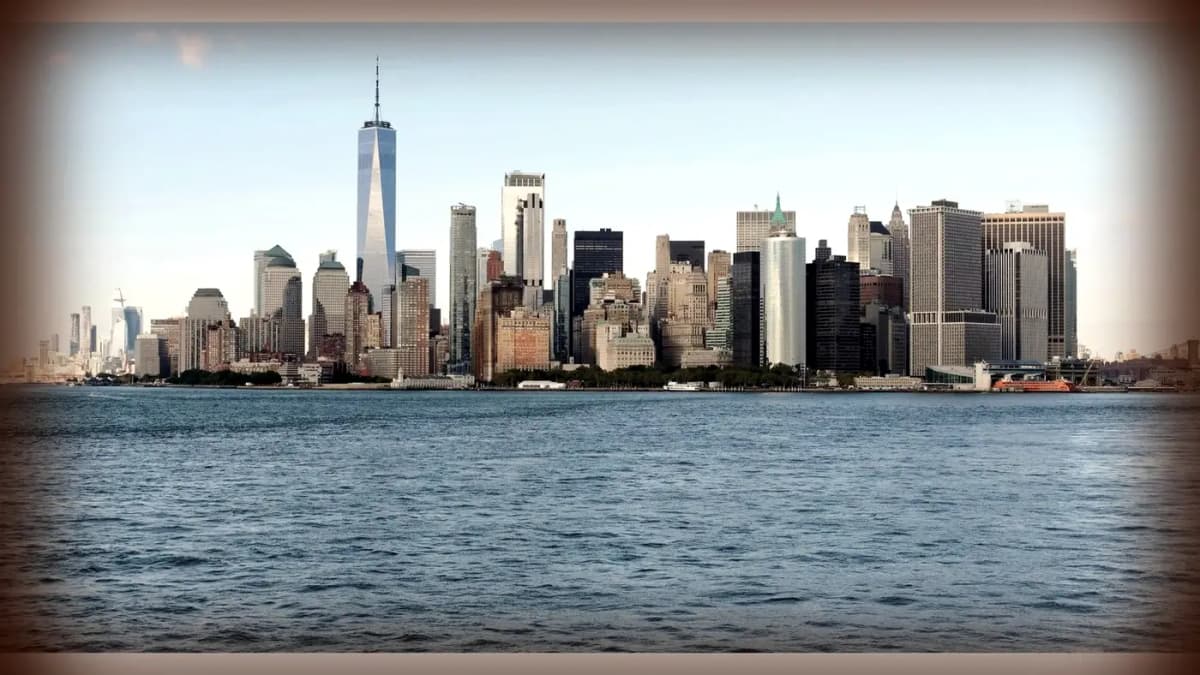
Caption: Lower Manhattan from the Staten Island Ferry, the free crossing that can feel like a gift at sunset and a deadline after midnight.
The cultural cost of Staten Island usually shows up after the applause.
Not when you buy the ticket. Not when you sit down. Not when the lights go out and, for ninety minutes, New York does the thing it still does better than almost anywhere: put bodies, voices, music, and strangers in the same room until the city feels briefly less impossible.
It shows up later, under fluorescent terminal light, when you are back at Whitehall watching the board and doing the math with everyone else who misjudged the ending by seven minutes. The show finished at 9:43. The subway took its time. The ferry is free, yes. The ferry is also a clock.
That is the part arts access conversations in New York often skip. We talk about ticket prices as if geography politely waits outside. It does not. If you live on Staten Island, the borough with no subway link to the other four, a night of culture is not one line item. It is a route. It is a water crossing. It is who comes with you. It is how tired you are willing to be the next morning. It is whether the last leg home feels ordinary or exposed. It is also, if we are being honest, whether Manhattan has trained you to think the real thing is always over there.
Sally rule: travel does not escape the world. It reads it closely. A ferry terminal reads New York very closely.
The Seat Is The Cheap Part
Use The Joyce Theater as the cleanest example because the numbers are almost too neat.
The Joyce sits at 175 Eighth Avenue in Chelsea and remains one of the city's serious dance houses. Its pricing structure is built in four tiers; limited partial-view seats start at 17 dollars and 27 dollars for each performance, and dance community members can access 10-dollar Harkness JoycePass tickets. In a city where culture can price itself like rent cosplay, that is unusually democratic.
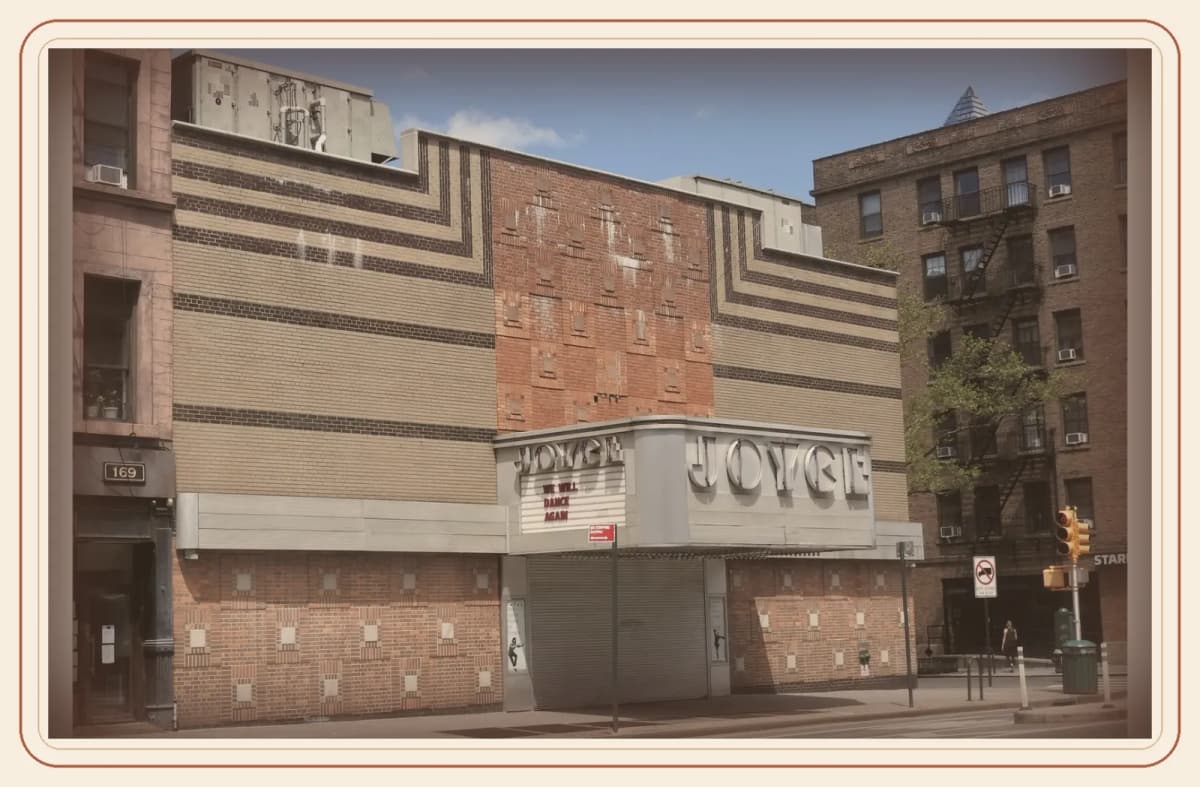
Caption: The Joyce Theater in Chelsea, the kind of stage worth crossing for when the company is the point.
Now price the evening from Staten Island.
A 17-dollar seat plus a subway round trip from Whitehall at 3 dollars each way comes to 23 dollars before you have bought a coffee, checked a coat, or called a car because the late bus home is not matching your body tonight. If you use the express bus instead of the ferry-subway chain, the express fare is 7.25 dollars each way. If you drive, the schedule gets easier and the bill moves into tolls, parking, and the tiny grief of watching your phone for garage time instead of letting the performance stay with you.
The ferry itself is free. NYC DOT operates it every day between Staten Island and Lower Manhattan. The crossing is roughly 25 minutes. Those two facts are both generous and incomplete.
Free is not the same as frictionless.
The real price includes:
• the trip to St. George before the water even begins;
• the ferry schedule after the curtain comes down;
• the subway ride from Whitehall to the venue;
• the person who says they are fine coming with you, then quietly checks how late it will be;
• the solo walk after the return boat;
• the next morning, when the city expects you to behave like geography was not there.
This is not a complaint disguised as analysis. I love the crossing. I also know love is not a transportation plan.
The Ferry Is Arts Infrastructure
Staten Island's ferry terminal is one of New York's great contradictions: the borough's strongest connection and one of its clearest borders.
At St. George, culture is not hidden. It is just arranged differently. The terminal can pour visitors toward the ferry and still make the neighborhood feel oddly hard to enter. The waterfront can look like a gateway and function like a sorting machine. People pass through; fewer turn toward the streets, the theaters, the galleries, the rooms where the island is not waiting to be discovered but already working.
That is why the local venues matter. Not because they excuse the city from making cross-borough access easier. Not because every Staten Island night should become a stay-on-the-island night. Because choice is only real when staying local does not feel like losing ambition.
The question is not "Is Manhattan worth it?" Sometimes, absolutely. The question is: why does Manhattan get to be the default, and Staten Island the explanation?
St. George Theatre Is The Big-Room Answer
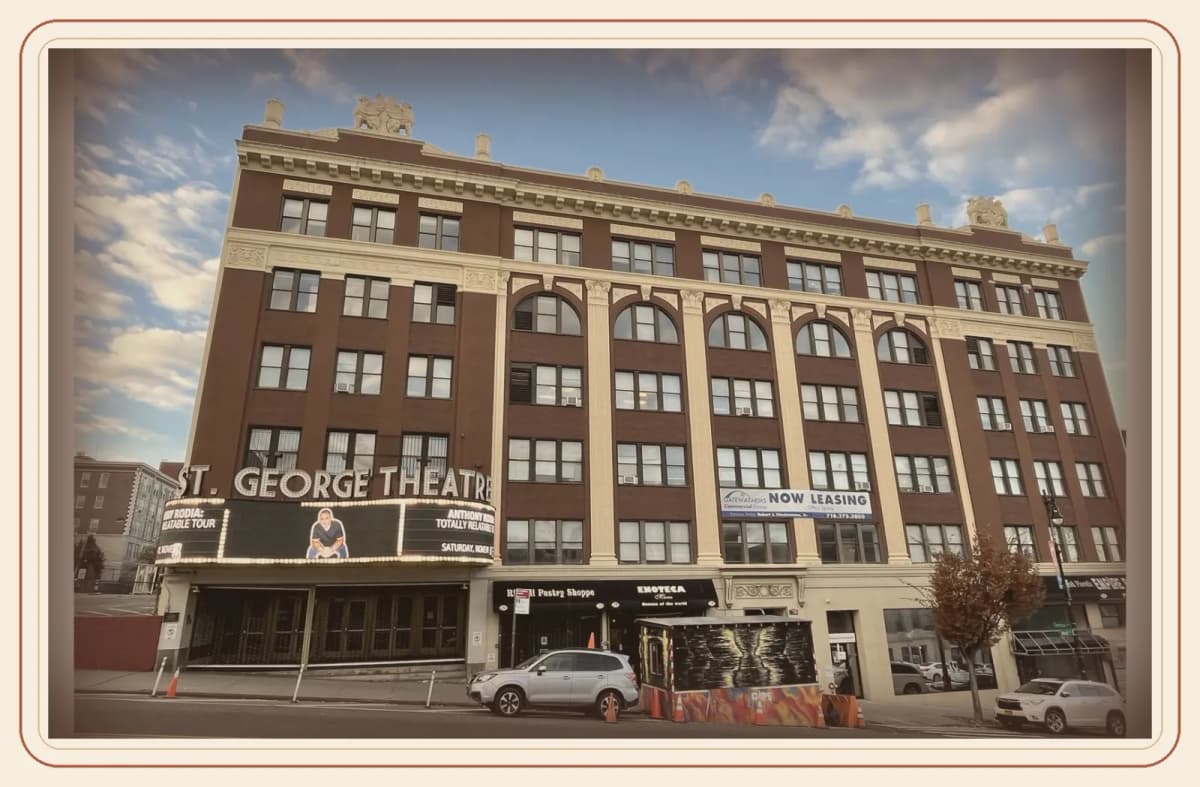
Caption: St. George Theatre, a 1929 movie palace that lets the borough keep a marquee night near the boat.
If your mental picture of Staten Island culture is small, start at 35 Hyatt Street and let the room correct you.
The St. George Theatre opened on December 4, 1929. It is a restored 2,800-seat venue in the St. George district, built for movie-palace scale and still capable of the simplest cultural pleasure: walking someone through the doors and watching their expectations rearrange themselves. Touring music, comedy, dance, film, theatrical productions, local benefits, family shows: the calendar behaves like a borough trying to hold more than one self at once.
The best use of the St. George is not as a consolation prize for skipping Manhattan. Use it when you want a proper night out without turning the ferry into a test of devotion. Use it for visiting family who assume the good room must be somewhere else. Use it for the person who has only ever met Staten Island as a punchline. (Some rooms do more persuasive work than any argument.)
There is also a useful reversal here. If Manhattan friends come to this theater, the crossing tax lands on them for once. Let them pay it. Then ask them how "close" the borough feels.
Snug Harbor Is The Slow Culture Answer
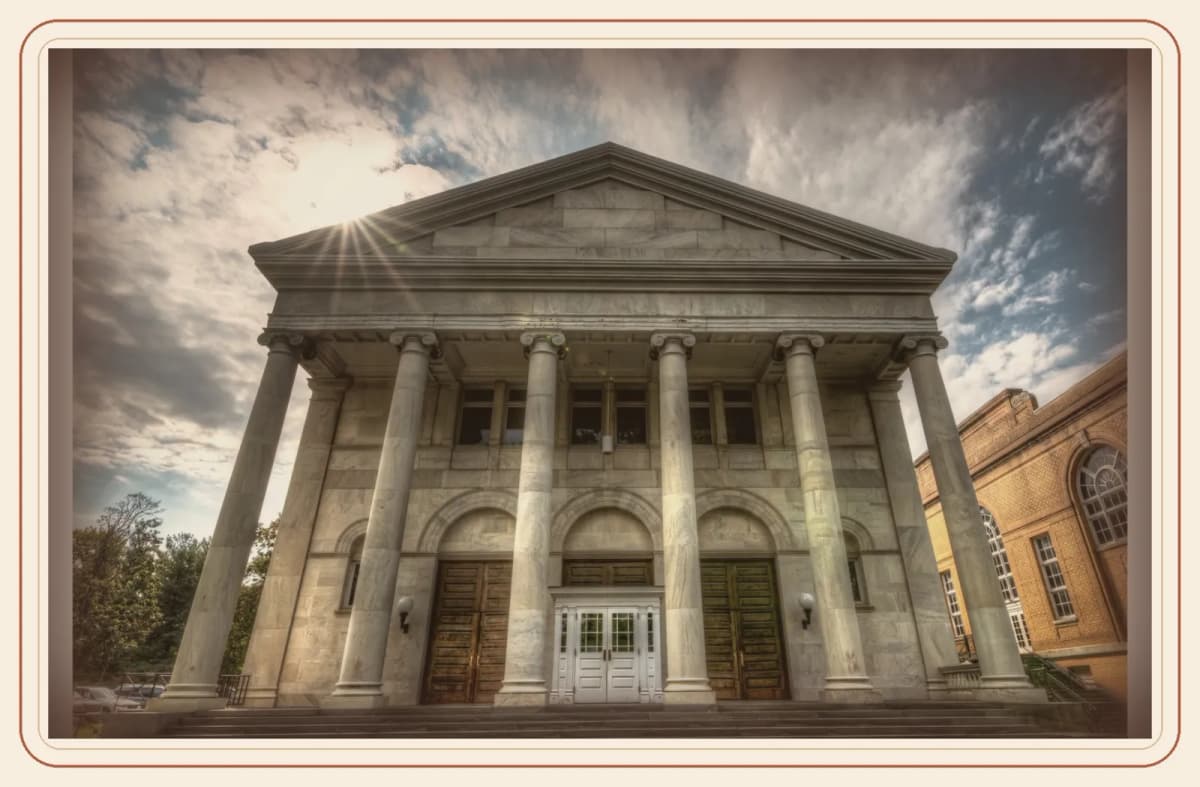
Caption: The Music Hall at Snug Harbor, where the approach through the campus is part of the evening.
Snug Harbor Cultural Center & Botanical Garden at 1000 Richmond Terrace asks you to change pace before you enter anything. That is its advantage.
The campus began as a 19th-century sailors' home and now holds gardens, museums, galleries, theaters, and one of the city's most quietly dramatic cultural walks. You do not rush Snug Harbor well. That is not a flaw. It is the instruction.
For performance, the Music Hall gives the island a different kind of room from the St. George: smaller, older, more listening than spectacle. The building's Greek Revival face does not shout. It waits. Choose it for concerts, dance, and theater nights when you want the scale to feel human. Arrive early if the weather allows. The walk through the grounds is not a bonus feature; it is the part that lets your nervous system catch up with your plans.
This is the place I would send someone who says they want culture but does not want to be processed by the city for five hours to get it.
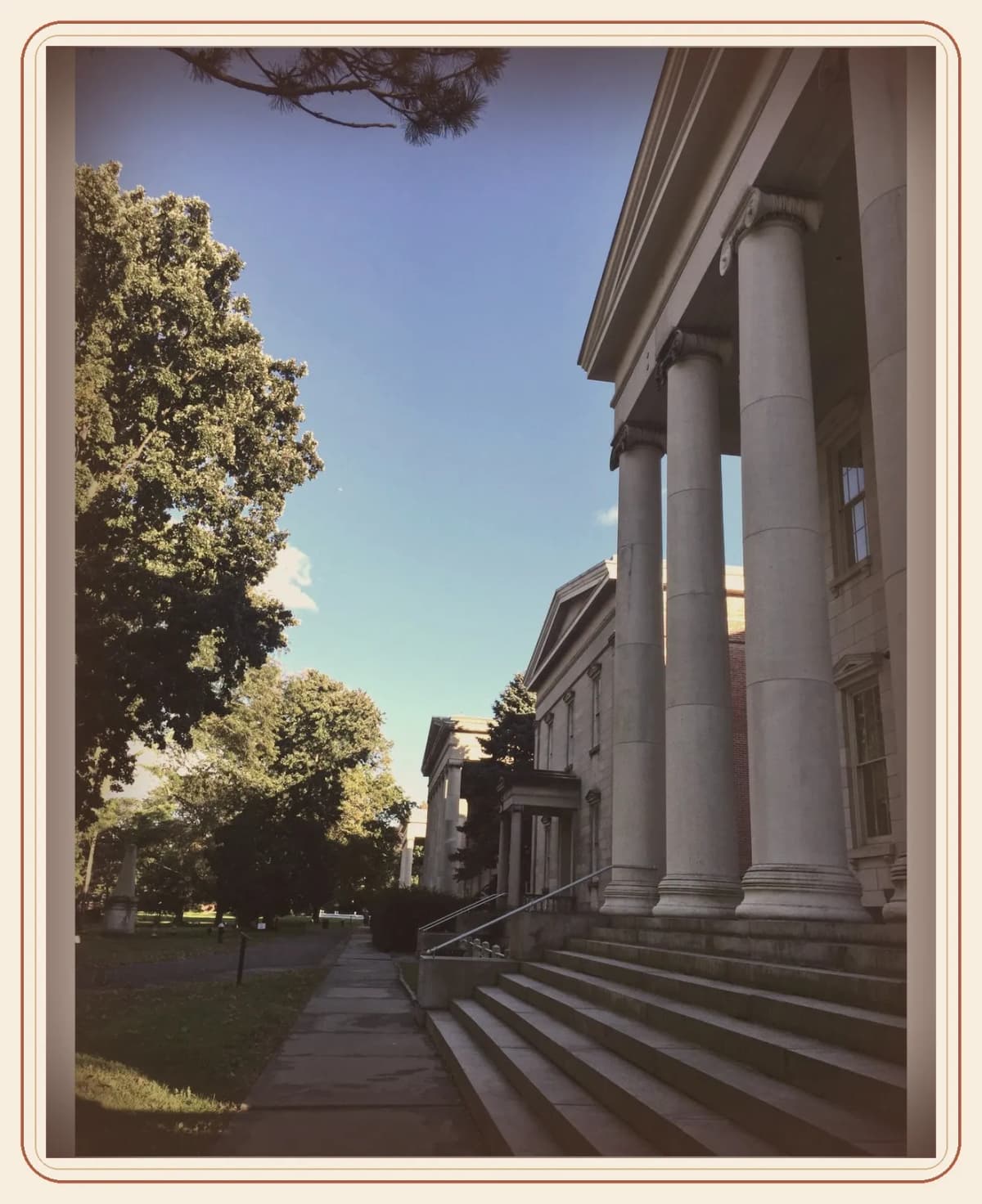
Staten Island Museum Is The Daytime Proof
Caption: Staten Island Museum in Building A at Snug Harbor, scaled for attention rather than endurance.
Not every cultural choice has to justify itself with a curtain time.
The Staten Island Museum, also on the Snug Harbor campus, is open Wednesday through Sunday from 11am to 5pm. Suggested admission is 8 dollars for adults, 5 dollars for students and seniors, and 2 dollars for children ages 2 through 12. The museum holds art, natural science, and local history under one roof, which is exactly the right mixture for a borough that is usually misread from the outside.
I like it for the afternoon when you do not want to be heroic. For a parent who needs a museum scaled to a child's patience. For a solo visitor who wants objects instead of performance. For the Staten Island resident who has crossed the harbor a hundred times to be educated by other boroughs and maybe deserves a room that begins closer to home.
Small museums can be radical because they ask you to stop performing expertise. You look. You read. You learn the place under your feet.
CSI Center For The Arts Is The Habit Answer
The Center for the Arts at the College of Staten Island is not the most photogenic entry in this essay, and that is partly why it matters.
At 2800 Victory Boulevard, it gives mid-island residents something the waterfront cannot always offer: distance relief. The complex includes Springer Concert Hall with 911 seats, Williamson Theatre with 442 seats, and a 156-seat Recital Hall. That range makes it useful for concerts, lectures, theater, dance showcases, student work, community programming, and the kind of local performance that becomes a habit because it does not require a whole evening of logistics.
This is the venue for the person who will not cross the harbor on a weeknight but will absolutely go twelve minutes down Victory Boulevard. That person is not less cultured. They are accurately reading their life.
We should stop pretending access only counts when someone overcomes an obstacle. Sometimes access is the absence of a heroic story.
When The Crossing Is Worth It
Keep The Joyce on the list. Keep Lincoln Center, BAM, The Public, the small rooms downtown, the galleries in Chelsea, the experimental spaces that make the whole trip feel like a dare you accepted. I am not writing a stay-put manifesto. I do not trust those. The world is too large, and the ferry is too beautiful, for that kind of provincial comfort.
What I want is a better verb than default.
Choose Manhattan when the work itself is calling you. Choose the crossing when the artist, company, exhibition, or room is specific enough that the water becomes part of the night. Take the earlier ferry. Build in the return. Do not pretend the free ride makes the evening free. If you are going alone, make the late leg boring on purpose: schedule checked, phone charged, route home decided before the lights go down.
And choose Staten Island when the island is not the compromise but the point. St. George for the big room. Snug Harbor for the slow approach. Staten Island Museum for the daytime reset. CSI for the repeatable habit. These are not the same plan, which is why they work.
Rules For The Person Checking The Clock
Price the whole evening, not the seat.
If the ticket is 17 dollars and the subway is 6 dollars round trip, say 23 dollars before food, rideshare, or patience. Numbers are not unromantic. They protect the romance from becoming resentment.
Check the return before you buy.
Ferry service runs every day, but late-night timing changes the feel of the whole plan. The boat can be free and still be the reason you leave early.
Let one local venue lead each month.
Before you scan Chelsea, Brooklyn, or the Upper West Side, check St. George Theatre, Snug Harbor, Staten Island Museum, and CSI. This is not borough loyalty as homework. It is how you keep the island from becoming only the place you depart.
Bring someone for the first version; go alone when the route is familiar.
Sally is not here to sell bravery as a personality. A late ride home is different when you know the stations, the terminal, and your own tolerance. Skill comes from repetition.
Do not apologize for choosing the closer room.
Culture does not become more serious because you suffered to reach it. Sometimes the most adult cultural decision is the one that gets you home with enough self left for tomorrow.
The Karpo Read
The water is not the problem. The lie is the problem.
The lie is that a cheap ticket tells the whole story. The lie is that Staten Island is culturally empty until Manhattan verifies it. The lie is that geography is neutral, that a ferry is only scenic, that a borough without a subway has the same night-out math as everyone else.
A better version is available. Cross when the crossing is part of the meaning. Stay when staying gives the island its proper weight. Let both choices be real.
Beyond boundaries does not always mean farther from home. Some nights, it means refusing to make your own borough disappear before the curtain even rises.
Places in this guide



4 places