 Haaland Has Seven Goals and Norway Runs Entirely Through Him
⚽️2026 FIFA WORLD CUP

Semifinal Dates North American Time Zones and Qualification Path
The 2026 FIFA World Cup semifinals unfold across two days in mid-July, with kickoffs scheduled to accommodate prime-time viewing in Eastern, Central, and Pacific zones. Winners advance directly to the July 19 final at MetLife Stadium, capping a month-long tournament hosted by the United States, Canada, and Mexico.
The road to the 2026 FIFA World Cup final narrows to four teams during a pivotal 48-hour window in mid-July, when the semifinals determine which two nations will contest the championship at MetLife Stadium in East Rutherford, New Jersey. Scheduled for July 14 and 15, the semifinals represent the penultimate stage of a tournament that will have already delivered 102 matches across sixteen host cities in three countries. For fans planning watch parties, travel itineraries, or simply marking their calendars, understanding the timing and stakes of these two fixtures is essential to experiencing the climax of the world's most-watched sporting event.
Updated August 2026: World Cup schedules, stadium policies, player statistics, broadcast details, and post-match records can change quickly. Check the linked FIFA, stadium, broadcaster, or tournament sources in the Sources section before using this guide for travel, tickets, viewing plans, or factual citation.
Karpo helps you build the perfect semifinal experience, whether you're hosting a watch party in Atlanta, planning a sports-bar crawl in Dallas, or coordinating group travel to New Jersey for the final. Text us your city, your group size, and your priorities—we'll send back a personalized plan with venue recommendations, transit routes, and kickoff countdowns tailored to your time zone. No apps, no subscriptions, just straightforward answers when the stakes are highest.
Semifinal One: July 14 in Dallas
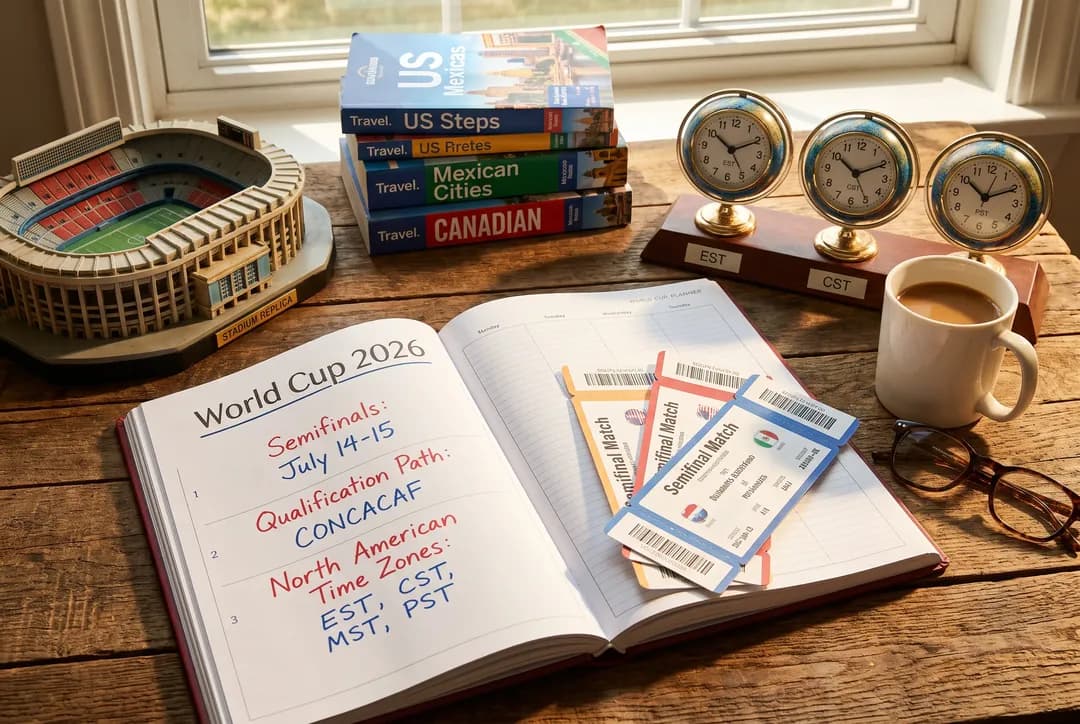
The first semifinal kicks off on Tuesday, July 14, 2026, at AT&T Stadium in Arlington, Texas. FIFA has scheduled the match for an evening slot designed to capture prime-time audiences across North America, with kickoff expected at 8:00 p.m. Central Time. That translates to 9:00 p.m. Eastern, 7:00 p.m. Mountain, and 6:00 p.m. Pacific, ensuring that viewers from coast to coast can tune in after the workday concludes. AT&T Stadium, home to the Dallas Cowboys, will operate in its soccer configuration with a reduced capacity that still exceeds 80,000 seats, making it one of the largest venues in the tournament.
The matchup itself remains to be determined through the knockout bracket, which begins with the Round of 16 on June 26 and continues through the quarterfinals on July 9 and 10. The winner of Quarterfinal 1 will face the winner of Quarterfinal 2 in Dallas, a pairing that could feature any combination of traditional powerhouses, emerging contenders, or surprise qualifiers. Regardless of the teams involved, the victor earns a berth in the final and three additional days of rest and preparation before the championship match.
Semifinal Two: July 15 in Atlanta
Twenty-four hours after the Dallas semifinal, the second semifinal unfolds on Wednesday, July 15, at Mercedes-Benz Stadium in Atlanta, Georgia. FIFA has mirrored the scheduling approach, setting kickoff for 8:00 p.m. Eastern Time—which corresponds to 7:00 p.m. Central, 6:00 p.m. Mountain, and 5:00 p.m. Pacific. The one-hour difference in Eastern versus Central kickoffs ensures that both semifinals occupy similar evening windows for their respective local markets while maintaining consistency for national and international broadcasters. Mercedes-Benz Stadium, known for its retractable roof and modern amenities, will host a capacity crowd in a city with deep soccer roots and a passionate supporter culture.
This semifinal pits the winner of Quarterfinal 3 against the winner of Quarterfinal 4, completing the final four. The victor joins the Dallas semifinal winner in New Jersey, while the loser prepares for the third-place match scheduled for July 18 in Miami. The compressed timeline between the semifinals and the final—just four days—places a premium on squad depth, injury management, and tactical flexibility, factors that often separate champions from runners-up at the World Cup's decisive stage.
Time Zone Considerations for Viewers
North American fans enjoy a rare advantage during the 2026 tournament: kickoff times calibrated for domestic audiences rather than distant continents. The 8:00 p.m. local starts for both semifinals mean that viewers in the Eastern zone can watch without staying up past midnight, while those in the Pacific zone can tune in during the early evening. Central and Mountain viewers land somewhere in between, with kickoffs at 7:00 p.m. and 6:00 p.m. respectively for the Atlanta match. This scheduling contrasts sharply with recent World Cups held in Russia, Brazil, and Qatar, where North American fans often faced early-morning or midday kickoffs that disrupted work schedules and social viewing plans.
For bars, restaurants, and public viewing venues, the evening slots create ideal conditions for extended watch parties. A typical semifinal broadcast, including pre-match coverage, the 90-minute regulation period, halftime, and potential extra time, can stretch to three hours or more. An 8:00 p.m. Eastern kickoff means that even a match requiring extra time and penalties would conclude before midnight, allowing venues to serve full dinner menus and maintain reasonable closing hours. Pacific viewers benefit even more, with a 6:00 p.m. start that accommodates after-work crowds and families with younger children.
The Knockout Path to the Semifinals
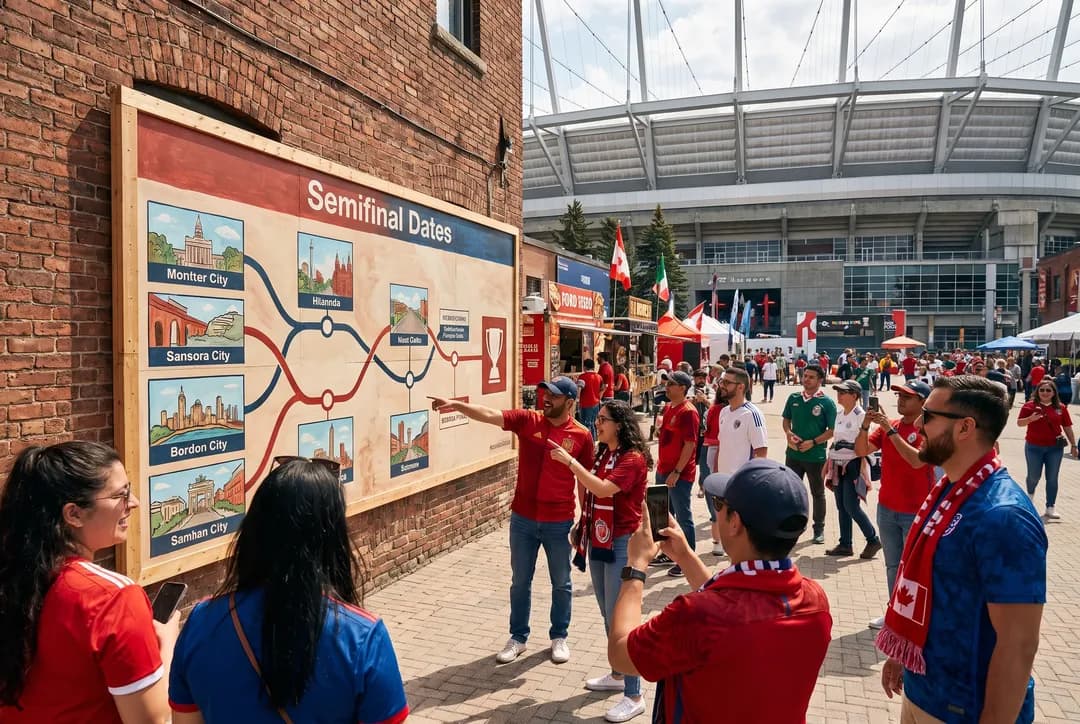
Reaching the semifinals requires navigating a three-round knockout gauntlet that begins immediately after the group stage concludes on June 27. The expanded 48-team format introduces a Round of 32 for the first time in World Cup history, meaning that semifinalists will have played at least three group matches and three knockout ties—six matches minimum—before stepping onto the field in Dallas or Atlanta. The Round of 32 runs from June 26 to July 2, followed by the Round of 16 from July 4 to July 7, and the quarterfinals on July 9 and 10. Each knockout match operates under standard elimination rules: 90 minutes of regulation, 30 minutes of extra time if necessary, and a penalty shootout if the score remains level.
The quarterfinal pairings determine the semifinal matchups through a fixed bracket structure published by FIFA well in advance of the tournament. Quarterfinal 1 and Quarterfinal 2 feed into the Dallas semifinal, while Quarterfinal 3 and Quarterfinal 4 lead to Atlanta. This predetermined path means that certain groups and Round of 32 positions funnel toward specific semifinals, a detail that becomes significant for fans hoping to see particular teams or rivalries materialize in the final four. The bracket design also ensures that the two semifinal winners have not faced each other earlier in the knockout stage, preserving the final as a fresh contest.
Advancing to the July 19 Final
The two semifinal winners earn the right to contest the World Cup final on Saturday, July 19, 2026, at MetLife Stadium in East Rutherford, New Jersey. Kickoff is scheduled for 3:00 p.m. Eastern Time, a departure from the evening slots used for the semifinals and a nod to the global audience that will tune in across multiple continents and time zones. For the finalists, the four-day gap between the semifinals and the final offers a brief window for recovery, tactical preparation, and media obligations, though the compressed schedule leaves little margin for managing injuries or fatigue accumulated over a month-long tournament.
MetLife Stadium, home to the NFL's New York Giants and New York Jets, will host the final in front of more than 82,000 spectators, the largest crowd of the tournament. The venue's proximity to New York City positions the final as a global spectacle, with the metropolitan area's infrastructure, hospitality capacity, and international connectivity supporting an influx of fans, media, and dignitaries. For the two teams that emerge from the Dallas and Atlanta semifinals, the final represents the culmination of years of preparation and the opportunity to claim the sport's most coveted trophy on North American soil.
Planning Around the Semifinal Schedule
For fans attending matches in person, the two-day semifinal window creates logistical challenges and opportunities. Supporters hoping to see both semifinals must navigate flights or drives between Dallas and Atlanta—cities separated by roughly 800 miles and a one-hour time difference—within a 24-hour span. The Tuesday-Wednesday scheduling means that most attendees will need to choose one semifinal or commit to a whirlwind itinerary that includes overnight travel. Hotels in both cities typically see demand spikes during major sporting events, and the World Cup semifinals will be no exception, making early reservations essential for securing convenient accommodations at reasonable rates.
For those watching from home or at public venues, the semifinal schedule offers a rare midweek opportunity to gather friends, family, or fellow supporters for high-stakes soccer. The evening kickoffs align well with dinner plans, and many bars and restaurants in soccer-friendly cities will extend hours, offer special menus, and install additional screens to accommodate crowds. Confirming venue policies in advance—particularly regarding reservations, minimum purchases, and seating availability—can prevent disappointment on match day. The four-day gap between the second semifinal and the final also provides a natural pause for fans to shift focus, make travel arrangements if attending the final, or simply savor the anticipation before the tournament's climactic match.
Tags: #WorldCup2026 #Dallas #Atlanta #NewYork #SoccerSchedule #FIFAWorldCup #SportsTravel #Semifinals
Sources consulted: FIFA World Cup 26 schedule
All trademarks are the property of their respective owners.
Ask Karpo First
Text Karpo with your city and your semifinal plans—whether you're scouting the best sports bar in New York, coordinating a group trip to Dallas, or figuring out transit from downtown Atlanta to Mercedes-Benz Stadium. We'll send back specific recommendations, kickoff reminders in your time zone, and a personalized plan that fits your schedule and your crew.
Ask Karpo for more information.
Keep reading
- Haaland Has Seven Goals and Norway Runs Entirely Through Him
 World Cup Trophy Ceremony Timing Medals and Postmatch Celebrations
 Olise and France's Attack: The Semifinal Tactical Question