 Scenic Walking Trail Near Me: Central Park North Woods Ravine and Loch Walk
Free Things to Do
Visiting Brooklyn Bridge in NYC: Tickets, Timing and Local Tips
Walk the Brooklyn Bridge without the chaos: what to check before you go, which entrance survives crowds, and the train home that actually runs.
Most people aim for the Manhattan side staircase near City Hall Park because that's what shows up first in map results. What they don't see until they're standing there is how constricted the pedestrian lane can feel once you're up on the deck, shared with cyclists in both directions, and on busy afternoons it can be shoulder-to-shoulder from the pylon to the Brooklyn tower. If you're trying to stop for a photo or just get your bearings, you're blocking someone every few seconds.
Text Karpo before you walk to get the current pedestrian entrance status, live subway timing from both sides, and a backup route if the bridge walkway closes for an event or weather.
The entrance everyone misses until it's too late
The Brooklyn Bridge has no admission fee and no ticket requirement. It's a public roadway. But that free access means no crowd control, no line management, and on weekends in summer the Manhattan entrance stairs back up onto the sidewalk by late morning. The better move is starting from the Brooklyn side, specifically the ramp entrance near the intersection of Tillary Street and Adams Street. It's a longer approach—maybe a quarter-mile walk from the York Street F station or the High Street A/C stop—but the ramp spreads people out and you're walking toward Manhattan, which gives you the skyline view in front of you instead of behind. Starting from the Brooklyn side can make the beginning of the walk feel less congested, though conditions change with the weather and time of day.
If you do start in Manhattan, skip the Centre Street stairs entirely and walk south along Park Row to the access ramp near Spruce Street. It's less obvious and has no big signs pointing at it, but it avoids the bottleneck and puts you on the walkway past the worst of the selfie traffic. Either way, if you're walking the Brooklyn Bridge on a weekend between eleven and four, you're going to stop and start. There's no secret hour that eliminates people—only degrees of patience required.
A route that clears before the train closes
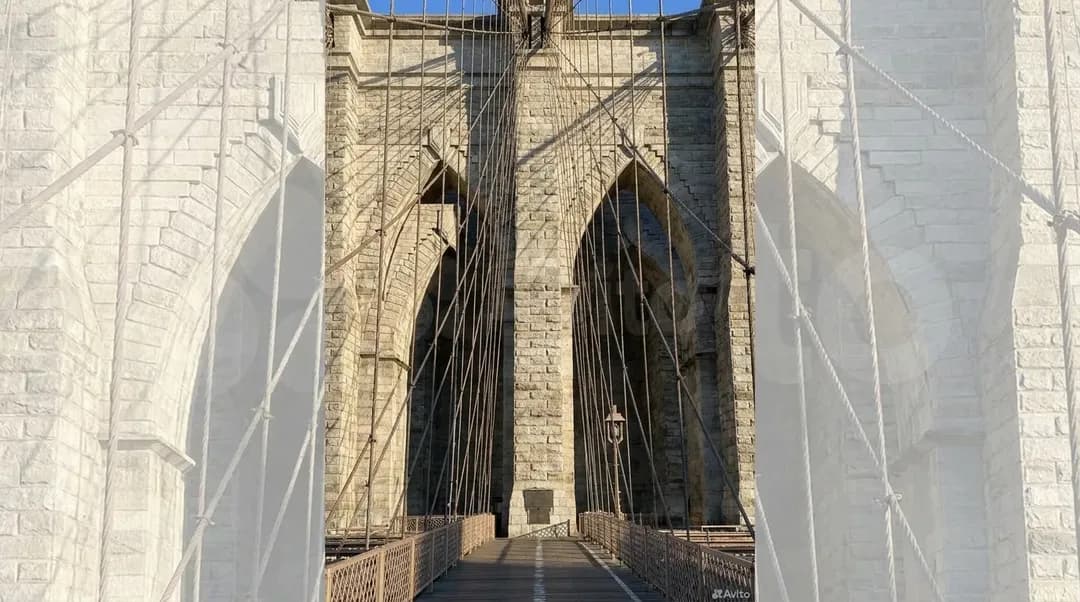
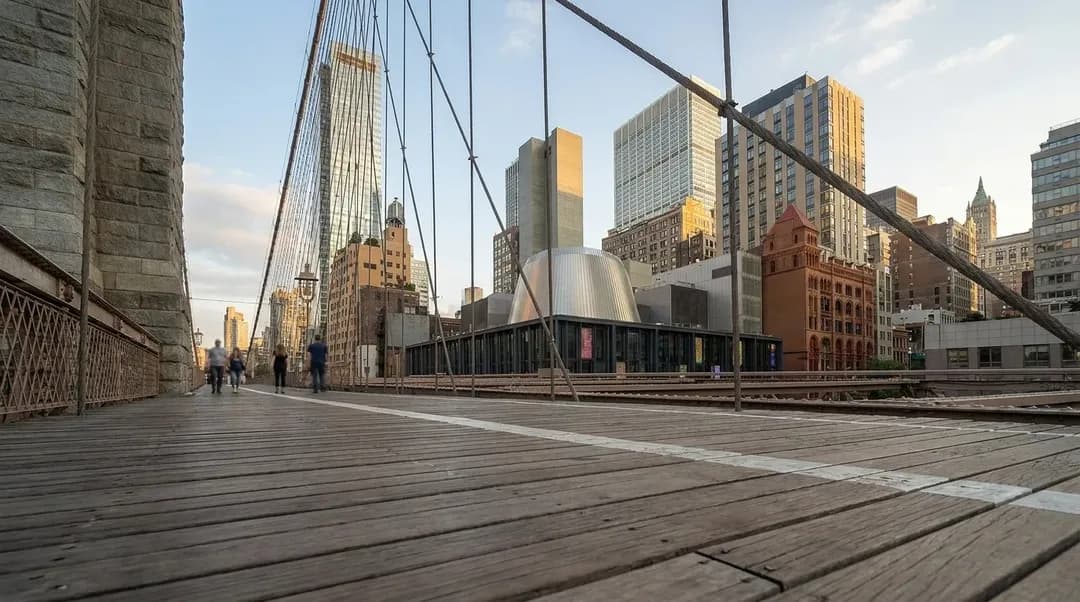
The walk itself is about a mile and a half and takes thirty to forty minutes if you're moving steadily, closer to an hour if you're stopping for photos. The pedestrian path sits above the car lanes, and the wooden planks are uneven enough that you'll feel every seam if you're wearing thin-soled shoes. There's little shade once you're past the tower, and in summer the reflected heat off the wood and the steel cables can make the bridge feel hotter than street level. Bring water, because there's nothing to buy until you're off the bridge.
From the Brooklyn side, once you reach the Manhattan tower and start descending, you're aiming for either the Chambers Street or City Hall subway stops. Chambers has the 1/2/3, the A/C, and the J/Z within a two-block radius, but the station labyrinth means your transfer might take longer than the walk between separate entrances. If you're heading to Midtown, the 4/5/6 at Brooklyn Bridge-City Hall is more direct, but that entrance is a block farther east and requires crossing Park Row during rush hour, which backs up every light cycle. If you're going back to Brooklyn, the A/C at High Street is your cleanest return—it's right at the base of the bridge on the Brooklyn side, and you avoid any Manhattan transfer entirely.
Late-night timing matters here. After midnight, the A and C trains run local and share the same track, so your wait stretches to twenty minutes even if you just missed one. The F at York Street runs every fifteen to twenty minutes after eleven, but the walk from the bridge to that station is darker and quieter than the walk to High Street, and on a weeknight the sidewalk along Tillary empties out fast. If you're finishing a walk after ten, plan for High Street and the A/C. If those trains are running slow—check before you descend from the bridge walkway—the 2/3 at Clark Street is a ten-minute walk north into Brooklyn Heights and usually has better service, though that adds another leg to your trip if you're heading east into Bushwick or Bed-Stuy.
Who should skip this entirely
If you're uncomfortable in slow-moving crowds where you can't step aside, the Brooklyn Bridge on any temperate weekend is not the place to test your patience. The walkway has a low railing on one side and a bike lane on the other, and during peak times there's no room to pause without someone nudging past you. People stop abruptly to frame a shot, cyclists ring their bells and squeeze through gaps that aren't quite wide enough, and there's always a tour group blocking the center of the path while their guide points at the tower cables. It's a functional route for commuters early in the morning, but as a sightseeing experience it requires tolerance for constant negotiation.
The bridge is also fully exposed. If it's raining, the wooden planks get slick and there's no awning or cover for a mile and a half. If it's windy, the gusts funnel between the cables and you'll feel every shift. In January and February, the wind-chill on the walkway is brutal, and your hands will go numb holding a phone for photos. If weather is marginal, check the conditions live before you commit to the walk—there's no reasonable bailout point once you're halfway across.
Accessibility is limited. The ramps on both sides are long and graded gently enough for wheelchairs and strollers, but the surface is uneven and the crowding makes it difficult to maintain a steady pace. If you're pushing a stroller or using a wheelchair, aim for a weekday morning, when the path is generally easier to navigate. Otherwise, you're stopping every few yards to let people pass or navigate around stationary groups.
What to verify the day you go
The Brooklyn Bridge walkway closes occasionally for maintenance, usually overnight, but sometimes without much advance notice if there's structural work or a film permit. The city's official DOT alerts page lists closures, but it's not updated in real time and the language is often vague about which lanes are affected. If you're planning to walk on a specific day, check that morning whether the pedestrian path is fully open. If it's closed or restricted to one direction, your timing will double and the crowding triples because everyone's funneled into half the space.
Weather changes fast in New York, especially in spring and fall. A forecast that shows partly cloudy at nine can turn into steady rain by eleven, and once you're on the bridge there's no shelter. If the chance of rain is above thirty percent, bring a light jacket you can tie around your waist. The wind is always stronger on the bridge than it is at street level—assume it'll feel ten degrees cooler than whatever your weather app says, and if the wind speed is listed above fifteen miles per hour, it's going to be unpleasant for the full walk.
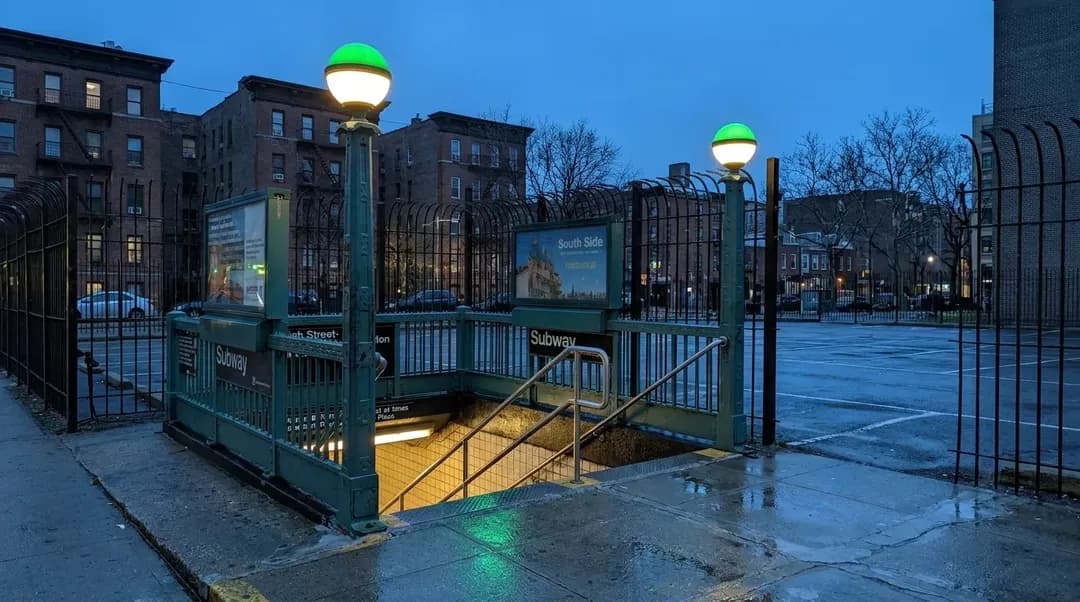
Subway service changes are constant in New York, and weekend work affects different lines every month. If your plan depends on a specific train to get you back from the bridge, check the MTA's service status page the morning of your walk, not the night before. The A and C frequently share a single track on weekends, the F sometimes skips York Street for hours at a time, and the 4/5 express trains drop to local service without warning. Know your backup line before you start walking, because if your planned train isn't running when you finish, you'll be standing at a closed entrance trying to re-route on your phone while your legs are tired and you just want to sit down.
Practical notes
- No tickets or fees required—the Brooklyn Bridge is a public pedestrian route, open 24 hours.
- Start from Brooklyn (Tillary & Adams) to avoid Manhattan entrance crowds and walk toward the skyline view.
- Allow 45–60 minutes for the walk with photo stops; the path is 1.5 miles with no shade or water.
- Check MTA service status the morning of your walk—weekend changes affect A/C/F trains frequently.
- Avoid midday weekends April–October unless you're comfortable in slow-moving shoulder-to-shoulder crowds.
- Verify pedestrian path status the day you go—occasional closures for maintenance or events are posted on NYC DOT alerts.
Tags: #karpo #nyc #newyorkcity #brooklynbridge #freenyc #nycwalks #brooklyn #manhattan #nycsubway #thingstodonyc #visitnyc #nyctravel #brooklynheights #downtownmanhattan #walknyc
Sources consulted: NYC DOT Brooklyn Bridge · MTA Service Status
All trademarks are the property of their respective owners.
Ask Karpo first
Text Karpo the morning of your walk to confirm the pedestrian path is fully open, check current subway timing from both bridge exits, and get a live route back to your neighborhood. If weather turns or a train drops out of service, Karpo will adjust your return plan while you're still on the bridge.
Ask Karpo for more information.
Keep reading
- Scenic Walking Trail Near Me: Central Park North Woods Ravine and Loch Walk
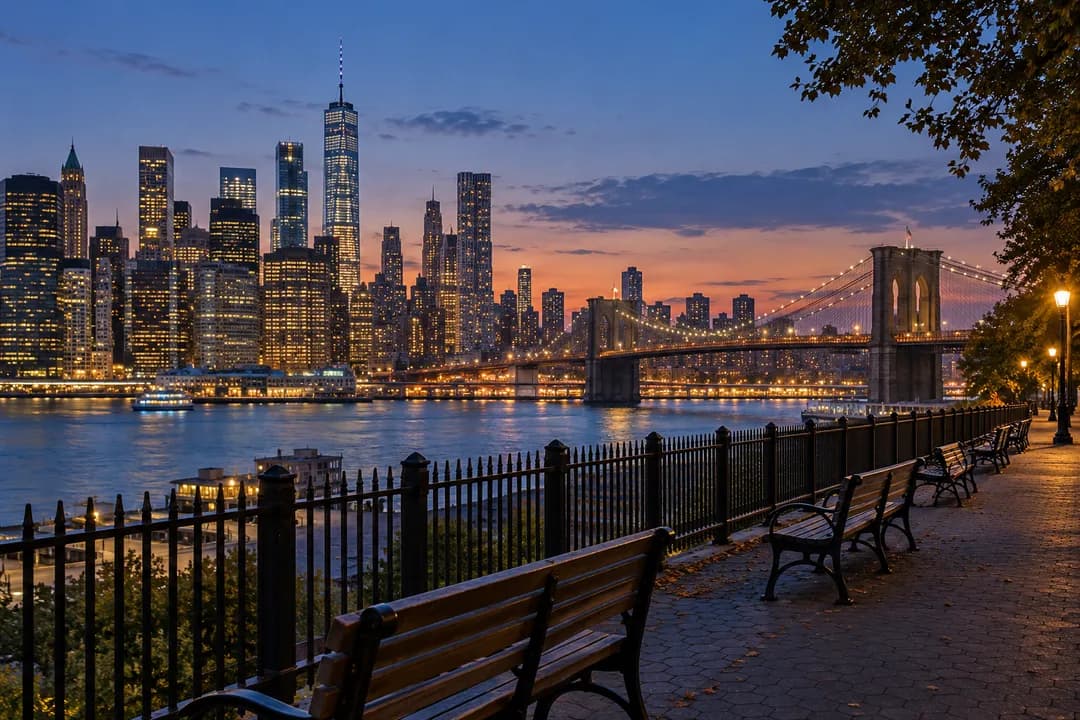 Scenic Viewpoint Near Me: Brooklyn Heights Promenade at Sunset
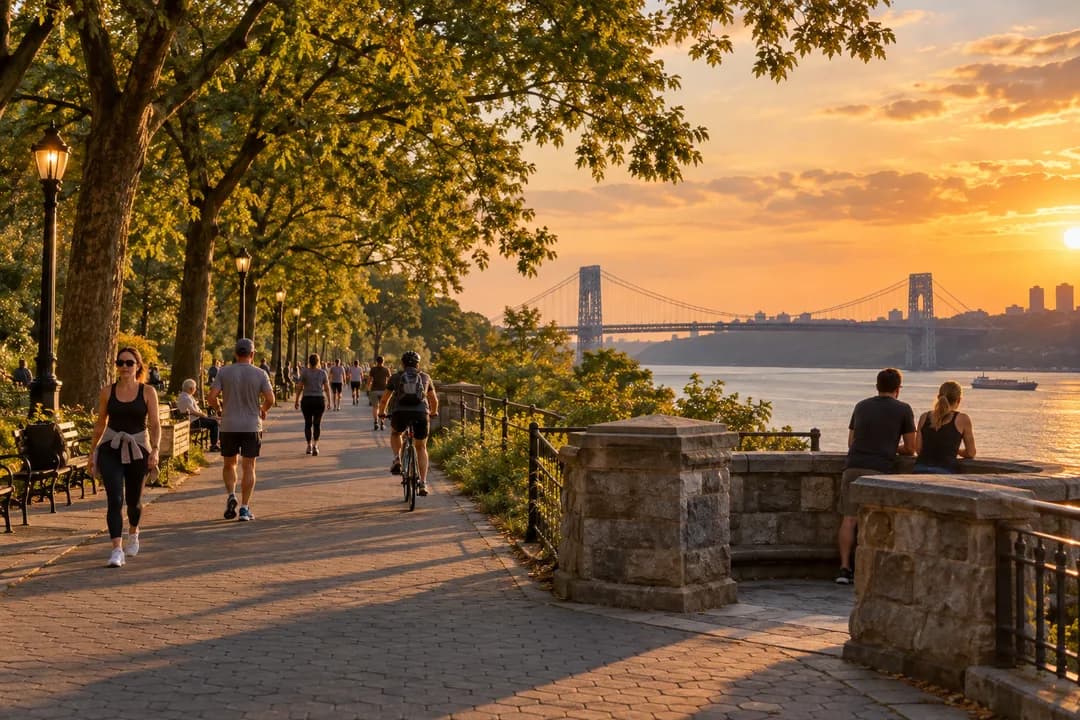 Scenic Viewpoint Near Me: Riverside Park Hudson River Walk