 Scenic Walking Trail Near Me: Central Park North Woods Ravine and Loch Walk
Free Things to Do
Scenic Viewpoint Near Me: Riverside Park Hudson River Walk
A practical guide to Riverside Park along the Hudson below Riverside Drive on the Upper West Side, with the best viewing angles, arrival timing, walking route, and Olmsted history.
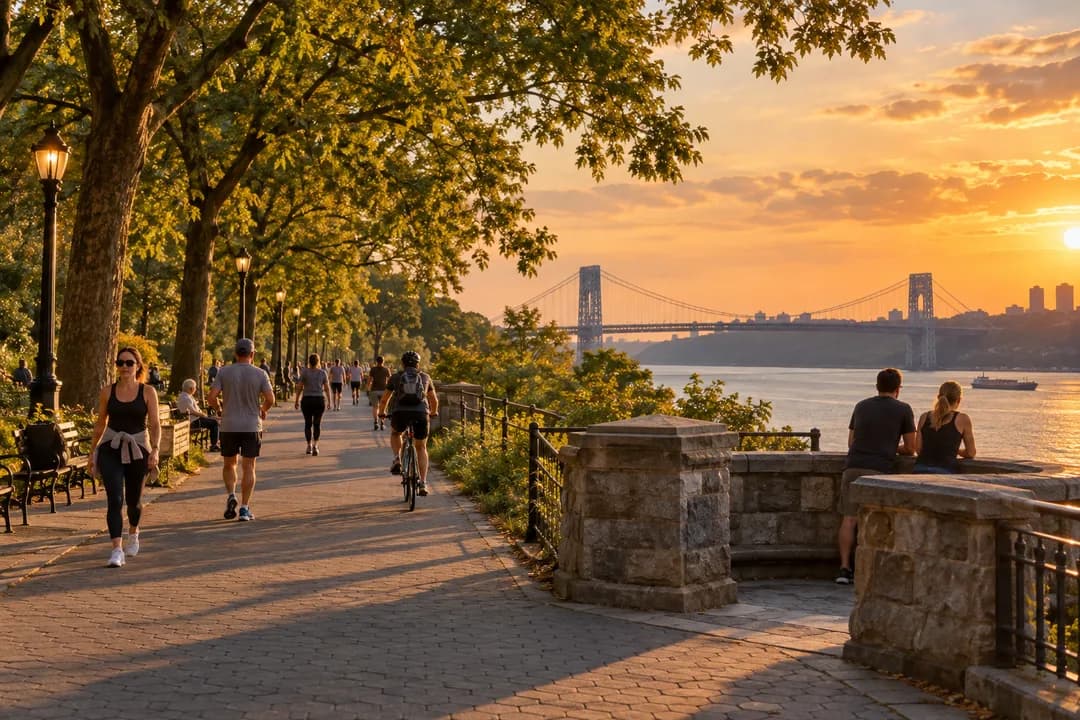
Riverside Park is the scenic viewpoint near me for a slower Hudson River outing in Manhattan. The park runs along the river below Riverside Drive on the Upper West Side, with overlooks, trees, promenades, athletic spaces, and river-facing paths stacked down the slope. It does not deliver one iconic skyline angle; instead, it gives you a sequence of changing views, from open water and sailboats to bridges and wooded slopes. Choose Riverside when the goal is to walk beside the city rather than stand in front of it.
A View That Unfolds as You Walk
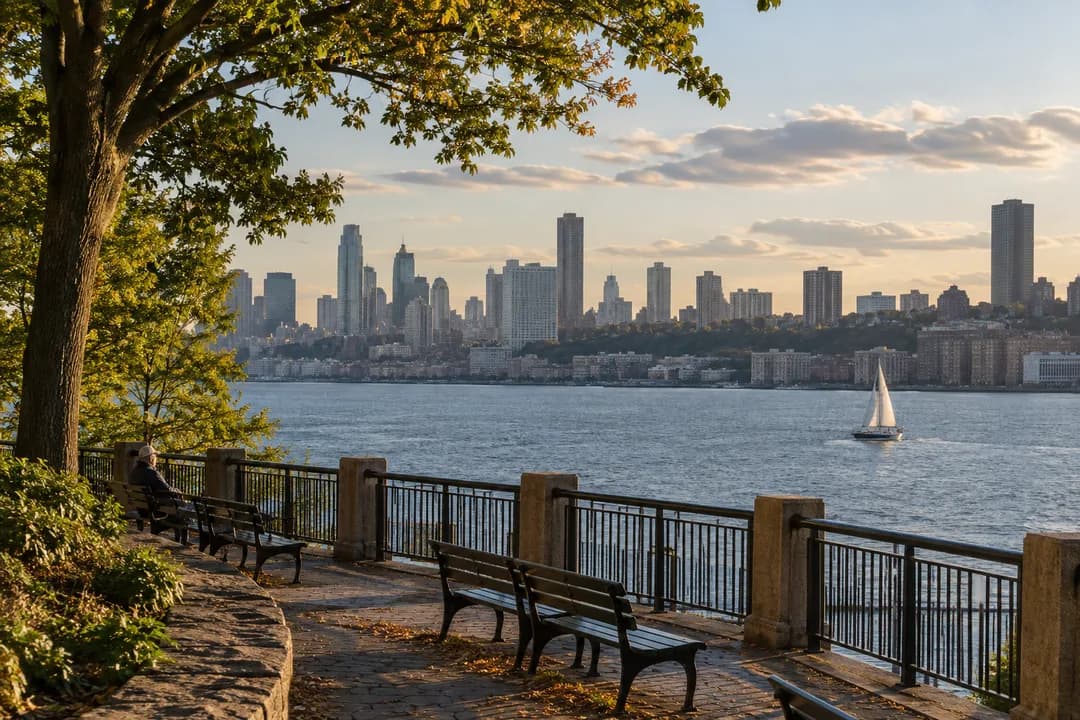
Riverside Park is most rewarding when you stop searching for a single perfect railing. The river appears and disappears between trees, ramps, terraces, and athletic fields, creating a more cinematic rhythm than a formal lookout. On one stretch you see open water; on another, a bridge or shoreline detail becomes the subject. The park's elevation changes make the route feel like a series of small reveals. Bring your attention to the landscape and let the panorama arrive gradually.
Morning light can make the Hudson look pale and expansive, while late afternoon adds warmer color to the park's stonework and tree canopy. The river remains the constant, but its surface changes with wind and traffic. Sailboats, ferries, and working vessels provide scale without needing a planned event. Sunset is less about a single sun position than about watching the west-facing water and the park transition from active daytime route to evening neighborhood walk.
The practical advantage of Riverside Park is that you can choose your level of effort. A visitor can take a short river-facing stroll, sit near a view, or commit to a longer north-south route. Families and runners use the park differently, and the varied paths make that coexistence easier than on a narrow promenade. Wear shoes that handle slopes and park surfaces, and do not assume the closest river edge is always the easiest section to reach.
Where the Hudson Becomes the Main Subject
Pick an entrance by cross street rather than by park name, because the park is a long ribbon with dozens of stairways and ramps. Walking west from Broadway on any numbered street gives the outing a clear transition from city blocks to open landscape. Two buildings make good anchors at the northern end: the Nicholas Roerich Museum, in a brownstone at 319 West 107th Street just off Riverside Drive, and The Riverside Church at 490 Riverside Drive, whose tower rises over the park near West 120th Street. If you arrive by car, do not make a tight sunset promise around curb availability; transit and walking suit the park's linear layout better.
Riverside Park's story starts with Frederick Law Olmsted. According to the National Park Service, the city acquired the original 191 acres in 1872, and Olmsted spent about two years gathering information before submitting his plan, which paired the park with Riverside Drive, a tree-lined roadway winding through the rocky landscape. Calvert Vaux carried the design forward after Olmsted left the parks board in 1878. That origin explains why slopes, trees, terraces, and river access feel layered instead of flattened into one plaza, and why the view rewards repeat visits.
A useful route is to enter from the Upper West Side, move toward the river, then follow the water until a bridge, overlook, or shaded seating area gives you a reason to pause. Turn back before the walk becomes a commitment if you are visiting with children or carrying a camera bag. For a longer afternoon, connect the park to the surrounding Upper West Side streets and return by a different entrance. The park rewards a flexible route more than a rigid list of stops.
How to Build a Comfortable Riverside Visit
There is no ticket line, but the best way to avoid the feeling of crowding is to visit before the late-afternoon rush or choose a section beyond the most obvious entrances. Weekend weather brings runners, families, and people meeting friends outside. That energy can be pleasant, but it changes the promise from quiet contemplation to neighborhood park life. If you want an emptier photograph, use the first part of the morning. If you want atmosphere, arrive when the park is active and let people supply scale.
Bring water, a layer, and enough time to sit. Riverside Park is less convenient for an impulse snack at every river-facing point than a commercial plaza, so plan food before or after the walk. Restrooms and services depend on the section and facility you use; the safest plan is to treat the park as an outdoor route rather than a self-contained attraction complex. The river breeze can be cooler than Broadway, especially when you stop instead of walking.
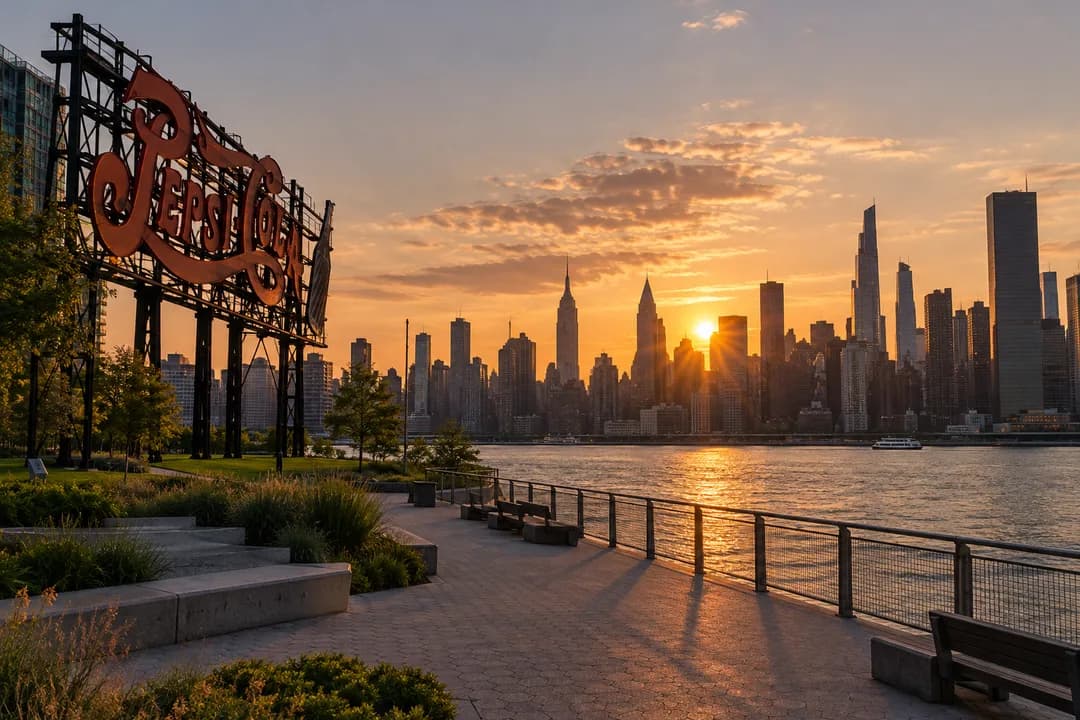
Skip Riverside Park if you need a single postcard view within five minutes of the subway. Brooklyn Heights gives a sharper bridge-and-Manhattan composition, while Gantry Plaza makes Midtown immediately legible across the water. Choose Riverside when you want a more spacious, layered walk and when the act of moving through a landscape matters as much as the photograph. That distinction helps prevent a good park from disappointing someone who came for a different kind of viewpoint.
Upper West Side Streets and Park Edges
The surrounding Upper West Side makes a natural extension. Walk the residential blocks before entering the park, then use the river as the organizing line. After the view, return toward Broadway for a meal or continue to another park section if the light remains good. The route is strongest when you leave room for a detour: a terrace, a tree-lined stair, or a bench with an unexpected angle can be more memorable than the location you marked before arriving.
Riverside is also a good choice for mixed groups. A photographer can work the river and bridges, a runner can keep moving, and someone who only wants fresh air can settle into a shaded section. Keep shared paths open and avoid turning a narrow overlook into a personal studio. The park's scale makes courtesy easier, but the busiest sections still reward compact bags, short photo stops, and a willingness to give the best rail position to the next visitor.
Riverside Park makes scenic viewpoint near me feel less like a shopping query and more like a route-planning decision. Enter from a cross street off Riverside Drive, move toward the Hudson, and let the park's terraces, trees, and water reveal the view in pieces. It is not the most concentrated panorama in New York, and that is exactly its strength. Come when you want a river walk with real neighborhood texture, not a queue for one famous frame.
Leave with the river still in view, even if the final section is only a short return walk. Riverside Park is valuable precisely because it does not compress the Hudson into one famous frame: trees, bridges, terraces, and changing light build the experience over distance. That is the version of Manhattan this route lets you keep.
Ask Karpo for more information.
Keep reading
- Scenic Walking Trail Near Me: Central Park North Woods Ravine and Loch Walk
 Scenic Viewpoint Near Me: Brooklyn Heights Promenade at Sunset
 Scenic Viewpoint Near Me: Gantry Plaza State Park Skyline Walk