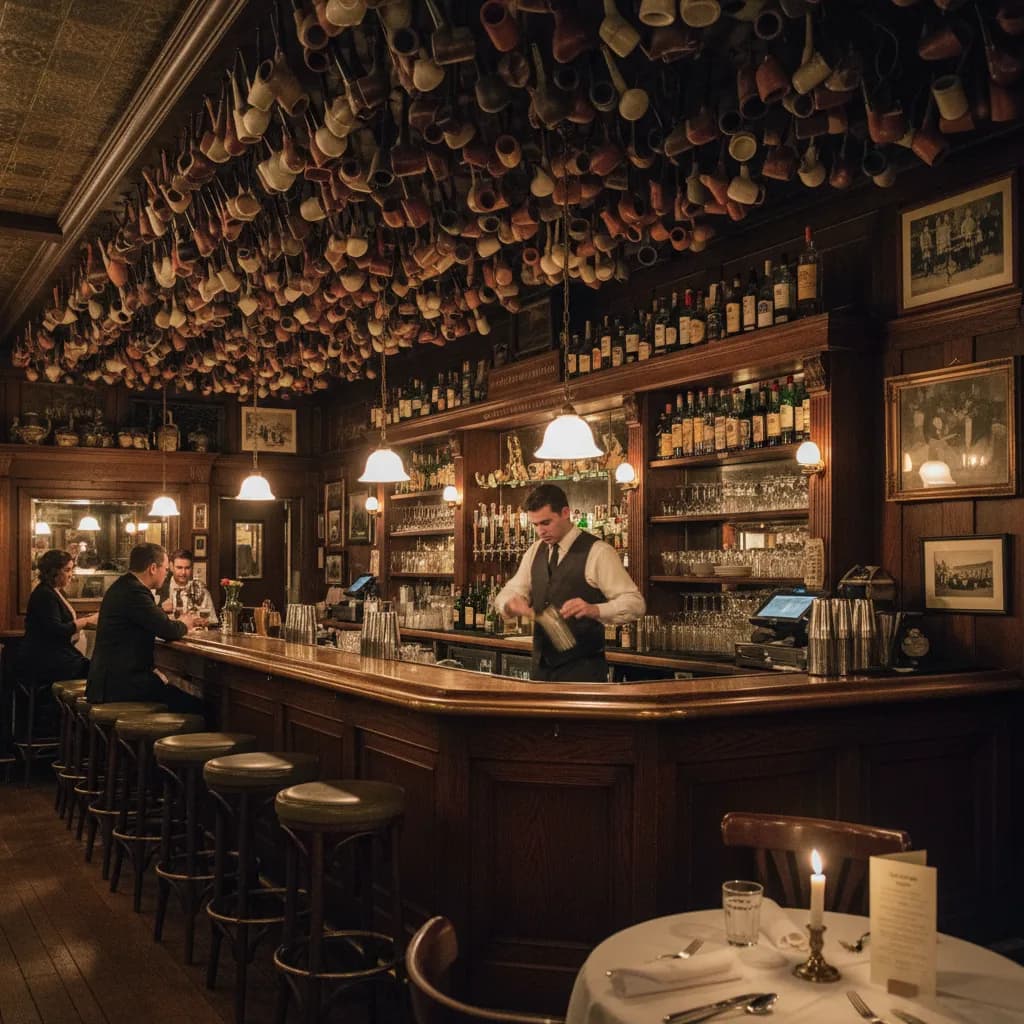
 Where to Eat Near Penn Station That Isn't a Chain
US Open 2026

US Open Draw Explained: Seeds, Wild Cards and Qualifying
A clear explanation of how seeds, qualifiers, wild cards, and lucky losers fill the 128-player singles draws at the US Open.
The US Open singles draws accommodate 128 players in both the men's and women's competitions, but understanding how those players arrive at their specific positions requires knowledge of several interconnected systems. Seeds receive protected placement to prevent early collisions between top players, while qualifiers earn their spots through a preliminary tournament, and wild cards offer direct entry based on selection criteria rather than ranking points. The draw ceremony, held shortly before the tournament begins, determines the bracket structure that shapes two weeks of competition at the USTA Billie Jean King National Tennis Center. For fans planning to attend or follow the tournament, grasping these mechanisms adds strategic depth to watching matches unfold.
Text Karpo Now: Tell us what you want from US Open Draw Explained, and Karpo can track official updates, match timing, tickets and transit.
How Seeding Works at Grand Slams
Grand Slam tournaments including the US Open designate 32 seeds in both singles draws. These seeded players receive protected placement designed to distribute the strongest competitors throughout the bracket. The top seed is placed at position one, the second seed at position 128, and the remaining 30 seeds are distributed according to a formula that balances the draw into sections. Seeding typically follows the ATP and WTA rankings, though the specific ranking date and any adjustments are announced before the draw ceremony.
The purpose of seeding extends beyond simply rewarding highly ranked players. By spacing seeds throughout the draw, the system theoretically ensures that the strongest players meet only in later rounds, creating a progression where match difficulty increases as the tournament advances. Seeds one through four are placed in separate quarters, meaning they cannot meet before the semifinals if all advance as expected. Seeds five through eight occupy positions that would lead to quarterfinal meetings with the top four. This structure creates the familiar bracket shape where developments in one section do not immediately affect players in distant parts of the draw.
Unseeded players, including qualifiers and wild cards, are placed in the remaining positions through the draw ceremony's selection process. This means an unseeded player might face a top seed in the first round or might draw another unseeded opponent, creating significant variation in path difficulty. The draw ceremony itself is a formal event where tournament officials fill the bracket while respecting seeding rules and, when applicable, separation guidelines that prevent players from the same nation meeting in early rounds unless draw size makes it unavoidable.
Qualifying Tournament Structure and Process
The qualifying tournament takes place during the week before the main draw begins, offering players outside the direct acceptance ranking cutoff a chance to earn their way into the 128-player field. Sixteen qualifying spots are available in both men's and women's singles. Qualifiers must win three consecutive matches in the qualifying draw to advance to the main draw, making it a demanding path that requires both form and endurance before the tournament proper even starts.
Players enter qualifying based on their ranking position, with those just below the main draw cutoff receiving priority. The qualifying draw itself contains 128 players competing for those 16 main draw positions, meaning only one in eight qualifiers successfully advances. These matches are played at the same venue, giving qualifiers the advantage of acclimating to court conditions before facing main draw opponents. For fans attending during qualifying week, these matches offer an opportunity to watch competitive tennis with less crowded grounds.

Once qualifiers win through to the main draw, they are designated with a 'Q' next to their name in the bracket. They occupy specific positions reserved for qualifiers rather than competing for the same slots as direct acceptances. Qualifiers can be placed anywhere in the bracket that a non-seeded position exists, and they face the same draw process as other unseeded players. A qualifier might draw a seeded opponent in round one or might face another qualifier or unseeded player, depending on how the draw unfolds.
Wild Cards and Selection Criteria
Wild cards provide direct entry into the main draw without requiring ranking qualification or success in the qualifying tournament. The USTA receives a set allocation of wild cards for the US Open and distributes them based on various factors including past performance, American player development priorities, protected ranking situations following injury, and occasionally promotional considerations. Wild card recipients are marked with 'WC' in the draw and, like qualifiers, occupy designated positions separate from the direct acceptance list.
The wild card selection process generates significant attention because it can provide opportunities to players who might otherwise miss the tournament. A former champion returning from injury, a promising junior making a professional debut, or a local player with regional support might all receive consideration. Wild card announcements typically occur in the weeks leading up to the tournament, and the USTA uses a combination of automatic awards through domestic playoff events and discretionary selections. International reciprocal agreements also result in wild cards being exchanged between Grand Slam tournaments.
Wild cards enter the draw ceremony on equal footing with qualifiers and other unseeded players in terms of placement. They receive no seeding protection and face the same assignment to available positions. This means a wild card could face a top seed immediately or could land in a more favorable section of the draw. The uncertainty is part of what makes the draw ceremony compelling—even after the participant list is known, the specific matchups remain unknown until the bracket is revealed.

Lucky Losers and Withdrawal Replacements
A lucky loser is a player who lost in the final round of qualifying but gains entry to the main draw when another player withdraws before their first-round match begins. The highest-ranked player who lost in the qualifying final round receives priority for lucky loser positions, creating an ordered list of potential replacements. Lucky losers inherit the exact draw position of the withdrawn player, meaning they could face any level of opponent depending on who withdrew and where that player was positioned.
The timing of withdrawals determines whether a lucky loser enters or whether the opponent receives a walkover. If a player withdraws after the draw is made but before the match begins, a lucky loser can be inserted. If a player withdraws during a match or after it has started, no replacement occurs. This system ensures the draw remains at 128 first-round matches while providing opportunity to players who came closest to qualifying on merit. Lucky losers are designated with 'LL' in the bracket and receive full prize money for any round they reach.
Practical Notes
The draw ceremony typically occurs the Thursday or Friday before the tournament's Monday start, and the USTA publishes the complete bracket immediately on the official US Open website. Fans planning their visit should check the draw as soon as it is released to identify which matches will appear on which days, since first-round matches are split across Monday and Tuesday. Grounds passes provide access to outer courts where many first-round matches occur, often featuring qualifiers and wild cards. Arthur Ashe Stadium and Louis Armstrong Stadium sessions require separate tickets and feature seeded players prominently, but the draw determines exact scheduling. Reviewing the bracket helps identify potential matchups and which sections might produce the most competitive path to the final.
Tags: #USOpen2026 #Tennis #GrandSlam #NewYorkTennis #ArthurAsheStadium #FlushingMeadows #USOpenGuide #TennisFans #SportsTravel #HardCourt #NewYork #KarpoFinds
Sources consulted: usopen.org — Official reference · usopen.org — Official reference · usopen.org — Official reference
All trademarks are the property of their respective owners.
Ask Karpo first
Before you lock in tickets or build a full day around an unconfirmed schedule, ask Karpo first. Share your dates, budget, and favorite players, and Karpo can help turn official US Open updates into a practical New York plan.
Ask Karpo for more information.
Keep reading
- Where to Eat Near Penn Station That Isn't a Chain
 Andytown Coffee in the Outer Sunset: The Snowy Plover Explained
- Best Things to Do in Chicago: What the City Gives Away