 Costume Rental Near Me in Williamsburg: Hit and Run Productions Archive
Hidden Gems & Odd Finds
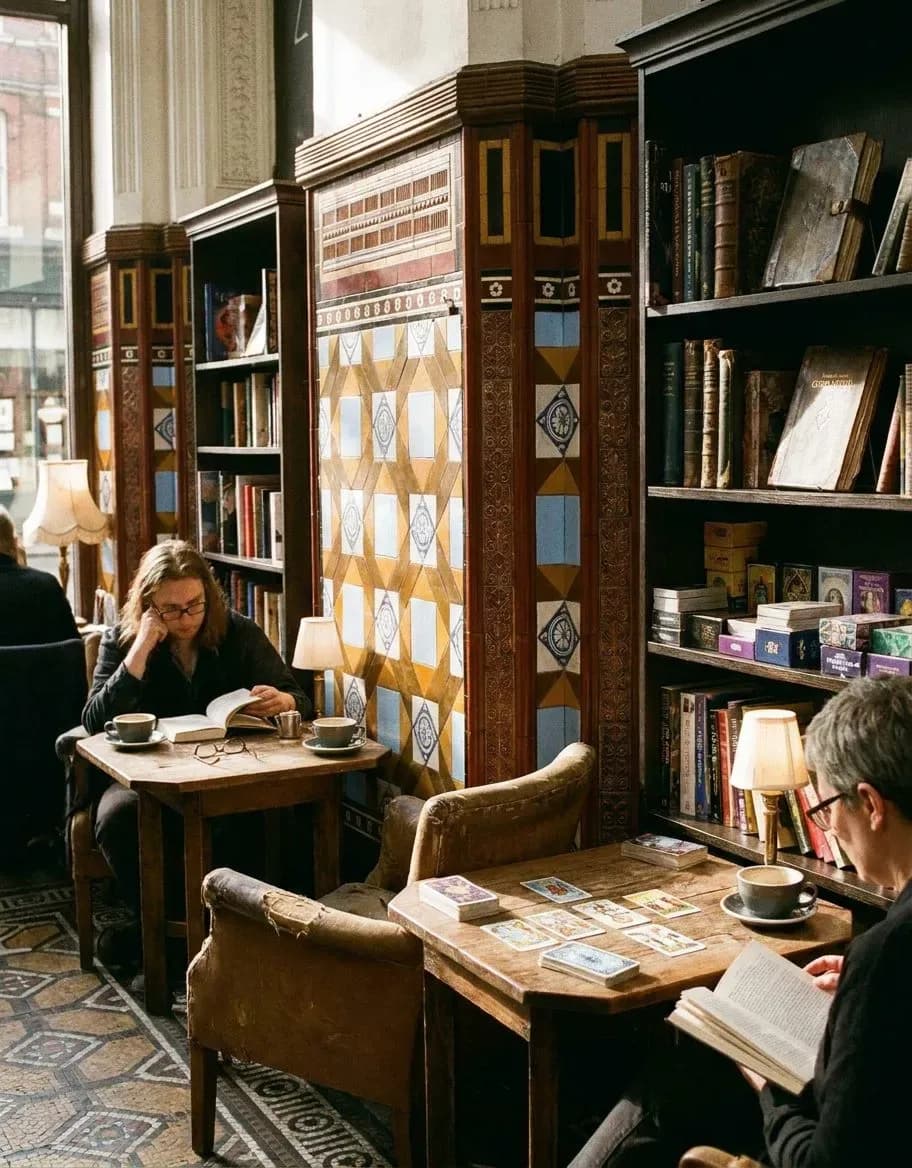
ula cafe's occult library when ludlow street's esoteric readers arrive for afternoon tarot
This Lower East Side cafe transforms from morning coffee service into an afternoon metaphysical consultation space, where tarot readers and rare grimoire collectors share tables with laptop workers beneath floor-to-ceiling shelves of esoteric texts.
The coffee drinkers and the cartomancers share the same floor-to-ceiling windows on Ludlow Street, separated only by the hour and a certain quality of attention. Ula Cafe is a cafe on Ludlow Street; verify the claimed occult-library and tarot programming before stating them as fact. The shelves include books and tarot-related materials By mid-afternoon, the atmosphere shifts without announcement. Laptops remain open at front tables while card spreads appear at the back. The light stays the same. The intention changes.
The afternoon window
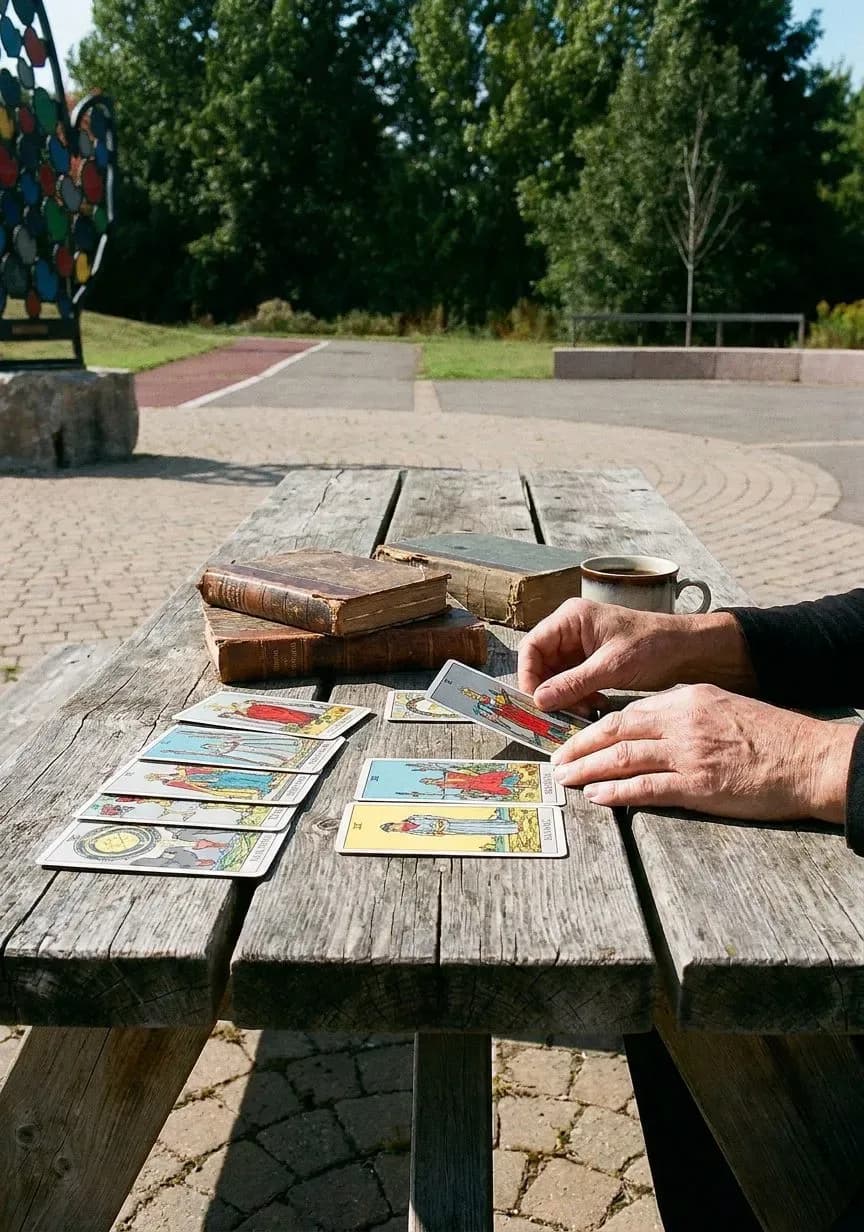
The shift happens in the afternoon, when tarot readers may arrive and set up at the back corner tables, arranging their decks and consultation notebooks with the casual confidence of regulars claiming familiar territory. Walk-in consultations are the norm—no appointments, no online booking systems, just the quiet understanding that if a reader is seated with cards visible, they're available. The weekend rhythm has become reliable enough that those curious about a reading know when to arrive, and those seeking uninterrupted work know to claim the front window seats early.
The transition feels less like a program change and more like a tide. Morning patrons thin out naturally as the lunch hour passes. Readers drift in carrying tote bags heavy with deck collections and reference texts. The staff nods, familiar. No one rings a bell or flips a sign. The cafe simply becomes, for a few afternoon hours, a place where someone might ask about career prospects over a spread of cards while someone else two tables away finishes a grant proposal. The coexistence is the point.
The collection itself
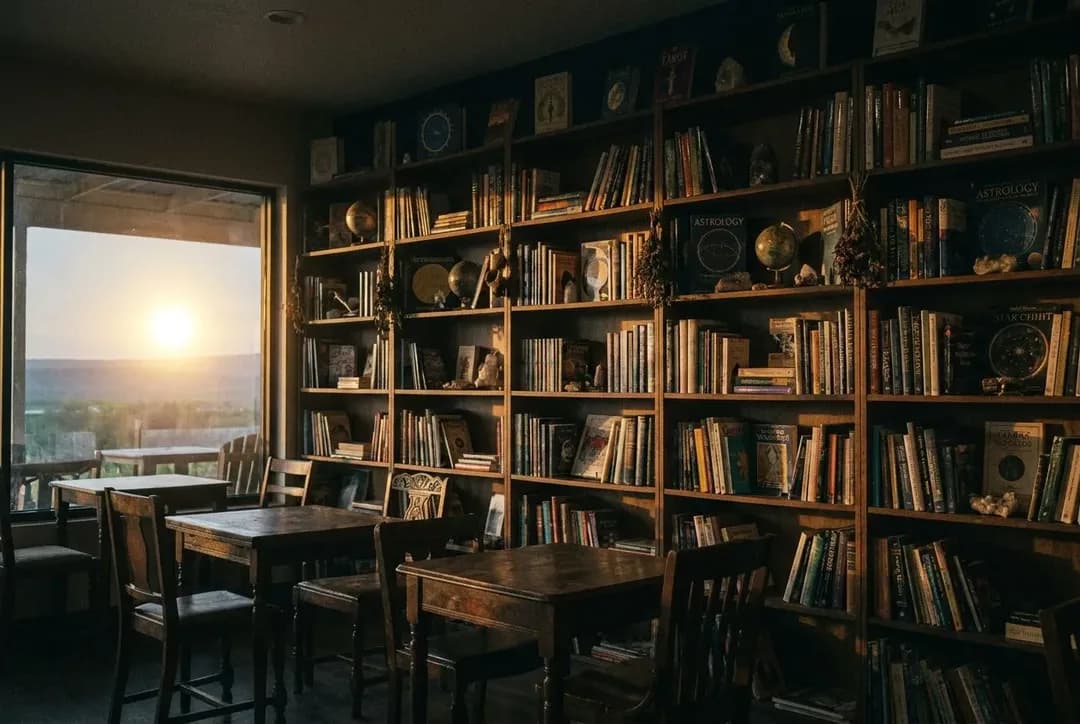
The occult book collection commands attention even before you understand its scope. Shelves climb toward pressed-tin ceilings, dense with titles in multiple languages, spines cracked from decades of handling or pristine in archival sleeves. These are rare and out-of-print volumes available for in-store reading but never for sale—a lending library of sorts, though nothing leaves the premises. Staff can provide handling guidance for the more fragile texts, producing cotton gloves for nineteenth-century grimoires or explaining the proper way to support the spine of a 1970s astrology compendium that's threatening to separate from its binding.
The collection skews toward the serious end of esoteric study. You'll find academic treatments of Western ceremonial magic traditions alongside primary-source Hermetic texts, modern Wiccan liturgy next to dense philosophical examinations of Thelema and chaos magic theory. Browsers are encouraged to pull volumes and settle in, ideally with a second coffee. Questions are welcome. The staff—many of whom maintain their own practices—can point a newcomer toward accessible entry points or help a dedicated student track down a specific ritual's historical context. It's the opposite of the crystal-shop vibe that dominates metaphysical retail. This is a research library that happens to serve excellent espresso.
The hybrid schedule
Ula Cafe operates on a hybrid schedule that makes the dual function legible to anyone paying attention. Morning coffee service transitions to afternoon metaphysical programming according to a weekly calendar published both in-house and online, outlining which readers will be present on which days, when specific workshops or discussion circles convene, and when the space returns to general cafe mode. Late 2026 has seen the schedule stabilize into a rhythm regulars can anticipate, though walk-ins remain welcome throughout. The programming never overtakes the cafe function entirely—coffee and pastries remain available all day, and no one is asked to leave or participate.
The calendar itself has become a minor work of design, a folded card stock affair listing moon phases alongside reader specialties and workshop topics. It's the kind of artifact that ends up pinned to apartment fridges, consulted when making weekend plans or when a specific question demands a specific type of guidance. The hybrid model solves a problem many metaphysical spaces face: how to fund serious esoteric work without relying entirely on retail sales of mass-market tarot decks and amethyst clusters. Here, the cafe income supports the library, and the library gives the cafe its particular gravity.
The regulars and the rituals
Spend a few visits and the cast becomes familiar. The software engineer who codes until two then closes her laptop for a thirty-minute reading, same reader every week. The graduate student working through the cafe's collection of alchemical texts in chronological order, taking meticulous notes in a hardbound journal. The older man who arrives Saturdays with his own deck, never for consultation, just to practice spreads in companionable silence. Conversation happens but isn't required. The space holds room for solitary practice and communal study in equal measure.
The readers themselves range in approach and tradition. One specializes in psychological tarot, drawing heavily on Jungian archetypes. Another practices a more folk-inflected style, reading playing cards with techniques passed down through family lines. A third incorporates astrology transits, pulling up natal charts on a tablet between card draws. What unites them is a certain seriousness, an absence of theatrical performance. These are practitioners treating divination as a legitimate tool for reflection and decision-making, not entertainment. The consultations feel less like fortune-telling and more like particularly intuitive therapy sessions.
Material atmosphere
The physical space itself reads as Brooklyn-via-Prague, all dark wood and amber glass, vintage pharmacy shelving repurposed for book storage, mismatched seating that somehow coheres into a single aesthetic. The lighting is warm enough for extended reading without the flat brightness of typical cafes. Afternoon sun slants through south-facing windows, catching dust motes and the gilt edges of older books. The scent is layered: espresso and cardamom, old paper and furniture oil, occasionally the faint smoke of palo santo when a reader cleanses their deck between clients. It smells like a place that has always existed, even though Ludlow Street's current incarnation is relatively recent.
Sound moves differently here. Conversation stays low without enforcement. The espresso machine hisses and gurgles but never dominates. Someone's ambient playlist drifts from overhead speakers, mostly instrumental, nothing jarring. The acoustic qualities feel intentional, designed for multiple simultaneous uses that don't bleed into one another. You can hold a quiet consultation in the back while someone takes a work call up front, and neither intrudes on the other. It's a small miracle of spatial design that shouldn't work but does.
Who this serves
Ula Cafe answers a question few spaces bother asking: what if esoteric practice didn't require total separation from daily life? The model rejects the idea that metaphysical work demands retreat to a dedicated temple or shop, instead proposing that divination and coffee, grimoire study and deadline work, can coexist without one diminishing the other. For the laptop workers, the presence of readers and rare texts adds texture to the afternoon, a reminder that other frameworks for understanding the world are literally within arm's reach. For the practitioners, the cafe setting destigmatizes and normalizes their work, removing it from the realm of spectacle and returning it to the everyday.
It also serves the genuinely curious, those who've wondered about tarot or ceremonial magic but found most entry points either too commercial or too insular. Here, you can simply sit with a book for an hour, ask a few questions, watch a reading from a respectful distance. The barrier to entry is the price of a coffee and a willingness to sit with unfamiliar ideas. That openness, paired with the collection's scholarly depth, creates a rare balance. Ula is neither occult Disneyland nor members-only lodge. It's a third thing, still defining itself.
Practical notes
Ula Cafe sits on Ludlow Street in the Lower East Side; verify the exact address and current hours directly, as the hybrid schedule shifts seasonally. Nearest subway access includes the F at Delancey-Essex and the J/M/Z at Essex. Street parking is scarce; the neighborhood is walkable. The space is ground-level with step-free entry, though the bathroom is compact. Bring cash for tarot consultations, which operate independently of the cafe's card-friendly register. The weekly calendar is available at the counter or online. Plan for at least ninety minutes if you intend to browse the collection seriously. Weekday mornings skew quiet if you're seeking work space rather than readings.
Tags: #the_odd_edit #ula_cafe #lower_east_side #nyc_occult #tarot_reading #esoteric_books #metaphysical_library #ludlow_street #weekend_plans #nyc_cafes #grimoire_collection #hermetic_texts #cartomancy #ritual_space #summer_2026
Sources consulted: Tarot · Lower East Side · Lower East Side Guide · Lower East Side Transit · Coffeehouse Culture
All trademarks are the property of their respective owners.
Ask Karpo for more information.
Keep reading
- Costume Rental Near Me in Williamsburg: Hit and Run Productions Archive
 Costume Rental Near Me in Flatiron: Abracadabra NYC Showroom Floor
 Costume Rental Near Me in NoHo: Albright Fashion Library Archive