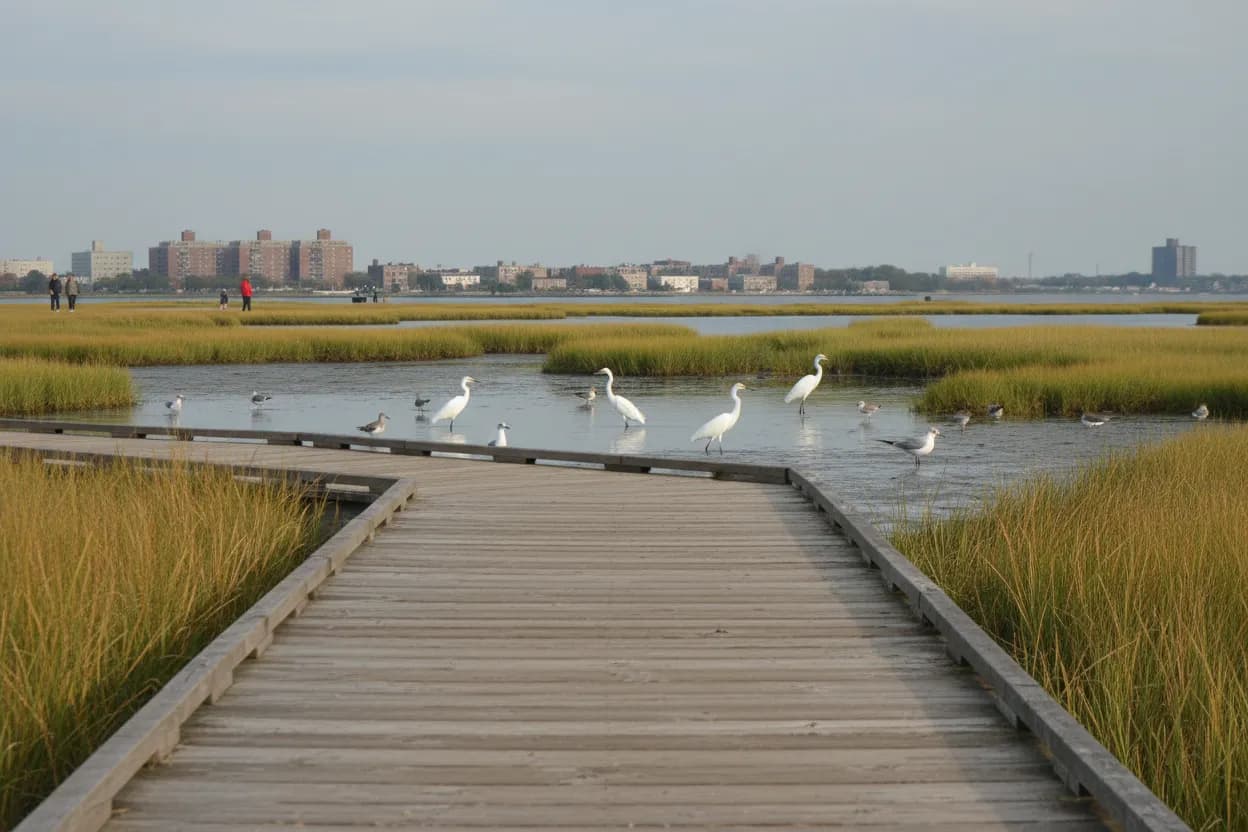
Marine Park Salt Marsh Nature Trail is not the kind of Brooklyn outing that needs a big schedule, but after rain it does need judgment. The draw is simple: a flat, low-cost route beside Gerritsen Creek, with marsh views, viewing platforms, and enough bird activity to satisfy a beginner without turning the morning into a full hike. The tradeoff is that wet edges, insects, puddled approaches, and stroller or wheelchair friction can change the outing quickly. For a late-morning reset on July 20, 2026, treat this as a flexible loop from the Salt Marsh Nature Center area, not a promise that every surface will feel easy.
Want the route checked against today’s rain, bus delays, and park notes before you leave? Text Karpo with Marine Park Salt Marsh and your starting neighborhood.
Start With The Weather, Not The Map
The best version of this walk is after rain has stopped, clouds are lifting, and the heat has not yet settled over the marsh. NYC Parks and state wildlife guidance confirm Marine Park as a salt marsh and grassland habitat, but they do not guarantee trail conditions after storms. If radar shows another band approaching, shorten the plan to a nature-center-area look, one viewing point, and a clean exit before the surface becomes the main event.
For a child or mobility-conscious companion, late morning is sensible because visibility improves and the outing stays bounded. The risk is that sun after rain can make bugs and humidity feel worse than the forecast suggests. Pack water, repellent, and a small towel for damp benches or railings. If shoes are already soaked at the first muddy approach, call that useful information, not a failed trip, and pivot to a paved park edge.
Where To Aim First
Use the Salt Marsh Nature Center area on Avenue U as the practical anchor, because community and park partners identify it as the starting point for walks into Marine Park’s marsh landscape. Salt Marsh Alliance lists the center at 3302 Avenue U; Marine Park Alliance lists 3301 Avenue U, so use the Avenue U and East 33rd Street area rather than betting on a single doorway number. Confirm any indoor access before relying on bathrooms or staff help.
Once there, think in segments: arrival, first marsh view, boardwalk or trail stretch, and return. NYSDEC lists the Salt Marsh nature trail, nature center, and viewing platforms as watchable-wildlife spots, which supports a compact plan. Do not push for every spur after rain. The value is in pausing long enough for birds to move and for kids to notice the creek, grasses, mudflats, and small changes in sound.
Boardwalk Math For Damp Feet
The route is often described as easy and flat, but flat is not the same as friction-free. After rain, the calculation is less distance and more surface variety: paved approach, possible puddles, boards, soft shoulders, and narrow moments where passing another group may take patience. If your companion uses a stroller, cane, or wheelchair, decide in advance whether a partial out-and-back counts as success. That keeps the morning from turning into a negotiation at the wettest point.
A useful rule is the ten-minute test. Walk ten minutes from the starting area, checking wheel vibration, shoe grip, mosquitoes, and whether the child is exploring or resisting. If conditions are good, continue to the next viewing point and reassess. If not, reverse while everyone is still dry enough to be reasonable. This is especially important because official pages confirm the habitat and access points, not a real-time passable surface report.
Birding Payoff Without Overpromising
Marine Park is a legitimate beginner birding stop, not a zoo-like guarantee. NYSDEC highlights birdwatching, viewing platforms, Gerritsen Creek habitat, and species such as myrtle warblers, canvasbacks, and grasshopper sparrows among wildlife to watch. Salt Marsh Alliance also notes waterfowl around the creek. Use those as habitat cues, not a checklist. The better goal is noticing movement across water, grass, sky, and mud, especially after rain has quieted foot traffic.
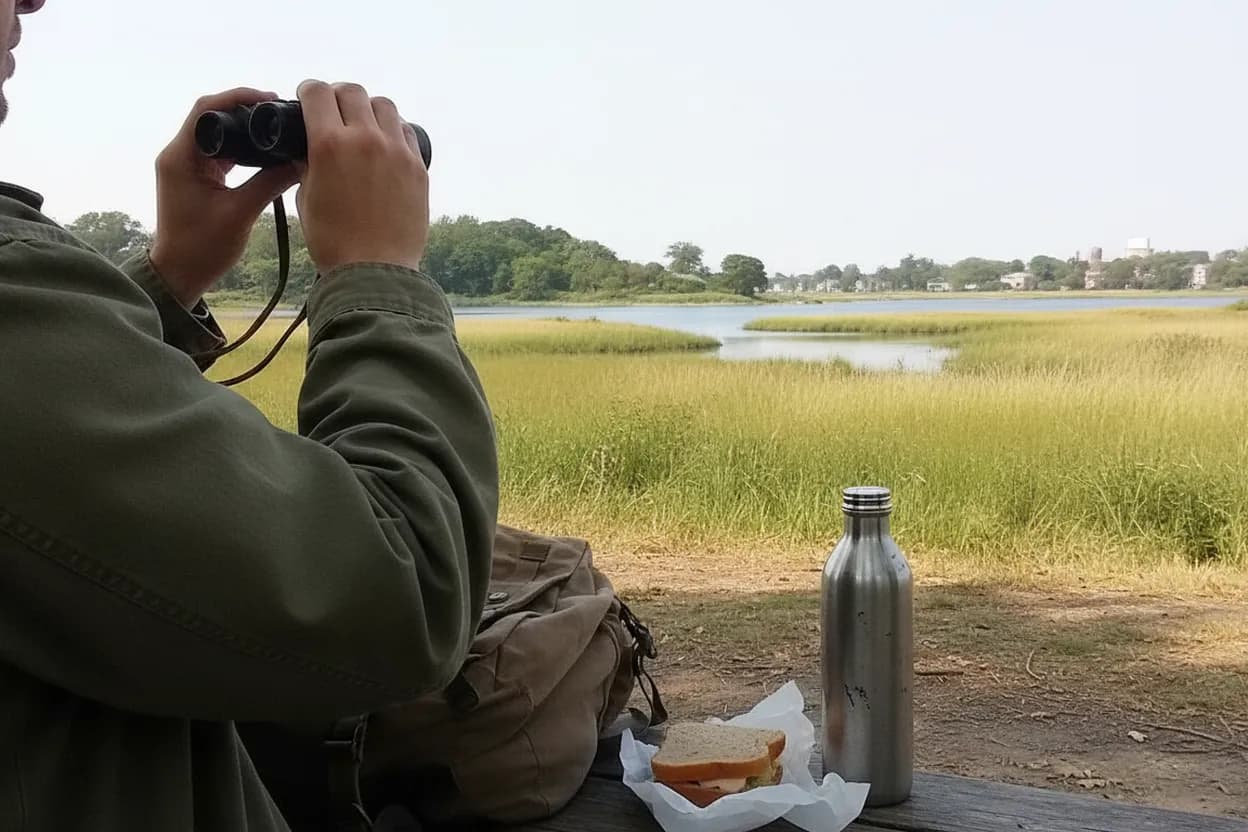
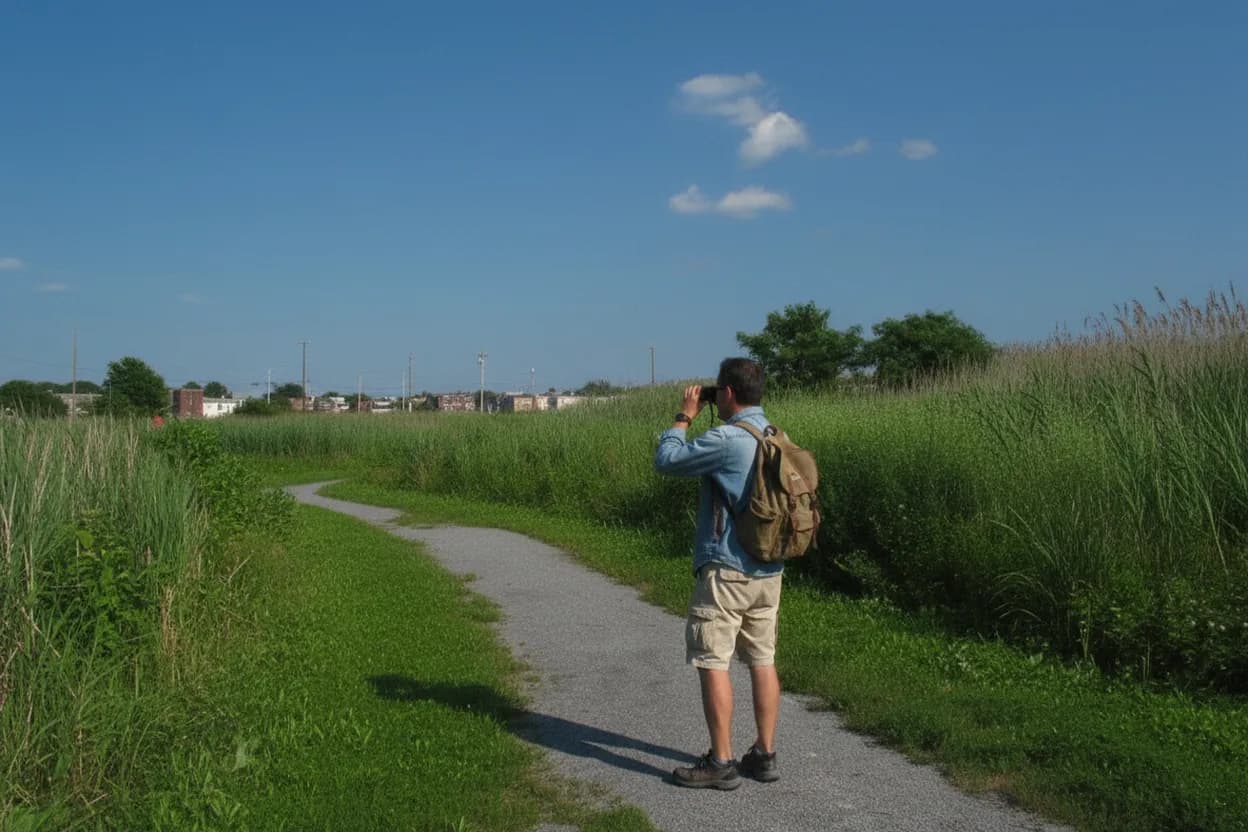
Bring binoculars if you have them, but do not make gear the price of admission. For children, set a short mission: find one bird on water, one bird in the air, and one sound you cannot identify. For adults, scan slowly before walking again. Birds often appear after you stop. If the trail is buggy or slick, a stationary watch from a platform can deliver more than forcing a longer loop.
Transit And Arrival Tradeoffs
For transit, verify the live route before leaving. MTA Bus Time shows the B3 running via Avenue U, with stops including Avenue U at East 33rd Street and nearby blocks, which makes it the clearest bus reference for the nature center area. Brooklyn Bird Club’s 2026 event directions also mention the B3 along Avenue U, the B31 at Gerritsen Avenue and Avenue U, and the B41 at Kings Plaza with a longer walk.
Driving may be easier for families carrying extra shoes or mobility gear, and Brooklyn Bird Club’s field-trip notes describe a large free public parking lot across from the nature center. Still, do not build the outing around a guaranteed space, especially on weekends or during park events. If transit is delayed, keep the plan intact by dropping the loop ambition and making the marsh overlook the destination, then heading home before hunger takes over.
Who This Walk Fits Best
This outing fits someone who has been inside too long and wants air without spending money or committing to a strenuous hike. It is especially strong for a Brooklyn family, a first-time birder, or a visitor who prefers real landscape over a programmed attraction. The terrain is approachable, and the habitat is varied enough to feel different from a playground walk. The catch is that the marsh asks for patience, weather awareness, and tolerance for imperfect surfaces.
It is a weaker fit for anyone who needs fully predictable accessibility, a guaranteed indoor fallback, or a long list of amenities. Salt Marsh Alliance posts weekend public hours for the nature center, but staffing and access can change, and the outdoor trails remain the core experience. If your group needs reliable bathrooms, seating, or climate control, verify the center first or pair the walk with a separate nearby stop that can absorb a change of plans.
What to Confirm Before Committing to Marine Park Salt Marsh Nature Trail
Final checklist for July 20, 2026: confirm the current forecast and radar, check MTA Bus Time if taking the B3, look for NYC Parks alerts for Marine Park, and verify Salt Marsh Nature Center hours if indoor access matters. Wear closed shoes that can get dirty, bring repellent, water, and a bag for wet layers. Keep dogs leashed where required, stay on marked paths, and avoid entering marsh grass or muddy habitat edges.
The backup decision is straightforward. If rain returns, bugs spike, wheels struggle, or the child loses interest, shrink the outing to one platform, a five-minute quiet watch, and a return along the firmest route. If conditions are better than expected, extend gently rather than racing the whole trail. Marine Park Salt Marsh works best when treated as a reset with options: enough nature to matter, close enough to leave without regret.
Tags: #MarinePark #SaltMarshNatureTrail #BrooklynBirding #NYCParks #BrooklynFamilies #AccessibleNYC #NatureWalk #HiddenGemsNYC #GerritsenCreek #BeginnerBirding #FreeNYC #AfterRain #AskKarpo #BeforeYouGo
Sources consulted: Source 1: dec.ny.gov · Source 2: saltmarshalliance.org · Source 3: marineparkalliance.org · Source 4: bt.mta.info · Source 5: brooklynbirdclub.org
All trademarks are the property of their respective owners.
Ask Karpo first
Tell Karpo your date, group size, budget, and starting neighborhood. We’ll check current access, timing, transit, and the cleanest plan for Marine Park Salt Marsh Nature Trail, Brooklyn before you head out.