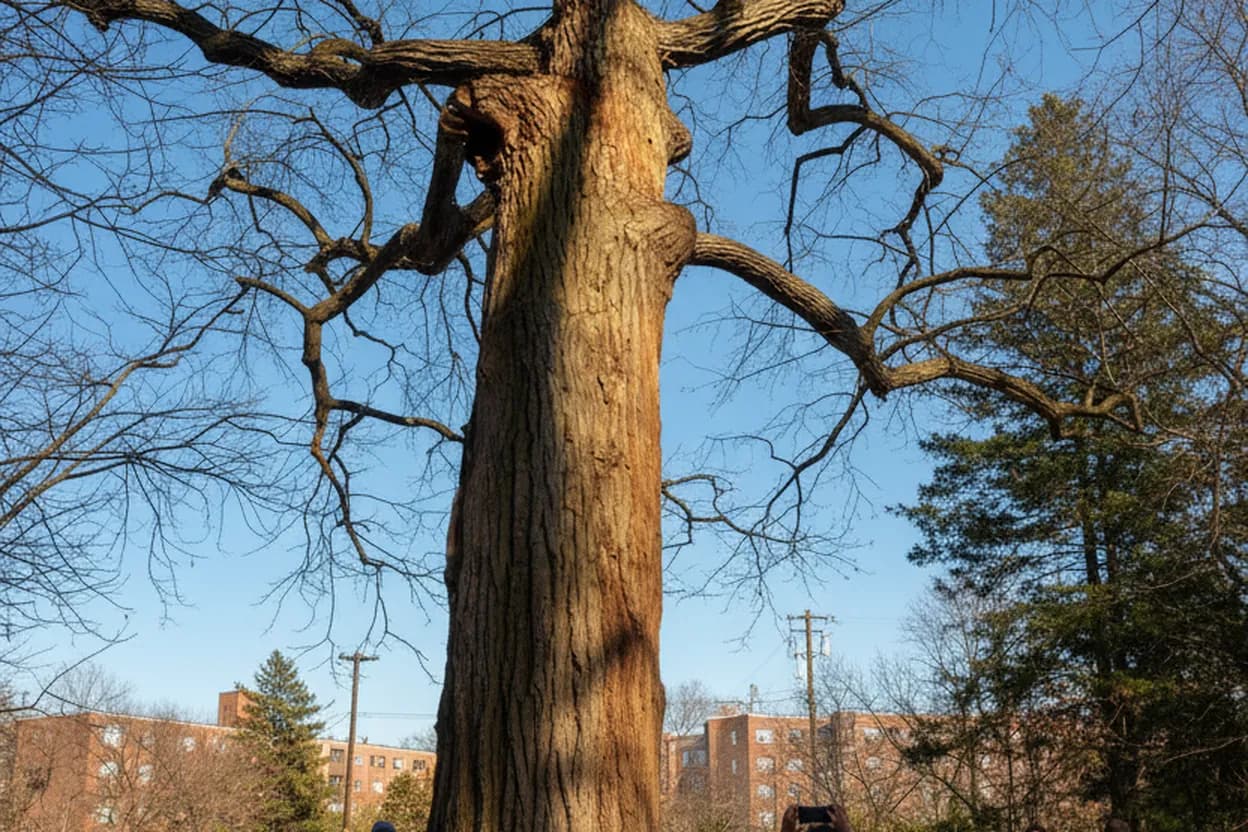
The Queens Giant sounds like a quick win: one extraordinary tulip tree, one odd landmark, one story to tell without committing to a full park day. The reality is slightly more demanding. NYC Parks lists the Alley Pond Giant on Tulip Tree Trail and directs visitors to enter from the Horace Harding Expressway side, but this is still a wooded park visit with uneven ground, navigation choices, ticks, poison ivy risk, and weather-dependent footing. For a Queens reader who wants a low-energy morning walk with a friend who dislikes long hikes, the trip can work. The difference is treating it as a focused nature errand, not a casual sidewalk detour.
Want a faster call on whether today is too muddy, hot, or transit-dependent? Text Karpo with your start point and timing, and ask for the shortest realistic version.
Start With The Right Entrance
Use the Horace Harding Expressway approach as the default, because NYC Parks places the Alley Pond Giant along Tulip Tree Trail and specifically notes entry from the Horace Harding Expressway entrance. Do not aim for the park’s broadest or prettiest access point unless you want a longer walk. Alley Pond Park is large, divided by major roads, and easy to underestimate when a map makes everything look compact. The goal here is proximity, not a scenic sampler.
The practical landmark to confirm before leaving is the Horace Harding Expressway and East Hampton Boulevard area, which NY1 also identified as the trail starting point in its reporting on the tree. From there, expect a natural-surface walk rather than a polished attraction entrance. If your companion is already annoyed by vague directions, assign one person to navigation and one to watching trail signs and footing. This is a short quest only when the start is correct.
Keep The Walk Small
The Queens Giant is best treated as a single-object nature quest. Go in, find the tulip tree, spend a few quiet minutes outside the protective boundary, and leave by the same route if energy is low. That pacing keeps the visit from turning into an accidental tour of wetlands, meadows, ponds, and ballfield edges. Alley Pond Park has enough terrain to absorb a whole morning, but the tree visit does not need to carry that ambition.
Build in a realistic buffer anyway. The trail is not a straight museum corridor, and the useful time is not just walking time; it includes finding the entrance, deciding at forks, stepping around damp patches, and checking yourself afterward. A 30-minute fantasy can become an hour without anything going wrong. If you only have a hard half hour before another commitment, save it for a drier, cooler, less pressured morning.
Go Before Heat Builds
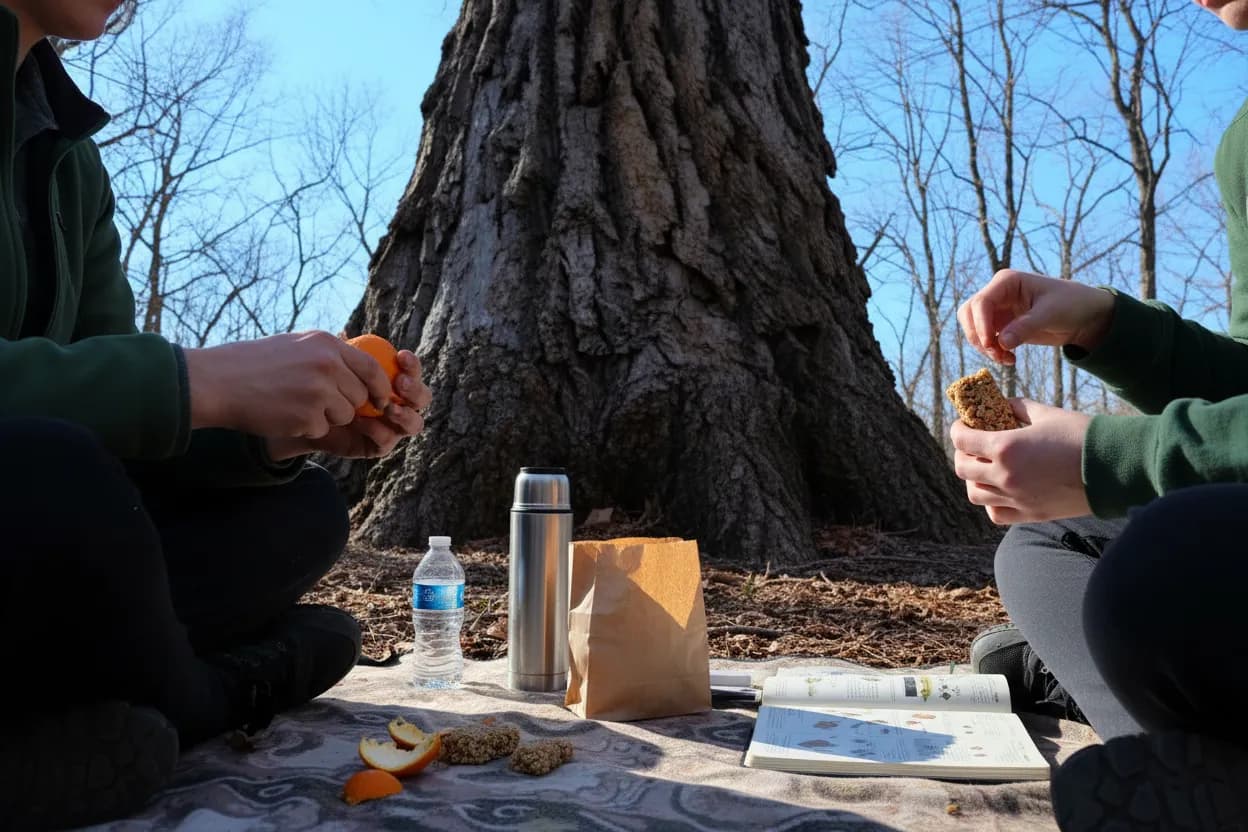
For July 20, 2026 planning, the strongest version is a dry morning after several clear days. That timing gives you better footing, lower heat stress, and fewer reasons to push faster than the trail deserves. Alley Pond’s wooded sections can feel sheltered, but shade does not remove humidity, insects, or the effort of uneven ground. Bring water even for a short visit, especially if you are arriving by bus and cannot retreat immediately to a car.
Skip the middle of a hot day if the whole point is a low-energy outing. The Queens Giant is impressive, but it is still a tree behind a protective fence, not an air-conditioned payoff. If your friend dislikes long hikes, heat will make the trail feel longer than it is. Morning also gives you more patience for navigation mistakes and more options if the first path segment is muddy, blocked, or simply less obvious than expected.
Know The Transit Tradeoff
The trip can work by bus, but it is not as frictionless as a subway-to-sidewalk landmark. MTA Bus Time lists the Q30 between Little Neck and Jamaica via Horace Harding Expressway, and the route includes a Horace Harding Expressway and East Hampton Boulevard stop in the direction toward Jamaica. That makes transit plausible for a Queens reader, especially from Jamaica LIRR or nearby bus connections, but you should check live arrivals before committing.
The transit failure mode is not the walking distance alone; it is waiting in heat, missing a directional stop, or finishing the tree visit just as the next bus has gone. Confirm both outbound and return stops on MTA Bus Time the same morning, then screenshot the route if service pages are slow. If headways look thin or storms are nearby, this stops being a short odd landmark walk and becomes a patience test.
Plan For Ticks And Brush
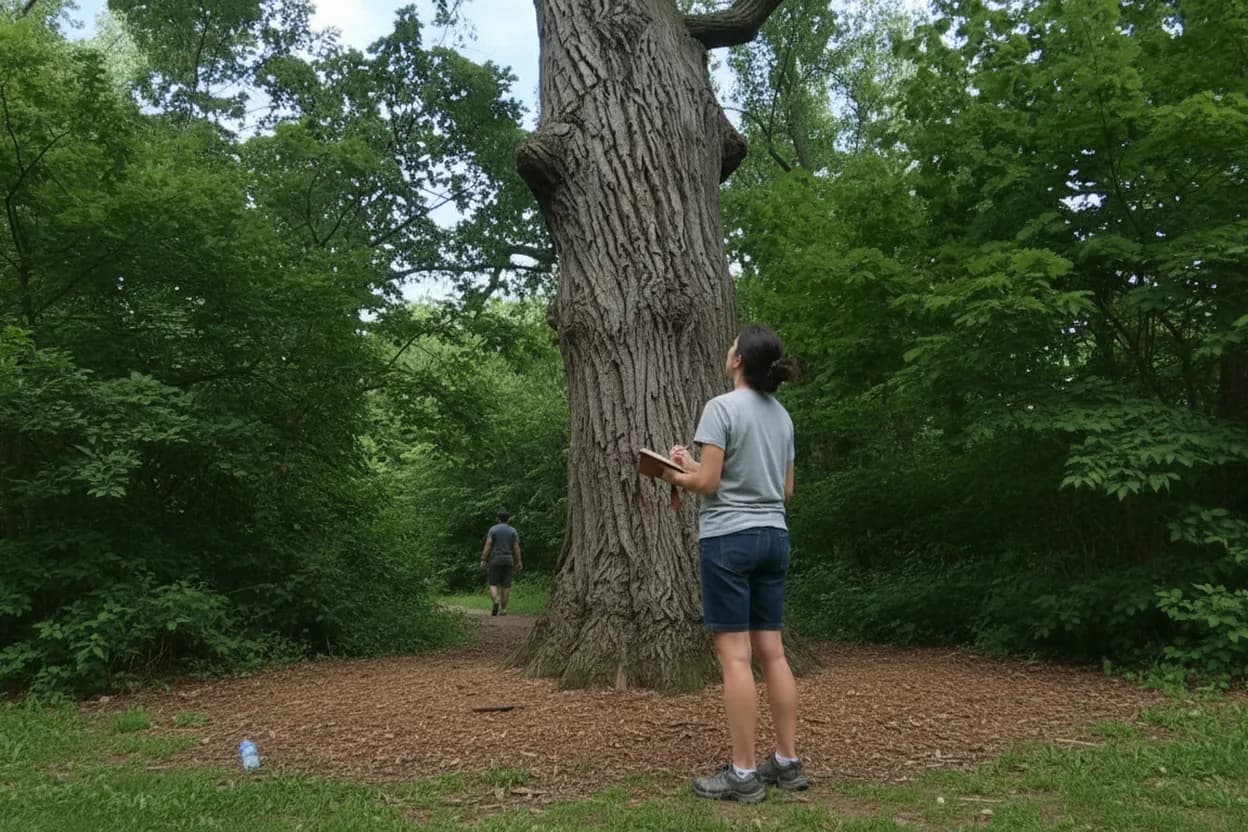
NY1’s ranger-sourced report on the Queens Giant specifically warned visitors to wear long sleeves for tick season and pants because poison ivy is on the trail. That advice still belongs in the decision guide, because the route is wooded and partly narrow rather than a paved plaza. Closed shoes are the baseline. Light-colored socks help with a tick check afterward, and repellent is reasonable if you already use it safely.
Do not step off trail to improve the photo or get closer to the trunk. The tree is fenced for protection, and trampling around an old specimen creates the exact pressure the fence is meant to prevent. It also raises your exposure to ticks, poison ivy, roots, and hidden wet spots. If your ideal visit requires touching the bark or staging a close-up inside the boundary, choose a different tree walk. This one is for looking, not handling.
Skip After Heavy Rain
Heavy rain changes the math. Alley Pond Park includes freshwater and saltwater wetlands, tidal flats, kettle ponds, forests, and meadows, according to state and city-adjacent conservation descriptions, so wet ground is part of the landscape rather than an exception. After a storm, a short trail can mean slick roots, soft soil, puddled low spots, and more brush contact as people edge around mud. That is not the right setup for a reluctant hiking companion.
The backup rule is simple: if the last day or two brought heavy rain, verify conditions instead of assuming the trail is fine. Check NYC Parks alerts, recent weather, and your own tolerance for turning around. If there is any uncertainty, make the visit conditional: go only if the first trail segment is dry and clear. Turning back early is not a failed outing; it is the right call for a landmark that will still be there.
Use This Final Checklist
Before leaving, confirm four things: the Horace Harding Expressway entrance, Q30 live arrivals if you are using transit, current weather, and whether NYC Parks has any alerts affecting Alley Pond Park or its trails. Then pack water, closed shoes, long pants, and a phone with enough battery for maps. Tell your friend the plan is a focused tree visit with an easy turnaround, not an open-ended hike through the park.
At the site, stay on marked or established paths, respect the fence, take a quick photo from outside the boundary, and leave by the route you understand best. If the trail is muddy, overgrown, confusing, or hotter than expected, turn around before morale drops. The Queens Giant works when the visit stays modest: one remarkable tulip tree, a little Queens natural history, and no obligation to convert curiosity into a full park day.
Tags: #QueensGiant #AlleyPondPark #QueensNYC #NYCParks #HiddenGems #OddFinds #TulipTreeTrail #TransitTrip #MorningWalk #NatureWalk #AskKarpo #BeforeYouGo #NYCOutdoors #QueensHiddenGem
Sources consulted: Source 1: php1-84.nycgovparks.org · Source 2: dec.ny.gov · Source 3: bustime.mta.info · Source 4: ny1.com · Source 5: oldgrowthforest.net
All trademarks are the property of their respective owners.
Ask Karpo first
Tell Karpo your date, group size, budget, and starting neighborhood. We’ll check current access, timing, transit, and the cleanest plan for Queens Giant tulip tree, Alley Pond Park, Queens before you head out.