The phrase “travis kelce patrick mahomes lawsuit” may be pulling attention this week, but it should not send anyone racing across Miami on a rumor. A smarter move is to treat the headline as a planning trigger: Which neighborhood fits your actual errand, how will you get there, what official pages need checking before you leave, and where will you pivot if crowds, heat, service changes, or access limits make the first idea impractical? Miami rewards people who plan by district and transit connection, not by hype. This guide uses public, official Miami information only and avoids claiming any celebrity appearance, affiliation, event, private access, endorsement, or guaranteed sighting.
Want a faster read on whether your Miami plan makes sense before you cross the causeway, board Metrorail, or pick a beach day? Text Karpo with your starting point, target neighborhood, and backup preference.

Translate the headline into a neighborhood question
Start by stripping the search term down to what it can actually help you decide. “travis kelce patrick mahomes lawsuit” is not a Miami itinerary, not an event listing, and not evidence of a local appearance. The useful question is narrower: if online attention has made you curious about sports culture, nightlife, beaches, art, or a public gathering zone in Miami, which neighborhood gives you the most reliable public experience without depending on a rumor?
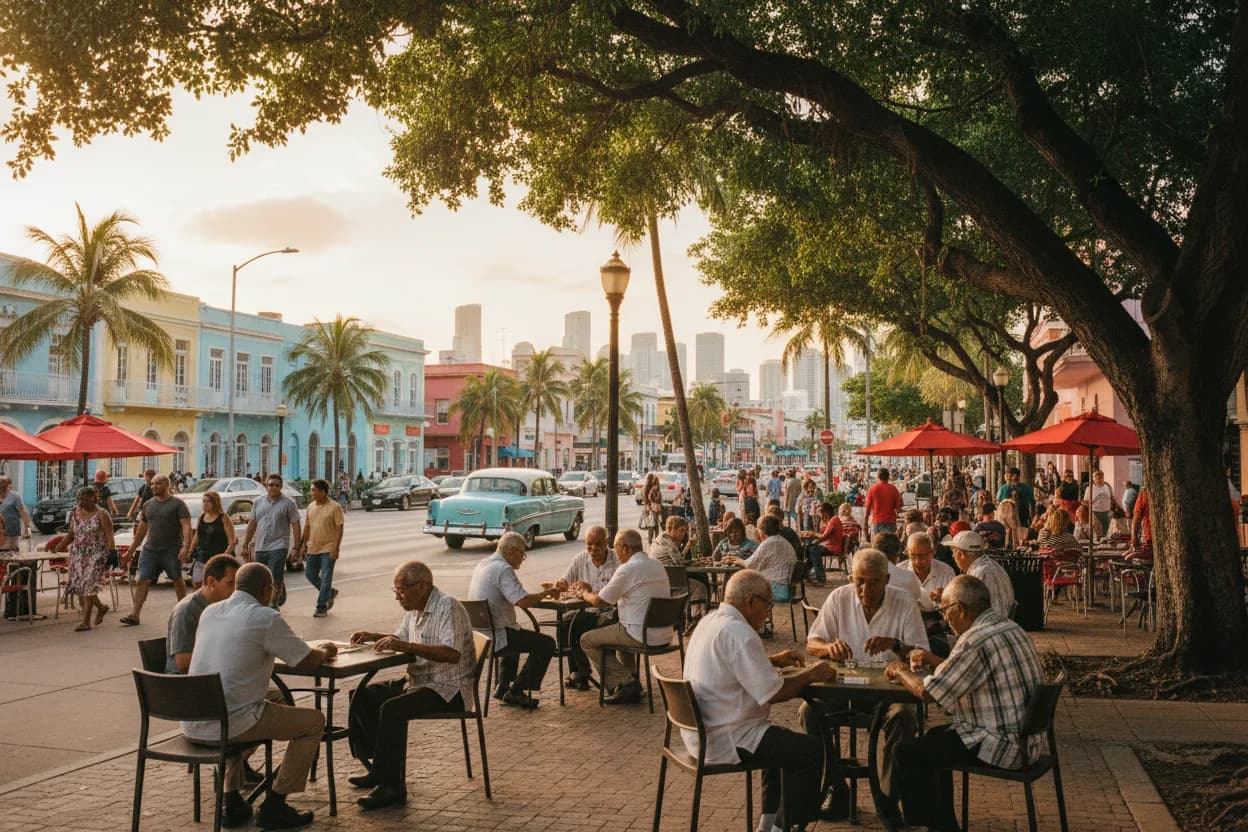
The official Greater Miami & Miami Beach visitor site frames the destination as a mix of beaches, culinary activity, arts and culture, outdoor experiences, sports, tours, and distinctive cities and neighborhoods. That matters because Miami is not one walkable blob. South Beach, Downtown Miami, Wynwood, Little Havana, Coconut Grove, Doral, and other areas solve different visitor problems. Pick the place that matches your task, then verify what is happening there today.
Choose the area by the actual task
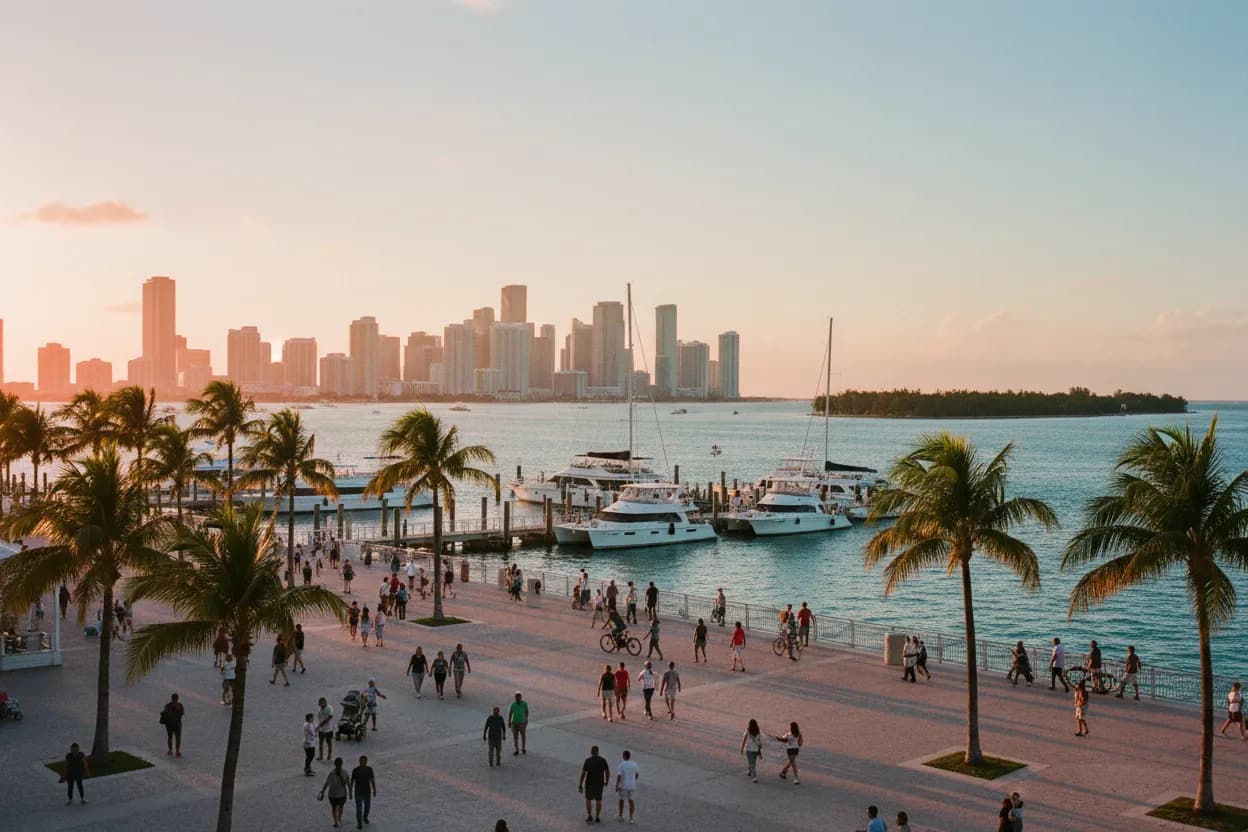
If your goal is a classic beach-and-stroll plan, Miami Beach is the more logical starting point than chasing a sports-adjacent headline. The official visitor site highlights South Beach’s white-sand beach and lists live webcam locations such as 1st Street Beach, 21st Street Beach, 45th Street Beach, Ocean Drive, and Lincoln Road. Those webcam references are useful because they point you toward public places where conditions can be checked before committing time.
If your goal is art, culture, or a weather-flexible afternoon, look inland before defaulting to the sand. The official site lists arts and culture as a major Miami experience and includes places and event examples such as Pérez Art Museum Miami, Wynwood Walls, and the International Ballet Festival of Miami running through August 16, 2026. Event dates and venue details can change, so treat the official event page as the authority before building your day around any listing.
If your goal is food, August is a practical month to verify restaurant options because the official visitor site identifies Miami Spice as running August through September and describes it as specially-priced three-course meals at top eateries for lunch, brunch, and dinner. Do not assume every restaurant, time slot, menu, or neighborhood is available; use the official program page and the restaurant’s own channels before crossing the city.
Use transit exits as planning anchors
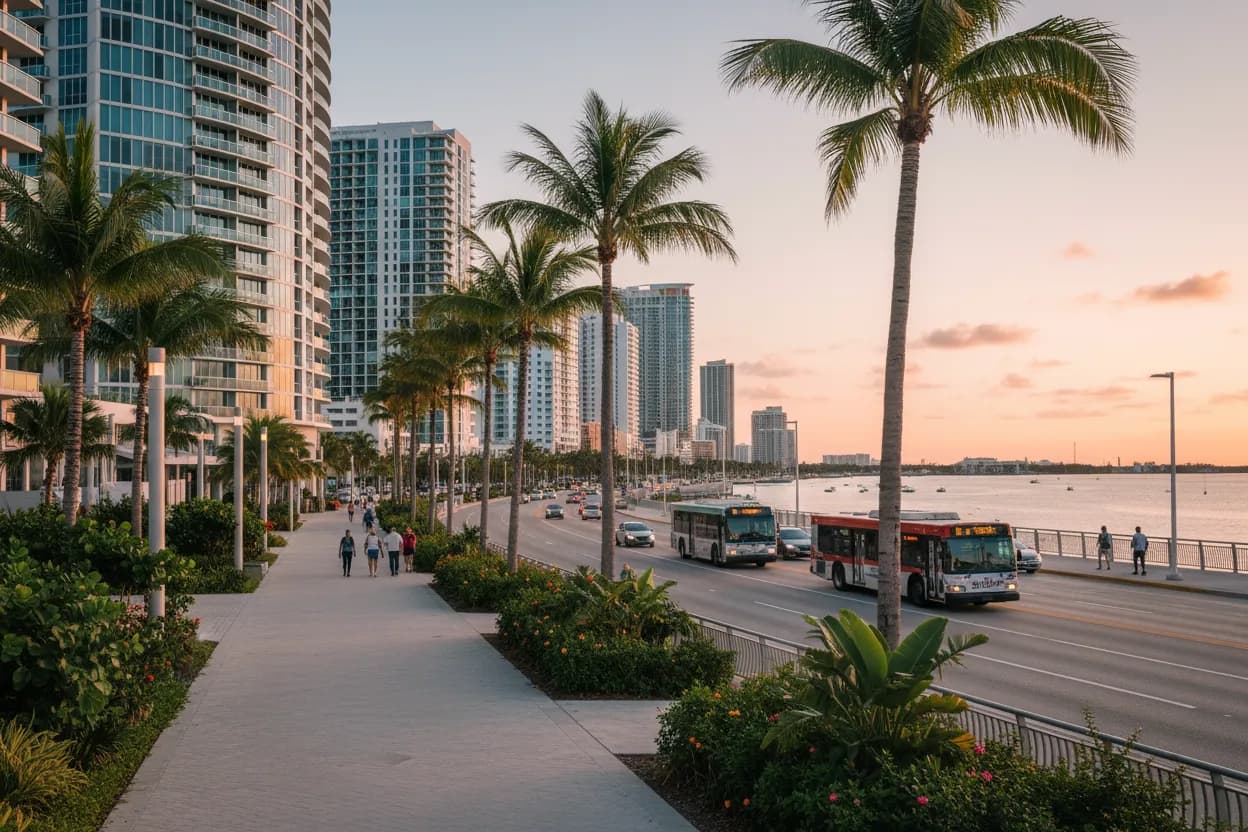
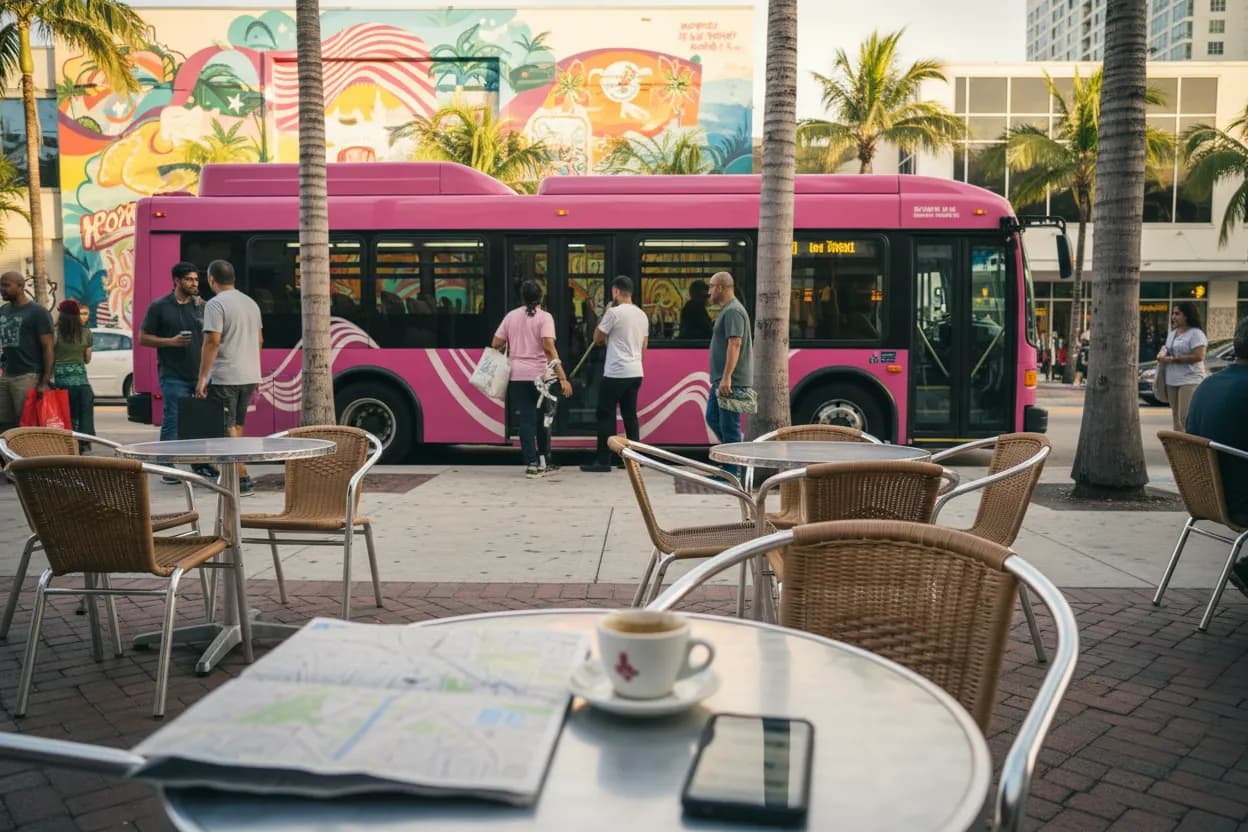
Miami plans work better when the transit stop is chosen before the photo backdrop. Miami-Dade County’s Department of Transportation and Public Works says riders can plan routes, read service updates and rider alerts, and track buses and trains in real time. Its system includes Metrobus, BRT Metro Express, Metrorail, Metromover, MetroConnect microtransit service, and Special Transportation Service. Use those official tools first, then decide whether a neighborhood plan is realistic.
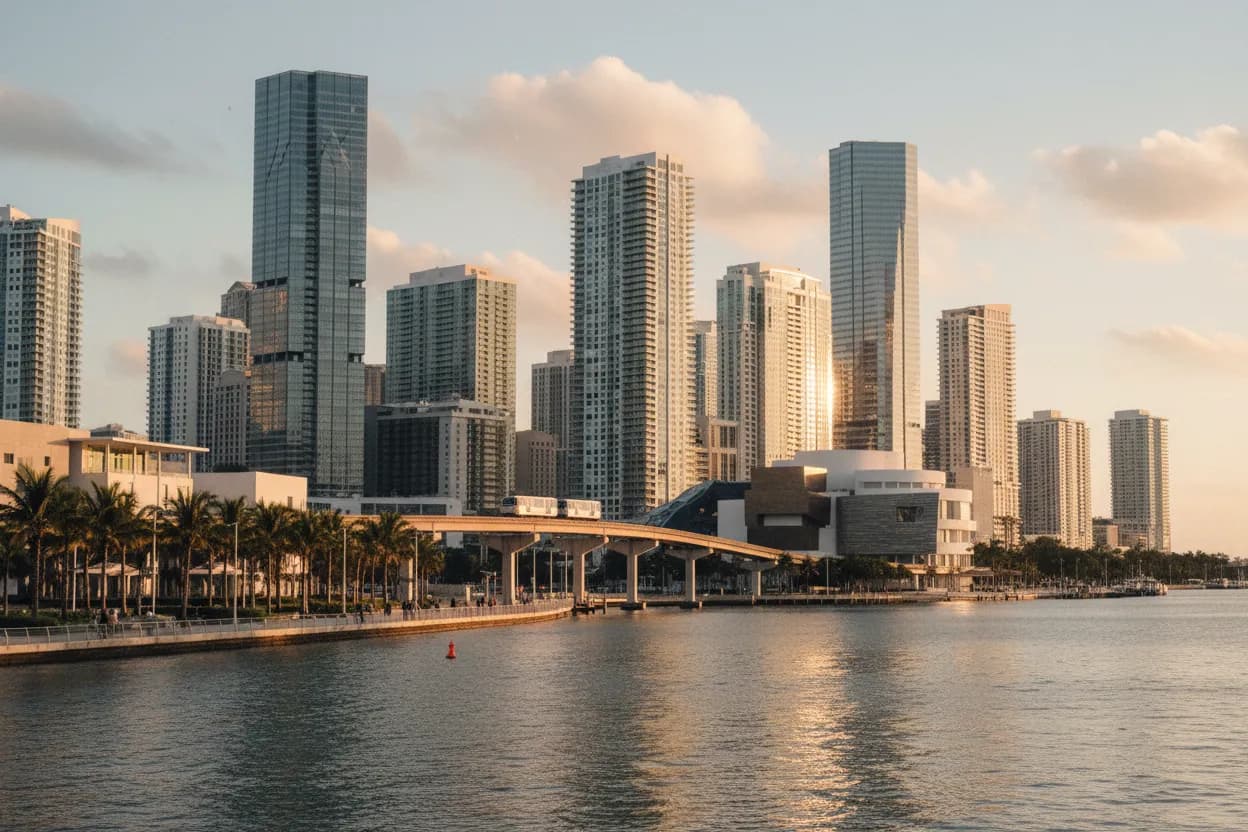
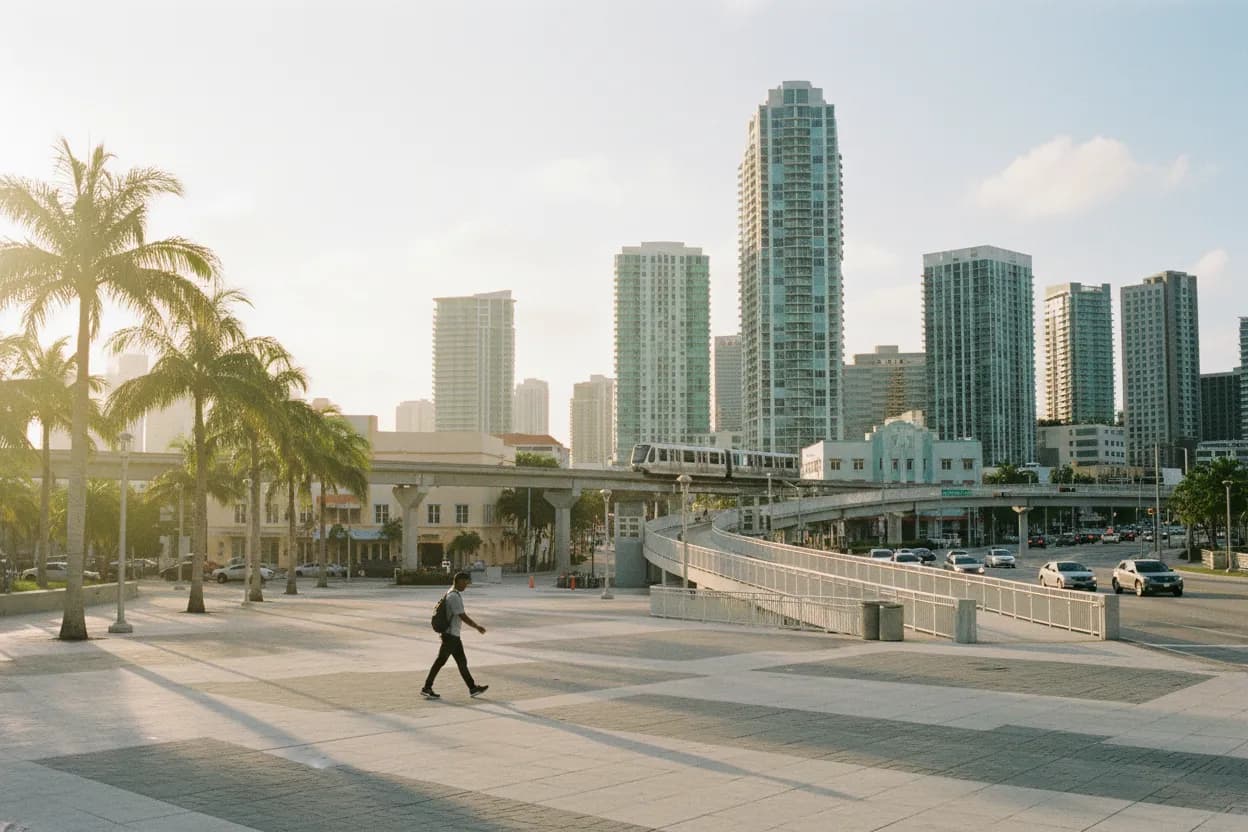
For a Downtown Miami plan, Metromover can be useful, but it is also a service you must check before relying on it. The county transportation page posts an important message that on Saturday, August 15, Metromover service will begin operating at 2 p.m. while upgrades continue. If your Miami day falls near a posted service change, do not improvise at the platform; check rider alerts, service updates, the trip planner, and transit tracker before leaving.
Build your route around decision points. If you are coming from Miami International Airport, the county page notes that the Orange Line connects to and from the Miami International Airport station, with fare details posted by the county. If you need elevator or escalator access, the official transportation page has an Elevators & Escalators Status resource. That is not a minor detail in August heat or with luggage, kids, mobility needs, or tight timing.
Add one indoor and one outdoor backup
A Miami neighborhood guide should always include a pivot, especially in late summer. For an indoor backup, choose an official arts, culture, spa, restaurant, or museum-related option that you can verify the same day. The visitor site lists Miami Spa Months for July and August, Miami Spice for August and September, and arts and culture experiences across the destination. Those categories are useful because they let you shift from heat, rain, or crowd pressure into a planned indoor stop.
For an outdoor backup, use public places where you can check conditions before arrival. The official visitor site’s live webcam list includes Bayfront Park in Downtown Miami, Biscayne Bay and PortMiami, Calle Ocho in Little Havana, Lincoln Road in Miami Beach, Sailboat Bay in Coconut Grove, Virginia Key Beach Park, Sunny Isles Beach, and Wynwood Walls. A webcam does not guarantee comfort, parking, access, or low crowds, but it helps you avoid planning blind.
Pair backups by geography. If your first plan is Lincoln Road, keep a Miami Beach outdoor option and an indoor dining or spa check nearby rather than suddenly rerouting to Coconut Grove. If your first plan is Downtown Miami, Bayfront Park or a verified museum or restaurant option may be a cleaner pivot than crossing to the beach. The backup should reduce friction, not create a second commute.
Avoid treating online attention as a local promise
The biggest planning mistake is converting a national phrase into a local claim. A search spike around “travis kelce patrick mahomes lawsuit” does not establish that either person is in Miami, connected to a Miami venue, endorsing a local business, or appearing at a public event. Unless an official source says something specific, do not build your day around celebrity access, private venues, hotel lobbies, or speculative sightings.
This matters for safety and courtesy as much as accuracy. Miami’s public spaces are busy enough during summer programming, beach days, restaurant promotions, arts events, and sports activity. Adding rumor-driven movement can waste transit time and push people into crowded areas for no public reason. A better approach is to let the phrase remind you to verify: official destination pages for events, official transit pages for movement, and official venue pages for access.
Be especially cautious with screenshots, reposted flyers, and vague “seen in Miami” claims. If a post does not link to an official organizer, venue, public agency, or the destination’s own event information, treat it as unverified. Your itinerary should still work if the online hook disappears, because the neighborhood choice is based on public activities you can actually access.
Verify conditions before crossing the city
Before leaving, run a three-part check. First, confirm the neighborhood target on the official Greater Miami & Miami Beach site or the specific venue’s official page. Second, check Miami-Dade Transit rider alerts, service updates, the trip planner, and real-time tracking. Third, look at practical access needs: elevators or escalators if you need them, posted service changes such as Metromover upgrade impacts, and whether your backup is close enough to be useful.
Then make the plan executable. Pick a primary neighborhood, a transit anchor, a latest-arrival time, one indoor backup, and one outdoor backup. For example, a Downtown-focused day might use a transit-first plan, a verified arts or dining stop, and Bayfront Park conditions as an outdoor check. A Miami Beach day might center on Lincoln Road or South Beach, with official webcam checks and a verified dining or spa option nearby.
Finally, decide what would make you cancel or reroute. Heavy crowds, a service alert, an accessibility outage, a moved event, or a weather shift are all valid reasons to change course. Miami is easier when you respect distance, bridges, heat, and neighborhood differences. The win is not proving a rumor right; it is getting a public city plan that still works when the rumor is irrelevant.
Tags: #Miami #MiamiBeach #DowntownMiami #Wynwood #LittleHavana #CoconutGrove #MiamiTransit #NeighborhoodGuides #TravelPlanning #CrowdCheck #TransitAlerts #OfficialSources #AskKarpo #BeforeYouGo
Sources consulted: miamiandbeaches.com · miamidade.gov · miamidade.gov
All trademarks are the property of their respective owners.
Ask Karpo first
Ask Karpo first if your Miami plan depends on a headline, a repost, or a tight cross-city connection. Send your start point, target neighborhood, time window, and must-have access needs, and Karpo can help pressure-test the route before you go.