 Haaland Has Seven Goals and Norway Runs Entirely Through Him
⚽️2026 FIFA WORLD CUP

BMO Field's World Cup: Toronto Bars for the Croatia–Belgium Crowd
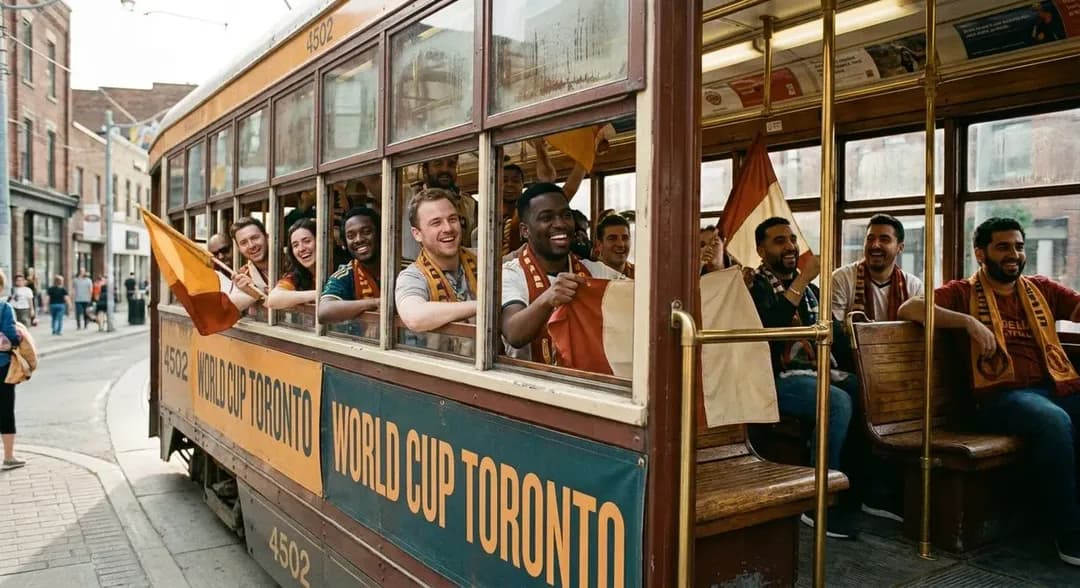
When the 2026 FIFA World Cup lands at BMO Field, the 504 King streetcar becomes a rolling pregame party. The Exhibition GO platform fills with red-and-white checkers and black-yellow-red stripes—two diasporas who've claimed the west end long before the tournament arrives.
The streetcar calculus
You board the 504 at Union Station ninety minutes before kickoff, and the demographic shift happens in real time. By Bathurst the suits thin out. By Dufferin the jerseys multiply. The Exhibition Loop spills you onto a plaza where vendor smoke mixes with lake wind, and you realize the match is the intermission—the bars are the main event. Toronto's World Cup 2026 fixtures at BMO Field will see thirty thousand inside the stadium, but the real atmosphere builds in the Parkdale and Liberty Village corridors where second-generation Croatians and Belgians have turned pubs into consulates. The Exhibition GO train, running express from Union on match days, delivers you six minutes faster, but you miss the streetcar's slow-burn energy, the way anticipation layers with each stop west.
Croatia plays here twice in the group stage. Belgium once. The scheduling accident creates a cultural overlap in a city already thick with both communities. The west-end bars have been preparing since the draw—new projectors, expanded patios, kitchen staff who know that ćevapi and frieten aren't optional.
Pravda on Roncesvalles
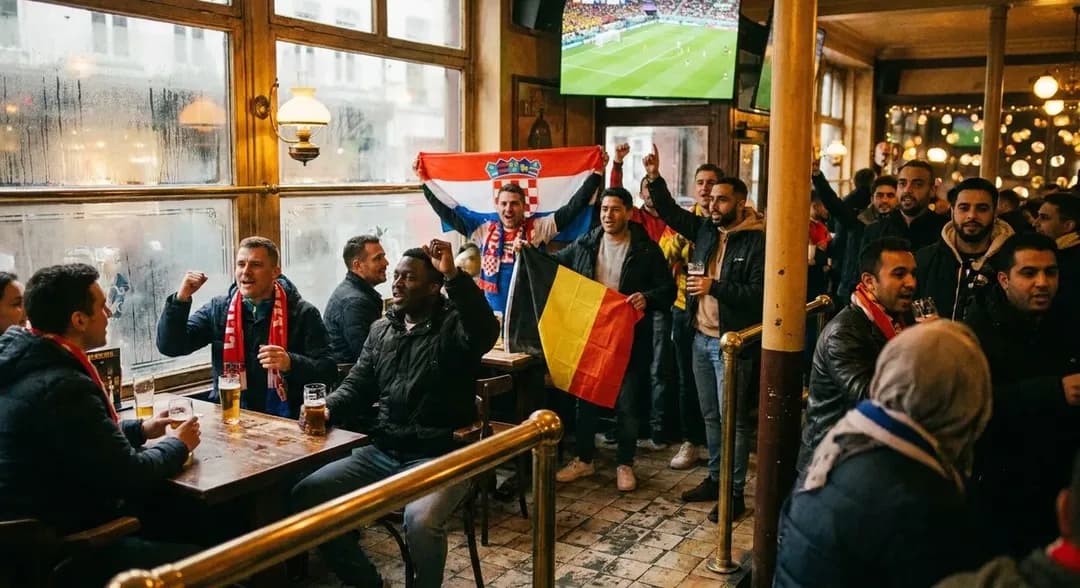
Pravda doesn't advertise itself. The sign's modest, the windows frosted, and if you don't know the block you'd walk past. Inside, the back room holds forty-eight people at capacity, and on Croatia match days the booking list closes seventy-two hours in advance. The owner, a Split native who arrived in 1992, keeps a framed Davor Šuker jersey above the bar and pours rakija in measures that would horrify Ontario's serving guidelines. Sit at table seven—it's positioned so you see both screens and the kitchen pass, where his wife plates sarma with the intensity of a set-piece defense.
The Croatia Supporters Club Toronto uses Pravda as unofficial headquarters. They don't sing the nationalist anthems that embarrass the younger generation, but when Modrić's name appears on the teamsheet—if he's somehow still playing in 2026—the room goes silent with something close to religious awe. Order the pašticada three days ahead if you want it for match day. The dish takes that long.
Café Belgique's frites strategy
Café Belgique on Queen West expanded last year specifically for this tournament. The owners—one from Ghent, one from Liège, both fluent in the regional rivalry—installed a second fryer to handle match-day volume. The Belgian diaspora in Toronto lacks the concentrated geography of the Croatian community, but this café pulls them from Mississauga, Oakville, even Hamilton. The frites come in paper cones, the mayo selection spans six varieties, and the Jupiler flows in quantities that make the Leuven brewery's export manager very happy.
Request the corner booth near the front window. It's technically a four-top but they'll seat six if you're friendly, and the angle gives you the street theatre: Belgian flags as capes, kids in Lukaku jerseys, the occasional confused tourist who thought this was just a brunch spot. The stoofvlees takes forty minutes—they make it to order—so arrive early. The USMNT plays Mexico at MetLife Stadium the same day as Belgium's group opener, and the TV split-screen creates a strange dual loyalty among the staff, half of whom have green cards and Maple Leafs tattoos.
The Liberty Village wildcard
The Brazen Head bills itself as Irish but operates as a neutral zone for World Cup overflow. When Germany vs Finland group-stage matches pull the Danforth's German-Canadian community, the spillover lands here. The pub's proximity to BMO Field—a twelve-minute walk through the Fort York corridor—makes it the logical pregame for anyone without ethnic allegiance. The Guinness is fine, the projector screens are massive, and the staff has learned to spot the difference between casual fans and the ultras who need watching.
Sit at the bar's west end, stools fourteen through seventeen. The bartender, a Dundalk native named Colm, keeps a mental map of which regulars support which nations and seats them accordingly. He's defused three potential scuffles already this year during Champions League nights, and World Cup 2026 has him practicing his diplomatic Croatian and Flemish phrases. The kitchen does a decent enough burger that you won't feel cheated, but nobody comes here for food. When does World Cup start? June 11, and Colm's already booked extra security.
The Exhibition GO trick
Book the Exhibition GO station, not the streetcar, if you're coming from downtown for kickoff. The 504 gets romantic in retrospect but miserable in practice when fifteen thousand people have the same idea. The GO train runs express from Union, dumps you at the north entrance, and saves you thirty minutes of standing-room-only crush. The return journey's different—take the streetcar then, when the result's decided and you want to process it slowly, stopping at whichever bar matches your mood or your team's outcome.
The westbound platform at Exhibition fills ninety minutes before kickoff with a demographic cross-section that would make a sociologist weep: old Croatian men in bucket hats, Belgian families with face paint, neutral fans in Canada jerseys hoping to absorb some World Cup atmosphere. The GO staff, wise to the patterns, runs extra cars and doesn't bother checking tickets too carefully. You're all going to the same place.
The post-match Parkdale crawl
After the final whistle, the serious drinkers migrate north to Parkdale's Roncesvalles strip. The victory celebrations or defeat commiserations require establishments with later licenses and more forgiving noise bylaws. The Cadillac Lounge hosts a Croatian DJ on match nights who plays a Balkan-techno fusion that shouldn't work but does after three Ožujsko beers. Two blocks south, The Local's patio becomes Belgian territory, where the post-match analysis happens in a Flemish-French-English pidgin that excludes outsiders by design.
The smart move: pick your bar based on the result you want to celebrate or mourn, not the team you support. If Croatia wins, Pravda becomes a family reunion you can't penetrate as an outsider. If Belgium wins, Café Belgique's champagne corks achieve low-orbit velocity. The neutral spaces—The Brazen Head, the Amsterdam BrewHouse down by the lake—offer refuge for the unaffiliated or the heartbroken. Even Brazil vs Panama early-round matches pull crowds here, the South American diaspora claiming corners of bars with the confidence of long practice.
Practical notes
BMO Field sits at 170 Princes' Boulevard, accessible via the 504 King streetcar (Exhibition Loop stop) or Exhibition GO station. Match-day service increases frequency but expect crowds. Pravda (940 Roncesvalles Avenue) requires reservations for World Cup fixtures; call three days minimum. Café Belgique (1063 Queen Street West) operates first-come seating but opens at 10 AM on match days. The Brazen Head (219 King Street West) accepts groups up to twelve with advance notice. Bar prices range $7-$9 for domestic beer, $12-$15 for imports. Food averages $18-$28 for mains. Most bars enforce capacity limits on match days—arrive ninety minutes early or accept standing room. The 504 streetcar runs every seven minutes normally, every three minutes on event days. GO Transit Exhibition station offers express service from Union Station in six minutes, $4.40 one-way with Presto card.
Tags: #WorldCup2026 #BMOField #TorontoBars #CroatiaFootball #BelgiumFootball #ParkdaleTO #Roncesvalles #LibertyVillage #504Streetcar #ExhibitionGO #FIFAWorldCup #TorontoFootball #SoccerBars #DiasporaCulture #QueenWest
Sources consulted: FIFA World Cup 26 · ESPN Soccer · Time Out Toronto
Please drink responsibly. Must be of legal drinking age.
All trademarks are the property of their respective owners.
Ask Karpo for more information.
Keep reading
- Haaland Has Seven Goals and Norway Runs Entirely Through Him
 World Cup Trophy Ceremony Timing Medals and Postmatch Celebrations
 Olise and France's Attack: The Semifinal Tactical Question