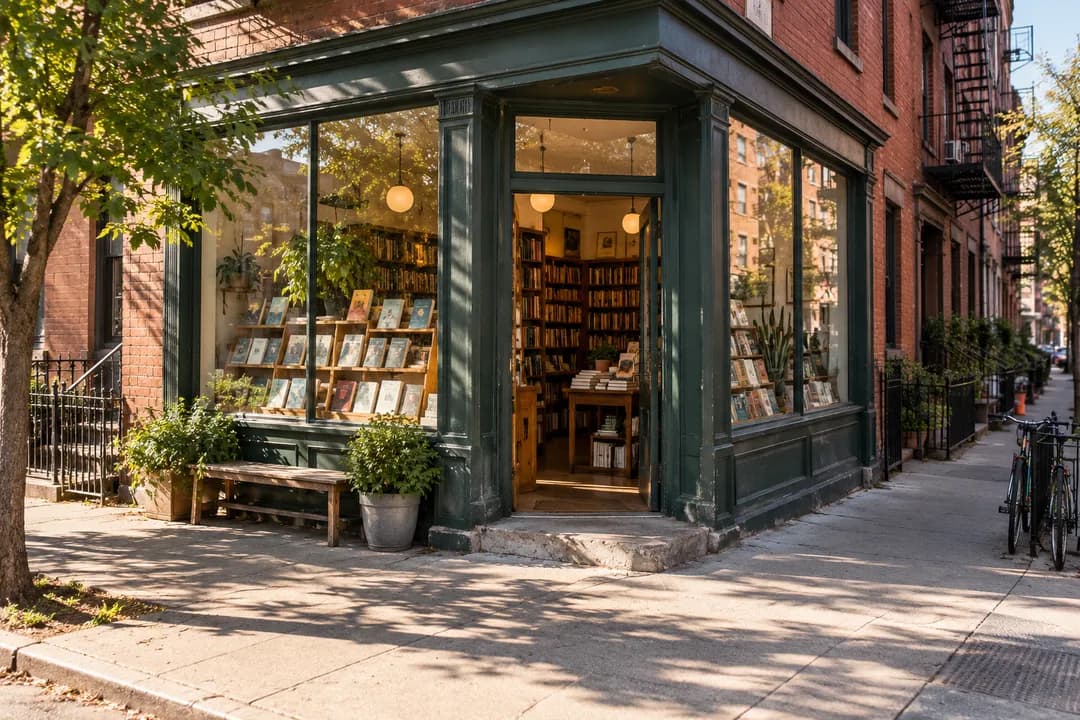
 WORD Bookstore in Greenpoint Remains a Community-Focused Indie Bookstore Near Me
Hidden Gems & Odd Finds
The Record Store in Ridgewood That Only Stocks 7-Inches
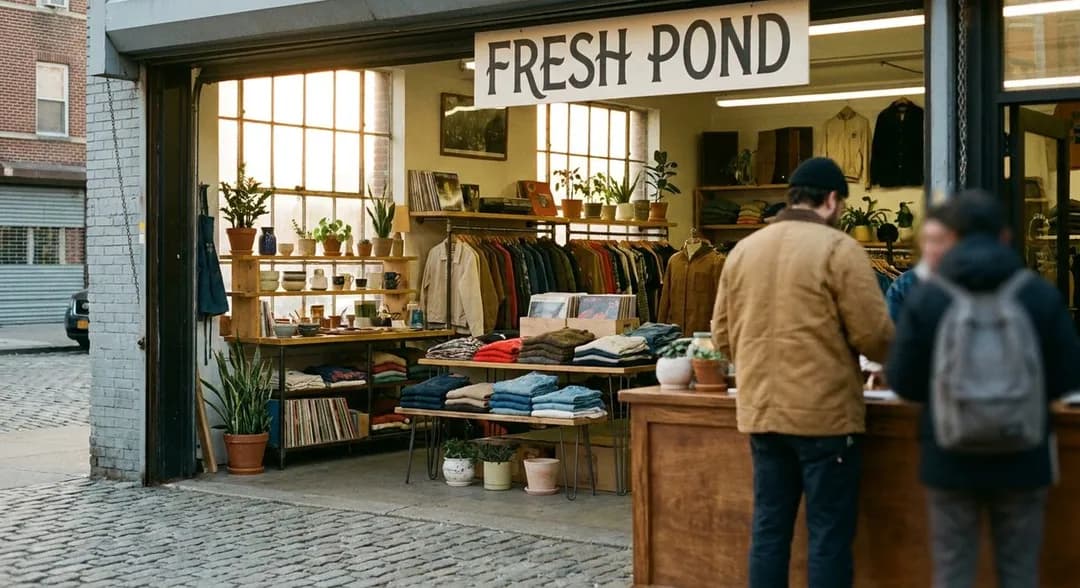
A converted garage on Fresh Pond; the owner curates by mood, not genre
You walk past it three times before you realize the hand-painted sign above the garage door isn't ironic. Fresh Pond Road doesn't announce itself the way Bushwick does, and that's exactly why Paul Mercado chose this particular converted garage in Ridgewood for his 7-inch-only record shop. The space holds maybe eight people comfortably, the walls are lined floor-to-ceiling with white milk crates, and every single record inside measures exactly seven inches in diameter. No LPs. No 12-inch singles. Just the small stuff, organized in a way that makes zero conventional sense.
The Crates Are Labeled Like Playlists From 2003
Forget alphabetical. Forget genre. Paul arranges his stock by emotional temperature and time of day, which sounds precious until you're standing there at 2pm on a Wednesday flipping through a crate marked "Humid Regret" that somehow contains both a 1967 Motown B-side and a 2019 Melbourne garage track that share the exact same energy. Other sections read like "Morning Shower Singing," "Driving to the Airport Alone," and "That Feeling When You're the Last One Awake." He recrates everything every three months, which means the Replacements 45 you saw in "Fuck This Job" might migrate to "First Warm Day" by May. The system works because Paul's been DJing basement parties in Queens since 1998 and his internal categorization makes more intuitive sense than Discogs ever could.
The Garage Door Stays Half-Open Until 4:47pm Exactly
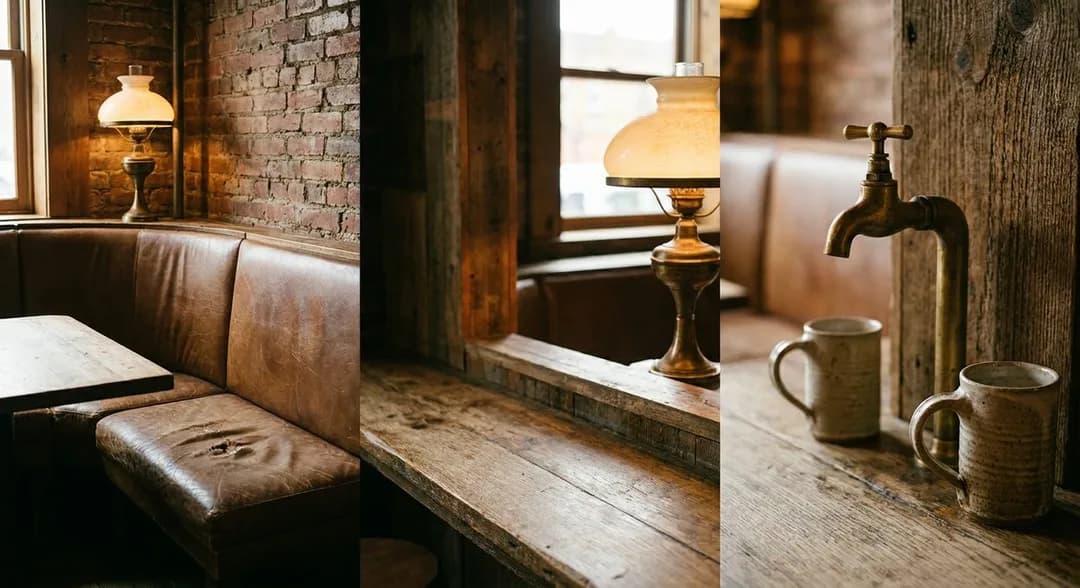
The shop operates on what Paul calls "natural light hours" from November through March. He opens whenever he gets there, usually around 11am, and the garage door comes down the moment direct sunlight stops hitting the threshold. In winter that's 4:47pm. In summer it stretches past 7pm. There's no artificial lighting except for one clip-on lamp aimed at the turntable, so the whole operation runs on whatever daylight filters through that half-open door and a skylight Paul installed himself. You adapt your eyes or you don't come. He's not trying to be difficult—the rent on this space is $890 a month because it's technically not zoned for retail, and keeping it dim means the landlord three doors down doesn't notice the foot traffic. On Tuesdays he's closed because that's when he drives to estate sales in New Jersey.
Every Record Gets Played Before It Goes Into Circulation
The turntable sits on an old door balanced across two filing cabinets, and Paul auditions every single 45 before pricing it. Not because he's checking for scratches—though he does that too—but because he needs to hear where it belongs emotionally. You'll watch him drop a needle on some obscure French ye-ye single, close his eyes for thirty seconds, then file it in "Broke Up But Still Friends." The speaker is a single Klipsch he pulled from a dead karaoke bar in Flushing, and it's angled directly at his folding chair. If you're in the shop during an audition session, you're part of it. He'll sometimes ask what you're feeling from a track, and if your answer shifts his read, he'll reconsider the placement. This process is why the inventory turns over slowly—he acquires faster than he can categorize.
The Pricing Makes Sense Only If You Know The Reference Points
Everything's between three and eighteen dollars, but the logic isn't condition or rarity. Paul prices based on how many copies of that specific pressing he's seen in his twenty-six years of digging. A beat-up Supremes single might be twelve dollars because he's only encountered that particular B-side twice, while a mint Ramones 45 goes for four because he's seen hundreds. He keeps a mental database that would make any algorithm weep. There's no negotiating, but if you buy five records he throws in a sixth from a cardboard box under the table—his personal collection of doubles that he's bored of. These freebies are often better than what you just paid for. On Saturdays between 1pm and 3pm, he runs a "trade weight" system: bring in your own 7-inches and he'll weigh them on a kitchen scale. Every four ounces gets you five dollars in store credit.
The Regular Who Sits In The Folding Chair Is Part Of The Furniture
Eddie's been coming since Paul opened in 2021, and he's claimed the single folding chair by the space heater as his permanent spot from November through April. He doesn't work there. He just shows up around noon with a thermos of coffee and sits. Sometimes he'll pull records for browsers who look lost, sometimes he'll tell you why your taste is boring, sometimes he just reads the Post. Paul says Eddie used to run sound at CBGB in the eighties, but Eddie's never confirmed this. What's confirmed is that Eddie knows where Paul hides the box of mis-filed records—stuff that didn't fit the mood system—and if he likes you, he'll point you toward it. It's under the table with the broken leg, covered by a canvas tarp. That's where the actual rarities end up, the stuff Paul couldn't emotionally categorize.
You Leave With Seven Records And No Idea What Genre You Just Bought
The beauty of Paul's system reveals itself three days later when you finally get home and play what you bought. That stack you pulled from "Driving to the Airport Alone" contains a Patsy Cline country weeper, a minimal techno white label from Detroit, and a 1973 Zambian psych track, and they all somehow belong together. You didn't shop by genre, so you didn't limit yourself by genre, and now your collection has gaps filled you didn't know existed. This is why people come back. Not for the curation exactly, but for the permission to ignore the categories they've been using since high school. The shop doesn't have a name on the door, just that hand-painted sign that says "7s ONLY" and Paul's cell number in case the door's down but his car's outside.
Practical Notes
The shop keeps natural light hours: roughly 11am until 4:47pm in winter, later in summer. Closed Tuesdays. Cash only, though Paul has Venmo for purchases over twenty dollars. The address is 64-22 Fresh Pond Road, tucked between a tire shop and a house with a chain-link fence. Take the M train to Fresh Pond Road and walk south three minutes. There's no sign visible from the train platform. No bathroom. No seating except Eddie's chair, which you cannot have. If the garage door is down, he's either not there or the light's gone. Don't knock. Paul's number is written on the sign if you need to check hours, but he doesn't always answer. Bring a tote bag—he doesn't provide bags because they take up space he needs for crates.
Tags: #TheOddEdit #RidgewoodNYC #VinylCulture #RecordDigging #SevenInchSingles #QueensNeighborhoods #IndependentRecordStores #CrateDigging #FreshPondRoad #NYCHiddenGems #RecordCollecting #AntiAlgorithm #MusicCuration #NeighborhoodSpots #NYCSubculture
Sources consulted: atlasobscura.com · timeout.com · nytimes.com
All trademarks are the property of their respective owners.
Ask Karpo for more information.
Keep reading
- WORD Bookstore in Greenpoint Remains a Community-Focused Indie Bookstore Near Me
 The Corner Bookstore on Madison Avenue Is Carnegie Hill's Indie Bookstore Near Me
 192 Books in Chelsea Brings Art and Fiction to Indie Bookstore Near Me