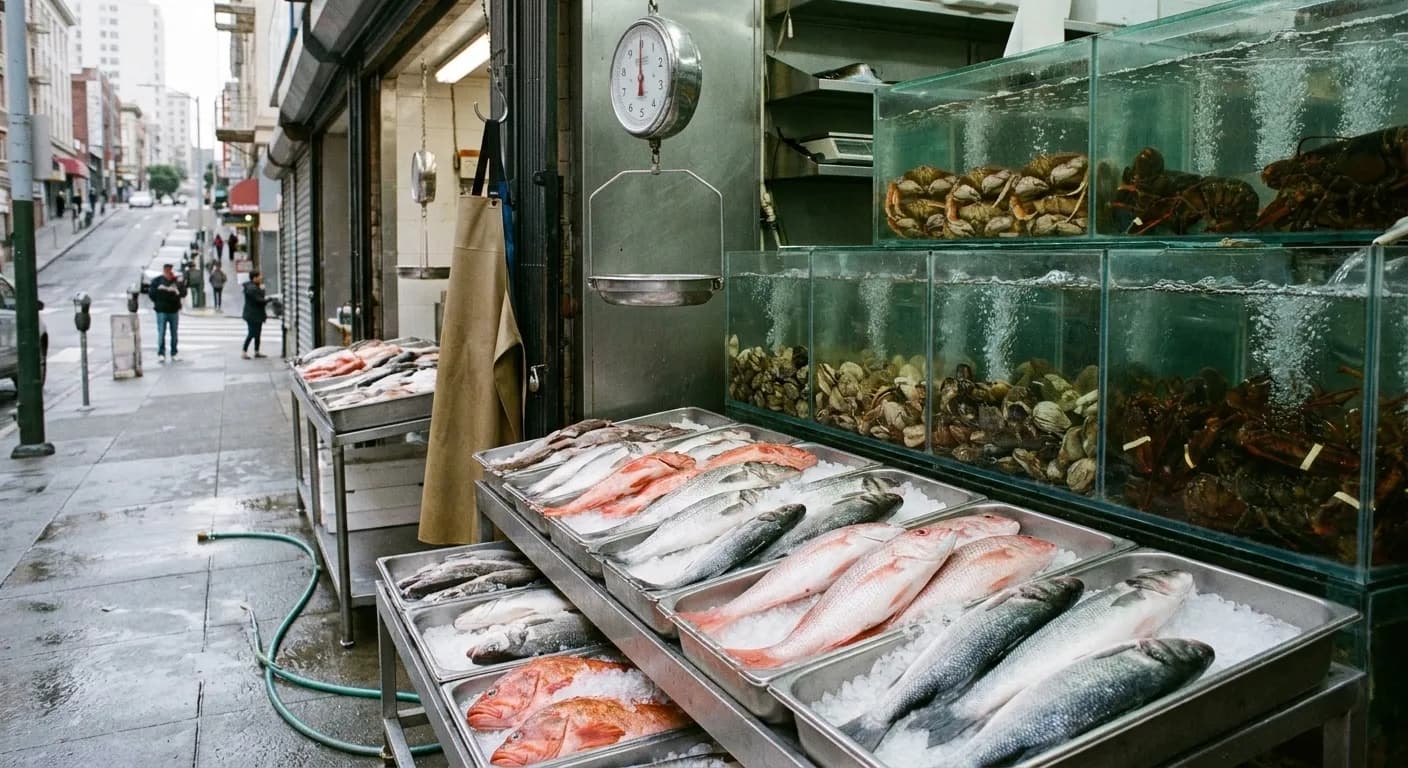
The best fresh seafood in San Francisco is not sold at the wharf. It is sold on Stockton Street between Broadway and Sacramento, out of tanks and off ice beds, to a neighbourhood that has been buying it that way for more than a century. Prices are a fraction of a supermarket's, the turnover is high enough that nothing sits, and the person selling it will scale, gut and fillet it while you wait, usually at no extra charge.
What is good on this street changes with the morning delivery, and the best stalls sell out by early afternoon. Ask Karpo what is fresh today, what it should cost, and which kitchens nearby will cook it the way you want.
How the street works
Stockton is a working market street, busiest between about eight and noon, and it operates at speed. Queues form and move; people know what they want. Two things make it easy for a first-timer. First, everything is visible — the tanks are on the pavement and the ice beds face the street, so you can point. Second, prices are per pound and posted, so there is no negotiation to worry about.
Bring your own bag, bring cash, and go in the morning. By mid-afternoon the best of the delivery is gone and what is left has been out for hours.
What to buy
Live is the neighbourhood's default: dungeness crab in season, lobster, prawns, and tanks of fish that get netted and dispatched at the counter. On ice you will find whole rock cod, tilapia, sea bass, pomfret, sand dabs, plus squid, clams, mussels and oysters. If you are unsure, ask what came in that morning — the answer is specific and honest, because these shops sell to people who come back every week.
Dungeness crab has a defined season and is the thing to buy when it is running: cheaper here than anywhere else in the city, sold live, and cooked for you on request at several of the shops. Ask for it cleaned and cracked if you do not want to do it at home.
Getting it cooked
A number of Chinatown restaurants will cook seafood you bring in, for a per-dish fee — the classic treatments being ginger and scallion, salt and pepper, or black bean sauce. This is not universal and it is worth calling first, but where it exists it is the best value seafood dinner in San Francisco: market price for the fish plus a small cooking charge, rather than a restaurant markup.
If you would rather just eat out, the same treatments are on the menu at the neighbourhood's Cantonese rooms, usually with a market-price line for whole fish and crab. Order the fish steamed with ginger and scallion at least once; it is the dish that shows whether a kitchen can cook.
Cooking it at home, simply
The whole steamed fish is the easiest good thing to do with a Stockton Street purchase: score it, steam it for eight to twelve minutes depending on size, pour over hot oil, soy and ginger, and finish with scallion. Clams and mussels want garlic, black bean and a splash of rice wine in a hot wok. Crab is best simply steamed and cracked, with ginger-scallion oil to dip. Nothing on this street needs a complicated recipe — it needs to be fresh, and it is.
Practical notes
Cash is expected and speeds everything up. Bring a cooler bag if you are not going straight home. Watch the tanks rather than the sign: an active, clean tank with lively animals is the whole quality signal. Ask for the fish to be cleaned and, if you want, cut into steaks — it takes them thirty seconds. Parking is impractical, so take the 30, 45 or 8, or walk down from Nob Hill. And if you plan to gather shellfish yourself anywhere on the coast, check the current state health advisories first, because seasonal closures for biotoxins are real and enforced.
What else to buy while you are on the street
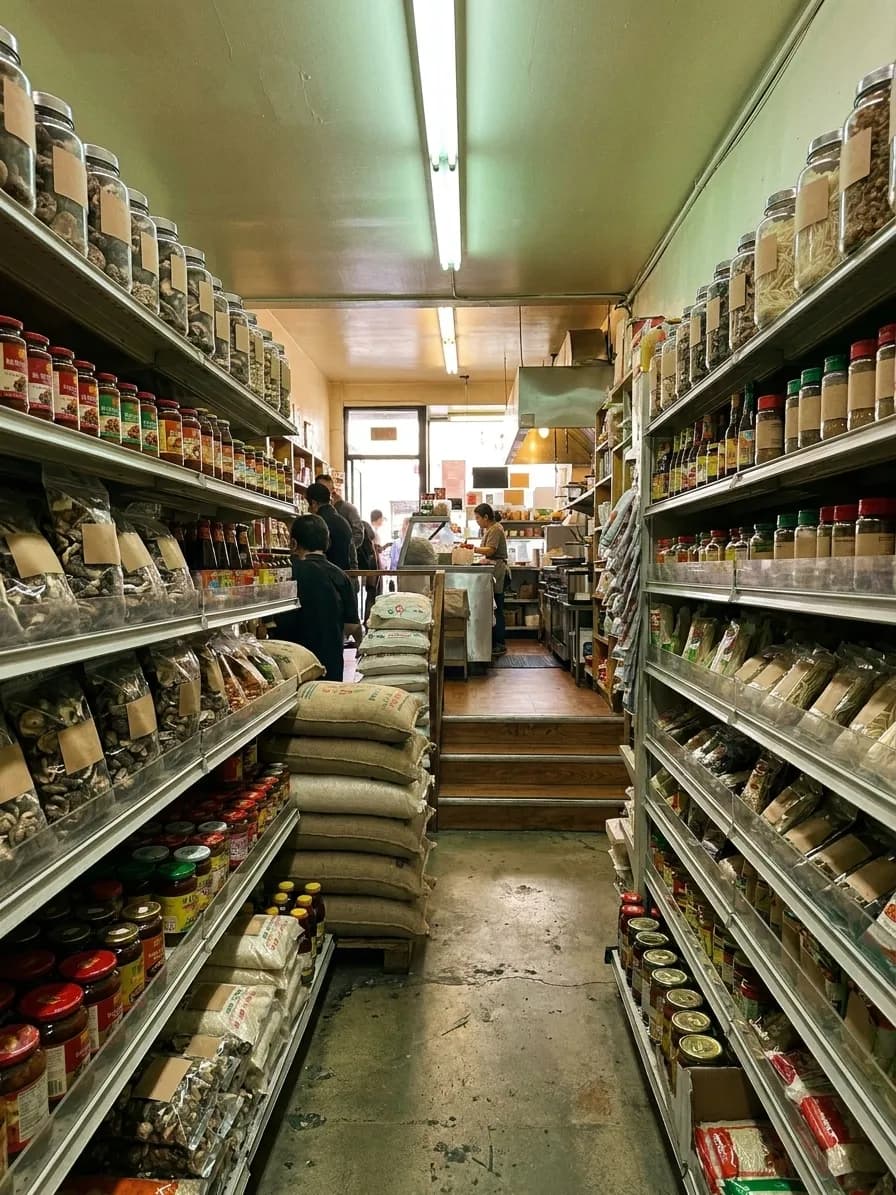
Stockton Street is a complete grocery corridor, not just a fish market. The same trip should pick up greens — gai lan, pea shoots, choy sum — from the produce stalls, ginger and scallion from anywhere, tofu from a maker rather than a packet, and dried goods from the shops with the shelves to the ceiling. All of it costs a fraction of a supermarket.
Buy the fish last and everything else first, so the seafood spends the least possible time out of the cold. It is the way the regulars sequence the street, and it is why the queues at the fishmongers are longest at the end of the morning.
Tags: #SanFrancisco #Chinatown #Seafood #StocktonStreet #DungenessCrab #FishMarket #CantoneseFood #SFEats #WhereToEatSF #MarketDay #CheapEatsSF #NeighborhoodGuide #BayArea #CookAtHome
Sources consulted: sf.gov · wildlife.ca.gov · sfmta.com
All trademarks are the property of their respective owners.
Ask Karpo first
What is fresh on this street depends on the morning's delivery and the season, and the best of it is gone by early afternoon. Ask Karpo what is worth buying today, what a fair price is, and which kitchens nearby will cook it for you.