 Hayes Valley Tailor Alteration Shop Finder for Boutique Buys
Neighborhood Guides
North Beach Tailor Alteration Shop Finder: Inherited Suits
Inherited a suit in San Francisco? Find a North Beach tailor who can refit a grandpa's jacket, reshape the trousers and keep the old cloth for new occasions.
A tailor alteration shop finder in North Beach often leads to a story about a family suit. This is the old Italian heart of San Francisco, a neighborhood where grandfathers wore a good wool suit to Sunday Mass at the church on Washington Square, to christenings and to long family lunches. Many of those suits still hang in closets today. With the right tailor, a jacket cut for another man and another decade can be refitted to carry a new generation through its own milestones.
Why Inherited Suits Are Worth Saving
Older suits were often made from heavier, denser wool than most modern ready-made clothes, and many were sewn with generous seam allowances so they could be altered as a man's body changed. That means an inherited suit frequently has more room to work with than you would expect. The cloth may also have a texture and drape that is hard to find today.
There is also the matter of meaning. Wearing a grandfather's suit to a wedding, a graduation or a funeral connects the day to people who are no longer there. Even if the fit needs work, many families feel that the effort is worth it. A good tailor understands that the goal is not just a jacket that fits, but a garment that keeps its history.
North Beach and the Craft of the Suit
For generations, North Beach was home to Italian immigrant families, and with them came barbers, bakers, delis and tailors. Some of those trades still survive on the neighborhood's narrow streets, alongside newer shops opened by people who learned their craft elsewhere. The neighborhood has a feeling of continuity, where old skills and old cafés sit comfortably beside bookshops and bars.
That makes it a natural place to bring a family suit. Many tailors who work in and around the neighborhood are used to clients carrying in garments wrapped in garment bags from decades ago. They have seen the old cuts, the high trouser rises and the heavy shoulder padding, and they know which of those details to keep and which to soften.
Checking the Suit Before You Visit
Start by putting the suit on in front of a mirror. Notice the shoulders first, since they are the hardest part to change. If the shoulder seams sit near your natural shoulder line, the jacket is a good candidate. If they hang far past your shoulder or pinch, the jacket may never fit properly, though the trousers might still be saved.
Then look inside. Check the inner seams for spare fabric, especially at the back of the jacket and the center back of the trousers. Look for moth holes by holding the cloth up to a light, and check the lining for tears. Make a list to show the tailor so the first conversation can focus on what is actually possible.
Refitting the Jacket
Common jacket changes include taking in or letting out the body at the side and back seams, adjusting sleeve length and reshaping the waist so the jacket follows your figure. On older jackets with heavy shoulder padding, some tailors can reduce the padding slightly for a softer look, though this needs care so the jacket does not collapse.
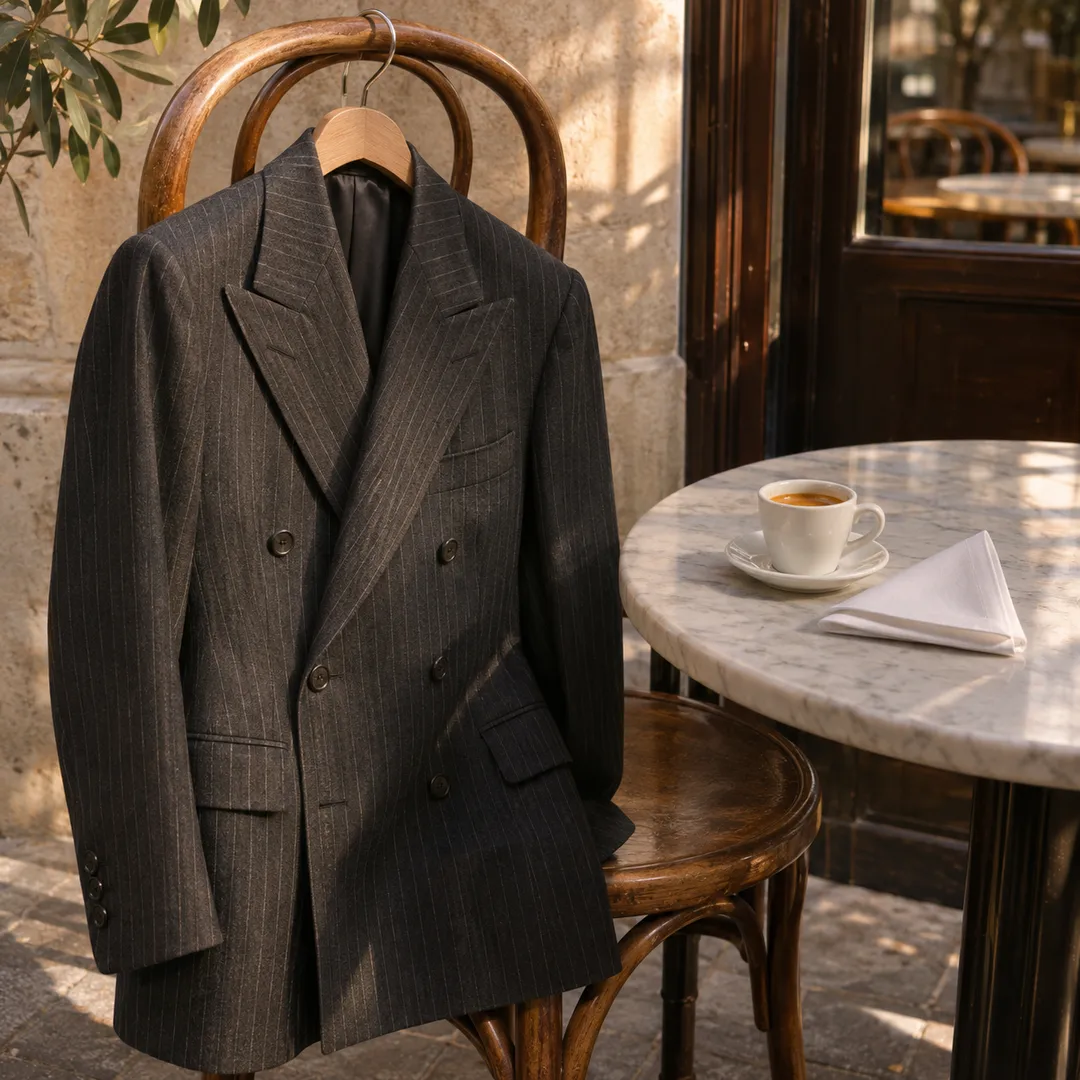
Double-breasted jackets have their own considerations. The button positions define the look, and moving them changes the proportions of the whole front. A tailor might suggest leaving the buttons in place and adjusting the side seams instead. Lapels can be narrowed in some cases, but it is a major job, and many people choose to keep the original width as part of the jacket's character.
Reshaping the Trousers
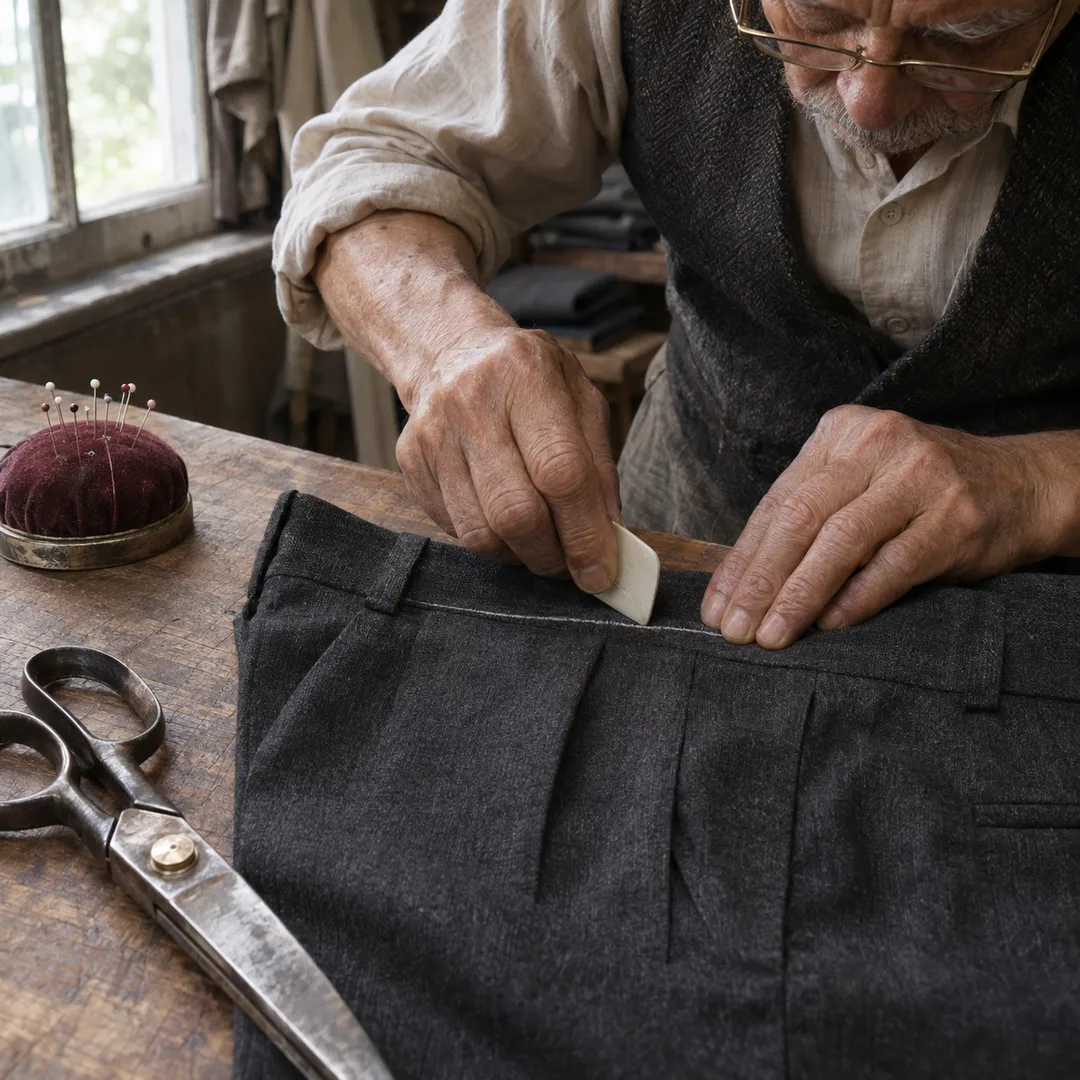
Old suit trousers usually have a high rise, pleats and a full leg. A tailor can take in the waist, narrow the leg through the knee and ankle and adjust the length so the hem sits cleanly on your shoe. Many people like to keep the pleats and high rise, since they pair naturally with a vintage jacket and are comfortable to sit in at a long lunch.
If the original trousers have cuffs, you can keep them or have them removed for a cleaner look. Some trousers have side adjusters or suspender buttons inside the waistband, and those small details are worth keeping. Bring the shoes and belt or braces you plan to wear so the tailor can set the length and waist precisely.
Repairing Moth Holes and Worn Linings
Moth holes are a common problem in suits that have spent years in a closet. A skilled tailor can sometimes reweave small holes by taking threads from a hidden part of the suit, such as the inside of a hem, and weaving them into the damaged area. Larger holes might need a patch placed where it will not show, such as under the collar.
Linings often wear out before the cloth itself, especially at the armholes and pockets. Replacing the lining makes an old jacket feel fresh inside and can extend its life by many years. Some people choose a new lining in a personal color, which adds a quiet modern touch inside a classic jacket.
Talking Through the Family Story
When you meet the tailor, share what you know about the suit. Who wore it, for which occasions and what you plan to wear it for. Those details can shape decisions about what to change. A suit worn to a parent's wedding might be kept as close to original as possible, while one bought for daily work might welcome more updates.
Ask the tailor what they would do if it were their family's suit. That question often gets you a thoughtful, honest answer. Use the Karpo APP to find tailors in North Beach and nearby Chinatown and Russian Hill, then visit two or three to see who responds most carefully to the suit and its story.
Washington Square and an Espresso While You Wait
After leaving the suit with the tailor, walk to Washington Square Park. The lawn spreads out in front of the twin white towers of the church, and on mornings you may see older residents practicing tai chi, families with strollers and friends talking on the benches. It is easy to imagine the suit's first owner walking the same paths.
Then find a café along Columbus Avenue or one of the side streets and order an espresso at the counter, the way people have done here for generations. Watch the neighborhood come and go through the windows. If you have time, climb the stairs toward Coit Tower for a view across the bay before heading back for your fitting.
How Many Fittings to Expect
Refitting an inherited suit usually takes more than one visit. The first fitting is for marking and pinning, and the second is to check the changes before final pressing. If the suit needs moth repairs or a new lining, expect extra time. Start well before the occasion you have in mind so there is no rush.
At each fitting, move around. Sit down, raise your arms and walk across the room. Older suits can feel different from modern clothing, and small adjustments to the sleeve pitch or trouser seat can make a big difference in comfort. Do not be shy about asking for a change. A good tailor wants you to be happy wearing it.
Caring for the Suit Afterward
Once your suit is refitted, look after it so it lasts another generation. Hang the jacket on a wide, shaped wooden hanger to support the shoulders, and fold the trousers along the crease over a padded bar. Brush the cloth after wearing to remove dust, and let it air for a day before putting it back in the closet.
Protect the suit from moths with cedar blocks or lavender sachets, and keep it in a breathable cotton bag rather than plastic. Dry clean only when necessary, since frequent cleaning can wear the cloth. Spot clean small marks gently and press with a cloth between the iron and the wool.
Wearing a Family Suit Into New Occasions
A refitted family suit tends to draw attention in the best way. Relatives recognize the cloth, friends notice the cut, and the person wearing it often feels a quiet sense of connection. In North Beach, where family traditions are woven into the streets and cafés, that feeling fits right in.
Take the first step by bringing the suit to a tailor and asking what is possible. When you want to explore other options or need a specialist for a delicate repair, the Karpo APP can help you find tailors close by, so the next chapter of the suit begins in good hands.
Ask Karpo for more information.
Keep reading
- Hayes Valley Tailor Alteration Shop Finder for Boutique Buys
 Pac Heights Tailor Alteration Shop Finder for Heirloom Gowns
 Inner Sunset Tailor Alteration Shop Finder for Trail Gear