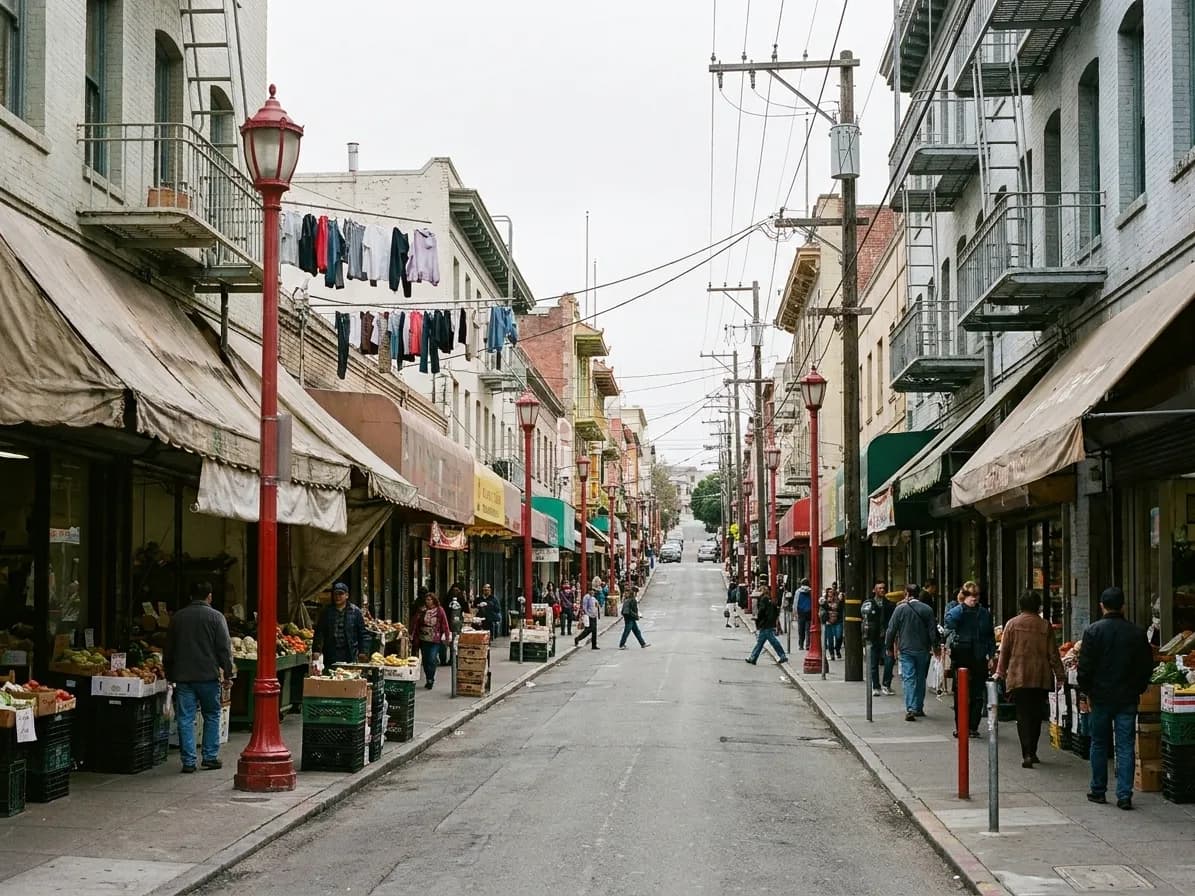
A pizza near me search inside Chinatown produces a thin and slightly confusing result, and the reason is worth stating plainly: Chinatown is not a pizza neighbourhood. Its commercial space is occupied by an older and denser food economy — noodle shops, barbecue counters, bakeries, produce, dim sum — and there is very little room or demand for a slice shop. What there is instead is a seam. Chinatown's northern edge runs straight into North Beach, and along that boundary is one of the best short pizza walks in San Francisco.
The honest answer is that Chinatown is not a pizza neighbourhood — the seam with North Beach is. Tell Karpo where you are standing and it will route you along the edge where the ovens actually are.
Why the seam is where the ovens are
The two neighbourhoods have been pressed against each other for over a century, and the boundary has moved as each expanded. The result is a few blocks where Italian-American businesses that were once well inside North Beach now sit at the top of Chinatown, with Cantonese shops on the same block. Broadway and the streets immediately either side of it are the practical dividing line, and they are where you will find the slice windows, the by-the-pie counters and the older pizzerias.
The walk, in the order that works
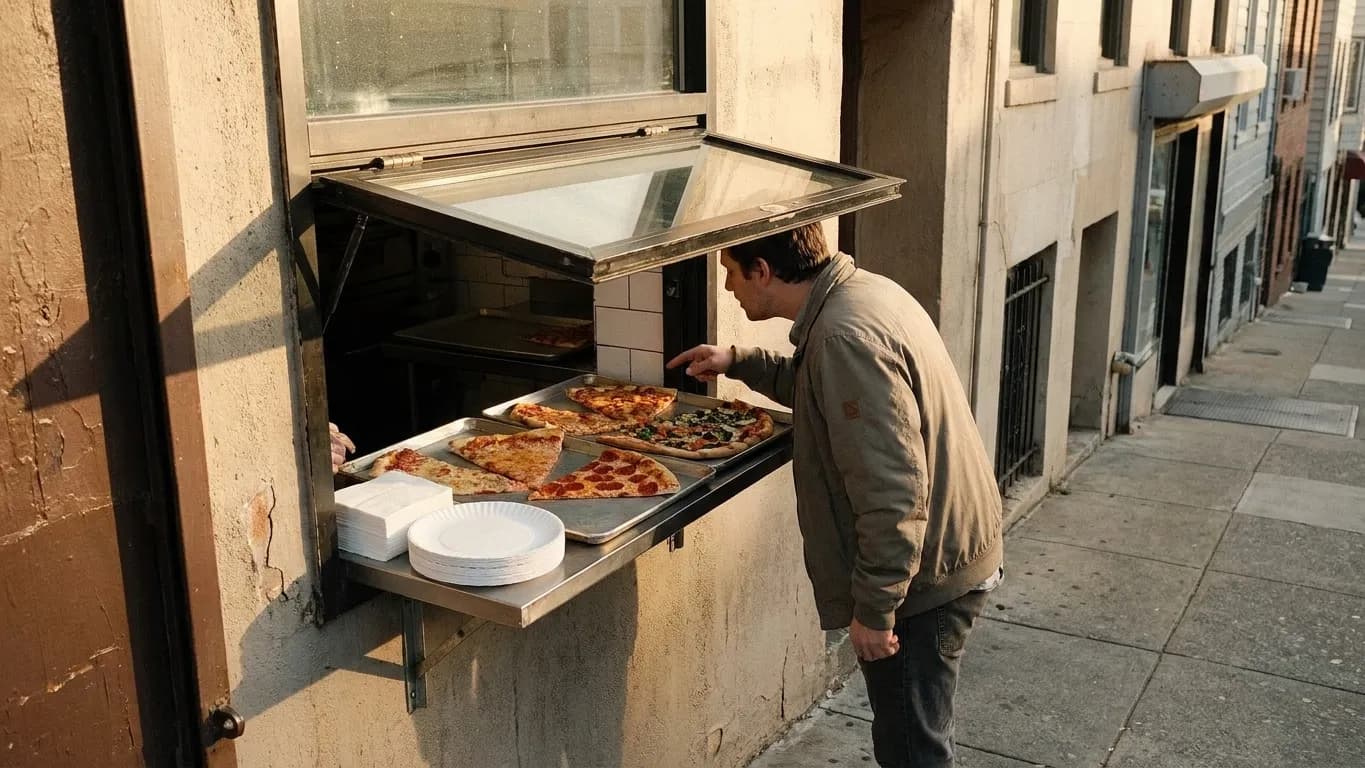
Start at the southern end of Chinatown and walk north — Grant or Stockton, uphill, through the busiest part of the neighbourhood. You are not looking for pizza yet; you are getting the contrast, which is the point of doing this on foot. Cross Broadway and the frontages change character within a block. Work the next few streets and you will pass the whole range: a window selling slices to people walking, a counter doing square pies by weight, and at least one full pizzeria with tables.
What to order at each format
At a window, take whatever is coming out rather than what looks best under the lamp, and ask — they will tell you honestly how long a tray has been sitting. At a by-weight counter, buy less than you want of two kinds rather than a lot of one. At a sit-down pizzeria, order a whole pie for two people rather than slices, because these kitchens are built around the pie and the slice is the leftover.
The Chinatown detour that makes the crawl better
Break the walk with something from the neighbourhood you are standing in: a bakery bun, a paper bag of egg tarts, a cup of tea. It costs a couple of dollars, it resets the palate between slices, and it is a much more honest way to spend an afternoon on this seam than eating four kinds of pizza in a row. The best version of this walk is not a pizza crawl at all — it is a two-neighbourhood crawl with pizza as the spine.
Practical notes
Do this in the afternoon rather than at night. The Chinatown half is fully awake during the day and half-closed after seven, while the pizza half runs later, so an afternoon start lets you see both. Bring cash for the Chinatown stops. And do not drive — parking in these blocks is genuinely among the worst in the city, and the entire walk is under a mile.
Businesses along this seam change hands regularly and hours vary, so check before planning around a specific counter.
Doing the same walk with a group
This route works unusually well for four to six people, because the format is grazing rather than sitting. Buy one or two slices at each stop and split them, which keeps everyone eating the same thing at the same time and means you can cover four counters without anybody being uncomfortably full. Somewhere with a bench or a small square makes a natural halfway point.
With children it works even better, since the walk is short, there are steps and alleyways to look at, and pizza is a reliable common denominator. Do it early — the Chinatown half of the route is at its best in the middle of the day and the crowds on the main streets thin considerably after about four.
What else is on the seam
The blocks either side of the boundary carry more than pizza, and the walk is better for acknowledging it. Within the same few streets there are Italian delis selling sandwiches and cured meat by weight, bakeries doing focaccia by the slab, Chinese barbecue counters with roast duck in the window, and at least one of the city's older bookshops.
Building the route as pizza plus two of those makes a considerably better afternoon than four pizza stops, and it is a more accurate picture of what this seam actually is: two food cultures that have been sitting against each other for a century and have quietly borrowed from one another the whole time.
Tags: #SanFrancisco #SF #BayArea #NeighborhoodGuide #LocalGuide #ByTheBlock #Chinatown #Pizza #FoodCrawl #SFEats #SFGuide #ExploreSF #SFLocal #SFWeekend
Sources consulted: sfchronicle.com · sf.eater.com · sftravel.com
All trademarks are the property of their respective owners.
Ask Karpo first
Karpo is a proactive AI assistant that lives in iMessage. Ask it to plot the walk and it will keep you on the seam.