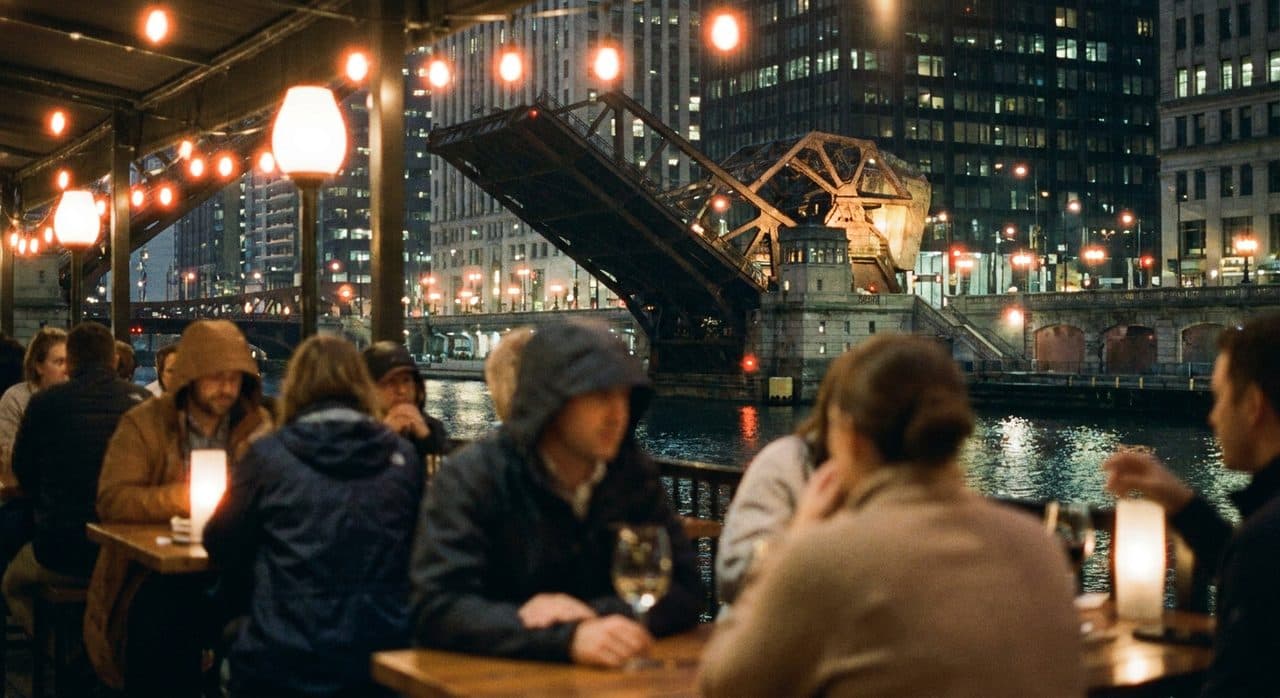
You're standing on the Riverwalk terrace with a glass of Grüner Veltliner getting warm in your hand, watching a 3,000-ton steel bridge split down the middle and lift toward the sky like a drawbridge in a medieval fantasy. It's 1:47 AM on a Tuesday in late April, and you're one of maybe eight people watching Chicago's spring bridge lift schedule play out in real time. The city hums different at this hour—quieter, industrial, honest about what it actually is.
The Machinery Runs on a Schedule Nobody Advertises
The spring bridge lifts happen because pleasure boats stored downriver for winter need to move back upstream to their summer moorings. The city runs these lifts between mid-April and early June, mostly after midnight when traffic thins out. You won't find the exact schedule posted anywhere useful—the city's official site lists "spring" and "as needed"—but the harbormaster's office runs lifts on Tuesdays and Thursdays between 12:30 and 3:00 AM, weather permitting. The Lake Street Bridge goes first, usually around 12:45, followed by Clark Street at 1:15, then Dearborn around 1:45. The bridges stay up for seven to twelve minutes depending on how many boats are queuing. You can hear the warning bells from three blocks away, a flat metallic clang that cuts through the ambient noise of delivery trucks and late-shift workers heading home.
City Winery Has the Only Terrace That Stays Open
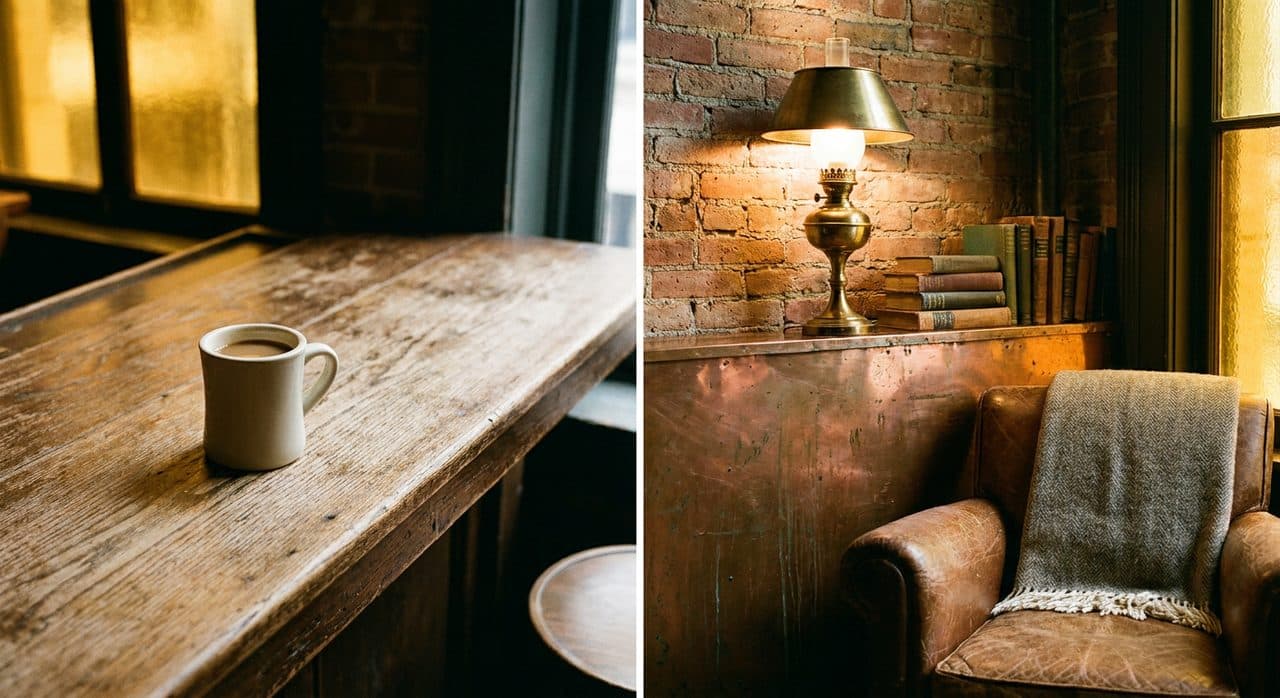
Most Riverwalk establishments close by 11 PM, even on weekends. City Winery's terrace—officially the Riverwalk Room patio—stays open until 2 AM Thursday through Saturday during bridge season, though they don't advertise this. You need to be inside the main dining room by 10:30 to get terrace access after midnight; they lock the exterior stairs at 11. Ask for section R7, the southeast corner tables, which sit directly across from the Dearborn Street Bridge lift point. The terrace holds maybe forty people comfortably, but after midnight you're usually sharing it with a handful of industry workers and one or two couples who stumbled into this by accident. The wine list runs heavy on Austrian and German whites—the 2021 Loimer Langenlois Grüner Veltliner sits at $16 a glass and doesn't try to be anything other than crisp and mineral. The kitchen closes at midnight, but they'll still bring out the cheese plate if you ask nicely.
The Bridges Themselves Are Bascule Trunnions, Not Drawbridges
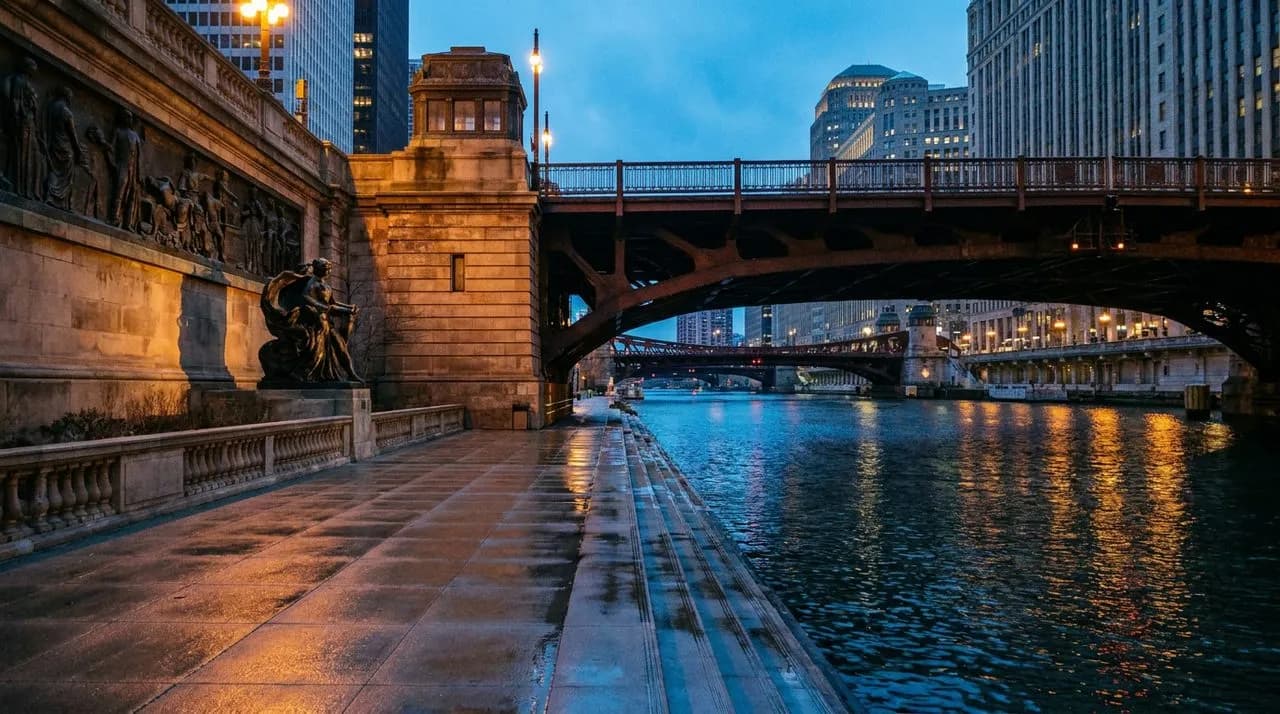
Chicago's river bridges operate on a trunnion bascule system—each bridge leaf pivots on a horizontal axle using a massive concrete counterweight hidden in the bridge house below street level. When the bridge lifts, you're watching 1,200 tons of steel and concrete pivot on a single point, balanced so precisely that the motors only need to overcome friction and wind resistance. The Dearborn Street Bridge, built in 1963, lifts faster than the older Clark Street Bridge from 1929—you can actually see the speed difference when multiple bridges go up in sequence. The counterweights drop into pits that extend forty feet below the riverbed. Sometimes you can feel the vibration through the terrace floor when the Dearborn leaf locks into the upright position.
The Boat Parade Moves Slower Than You'd Expect
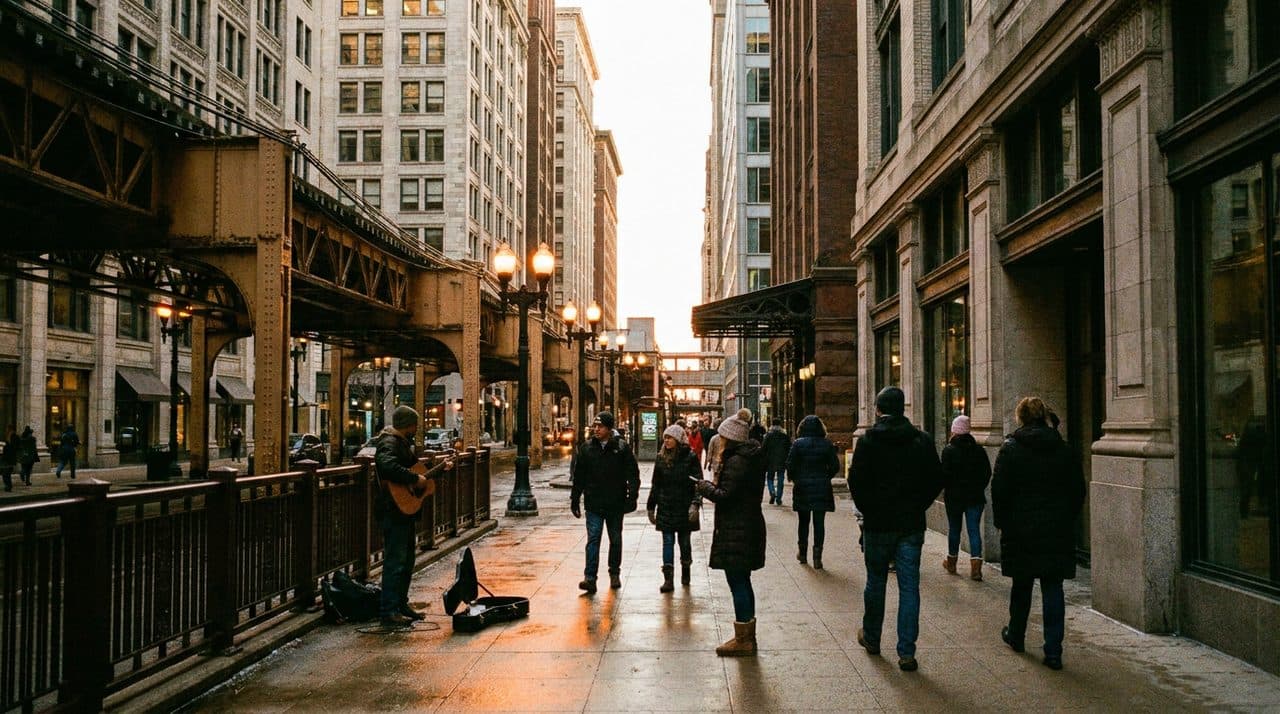
The boats themselves come through in clusters—six or eight at a time, motoring upstream at maybe four knots, their running lights reflecting off the black water in long wobbly lines. Most are cabin cruisers in the thirty-to-forty-foot range, nothing fancy, piloted by delivery captains the marinas hire for these overnight transits. You'll see the occasional sailboat with its mast towering above the bridge clearance, and once or twice a season someone brings a vintage wooden Chris-Craft through, all varnished mahogany and brass fittings catching the bridge lights. The boats don't honk or wave—this is work for them, just another delivery job, though sometimes a captain will raise a hand to the bridge operator. The whole procession takes maybe eight minutes, then the bells clang again and the bridge leaves descend with a hydraulic hiss and a final metallic clunk that echoes off the building facades.
The Light Pollution Actually Helps Here
You're not going to see stars—the Loop's ambient light washes out anything dimmer than Venus—but that same light pollution illuminates the bridge mechanics in sharp relief. The bridge houses glow from interior work lights, and you can see straight through the steel lattice structure as it lifts, watch the counterweight cables go taut, see the operator silhouetted in the control room window. The river itself reflects enough light that you can track the boats' wakes spreading across the surface in dark V-shapes. The buildings on the opposite bank—the Civic Opera House, the old Morton Salt building—throw enough light that the whole scene reads like a stage set, artificial and hyperreal. This isn't romantic in the soft-focus sense; it's romantic in the industrial sublime sense, all power and precision and infrastructure doing what it was built to do.
Nobody Else Knows to Look for This
That's the actual pleasure here—you've found something that happens in plain sight but off everyone's radar. The tourists are asleep in their Michigan Avenue hotels. The locals assume the Riverwalk closes at sunset. Even the City Winery staff seem mildly surprised when you ask about bridge lift timing. You're watching a seasonal urban phenomenon that serves a purely functional purpose, that wasn't designed for spectators, that happens whether anyone's paying attention or not. The bridges will lift thirty or forty times each spring, moving a few hundred boats from Point A to Point B, and most nights nobody watches at all.
Practical Notes
City Winery Riverwalk is at 11 West Riverwalk South, directly across from Dearborn Street. The terrace entrance is on the river level; take the stairs down from street level at Dearborn. Last reservation is 10:30 PM on nights they stay open late. The CTA Blue Line to Washington stops three blocks west. Metered parking on Wacker Drive runs $7 per hour until 2 AM. Bridge lift schedules run mid-April through early June, primarily Tuesday and Thursday nights between 12:30 and 3:00 AM—call the harbormaster's office at (312) 742-7529 after 6 PM for that night's timing. Dress warmer than you think; the river corridor holds cold air even in May. The terrace has overhead heaters but they're uneven. Reservations aren't required but they'll hold section R7 if you call ahead and mention the bridge timing.
Please drink responsibly. Must be of legal drinking age.
Tags: #ChicagoRiverwalk #LoopChicago #ChicagoBridges #MidnightChicago #TheLongWayHome #ChicagoAfterDark #RiverwalkChicago #BridgeLift #ChicagoRiver #HiddenChicago #CityWineryChicago #ChicagoSpring #UrbanExploration #ChicagoNights #OffTheBeatenPath
Sources consulted: timeout.com · atlasobscura.com · nycgo.com
All trademarks are the property of their respective owners.