There's a version of Chicago that exists entirely below street level, where the wind off the lake doesn't reach and January becomes irrelevant. The Pedway is not a secret—tens of thousands of commuters use it daily—but it occupies a curious space in the city's infrastructure, neither quite public transit nor quite sidewalk. It's five miles of tunnels, overhead bridges, and building lobbies strung together into a climate-controlled thread through the Loop. The system connects office towers, transit stations, and retail spaces in a network that prioritizes function over aesthetics. It's the long way home if you're measuring charm, but it's the warm way home when the thermometer drops.
The Hidden Entry Point
Finding your way in can feel like joining a club with no website. The Pedway has dozens of access points, but most are tucked inside lobbies or down stairwells that blend into the architectural background. The Pedway has multiple access points in and around Millennium Park and the Loop; signage and exact entrances vary by location. You could walk past it a hundred times before registering what it is. Once you descend, the temperature stabilizes and the acoustic quality changes. Street noise is replaced by the hum of ventilation systems and the soft echo of footsteps on polished floors.
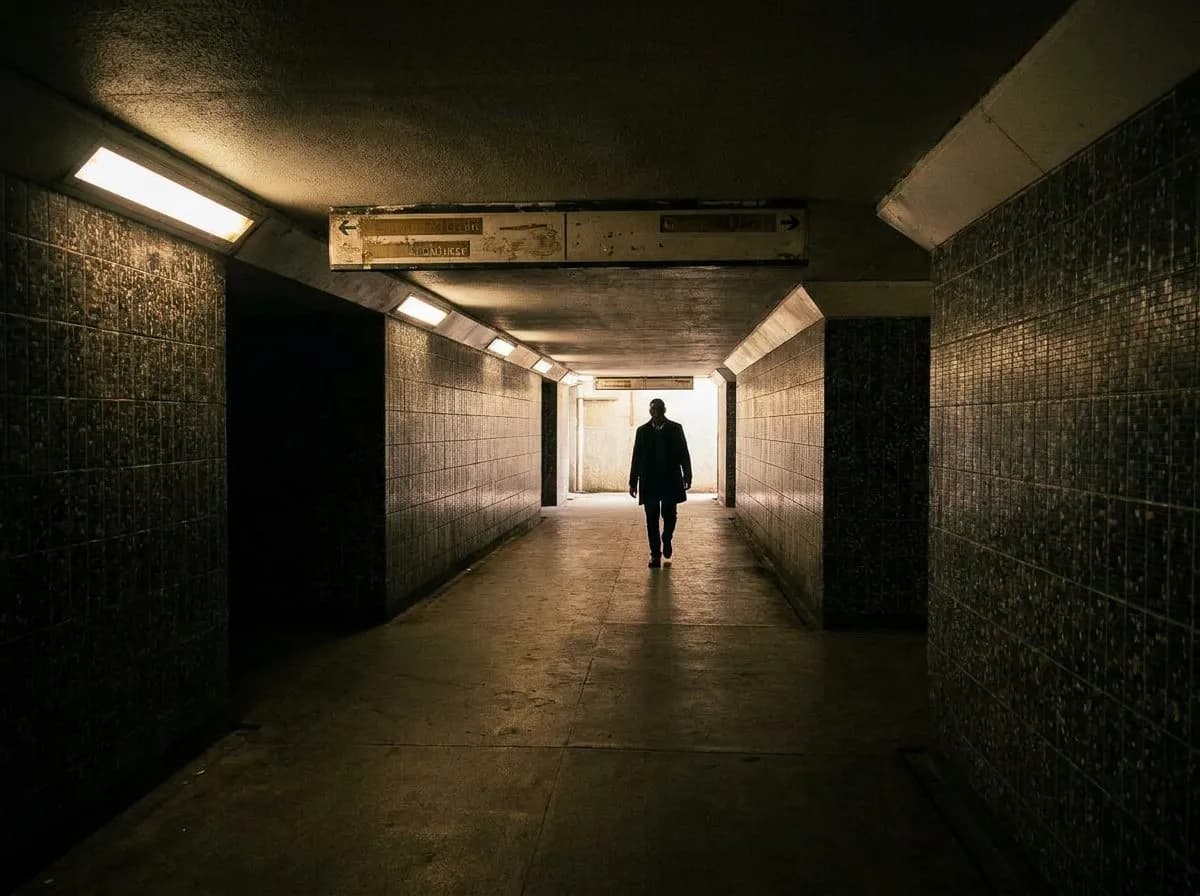
The transition from open plaza to subsurface corridor is abrupt. There's no grand portal, no threshold that announces you're entering a parallel city. Just a staircase, a plaque, and then you're in—surrounded by beige tile and directional signage that assumes you already know where you're going. It's deliberately understated, which is part of the appeal. This is infrastructure for people who've already figured it out.
The Morning Rush Corridor
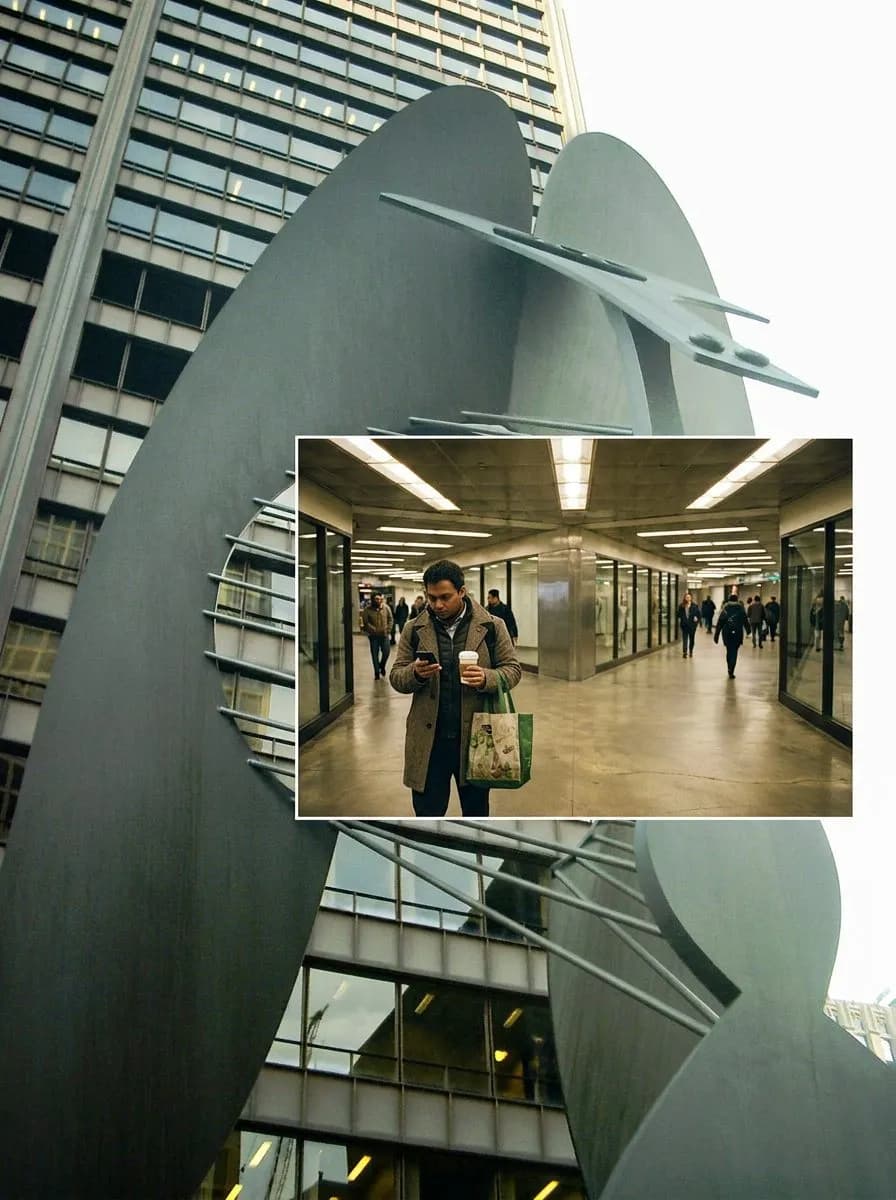
Not all segments of the Pedway carry the same weight. The Pedway section near Washington and City Hall is among the busier routes during weekday commute hours. The flow is tidal—purposeful, quick, synchronized to the rhythm of office schedules. During these windows, the tunnel becomes a river of coats and coffee cups, everyone moving with the practiced efficiency of commuters who've optimized their routes down to the minute.
The architecture here is strictly functional. Low ceilings, fluorescent panels, walls lined with directory boards and the occasional retail kiosk. There's no attempt to make it beautiful, which paradoxically makes it interesting. This is the city stripped to its skeleton—the part that keeps things running when the surface is iced over. In late 2026, as winter travel patterns shift and remote work settles into new norms, the Pedway remains a testament to the idea that people will still come downtown if you give them a way to do it without freezing.
Through Macy's and Under Michigan
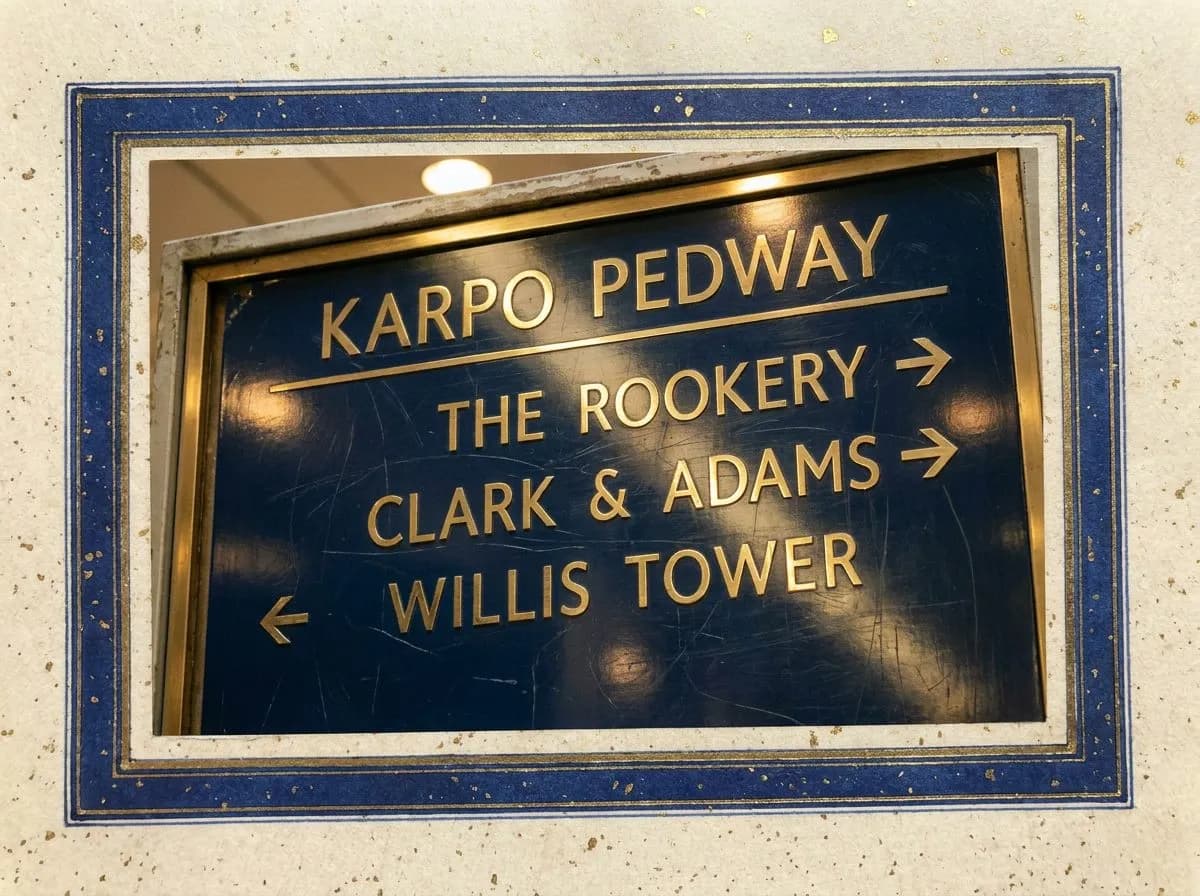
The route from Millennium Park to City Hall threads through spaces that blur the line between public and private. You'll pass through the basement level of Macy's on State Street, where the Pedway cuts through what feels like a service corridor adjacent to the main shopping floors. The lighting is dimmer here, the tile older. Then you're under Michigan Avenue, moving through passages that belong to no single building but exist in the interstitial zones between them. Office building atriums appear and disappear—glass-walled lobbies where daylight filters down from stories above, then back into tunnels lit entirely by artificial light.
The sensory experience oscillates. One moment you're in a polished granite-floored atrium with soaring ceilings, the next you're in a narrow concrete passage that smells faintly of cleaning solution and recycled air. It's a collage of architectural eras and design philosophies, held together by wayfinding arrows and the shared understanding that this is how you get where you're going without a coat.
The Unreliable Hours
Navigating the Pedway requires a different kind of urban literacy. Many segments are mainly open during business hours, and access can depend on the hours of connected buildings. What works on a Tuesday morning might be impassable on a Saturday afternoon. The system is less a fixed network than a conditional one—its shape shifting based on the schedules of the private buildings it passes through.
This creates a curious dynamic. The Pedway is public infrastructure that depends on private cooperation, which means it's subject to the whims of building management, security protocols, and maintenance schedules. You learn to build redundancy into your route, to know which segments are reliable and which require a contingency plan. It's urban planning as negotiation, and the negotiation never quite ends.
The Subsurface Experience
What the Pedway lacks in atmosphere it makes up for in utility. There's a particular pleasure in walking from point A to point B in January while wearing no outerwear, in moving through downtown without once consulting the weather app. The city above is only visible through stairwell exits—glimpses of daylight at the top of each egress point, reminders that the surface world is still there if you want it. Most of the time, you don't.
The aesthetic is resolutely unglamorous. This is not the vaulted beauty of a European arcade or the neon glow of an Asian underground shopping district. It's American infrastructure from the midcentury forward—built to solve a problem, maintained to a standard of basic function, and largely indifferent to questions of design. But spend enough time down here and you start to appreciate the honesty of it. The Pedway does exactly what it promises and nothing more.
Why Go
The appeal is narrow but real. If you're in the Loop on a bitter day and need to cover ground without freezing, the Pedway is unmatched. If you're curious about the hidden layers of urban infrastructure—the parts of the city that exist to make other parts work—it's a worthy expedition. And if you've ever wondered what it's like to experience downtown Chicago as a series of connected interiors rather than a collection of buildings separated by wind, this is your laboratory.
It won't show up on anyone's list of must-see attractions, and that's fine. The Pedway is for people who've moved past tourism into something closer to residency, even if temporary. It's the city's back staircase, the route you take when you know where you're going and just want to get there without drama. In a place where winter defines half the year, that's no small thing.
Practical notes
The Pedway is accessible from numerous points throughout the Loop, including entrances at Millennium Park (Chase Promenade north stairs), Macy's on State Street, and the Blue Line Washington station. Hours vary by segment depending on connected building schedules; many sections close after 7pm and on weekends. Most major sections are accessible, though some older connectors involve stairs. Bring a sense of direction—signage is functional but assumes familiarity. No admission fee. Nearest transit: Red, Blue, Brown, Orange, Pink, Purple lines to any Loop station.
Tags: #ChicagoPedway #TheLoopChicago #UndergroundChicago #ChicagoWinter #TheLongWayHome #UrbanInfrastructure #ChicagoCommute #DowntownChicago #PedestrianTunnels #WinterTravel #HiddenChicago #CityHallChicago #MillenniumPark #ChicagoExploration #UrbanExploration
Sources consulted: Wikipedia: Chicago Pedway · City of Chicago: Pedway System · CTA: Chicago Transit Authority · Choose Chicago: The Loop · Chicago Tribune: Pedway Coverage
All trademarks are the property of their respective owners.