Published lists of the best restaurants in New York have a shelf life of about eleven months. Chefs move, rooms change hands, a place that was extraordinary in March is coasting by December, and the list you are reading was assembled from a spreadsheet six months before it was published. A more useful way to hold the question is as a set of categories the city does better than anywhere else, with a working example in each that you replace as things change.
Restaurant lists age faster than anything else on the internet. Ask Karpo which of these is actually good right now and has a table.
Why the category approach works here
New York is not one restaurant scene, it is about twenty overlapping ones, most of which have nothing to do with each other. The people who care most about the city's tasting menus rarely have opinions about Uzbek food in Rego Park, and the reverse is even more true. A single ranked list flattens all of that into one axis, which is why it always feels wrong to anyone who eats seriously in a specific corner of the city.
The category approach also survives change. A specific restaurant may close; the category of great Cantonese banquet room in Flushing will not. Keeping one current example in each of fifteen or twenty categories is a more robust way to eat well here than memorising anyone's top fifty.
The categories that define the city
The old-guard institution: the deli, the steakhouse, the red-sauce Italian room, the Jewish appetising shop. Katz's Delicatessen on East Houston has been trading since 1888 and is the oldest continuously operating delicatessen in the country; Peter Luger in Williamsburg has been a steakhouse since 1887; Russ & Daughters has been an appetising shop since 1914. These are not nostalgia; they are still doing the thing they are known for at a very high level.
The immigrant neighbourhood anchor: Cantonese banquet rooms and Sichuan restaurants in Flushing, Uzbek in Rego Park, Trinidadian and Guyanese roti in Richmond Hill, Filipino in Woodside, Greek in Astoria, Dominican in Washington Heights, Senegalese in Harlem, Georgian in Brighton Beach, Bangladeshi in Jackson Heights. This is the deepest and least well-covered part of New York eating, and it is where the largest gap between quality and reputation sits.
The middle, which is where most eating happens
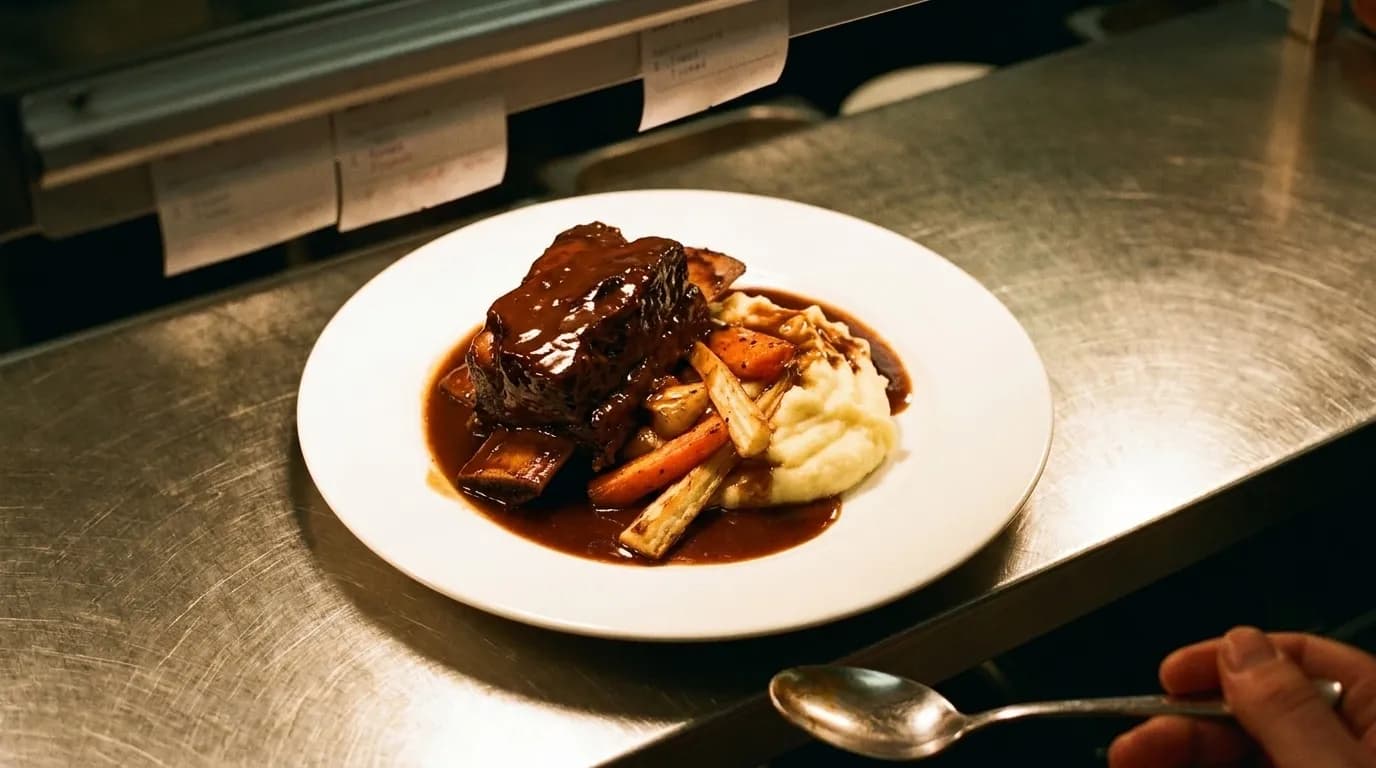
Between the institutions and the neighbourhood anchors is the category that has grown most in the last decade: the small, chef-owned neighbourhood restaurant with thirty covers, a short menu that changes, an idiosyncratic wine list and no ambition to expand. These are concentrated in the eastern Brooklyn neighbourhoods, the Lower East Side, and increasingly in Queens, and they are the best value serious cooking in the city.
The signals are consistent: fewer than a dozen savoury dishes, bread made in house, a wine list with a point of view, and a room that seats forty rather than a hundred. A restaurant that fits that description in a residential neighbourhood is a good bet without knowing anything else about it.
The pizza and the slice
One category deserves its own line because New York does it better than anywhere and it sits outside every other heading. The city has roughly eighteen hundred pizzerias, four distinct oven traditions — coal, gas deck, wood and electric — and a slice culture that functions as genuine civic infrastructure. Lombardi's on Spring Street, established in 1905, is generally cited as the first pizzeria in the United States. Any working list of the best eating in New York that omits a coal-oven pie, a plain slice and a square Sicilian is incomplete, and all three are cheap.
The top end
New York's fine dining is genuinely world-class and it is also the part of the scene most subject to fashion and to price inflation. The tasting-menu rooms are extraordinary and expensive; the more interesting recent development is that several of them run a bar or counter menu at a fraction of the price, which is the way to eat that cooking without a three-figure commitment.
The sushi counters are the other top-end category worth its price. New York has a deep bench of omakase rooms at wildly different price points, and the mid-range ones — a counter with a dozen seats, a set course, no theatre — are frequently better value than anything else at their level in the city.
Two more categories complete the picture. The bagel, appetising and smoked fish tradition, which is a genuinely New York cuisine with a hundred-year history and no real equivalent anywhere else. And the halal cart, bodega griddle and slice counter layer — informal, cheap, available at almost any hour, and a bigger part of how the city actually eats than every restaurant above it combined.
Keeping the list current
The practical method is to hold one current example per category and to replace it whenever you have a mediocre meal or hear something credible. Prioritise word of mouth from people who eat in that specific category over any general list. And treat any restaurant you have not been to in two years as unknown rather than as good — in this city that is usually accurate.
The other habit worth having is eating midweek. Tuesday through Thursday is when kitchens are sharpest and rooms are least rushed in New York, and the same restaurant on a Saturday and a Wednesday is genuinely two different experiences.
Practical notes
Most of the city's best rooms release tables on a rolling window, commonly thirty days, at a fixed morning hour; cancellations return at the twenty-four or forty-eight hour deadline. Bar and counter seats are held for walk-ins at a large share of the hardest restaurants. Many of the best rooms close Sunday or Monday. Outer-borough neighbourhood anchors rarely take reservations and rarely need them outside weekend evenings. And check weekend subway service before committing to a neighbourhood you cannot easily leave.
Tags: #NYC #NewYorkCity #BestRestaurants #NYCRestaurants #FoodNearMe #WhereToEatNYC #Flushing #Astoria #JacksonHeights #RichmondHill #LowerEastSide #Brooklyn #NYCEats #DiningGuide
All trademarks are the property of their respective owners.
Ask Karpo first
Want to know which rooms near you are actually good right now, which have released tables this morning, and where the walk-in counters are? Ask Karpo before you book.