 Williamsburg Arepa Lunch Spot Picker for Parents of Toddlers
Restaurants
Washington Heights Arepa Lunch Spot Picker for a Newcomer
This Washington Heights arepa lunch spot picker helps a Caracas newcomer tell a sweet Dominican corn arepa from a stuffed Venezuelan one and eat with a view.
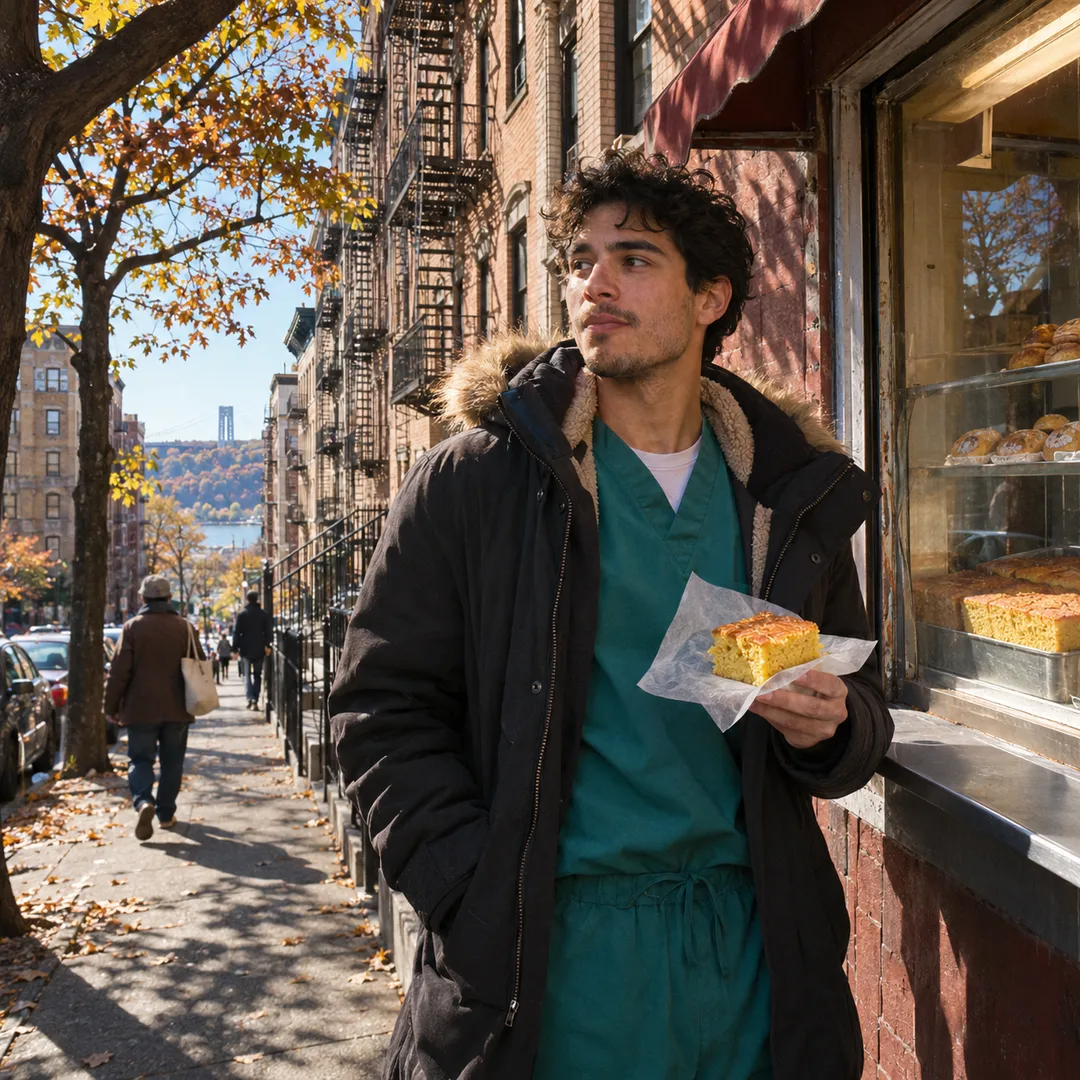
In Washington Heights, the word arepa can get you two completely different lunches. Gabriel learned this in his first week as a nurse uptown, fresh from Caracas, when he asked for an arepa at a Dominican bakery and was handed a square of sweet baked corn cake. This arepa lunch spot picker follows how he learned to tell the two apart, where he finds each one, and how a short lunch break became his favourite part of the shift.
Two Arepas Under One Name
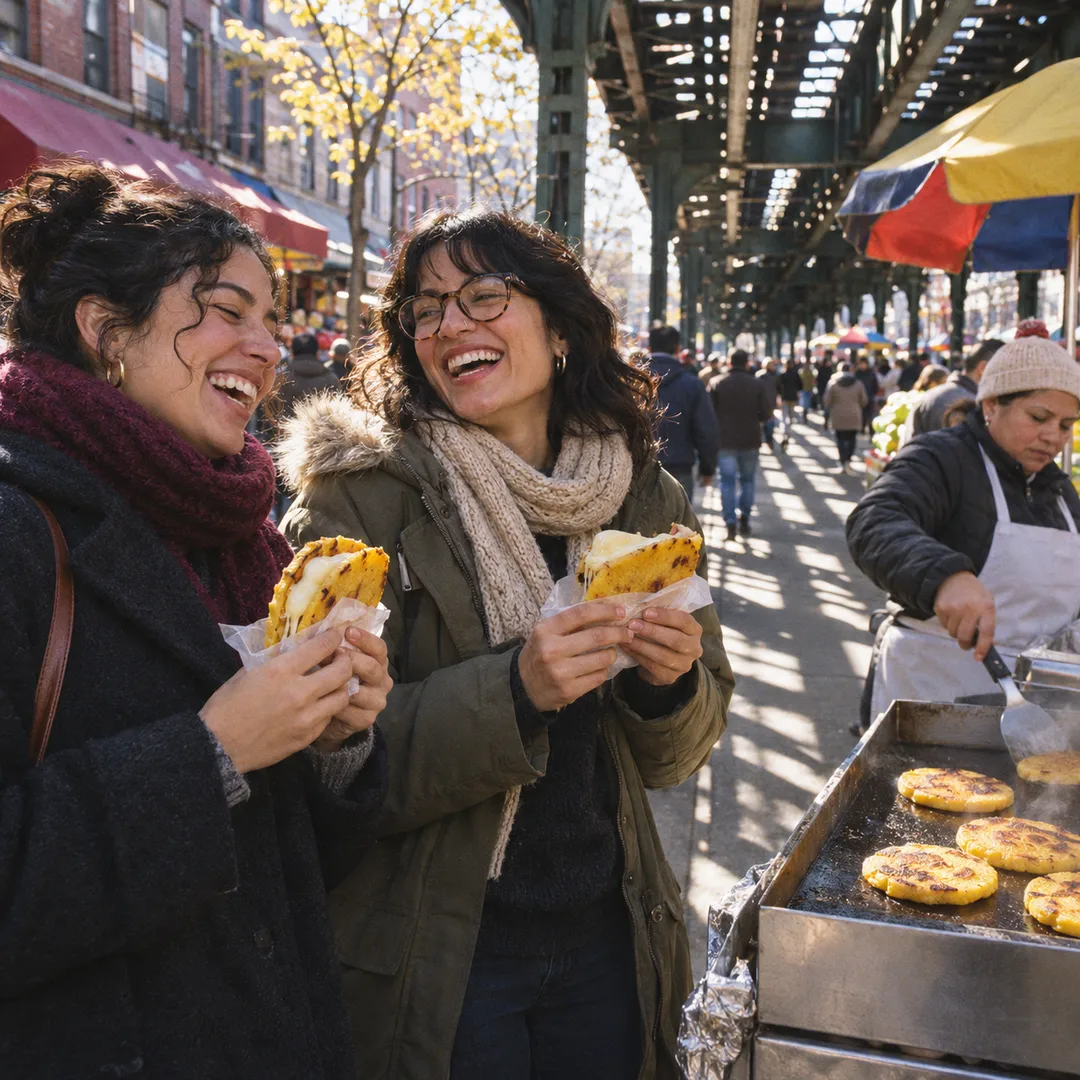
The Venezuelan arepa Gabriel grew up with is a round corn cake griddled until crisp, split open and stuffed with beans, cheese or meat. The Dominican arepa is a different thing entirely. It is a dense, sweet cornmeal cake, usually made with coconut milk or milk and baked in a pan, then cut into squares. Some families make it with a touch of cinnamon or raisins.
Neither one is wrong. They share a name and a base of corn but grew up in different kitchens. Washington Heights has been the heart of the Dominican community in New York for decades, so the sweet version is what most bakeries mean. Gabriel's coworker Yesenia, who grew up a few blocks from the hospital, laughed when he told her the story and said she had made the same mistake in reverse on a trip to Caracas.
Reading the Bakery Case
Now Gabriel knows what to look for. In a Dominican bakery the sweet arepa sits in the glass case near the cakes and the bizcocho, cut into thick golden squares that look a bit like cornbread. It pairs well with a small cup of strong coffee and makes a good mid-shift snack, filling and easy to eat standing up.
His tip for newcomers is to point and ask. Bakery staff uptown are used to curious visitors and will happily explain what is in the case. If you want something savoury, look for pastelitos, flaky turnovers filled with meat or cheese, or ask about the lunch plate of rice, beans and stewed meat that many small spots serve at midday. The sweet arepa works better as dessert than as a main meal.
Timing helps. Bakeries are busiest early in the morning, when people pick up bread and coffee on the way to work, and again in the late afternoon. Around midday the cases are full and the counter is calmer, which gives you a chance to ask questions without holding up a line of regulars. Gabriel now takes his break a little after the noon rush for exactly that reason.
Finding the Stuffed Kind
For the Venezuelan style, Gabriel had to search a little. Uptown has a smaller number of Venezuelan and Colombian counters than Queens, often tucked between barbershops and nail salons along the avenues. He uses the Karpo APP to pull up nearby arepa kitchens when he wants a stuffed one, then walks over on his break and orders the one he misses most from home.
His usual is a pabellón, with shredded beef, black beans, sweet plantain and white cheese. On colder days he goes for a dominó, black beans and crumbled cheese, which is lighter and easier to eat quickly. He asks for the green guasacaca sauce on the side so his scrubs stay clean, a lesson he learned the messy way during his first week.
A Lunch Break Built Around the Hills
Washington Heights sits on some of the highest ground in Manhattan, and that height is the reason the neighbourhood carries its name. During the Revolutionary War, Fort Washington stood on these hills to guard the Hudson, and the land still rises and falls in steep blocks, stairways and rocky outcrops. A short walk from the hospital often ends with a view.
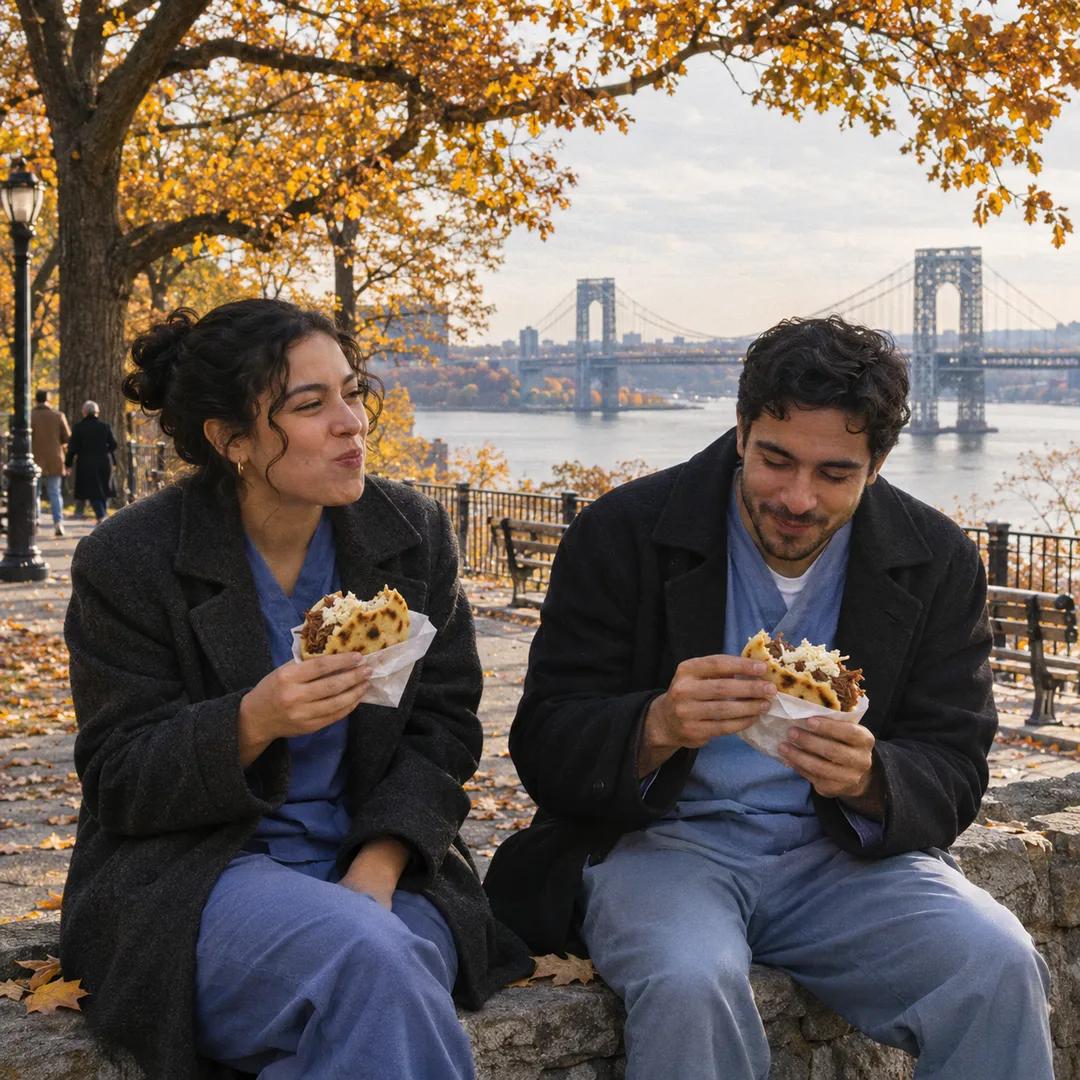
Gabriel's favourite spot is a stone wall in a hilltop park overlooking the Hudson, with the big steel towers of the George Washington Bridge to the south. He eats his arepa there when the weather holds, watching the river traffic and the cliffs of the Palisades on the New Jersey side. Twenty minutes outside is enough to reset his head before going back to the ward.
The neighbourhood's older history is close by too. The Morris-Jumel Mansion, a Georgian house on a rise in the southern part of the area, served as a headquarters for George Washington in the early days of the war and is often called the oldest house in Manhattan. Gabriel walked past it for weeks before stopping in, and now recommends it to every new nurse on his floor.
Longer Walks on a Day Off
On days off he takes the slower version of the same lunch. Fort Tryon Park, at the north end of the neighbourhood, has winding paths, terraced gardens and The Met Cloisters, a museum of medieval art set inside rebuilt pieces of European monasteries. Carrying a stuffed arepa up to the heather garden and eating on a bench is, in his words, the most unexpected picnic in the city.
Another route crosses the High Bridge, the old stone aqueduct bridge over the Harlem River, now a walkway linking Manhattan to the Bronx. Down by the river under the George Washington Bridge, the Little Red Lighthouse is a small surprise that most visitors miss. Any of these walks pairs well with a sweet Dominican arepa saved for dessert.
When the Plan Falls Apart
Hospital lunches rarely run on schedule. When a shift runs long and there is no time to walk, Gabriel keeps it simple and buys a square of sweet arepa from the closest bakery, eating it on the way back. When the line at his favourite Venezuelan counter is out the door, he moves on rather than wait, because a ten-minute delay on a short break is the whole break.
Rain changes things too. On wet days he eats inside at a bakery counter, usually beside retired men watching baseball highlights and arguing about the old days. Those conversations have taught him more Dominican Spanish than any class. One honest note: skip the heavy rice plate when you have a busy afternoon ahead, because it leaves you sleepy by three.
What a Newcomer Learns From Two Arepas
Months into his new job, Gabriel says the arepa mix-up was the finest introduction to the neighbourhood he could have had. It forced him to talk to bakers, coworkers and neighbours about food, and each conversation came with a little history of the island or the hills. He now keeps both versions in his routine, one for lunch and one for the walk back.
If you are new to Washington Heights, try his approach. Order a sweet arepa in a Dominican bakery and a stuffed one at a Venezuelan counter in the same week, then eat at least one of them with a river view. You will understand the neighbourhood better, and you will never confuse the two again.
Ask Karpo for more information.
Keep reading
- Williamsburg Arepa Lunch Spot Picker for Parents of Toddlers
 Lower East Side Arepa Lunch Spot Picker for Coeliac Friends
 Jackson Heights Arepa Lunch Spot Picker for a Taste Debate