 Washington Heights Arepa Lunch Spot Picker for a Newcomer
Restaurants
Williamsburg Arepa Lunch Spot Picker for Parents of Toddlers
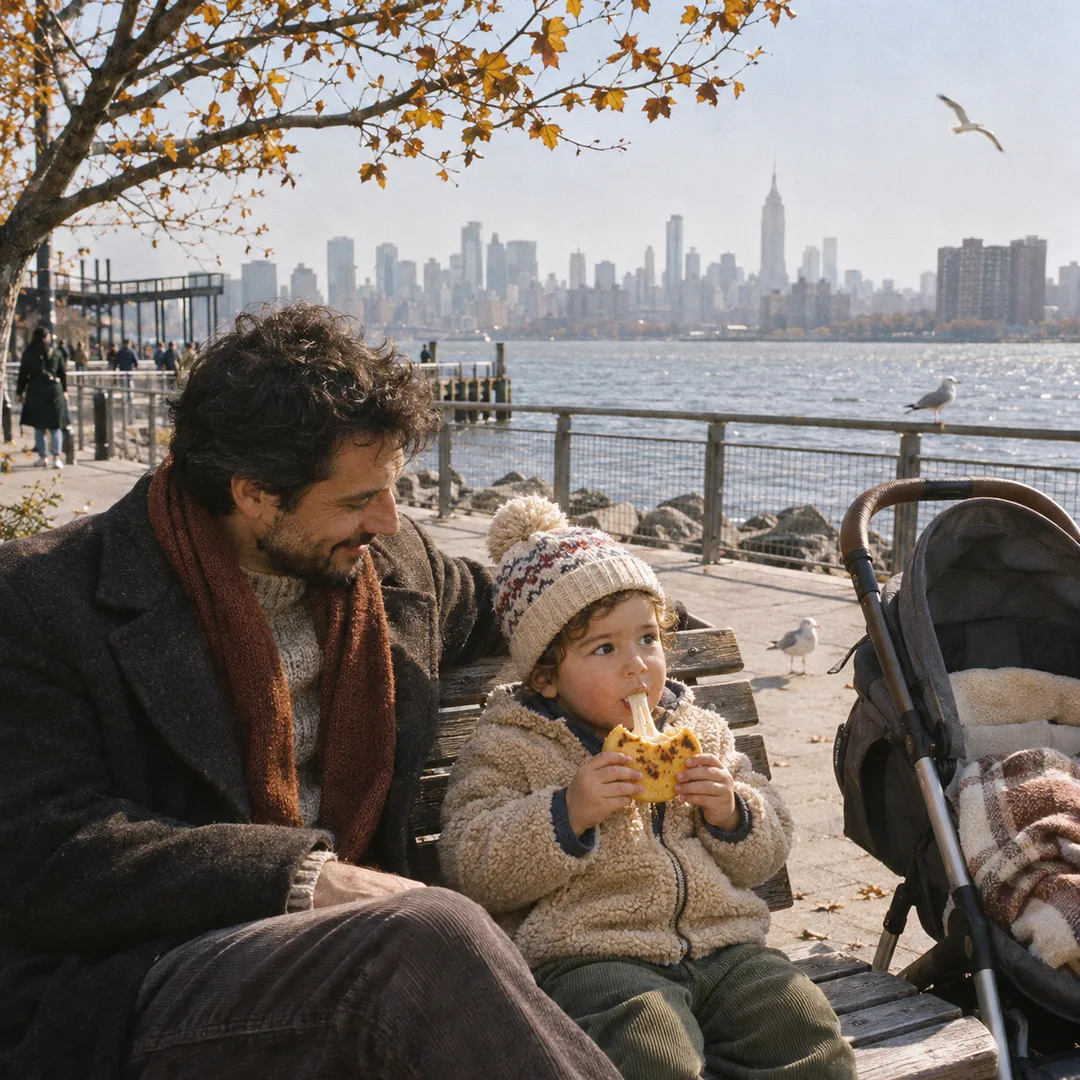
This Williamsburg arepa lunch spot picker shows parents how to order a toddler-sized arepa, fit a stroller at the counter and eat by the riverside playground.
A toddler can eat an arepa with two hands and no cutlery, which is why it became the default lunch for Maya and Tom on Williamsburg weekends. Their daughter Rosa is two, picky and fast to lose patience, and most restaurant lunches ended with half a meal in a box. This arepa lunch spot picker walks through how they choose a counter, what Rosa eats, where the stroller goes and why the waterfront became their dining room.
Why Arepas Suit Small Hands
Parents of toddlers judge food by a simple test: can it be held, can it be dropped without a disaster and does it taste mild enough to try twice? A plain arepa passes all three. The corn cake is soft inside with a gently crisp shell, it holds together when squeezed, and the classic filling of melted white cheese is about as familiar as food gets for a small child.
Maya also liked that the dough is simple, usually just corn flour, water and salt, so she knew what Rosa was eating. Tom liked that the adults could order something more interesting from the same counter, such as a pabellón with shredded beef, black beans and sweet plantain, without anyone feeling they had settled for a kids' meal.
Choosing a Counter With a Stroller
Williamsburg has plenty of small kitchens, but many are narrow with a step at the door and stools along a wall. Maya and Tom learned to pick places where they could see the order window from the sidewalk, so one of them could wait outside with the stroller while the other ordered. A counter with a bench out front or a wide doorway made the whole thing calmer.
Timing matters even more than layout. They aim for an early lunch, before the weekend brunch crowd fills Bedford Avenue and the side streets. Arriving a little before noon means shorter lines, a cook with time to cut Rosa's arepa in half and a quieter sidewalk for the stroller. On busy days they use the Karpo APP to check which arepa counters sit closest to the park they plan to visit.
Ordering for a Two-Year-Old
Many Venezuelan kitchens make arepitas, smaller arepas that are perfect for little hands. If they are not on the menu, ask for a plain arepa with cheese and request it cut in half. Ask for any sauce on the side, because the green guasacaca can carry a touch of chilli and the pink sauces are often garlicky. Rosa eats hers plain and dips the edges in a little sour cream when she is feeling adventurous.
Skip the fried sides for toddlers on a first visit. Tequeños, the cheese sticks wrapped in dough, are a hit with older kids but come out of the fryer very hot, and the cheese inside stays molten for longer than parents expect. Sweet fried plantains are a safer treat once they have cooled. Tom always asks for an extra stack of napkins, because corn crumbs go everywhere.
Drinks need a plan too. Tropical juices and sweet corn drinks are common at arepa counters, but they are sugary for a small child, so the family brings a water bottle for Rosa and lets her sip from a parent's papelón con limón, a cane sugar lemonade, only as a weekend treat. Small cups with lids are worth asking for, since the riverside wind tips over anything open.
Eating by the River
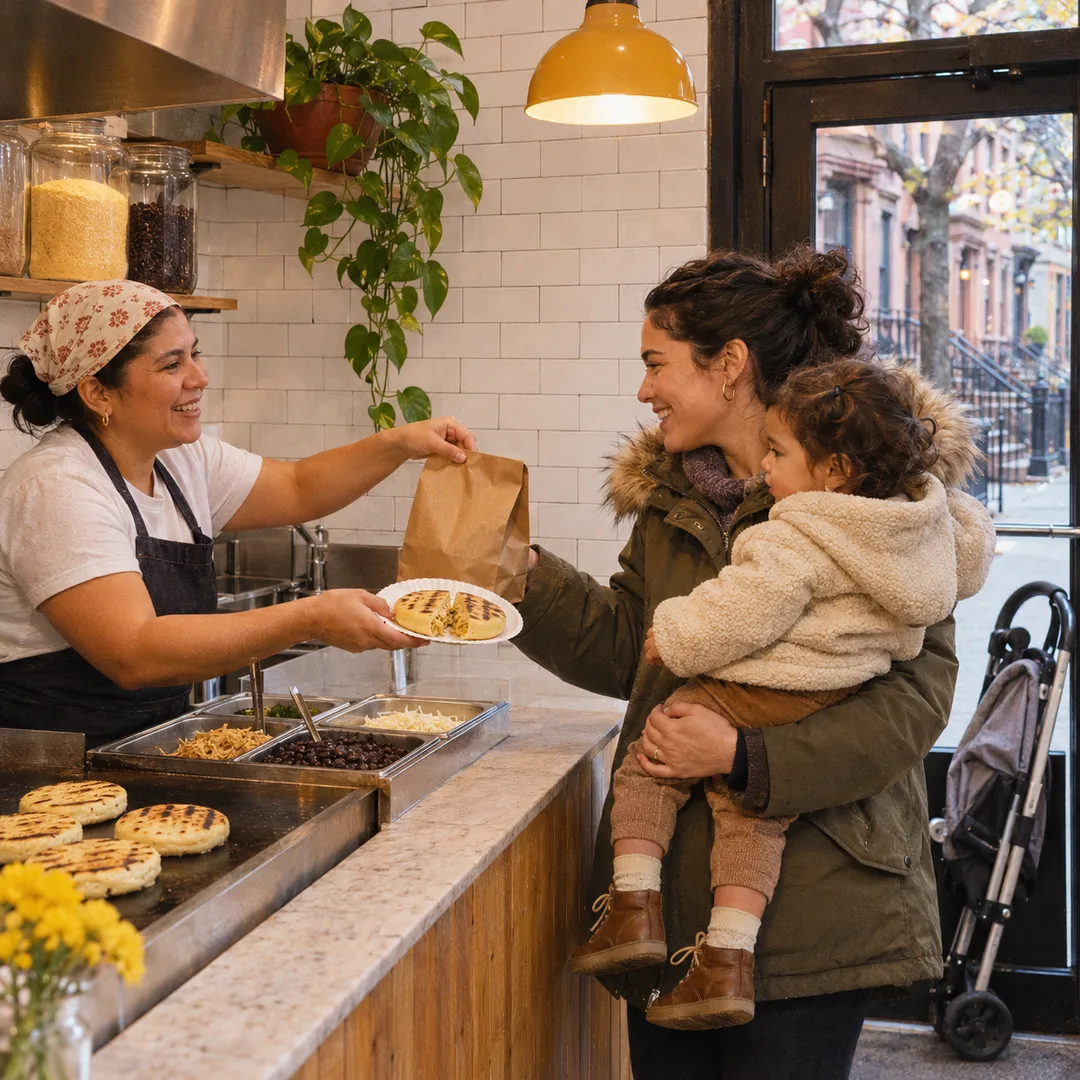
Rather than squeeze into a small dining room, the family carries lunch to the water. Domino Park runs along the East River on the site of the old sugar refinery that once dominated this stretch of shoreline. The park keeps pieces of the factory on display, including tall steel columns and big syrup tanks, and there is a playground designed with a nod to the refinery's machinery.
Rosa calls it the sugar park. They eat on a bench facing Manhattan, then she runs off toward the slides while her parents finish their own arepas. On a clear November afternoon the low sun lights up the skyline across the water and the park is full of families doing exactly the same thing with their own takeaway bags.
A few blocks north, Grand Ferry Park is a smaller patch of green beside the river, named for the ferry that once linked Williamsburg to Manhattan before the bridge was built. It is quieter than Domino Park and a good fallback when the main lawn is packed.
A Neighbourhood That Has Changed Many Times
Williamsburg has worn many faces. It grew as an industrial waterfront of breweries, refineries and shipyards, then became home to waves of families from many countries, and in recent decades it turned into one of Brooklyn's busiest spots for young professionals, artists and parents. The arepa counters are part of that latest layer, run by cooks who brought recipes from Venezuela and Colombia.
Walking between the river and the counters, you pass old warehouse walls painted with murals, a few surviving cast-iron storefronts and new glass towers. Maya likes to point out to Rosa which buildings used to be factories. Rosa mostly points out dogs, which in Williamsburg on a Saturday is an endless game.
When the Weather Turns
Brooklyn winters make park picnics harder, so the family keeps a cold-weather plan. On damp days they eat at counters with a few tables and choose a corner away from the door. If the place is too cramped for the stroller, they fold it and Tom holds Rosa while Maya orders. A wait longer than ten minutes with a hungry toddler is a sign to try the next counter along the street.
McCarren Park, on the north side of the neighbourhood, has wide paths and a playground that drain well after rain, and it is a good place to burn off energy after a quick indoor lunch. Pack a small towel to wipe a wet bench, a habit every Brooklyn parent learns sooner or later.
What Rosa's Parents Would Tell New Families
Start with one plain arepa and one bold filling for the adults, eat early, and plan to sit outside if the sun is out. Bring napkins, wipes and patience for crumbs. Ask for sauces on the side and keep fried sides for older kids. Above all, pick a counter close to a playground, because lunch with a toddler is really a race to the slide.
After a few months, Rosa now asks for arepa by name, which her parents count as a small parenting win. If you are new to Williamsburg with a little one, try their routine on a dry weekend and see whether the riverside lunch becomes your family's habit too.
Ask Karpo for more information.
Keep reading
- Washington Heights Arepa Lunch Spot Picker for a Newcomer
 Lower East Side Arepa Lunch Spot Picker for Coeliac Friends
 Jackson Heights Arepa Lunch Spot Picker for a Taste Debate