
Search interest in solar eclipse 2026 is a useful reminder to build a safety-first viewing plan before choosing any San Francisco location. The upcoming solar eclipse in 2026 has generated significant public interest, with many San Franciscans already looking ahead to the celestial event. While San Francisco will not experience totality, the partial eclipse still offers a remarkable viewing opportunity, provided you're in the right spot and prepared. This guide focuses on comparing various San Francisco neighborhoods, offering a practical, safety-first approach to planning your viewing experience. We'll examine factors like sky visibility, historical fog patterns, public transit access, and where to find official updates to help you make an informed decision for the 2026 solar eclipse.
To ensure a safe and enjoyable viewing experience, proper preparation is key. Always prioritize eye safety when observing any solar phenomenon.

Understanding San Francisco's Eclipse Viewing Landscape
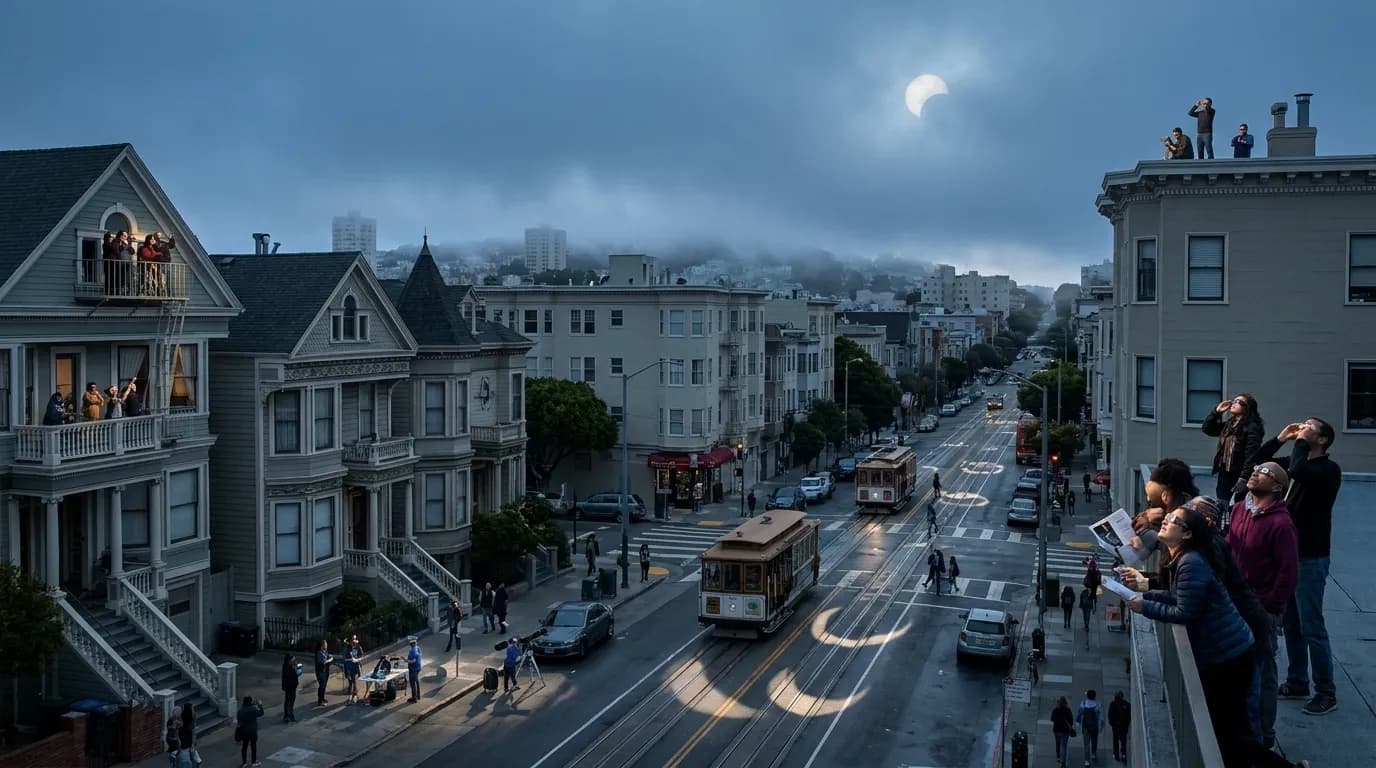
San Francisco's unique geography and microclimates mean that sky visibility can vary dramatically across different neighborhoods. Hills, tall buildings, and the ever-present marine layer are all factors that will influence your view of the 2026 solar eclipse. Areas with higher elevations or those further inland often offer clearer skies, but these benefits must be weighed against accessibility and potential crowd management.
The city's notorious fog, particularly during certain times of the year, presents a significant variable. While predicting specific fog patterns for a future date is impossible, historical data and seasonal trends can offer some guidance. Coastal neighborhoods are typically more prone to fog, which could obscure the view, whereas areas further east or south might have a better chance of clear skies. Having a backup plan or a flexible viewing location strategy is advisable.
Beyond weather, consider the practicalities of viewing. Open spaces, parks, and less obstructed areas will naturally provide a better vantage point. However, these popular spots may also attract larger crowds. Evaluating a neighborhood means looking at its typical sky conditions, its openness, and how well it can accommodate a significant number of observers without becoming overly congested.
Safety First: Protecting Your Eyes During the Eclipse
The most critical aspect of observing any solar eclipse, partial or total, is eye safety. Looking directly at the sun without proper protection can cause severe and permanent eye damage. Ordinary sunglasses, no matter how dark, are insufficient and unsafe for viewing the sun. Specialized, ISO-certified solar eclipse viewers are the only safe way to look directly at the sun during an eclipse.
It is imperative to acquire ISO 12312-2 international safety standard compliant eclipse glasses or handheld viewers from reputable manufacturers. These certified products filter out nearly all harmful ultraviolet, visible, and infrared light. Always inspect your eclipse viewers for scratches or damage before use; even minor imperfections can compromise their protective capabilities.
Even with certified eclipse glasses, it's wise to limit continuous viewing time and take breaks. For those who do not have access to certified glasses, indirect viewing methods, such as pinhole projectors, offer a safe alternative. These methods project an image of the sun onto a surface, allowing you to observe the eclipse without looking directly at the sun. Never use binoculars, telescopes, or camera lenses without proper solar filters designed for those specific devices, as this can concentrate sunlight and cause immediate damage.

Transit and Accessibility for Eclipse Viewers
Public transportation will be a key factor for many San Franciscans heading to their chosen viewing spots. The SFMTA provides comprehensive transit options throughout the city, including Muni buses, light rail, and cable cars. Planning your route in advance, especially if you anticipate larger crowds, will be essential for a smooth experience. Check the SFMTA website closer to the date for any potential service adjustments or advisories related to the eclipse.
Consider the accessibility of your chosen neighborhood. Some elevated parks or viewpoints might require significant walking or climbing. Families with young children or individuals with mobility concerns should prioritize locations that are easily reachable via public transport and have flat, accessible viewing areas. Proximity to restrooms and other amenities should also be part of your logistical planning.
Parking will likely be limited and challenging in popular viewing areas. Relying on public transit, rideshares, or even cycling, if safe and practical, is generally recommended over driving. If you must drive, research parking garages or lots in advance and be prepared for higher demand and potential congestion. Always abide by local parking regulations to avoid citations or towing.
Neighborhood Spotlight: Western & Central Districts
Neighborhoods in the western and central districts, such as the Outer Sunset, Outer Richmond, and Golden Gate Park, are often characterized by their proximity to the Pacific Ocean, which can lead to frequent fog. While these areas offer vast open spaces, the marine layer could significantly obscure the view of the solar eclipse in 2026. Viewers choosing these locations should have a high tolerance for potential cloud cover and consider them as a primary option only with a clear weather forecast.
Golden Gate Park, while extensive and offering many open areas, is particularly susceptible to coastal fog. Its sheer size means that some areas might be clearer than others, but overall, it shares the atmospheric challenges of the western districts. Transit access to the park is good, but navigating within the park on foot can be time-consuming, especially if you need to move to a clearer spot.
For those in these districts, a fallback plan to move further inland or to higher elevations might be prudent if the weather forecast indicates heavy fog. While the open skies here are appealing on a clear day, the unpredictable nature of coastal weather makes them a less certain choice for eclipse viewing without real-time weather confirmation.
Neighborhood Spotlight: Eastern & Southern Districts
Eastern and southern districts, including Potrero Hill, Bernal Heights, and some parts of the Mission District, tend to experience less fog than their western counterparts. Higher elevations in these areas, such as the peaks of Potrero Hill or Bernal Heights Park, offer panoramic views of the city and potentially clearer skies for observing the partial solar eclipse. These locations are generally more reliable for sky visibility.
These neighborhoods often have good access to Muni lines, making them relatively easy to reach. However, popular viewpoints can become crowded, and space might be limited. Arriving early will be beneficial to secure a good spot. The urban environment here means that while some parks offer open views, others might have more obstructions from buildings.
Viewers in these districts should still check local weather forecasts leading up to the event, as even these areas can experience some cloud cover. However, statistically, they offer a better chance of a clear view compared to the immediate coast. Consider the trade-off between potentially clearer skies and the density of urban infrastructure.
Official Updates and Contingency Planning
For the most accurate and up-to-date information regarding the 2026 solar eclipse, rely on official sources. The San Francisco Travel Association and SF Recreation and Parks Department websites are good starting points for general city information and park guidelines. While specific eclipse events are not confirmed, these sites will carry any relevant public advisories or operational changes if they arise.
The SFMTA website is crucial for real-time transit updates, which will be vital for navigating the city on the day of the eclipse. Check for any planned road closures, increased service, or detours. Having a backup plan for transportation, such as knowing alternative routes or bus lines, can save time and reduce stress.
Contingency planning should also include weather alternatives. If the skies are unexpectedly cloudy or foggy in your chosen location, identify a secondary viewing spot. While a last-minute change of plans might be necessary, having a few options in mind can help salvage the experience. Remember that even a partial eclipse is a significant astronomical event, and careful preparation enhances the viewing opportunity.
Practical notes
Always use ISO-certified solar eclipse glasses for direct viewing; ordinary sunglasses are not safe. Check SFMTA for transit updates and potential service changes. San Francisco Travel and SF Recreation and Parks are reliable sources for city-wide information. Be prepared for variable weather, especially fog, and have a backup viewing location in mind. Prioritize open spaces with clear sightlines. Remember, this is a daytime event, but consider bringing water, snacks, and sun protection. If you plan to view from a bar or restaurant patio, confirm they are open and remember legal drinking age requirements. Do not trespass on private property or restricted areas for viewing.
Tags: #SolarEclipse2026 #SanFranciscoEclipse #SFEclipse #EclipseViewing #BayAreaEclipse #SFNeighborhoods #EyeSafety #SFMTA #SFRecPark #SanFranciscoTravel #EclipseSafety #SkyGazing #CityTransit #FogCity
Sources consulted: SFMTA · San Francisco Travel · SF Recreation and Parks
All trademarks are the property of their respective owners.
Ask Karpo first
Ask Karpo: Planning your next San Francisco adventure? Our expert guides can help you navigate local events, hidden gems, and practical tips. What local experience are you curious about next?


