 Chinatown Batik Canting Pen Picker: Fine Spouts for Silk
Hidden Gems & Odd Finds
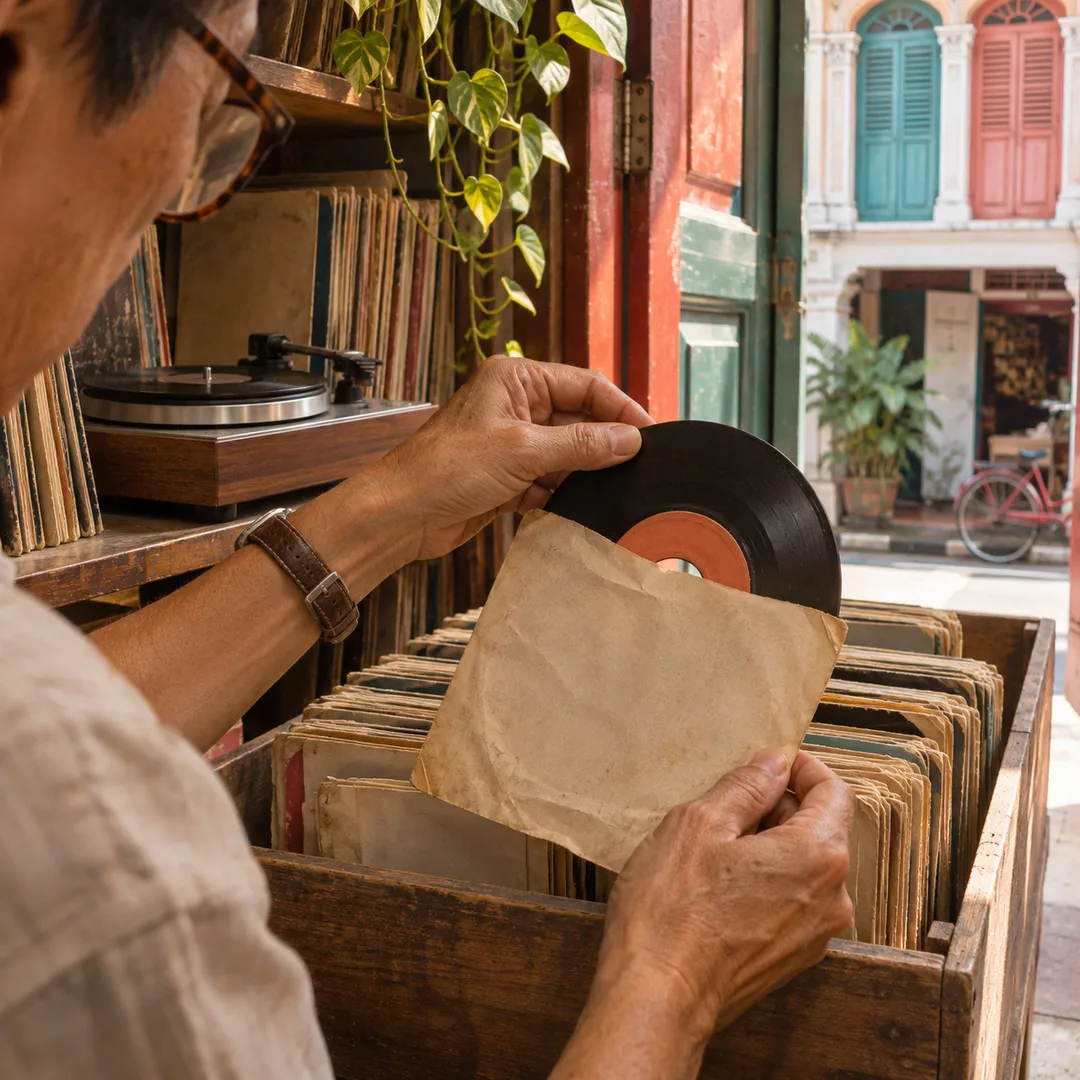
Kampong Glam Vinyl Record Crawl Planner for Pop Yeh-Yeh Fans
Plan a Kampong Glam vinyl crawl for 1960s Malay pop yeh-yeh: dig through shophouse crates near Haji Lane, then wind down by the mosque and Arab Street.
In the mid-1960s, a wave of Malay bands in Singapore picked up electric guitars, borrowed the jangle of the British beat groups and invented a sound of their own called pop yeh-yeh. The records were cheap, the sleeves were bright, and many were pressed in small runs that now turn up only in the bins of patient collectors. Kampong Glam, the old Malay and Arab quarter around Sultan Mosque, is the right place to go looking for that era. This vinyl record crawl planner is built for anyone who has heard a crackly yeh-yeh single online and wants to hold one, with a slow route through shophouse lanes, fabric stores and a mosque courtyard view at dusk.
A Short History of the Sound You Are Hunting
Pop yeh-yeh took its name from the yeah yeah choruses of mid-sixties beat music, but it quickly became something local. Bands sang in Malay, mixed in rhythms from kampung weddings and film soundtracks, and played dances and talent contests across Singapore and the peninsula. Many groups recorded for small labels, and their singles were pressed in modest numbers for a young audience that played them until the grooves wore thin. Then tastes changed, and much of the music drifted out of print.
That is exactly why a record crawl for this sound feels like detective work. You are looking for survivors: singles kept in a drawer by someone's uncle, extended plays that came in with a house clearance, the odd compilation LP pressed years later by a fan label. The neighbourhood that grew up around Malay culture in the city is a fitting place to start, and even if you do not leave with a rare original, you will leave knowing what to listen for.
Getting Your Ears Ready Before You Go
Spend an evening with the music before the crawl. Search for a few of the well-known yeh-yeh bands and singers on a streaming service and make a short list of names you like. Pay attention to the guitar tone, which is bright and twangy, and the drum patterns, which often borrow from Malay social dance rhythms. When you later see an unfamiliar name on a sleeve, knowing the sound helps you guess whether it belongs to the era.
Write your list on paper or keep it in a note on your phone, and add the names of a few related styles too, such as Malay film songs, Indonesian sixties pop and the instrumental guitar groups that sat alongside yeh-yeh on the same bills. Sellers in Kampong Glam deal in a mix of local and imported records, and a broader list means more conversations, more crates you will be shown and a better chance of a lucky find.
Working the Shophouse Lanes
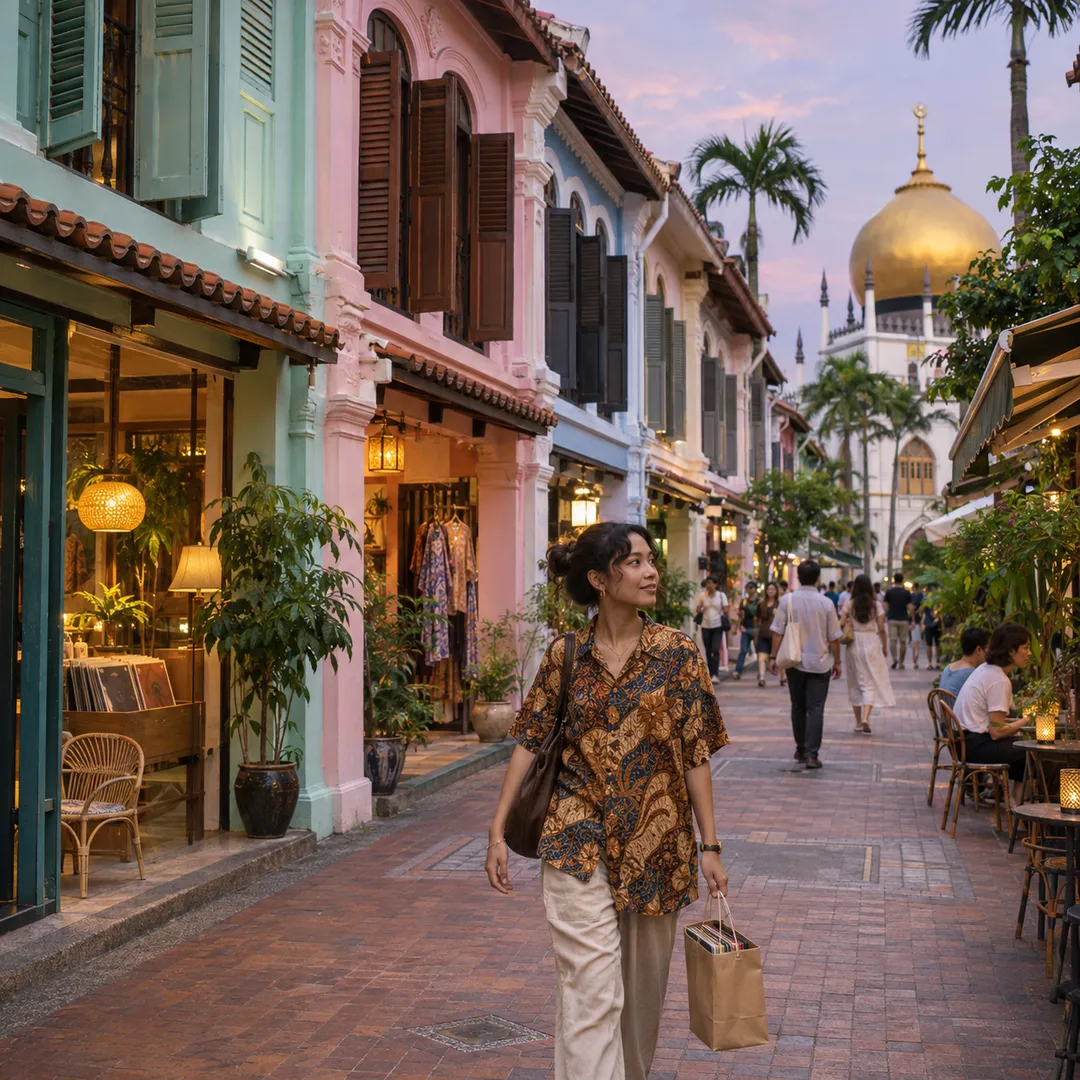
Start around Haji Lane and the side streets that run off it, where narrow shophouses hold vintage clothing, design shops and the occasional record seller tucked into a back room or upstairs floor. These spaces are small, so go in with a bag that sits close to your body and let other customers pass. Ask straight away whether the shop keeps any local or Southeast Asian records, because they are often stored apart from the main bins and not on display.
Seven-inch singles and extended plays are the formats to look for. They were the everyday currency of sixties pop in the region, and they are often kept in small boxes behind the counter. Hold each one by the edges, check the label for a band name you recognise and look closely at the condition. Heat and humidity can lift paper labels and fade sleeves, but a worn sleeve on a well-kept disc is still a fine record to play at home.
Talking to Sellers About Old Local Records
The best tool on this crawl is a good question. Instead of asking whether a shop has anything rare, describe what you love: a band name, a song you heard, or simply a sixties Malay band with a twangy guitar. Many sellers have stories about where their local stock came from, and some will pull out a box they keep for regulars or offer to message you if something comes in. Listening to those stories is half the reason to make the trip in person.
Be patient if a seller wants to play a record before you decide. Older local pressings vary a lot, and a quick listen tells both of you whether the surface noise is charming or too much. If a shop has a turntable at the counter, let the seller handle the record. Thank them whether or not you buy, because in a small scene like this, being remembered as the yeh-yeh hunter can lead to a phone call months later.
Breaks Between Crates: Fabric, Perfume and Teh Tarik
Kampong Glam is rich in distractions, and the crawl is better for them. Walk down Arab Street past the shops stacked with batik, songket and lace, and notice how many of the patterns echo the bright sleeve designs of the records you just handled. A traditional perfume shop or a carpet store makes for a calm pause, and the owners are often happy to explain the history of the trade on their street.
When you need to sit down, find a Malay or Indian Muslim eatery on one of the side streets and order teh tarik with something to share. Lay your finds on the table, look at the labels again, and look up the band names on your phone. It is also a good moment to decide whether to go back for the single you hesitated over, because in a neighbourhood this compact, returning takes only a few minutes.
End at the Mosque at Dusk
Finish the walk on Muscat Street or Bussorah Street, facing the golden dome of Sultan Mosque as the light fades. The call to prayer drifting across the rooftops is a reminder that this is a living neighbourhood, not a stage set, so dress modestly, keep your voice low and stay outside the prayer areas unless you are visiting during public hours. Standing at the end of the street with a bag of old Malay records is a quietly moving way to close the day.
If you have time, the Malay Heritage Centre nearby tells the story of the community and its arts, and it gives useful context for the music you have been hunting. Even a short wander through the grounds helps you understand why a sound born in this part of the city still matters to the families who first danced to it.
Practical Notes for a Kampong Glam Crawl
Late afternoon into early evening is the most comfortable time to walk, when the heat softens and the lanes start to glow. Weekends are lively and crowded, while weekdays give you more time with each seller. Bring a stiff folder or a small record mailer for seven-inch singles so they do not bend in your bag, and keep a small cloth to wipe your fingers after eating before you touch any sleeves.
Small shops in this area move, change their hours or close for buying trips, so treat your route as a sketch rather than a fixed plan. The Karpo APP can help you find other record shops, vintage stores and late-afternoon cafes nearby, and Bugis station is a short walk away when you are ready to head home with your finds.
Ask Karpo for more information.
Keep reading
- Chinatown Batik Canting Pen Picker: Fine Spouts for Silk
 Tiong Bahru Batik Canting Pen Picker: Handles and Bowls
 Katong Batik Canting Pen Picker: Wide Spouts for Wave Fills