 Tiong Bahru Batik Canting Pen Picker: Handles and Bowls
Hidden Gems & Odd Finds
Chinatown Batik Canting Pen Picker: Fine Spouts for Silk
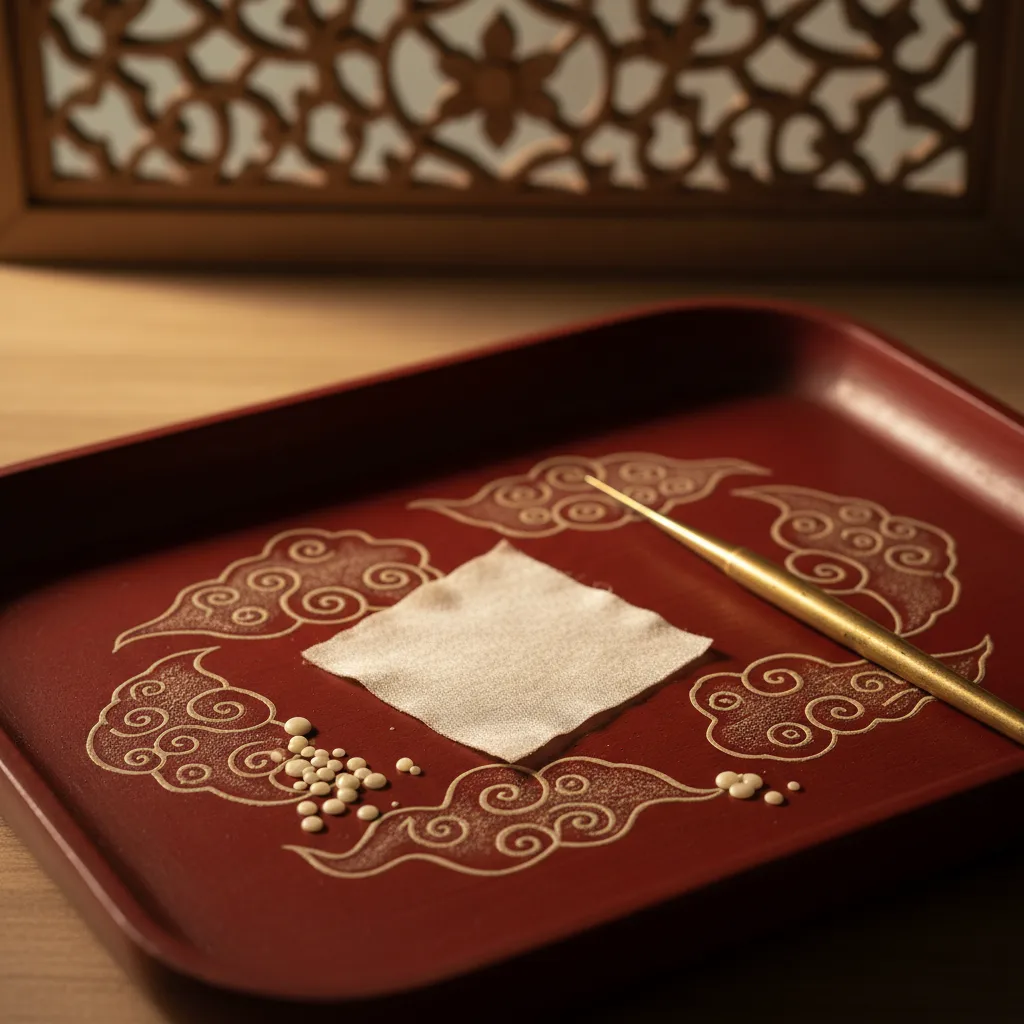
Cloud scrolls and lattice windows guide a silk handkerchief project, where a very fine spout and a three-dot canting meet delicate, fast-absorbing cloth.
Silk drinks wax almost instantly, which is both its magic and its trap for anyone drawing fine batik lines. For a batik canting pen picker in Chinatown, the meaningful comparison is between a very fine single spout for flowing cloud scrolls and a three-dot canting that stamps tiny clusters in a single touch. Carved lattice windows, temple rooflines, and decorated shophouse fronts give the district a rich vocabulary of clouds, knots, and geometric screens, perfect references for a small silk handkerchief.
A handkerchief that celebrates restraint
Silk is unforgiving, so choose a small square, roughly the size of a pocket handkerchief, and design one cloud scroll drifting across a corner with a scattering of dot clusters beneath it. Draw it at full size and trace it lightly onto the silk with a soft pencil or a water-soluble pen. Keeping the composition sparse means each line carries weight, and it lets you learn how silk behaves without investing in a large piece.
Mark which parts are scrolls and which are dots. The scroll needs one continuous, tapering line that curls back on itself. The dots need consistency in size and spacing. These two tasks rarely suit the same tool, which is why this project naturally leads to a pair of cantings. Deciding that early stops you from forcing a single spout to do both jobs poorly.
Very fine spouts and the speed of silk
On cotton, a fine spout draws a fine line. On silk, the same spout may draw a line twice as wide because the wax spreads along the smooth fibres. That surprises many beginners. To keep a cloud scroll delicate, choose the finest spout you can find and move a little faster than feels natural, so the wax has less time to spread. Practise on a silk offcut until the line width looks right.
A very fine spout clogs easily, especially as wax cools inside the narrow tube. Keep the reservoir only partly full and dip it back into the hot wax frequently. If the line breaks, warm the spout over the wax pot instead of forcing it clear with a pin, which can widen or bend the opening. Look for a spout with a smooth, straight bore; any roughness inside will catch wax and interrupt the scroll at exactly the wrong moment.
Three-dot cantings for even clusters
A three-dot canting has three tiny spouts arranged in a triangle. Touching it briefly to the cloth leaves a neat cluster of dots in one motion, which is far quicker and more uniform than placing each dot by hand. On silk, a gentle touch is essential; pressing too long lets the dots merge into a blot. Practise a light, rhythmic tap until clusters come out crisp and separate.
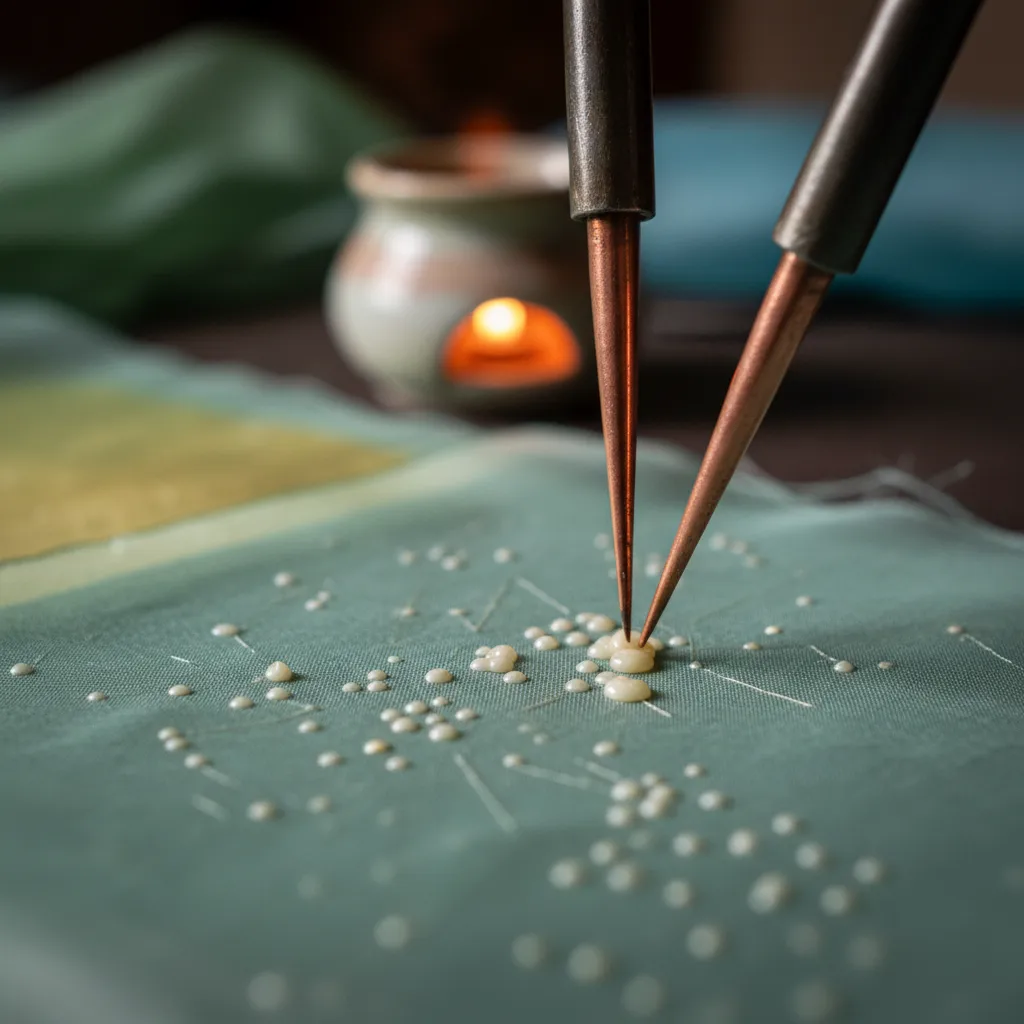
When handling one, check that the three spouts sit level with each other. If one is shorter, that dot will be faint or missing. Look closely at how cleanly each spout is soldered to the bowl, because uneven joints lead to uneven flow. A small bowl works well here, since you only need a little wax at a time and a lighter tool is easier to tap precisely.
Wax recipe for delicate fabric
Silk benefits from a wax blend that is flexible and clean, often richer in beeswax and resin. It holds sharp edges and resists cracking, preserving the integrity of fine scrolls. A paraffin-heavy blend cracks more freely, which can add an atmospheric texture on cotton but may look busy on a small silk square. For this project, prioritise clarity so the cloud scroll and dot clusters read cleanly.
Temperature matters even more on silk. Wax that is too cool sits on top and flakes off; wax that is too hot races across the fibres. Aim for wax that turns the silk slightly translucent and stays where you place it. Test each canting on an offcut whenever you reheat the pot, since conditions shift during a session and silk reveals every variation.
Dyeing and finishing considerations
Silk takes dye readily and can produce luminous colour, but it also shows unevenness. Choose a dye suited to silk and keep the bath gentle to protect the waxed lines. Soft colours such as celadon, plum, or deep teal suit cloud motifs and echo the painted tones often seen on temple details. After dyeing, the wax can be removed by ironing between absorbent papers or by careful hot-water methods appropriate for silk.
Handle the finished handkerchief carefully, as silk creases and marks easily. Press it with a cool iron on the reverse side. The result, a pale cloud scroll floating above clusters of dots, makes a thoughtful gift or a personal keepsake. It also gives you a clear record of how a fine spout and a three-dot canting perform on delicate fabric.
Browsing Chinatown with patterns in mind
Chinatown blends temples, heritage shophouses, five-foot ways, markets, and specialty shops, and its decorative details are endlessly inspiring. Walk slowly and sketch cloud scrolls on roof ridges, lattice patterns on windows, and repeated motifs on tiles or fabrics. You might also find fabric sellers, craft stores, or workshops that give you a chance to compare cantings and silks in person.
When you would like a few starting ideas, Karpo APP can suggest nearby fabric, craft, and heritage spots around Chinatown. Which ones you visit, when, and how you get there is entirely your call. Let the suggestions spark curiosity, then follow the patterns that catch your eye along the five-foot ways.
Choosing the pair that fits silk
For a silk handkerchief, the useful pair is a very fine single spout with a smooth bore for scrolls and a small three-dot canting for clusters. Skip wide filling spouts for now; silk rarely needs large waxed areas in a small design. Practise on offcuts, keep the wax at a steady temperature, and work in short sessions so your hand stays light. Over time, those small pieces will teach you exactly how silk and wax respond to each other, and every later project will benefit. Label each test scrap with the spout and wax you used, and you will soon have a quiet reference collection worth more than any new tool.
Ask Karpo for more information.
Keep reading
- Tiong Bahru Batik Canting Pen Picker: Handles and Bowls
 Katong Batik Canting Pen Picker: Wide Spouts for Wave Fills
 Joo Chiat Batik Canting Pen Picker: Twin Spouts for Borders