 Chinatown Batik Canting Pen Picker: Fine Spouts for Silk
Hidden Gems & Odd Finds

Bugis Vinyl Record Crawl Planner for Students on a Budget
This Bugis vinyl record crawl planner helps students dig on a small budget through old malls, book arcades and arts-quarter lanes, with cheap eats between.
Bugis has always been a place where young people in Singapore spend their afternoons. Schools, art colleges and polytechnic campuses sit nearby, the MRT lines cross here, and the streets between Bugis and Bras Basah are full of older shopping complexes, book arcades and cheap places to eat. For a student who has just found their parents' old turntable, or who wants to start collecting without spending a month's allowance, it is the obvious place to begin. This vinyl record crawl planner is written for that student. It does not give addresses, opening times or prices, which change too often anyway. Instead it explains how to move through the area's older buildings, how to tell a fair deal from a bad one, how to split one budget across records, cassettes and food, and how to come home with something you actually play rather than just own.
The Old Malls Are the Point
The heart of a Bugis crawl is not the shiny mall above the MRT. It is the older multi-storey complexes nearby, with narrow corridors, terrazzo floors and dozens of small units selling everything from art supplies to secondhand books, electronics repairs and music. Many of these buildings date from an era when Singapore's music retail lived in little shopfronts like these, and some of that culture lingers in the odd unit with crates of CDs, cassettes and records.
These places reward curiosity. Units open and close, some only raise their shutters on certain days, and the best finds are often in shops that are not really record shops at all. A stall that mostly sells books might have a box of LPs under a table. Walk every corridor on every floor before you decide where to spend.
Book Arcades and the Arts Quarter
Bras Basah, just next to Bugis, has long been known for its bookshops and school supply stores, and for decades it has drawn students hunting for cheap textbooks and stationery. That tradition of secondhand trade overlaps with music. Shops that deal in old books sometimes carry used vinyl, songbooks or soundtrack albums, and the people who run them often know their regulars' tastes.
The surrounding area is also the city's arts quarter, with art schools, museums and theatres nearby. That means you are surrounded by people who care about culture, and noticeboards or small zines can point you towards listening events, student radio shows or pop-up record fairs. Keep an eye out; a flyer on a corridor wall can lead to your best find of the year.
Splitting a Small Budget
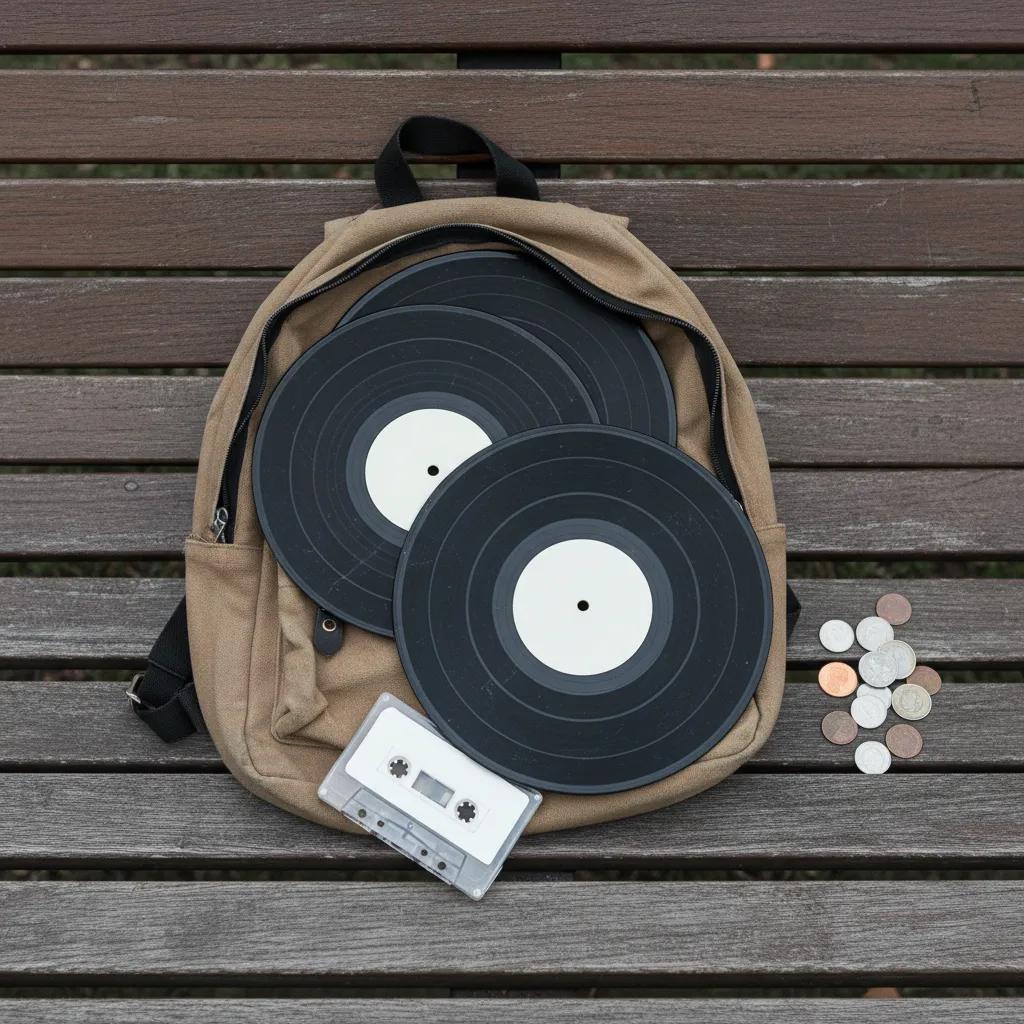
Before you go, decide how much you will spend in total and split it into three parts: records, one cheap extra such as a cassette or CD, and food. Writing it down sounds silly, but it stops you from blowing everything in the first unit you enter. If you only have enough for one record, that is fine. One carefully chosen album that you play a hundred times beats five you never touch.
Used records in plain or worn sleeves are usually the budget-friendly option, and older local and regional pressings can be surprisingly good. Cassettes and CDs are also worth a look; they are cheaper, easy to carry, and many collectors start with them before moving to vinyl. Do not feel you have to choose one format.
How to Check a Cheap Record
A low price is only a good deal if the record plays. Slide it out of the sleeve and look at it under the corridor lights. Fine surface marks are normal on used vinyl. Deep scratches, a heavy layer of dust or a record that wobbles when you look along its edge are warning signs. Check that the label in the middle matches the cover, because records sometimes end up in the wrong sleeve.
If a shop has a player, ask whether you can listen for a few seconds. Most sellers are happy to help someone who is clearly keen. If not, buying from sellers who are honest about condition is the safest path. Over time you will learn which stalls describe their stock fairly.
Feed Yourself Cheaply Between Stops
Bugis has plenty of affordable food, from hawker centres to food courts tucked inside the malls, and the busy street market area near the MRT is lined with snacks and drinks. Plan one proper meal in the middle of your crawl rather than snacking all afternoon, so you are not tempted to treat yourself with the record budget.
Eating also gives you a natural pause to look at what you have bought, compare notes with friends and decide whether to go back for that album you put down. Many students find that a cold drink and twenty minutes on a bench changes their mind about a purchase in a useful way.
Dig With Friends, Not Alone
A crawl with two or three friends is more fun and often smarter. Split up in a large complex and message each other when you find something interesting, then meet to compare. Friends can talk you out of an impulse buy or point out a record you would have missed. If you share a turntable at someone's home, you can even pool money on a record you all want to hear.
Keep the group small. Narrow corridors and tiny units do not suit a big crowd, and shop owners appreciate it when people browse carefully without blocking the passage.
Plan the Loop in Karpo APP
Open Karpo APP and search for record shops, bookshops, secondhand stores and cheap food spots around Bugis and Bras Basah. Save the ones that look promising into a list and put them in an order that starts at one end of the area and finishes near your MRT exit, so tired legs have a short walk home.
The app helps you discover and compare places nearby. It does not show what is in a crate today or keep anything aside, so think of your list as a starting map and let the corridors surprise you.
Practical Notes for a Student Crawl
Bring a backpack with a flat section or a stiff folder so records do not bend, plus a reusable bag for anything extra. Carry cash in small amounts in case a stall prefers it, but follow the shop's lead. Some units in older malls keep irregular days, so if a particular shop matters to you, check before making the trip. Weekday afternoons after class are often calmer than weekends. And keep a little budget back for the next visit: collections are built over many afternoons, not one.
Ask Karpo for more information.
Keep reading
- Chinatown Batik Canting Pen Picker: Fine Spouts for Silk
 Tiong Bahru Batik Canting Pen Picker: Handles and Bowls
 Katong Batik Canting Pen Picker: Wide Spouts for Wave Fills