 Chinatown Batik Canting Pen Picker: Fine Spouts for Silk
Hidden Gems & Odd Finds
Tiong Bahru Thrift Shop Crawl Planner for Retro Kitchenware
Love old enamel tiffins and kopitiam cups? Tiong Bahru suits a slow morning hunt for retro kitchenware. Here is how to plan it around breakfast and the flats.
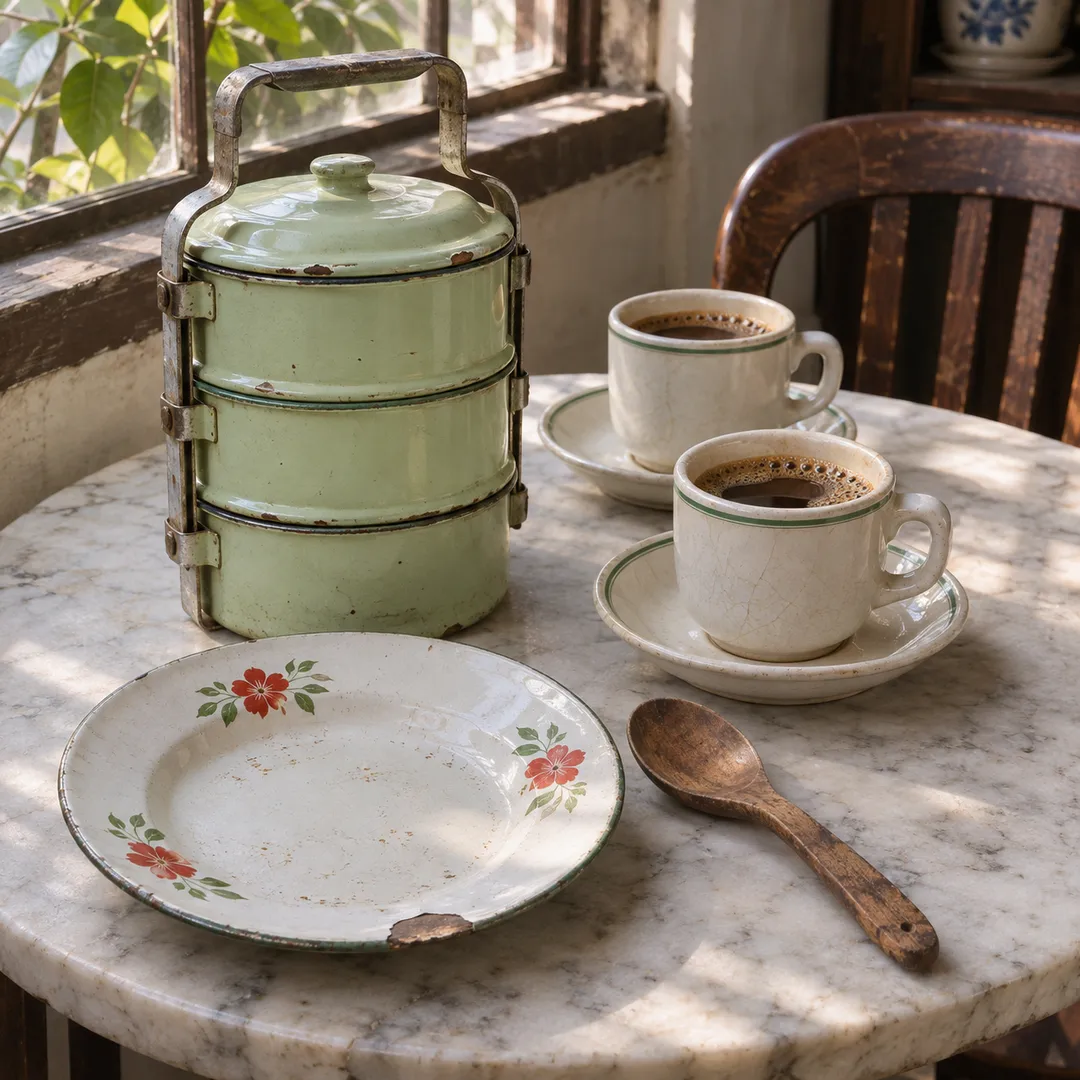
Some kitchen objects carry a whole city in them. The thick white coffee cup from a neighbourhood coffee shop, the stacked enamel tiffin carrier a grandparent once used to take lunch to work, the floral plate that came out only for visitors. In Singapore these pieces turn up in secondhand shops, at flea tables and in the boxes of people clearing older flats. Tiong Bahru, with its low Art Deco blocks and lively morning market, is a natural place to go looking. This plan is for anyone who wants a kitchen that feels lived in, built from pieces that have already seen decades of breakfasts.
What Counts as Retro Kitchenware Here
In a Singapore context, retro kitchenware usually means the practical objects of everyday life from past decades. Enamel bowls, mugs, basins and tiffin carriers. Heavy ceramic cups and saucers from coffee shops. Plates with printed flowers or roosters. Glass jars once used for biscuits or sweets. Woven baskets, wooden spoons and small metal tins.
None of these were made as treasures, which is part of the appeal. They were made to be used hard, and the best pieces show it in small chips, faded prints and handles worn smooth by many hands.
It helps to decide early whether you are collecting for use or for display. A cook wants sturdy pieces with sound glaze and tight lids, while a collector may happily take a faded tin with a dented corner because the print is rare. Knowing which one you are changes how you judge every shelf you pass.
Why Tiong Bahru Fits the Hunt
Tiong Bahru is one of the older public housing estates in the city, and its curved walk-up blocks still give the area a distinct feel. The neighbourhood mixes long-time residents with newer cafes and small independent shops, and that blend means old household objects and the people who appreciate them sit side by side.
The estate is also very walkable. Lanes are quiet, trees provide shade, and the market at its heart gives the morning a natural starting point. A crawl here feels less like shopping and more like an unhurried walk with a purpose.
Begin With Breakfast at the Market
Start early with breakfast at the market food centre. Order a local coffee or tea and watch what it arrives in. The cups, saucers and spoons around you are a quick lesson in the shapes and weights you will be looking for later. Notice how the cup feels in the hand and how the saucer sits.
The upper floor food centre gets busy as the morning goes on, so arriving early also means an easier seat. Share a table if asked, return your tray and keep the visit relaxed.
Planning a Gentle Route
After breakfast, walk outward from the market through the residential lanes. Look for small independent shops, occasional flea tables and any secondhand or vintage seller in the area. Some carry only a shelf of kitchen pieces among other things, so it pays to look carefully rather than quickly.
Keep the loop short and unhurried. A couple of focused stops and a good walk between them is more enjoyable than chasing every lead. Plan to finish before the strongest midday heat, when walking with a bag of ceramics becomes much less pleasant.
Checking Enamel and Ceramics
With enamelware, look for chips that expose the metal underneath. Small chips on the outside are mostly cosmetic, but rust on the inside of a bowl or mug means it is better used for display or holding dry things than for food. Tap the piece gently to check for dents that might hide a crack in the coating.
With ceramics, run a finger slowly around the rim to feel for hairline cracks, and hold cups up to the light. Crazing in the glaze is common in older pieces and can trap stains, so decide whether you want the piece for daily use or for a shelf.
Tiffin Carriers and Other Stackables
The stacked tiffin carrier is a favourite find for good reason. It is useful for packing lunch, storing small items or serving snacks at a picnic. Check that every tier sits firmly on the one below, that the clip or handle still locks and that the lid fits snugly.
Missing tiers are common, and odd sets sometimes come together from different carriers. That is fine for display, but if you plan to carry food, choose a set where everything matches and closes well.
Old glass jars deserve a look in the same corner of the shop. Check that the lid seals, that the glass is free of chips at the neck and that any rubber ring can be replaced. A row of clean jars on an open shelf makes a small kitchen feel ordered and calm.
Talking With Shopkeepers and Residents
Older objects often come with stories, and the people selling them may know where a piece came from. Ask gently about its history, whether it came from a coffee shop, a family home or a market stall. These stories add real meaning when the cup ends up on your own table.
Be courteous in the residential lanes. People live in these blocks, and quiet voices and an awareness of doorways and stairwells keep the walk pleasant for everyone.
A Slow Loop Past the Art Deco Flats
Between stops, take time to look at the flats themselves. The rounded corners, horizontal lines and spiral staircases at the backs of the blocks are some of the most photographed details in the area. Walking past them with a bag of old enamel and ceramics feels like a fitting end to the morning.
Take photos from the public lanes rather than climbing private stairways, and avoid pointing cameras into windows or onto balconies. The architecture is beautiful, but it is also somebody's home.

Bringing Finds Into Daily Use
Wash every piece gently by hand before its first use. Avoid harsh scrubbing on printed enamel, which can lift the pattern. Use the most fragile finds for dry goods or display, and give the sturdy coffee cups a daily job straight away.
Mixing old pieces with your modern kitchen works best when you repeat a colour or material. A shelf of mismatched floral plates looks intentional when they share a palette, and a single tiffin carrier on the counter can tie the whole room together.
Who This Plan Suits
This crawl suits home cooks who like objects with history, people setting up a first kitchen on a small budget, collectors of everyday design and visitors looking for a souvenir with real local meaning. It is also a lovely slow morning for anyone who enjoys architecture and breakfast more than malls.
It is less suited to someone who needs a full matching dinner set in one visit. Retro kitchenware is gathered one piece at a time, and much of the pleasure lies in returning to the estate and adding to the collection slowly.
Ask Karpo for more information.
Keep reading
- Chinatown Batik Canting Pen Picker: Fine Spouts for Silk
 Tiong Bahru Batik Canting Pen Picker: Handles and Bowls
 Katong Batik Canting Pen Picker: Wide Spouts for Wave Fills