 Chinatown Batik Canting Pen Picker: Fine Spouts for Silk
Hidden Gems & Odd Finds

Serangoon Thrift Shop Crawl Planner for a Book Club Shelf
Plan a Serangoon thrift crawl with your book club: split one wishlist, check swap shelves and secondhand corners, then sort the haul over a hawker supper.
Serangoon is a good place for a book club to go thrifting together, because its secondhand finds are spread thin across estates, malls and community swap shelves rather than packed into one famous street. That sounds like a drawback, but it turns the crawl into a shared game. Each member takes a part of the reading list, everyone walks a different loop, and the club meets at the end of the day to see what turned up. This plan is for a group of four to six readers who want a cheaper, more surprising way to stock next year's shelf.
Why Serangoon Works for a Group Book Hunt
Serangoon is a residential district first. Families have lived in its terrace houses, landed estates and HDB blocks for decades, and when they move, downsize or clear a teenager's old room, the books have to go somewhere. Some land in charity collection corners, some on the free shelves that residents set up near void decks and community clubs, and some in the small secondhand sections that a few neighbourhood shops keep beside their new stock.
That scattering suits a group. One person would spend a whole day chasing a single title, but five people walking five loops cover a lot of ground in an afternoon. The district is also easy to move around, with the MRT interchange and buses linking Serangoon Central to the quieter roads around Serangoon Gardens, so nobody has to walk too far in the heat with a bag of paperbacks.
Build One Wishlist and Split It Fairly
Before anyone leaves home, agree on a single shared list. Start with the books the club has already voted on, then add a few wild cards for each member, such as an older translated novel or a local writer nobody has read yet. Put it in a shared note so everyone can tick titles off as they go, and agree on how many copies you need, since one per person gets expensive fast.
Then split the list by type rather than by title. One person chases classics and older paperbacks, one hunts Singapore and Malaysian writing, one takes crime and thrillers, and one covers anything translated. Splitting by type means each person learns to scan a shelf for one kind of spine, which is much faster than checking every book for a dozen titles. A small spending limit per person keeps the game honest.
Reading a Secondhand Shelf Quickly
Secondhand shelves in neighbourhood shops are rarely sorted. Scan them sideways, looking for publisher colours and spine shapes rather than reading every title. Pull a book out only if the spine catches your eye, then check the first pages for heavy water damage or loose bindings. Singapore humidity is hard on paper, so a gentle smell of age is fine but a sour, damp smell usually means the pages will keep spotting at home.
Look for small signs of a previous reader, too. A pencilled name, a bus ticket used as a bookmark or a few underlined lines can make a copy more interesting for a book club, because they give you something to talk about at the next meeting. Skip copies with heavy highlighting in a novel you plan to discuss, since it can steer everyone toward the same passages.
Swap Shelves, Charity Corners and Giving Back
Community book swap shelves are part of what makes Serangoon fun. The rule is simple: take a book, leave a book. Ask every member to bring two or three books they have finished with, so the club can drop them off as it goes. It keeps the shelves healthy for the next reader and means the crawl leaves something behind instead of only taking.
Charity collection points and thrift corners work differently. They sell rather than swap, and the money usually supports a cause, so treat the books there as a small donation as well as a bargain. Be quick and tidy when you browse, put back what you do not take in the same place, and thank the volunteers. Many of them are retirees who know exactly which boxes came in that week.
Three Loops for a Group of Five
Start everyone together at Serangoon Central, where the MRT and the big mall make an easy meeting point, and agree on a time to regroup. One person can stay around the mall and the town centre, checking any secondhand stalls and charity corners there. Two more can take buses or walk out into the surrounding HDB estates, checking community clubs and void deck shelves along the way.
The last two can head toward Serangoon Gardens, where the quieter roads, low-rise houses and small neighbourhood shops make for a gentler walk as the afternoon cools. Ask each person to send one photo of their best find to the group chat as soon as they get it, which keeps everyone motivated and stops two people buying the same book on opposite sides of the district.
Regroup Over Supper at Serangoon Gardens
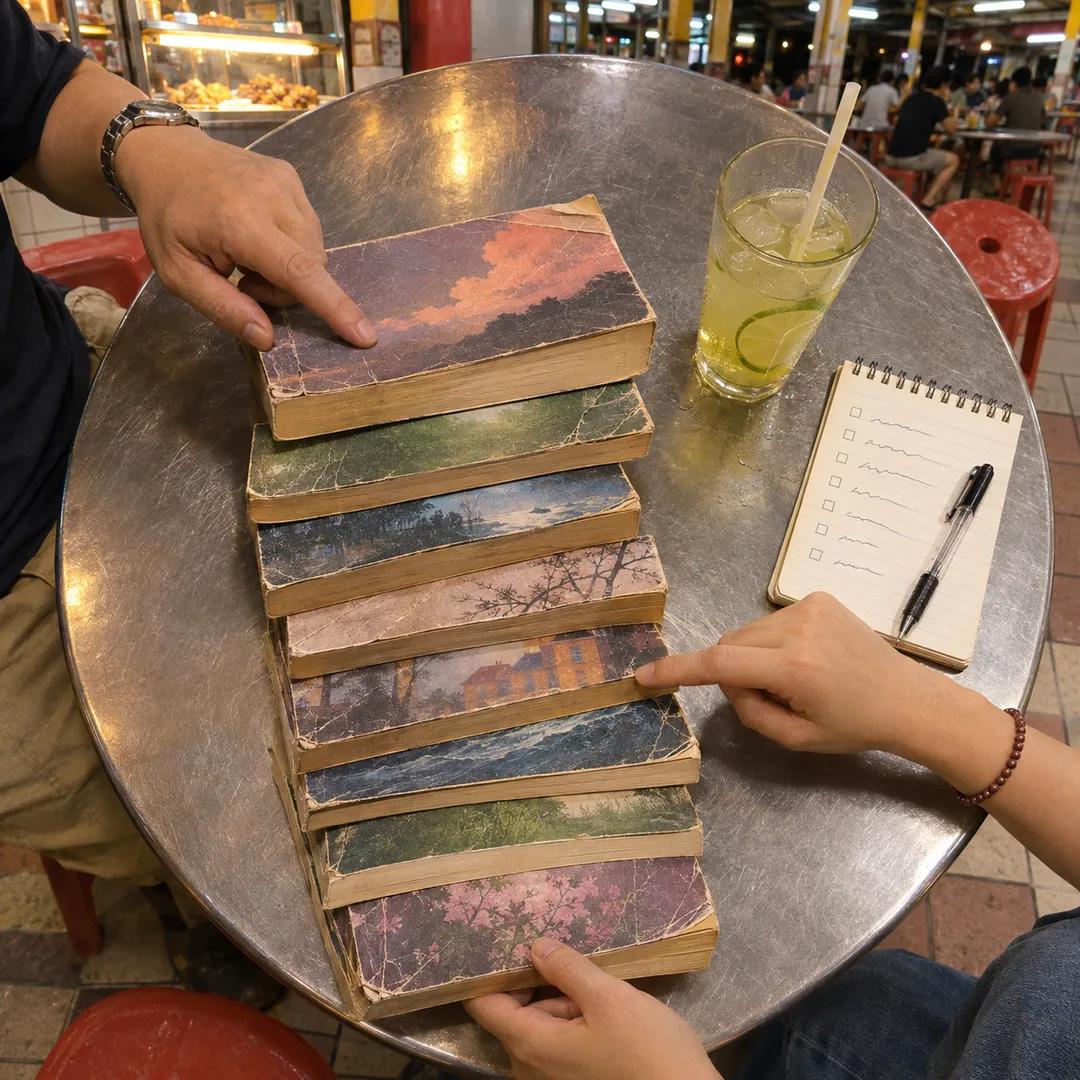
End the afternoon at the hawker centre at Serangoon Gardens, which is busiest after dark and has the kind of long tables that suit a group spreading out its finds. Grab satay, barbecued stingray or a plate of carrot cake, get drinks in, and wipe the table well before the books come out. Keep the paperbacks in a cloth bag on your lap until the food is cleared.
Then lay out the haul and go through it together. Tick titles off the shared list, swap duplicates between members, and decide which book the club will read first. This is often the best part of the day, because people tell the story of where each book was found. Someone always comes back with a surprise that was never on the list, and it is usually the one everyone wants to borrow.
Caring for Old Paperbacks in a Humid City
Once the books are home, air them before they go on a shelf. Stand them upright, slightly open, in a room with a fan for a day or two so any trapped moisture can escape. A sachet of silica gel or a small dehumidifier near the shelf helps a lot in Singapore, where an old book can develop brown spots within a single rainy season.
Wipe covers gently with a dry cloth rather than anything wet, and keep paperbacks away from windows that catch the afternoon sun, which fades spines quickly. If the club plans to pass books around, a simple card tucked into the back cover with each reader's name turns the copy into a small record of the group. Over a few years, those cards become their own story.
Plan B, and Using Karpo APP to Shape the Crawl
Some weekends the shelves are thin and the wishlist barely moves. When that happens, change the game instead of walking further. Let each member pick one book they have never heard of, purely by the cover or the first page, and make those the club's next wild card read. If heavy rain comes in, regroup early inside the mall at Serangoon Central and spend the time planning the next outing.
Before the day, tell Karpo APP how many people are coming and what kind of books you are after, and ask it to suggest a walking order for Serangoon plus a good place to meet for supper. Karpo APP can also suggest similar secondhand book spots elsewhere in Singapore, so the club has a second district ready when it wants to run the game again.
Ask Karpo for more information.
Keep reading
- Chinatown Batik Canting Pen Picker: Fine Spouts for Silk
 Tiong Bahru Batik Canting Pen Picker: Handles and Bowls
 Katong Batik Canting Pen Picker: Wide Spouts for Wave Fills