 Chinatown Batik Canting Pen Picker: Fine Spouts for Silk
Hidden Gems & Odd Finds
Queenstown Thrift Shop Crawl Planner for Retro Kitchenware
Plan a Queenstown thrift crawl for retro kitchenware: find rooster bowls, enamel tiffins and kopitiam cups, then walk the estate's heritage blocks and markets.
Queenstown is where Singapore's public housing story began, and that makes it a fitting place for a thrift shop crawl built around retro kitchenware. The bowls, tiffin carriers and coffee cups that filled the first HDB kitchens still turn up in secondhand shops, estate clear-outs and neighbourhood swap tables, often for people who grew up eating from them. This plan is for someone setting up a kitchen who wants it to feel a little like a grandparent's flat, and who would rather learn the estate's history on foot than from a museum label.
Why Queenstown Holds So Many Old Kitchens
Queenstown was Singapore's first satellite town, built up from the 1950s and 1960s with some of the earliest public flats, markets, schools and cinemas outside the city centre. Families who moved into those blocks furnished their kitchens with what everyone used at the time: porcelain bowls painted with roosters, enamel plates and tiffin carriers, thick glass jars for biscuits and heavy cups like the ones in every kopitiam.
Many of those families stayed for decades. As older residents move, downsize or pass on their flats, the kitchen things often go to relatives, neighbours, rag-and-bone collectors or secondhand sellers. That steady trickle means Queenstown and its neighbouring estates are a good place to look. It also means each piece has a good chance of having started life just a few blocks away.
Know the Classic Pieces Before You Look
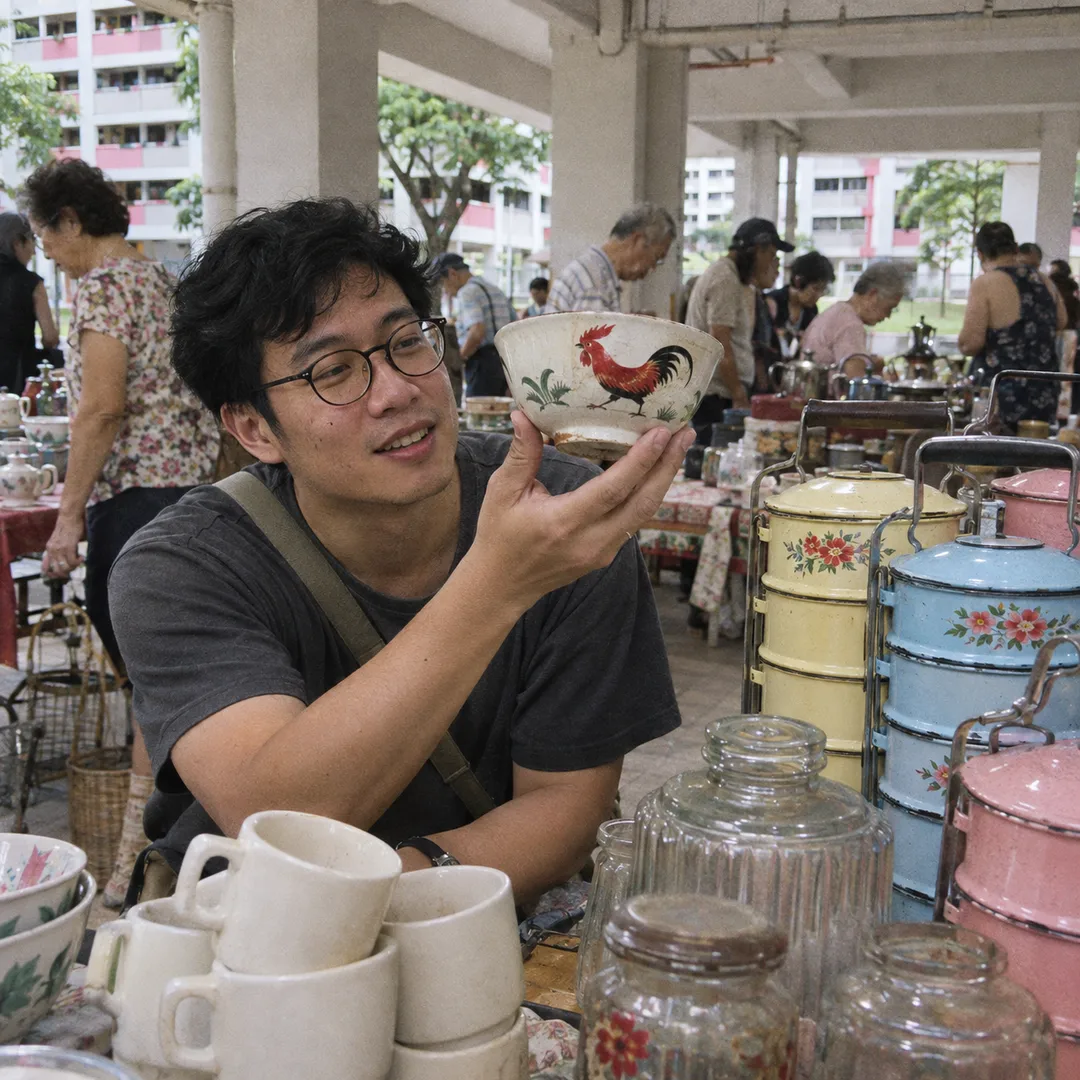
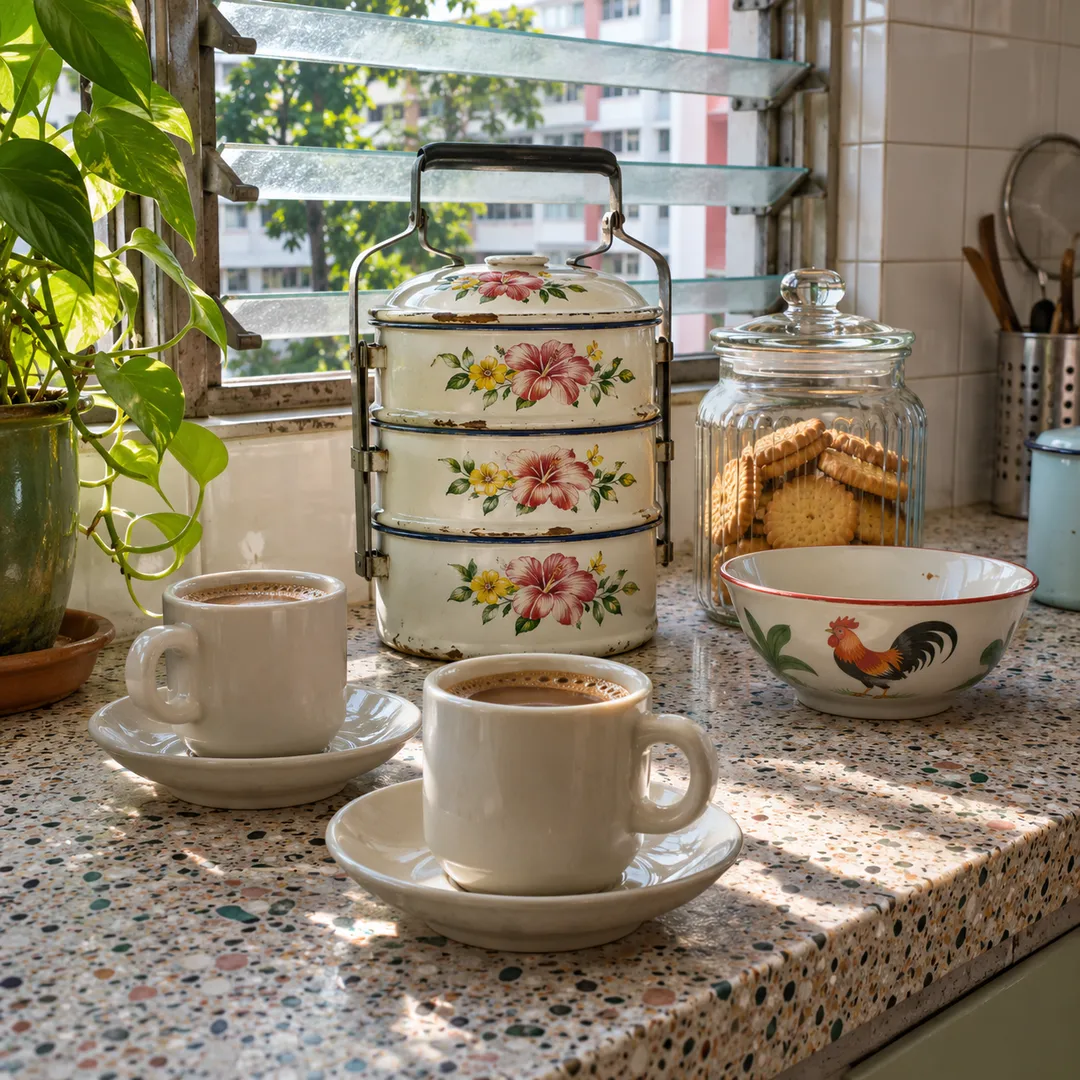
It helps to recognise the classics at a glance. The rooster bowl is a white porcelain bowl painted with a red and black rooster, banana leaves and a flower, a design found in kitchens across Southeast Asia. Enamel tiffin carriers come in stacked tiers, often with floral prints, and were used to carry lunch to work or school. Kopitiam cups are thick, heavy and usually white, with matching saucers.
Other pieces worth watching for include patterned enamel plates and basins, old glass sweet jars, heavy aluminium kettles, wooden chopping blocks and simple woven food covers. You do not need to know the exact age of each item. What matters is whether it is sound, whether you will use it, and whether it fits the kitchen you are building.
Checking Old Porcelain, Enamel and Glass
Run a fingertip around the rim of any bowl or cup. Small worn spots are normal, but a chip you can feel will catch your lip and collect grime. Hold porcelain up to the light and look for hairline cracks, then tap it gently with a fingernail. A clear ring is a good sign, while a dull clunk often means a hidden crack. Old painted designs should be on the glaze, not peeling off it.
Enamel is tougher but rusts where it chips. Small black chips on the outside are part of the charm, but rust inside a tiffin tier or a cooking pot means it is for display only. Check that tiffin tiers still stack and lock firmly, and that lids sit flat. With glass jars, look for cracks near the neck and make sure the lid still fits.
A Heritage Walk Between the Hunting Spots
Plan the crawl as a walk rather than a shopping list. Start in the morning near Queenstown MRT, then wander through the older estates toward Commonwealth and Dawson, looking up at the mix of early blocks and newer towers. Some of the older estates are being renewed, so walk with respect for residents and keep to public paths and void decks.
Along the way, look out for the neighbourhood markets, the old neighbourhood centres and the playgrounds that generations of children grew up with. Queenstown has a well-known heritage trail with information boards, and stopping at a few of them gives the kitchenware you find a real backstory. By the end of the morning, a rooster bowl feels less like a trend and more like a piece of the estate.
Talking to Sellers and Older Residents
Some of the best finds come from conversation. When you see a stall or a shop with old homeware, greet the seller and ask where the pieces came from. Many will tell you about the flat or family they bought them from, and some will remember using the same bowls as children. Show real interest and you may be offered pieces that are not on display yet.
Be gentle with bargaining. A small discount for buying a set is fair, but older sellers are often parting with things that matter to them. If you meet residents at a swap table or a community event, listen more than you talk. A few minutes hearing about the estate in the 1970s is worth more than any discount, and it makes the kitchen you build feel rooted.
Breakfast and Lunch Where the Old Cups Still Live
A retro kitchen crawl is best paired with a meal served the old way. The hawker centres and kopitiams around Queenstown and Commonwealth still serve kopi and teh in thick cups and saucers, and kaya toast with soft-boiled eggs is the classic order. Watching how the cups are used, stacked and washed is a good lesson in why they were made so solid.
Use the break to lay out what you have found and plan the rest of the day. Wrap each bowl and cup in newspaper or a cloth before it goes back in your bag, and keep heavier enamel at the bottom. For lunch, a plate of chicken rice or a bowl of noodles keeps the rhythm of the estate and gives your feet a rest.
Bringing Retro Kitchenware Back to Life
At home, wash everything by hand in warm soapy water before first use. A paste of baking soda and water lifts old tea and coffee stains from porcelain and cups, and a soft brush helps with the grooves around tiffin tiers. Avoid harsh scrubbers on painted designs, since they can wear the pattern faster than decades of use did.
Think about how each piece will live in your kitchen. Rooster bowls work for noodles, rice and dessert. A tiffin carrier can carry lunch to work again or hold dry goods on a shelf. Kopitiam cups make morning coffee feel like a hawker breakfast. If a piece is cracked but beautiful, use it for keys, plants or utensils instead of food.
Plan B, and Using Karpo APP to Shape the Crawl
Some days the old homeware has already been picked over. When that happens, switch your focus to the walk itself. Spend more time on the heritage trail, sketch or photograph the older blocks, and note the kinds of pieces you hope to find next time. Heavy rain is easy to wait out in a hawker centre with a second cup of kopi.
Before you go, tell Karpo APP that you are hunting retro kitchenware and want a heritage walk, and ask it to suggest a route through Queenstown plus a few places to stop for kopi along the way. Karpo APP can also suggest similar secondhand and heritage spots elsewhere in Singapore, such as other older estates, for a second outing.
Ask Karpo for more information.
Keep reading
- Chinatown Batik Canting Pen Picker: Fine Spouts for Silk
 Tiong Bahru Batik Canting Pen Picker: Handles and Bowls
 Katong Batik Canting Pen Picker: Wide Spouts for Wave Fills