 Chinatown Batik Canting Pen Picker: Fine Spouts for Silk
Hidden Gems & Odd Finds

Holland Village Thrift Shop Crawl Planner: Expat Move-Outs
Plan a Holland Village thrift crawl in expat move-out season: read the community boards, test furniture before you carry it, and finish on the Rail Corridor.
Holland Village is where a thrift shop crawl in Singapore turns into a lesson in how expat families leave. Postings end, leases expire, and a whole household of rattan chairs, picture books, standing fans and bicycles needs a new home in a few weeks. Much of it passes through the community boards, charity collections and small preloved shops around this low-rise neighbourhood, close to the international schools and the embassies. This plan is for a newcomer who wants to furnish a first Singapore flat without buying everything new.
Why Holland Village Collects Other People's Farewells
The neighbourhood grew around a British military presence and later became a long-running favourite of expat families, thanks to its low shop rows, outdoor dining and quiet streets of black-and-white houses nearby. That history means a steady churn of households arriving and leaving. When people go, they rarely ship cheap furniture home, so a great deal of good, ordinary stuff circulates locally, often through word of mouth rather than proper shops.
What you find reflects those households. There are teak sideboards bought on a weekend trip to the region, rattan sets that suit a humid balcony, children's books in several languages, rice cookers with foreign plugs and adaptors still attached. The quality is usually decent because the owners were furnishing for a few years, not a lifetime, and many items have been looked after with a resale in mind.
Timing Your Crawl Around Move-Out Season
Supply follows the school calendar. The weeks around the end of the international school year, in early summer, and again before the December holidays are when the most families pack up. If you have flexibility, aim your crawl for those windows, ideally on a weekday morning when sellers are home and the community boards have fresh cards pinned on them.
Outside those peaks, the hunting is thinner but calmer. Sellers are less rushed, and you have more time to ask about a piece before someone else claims it. Whatever the season, go early, because the best items at a move-out sale or a charity table tend to be spoken for within hours. A late start mostly gets you fans, hangers and mismatched mugs.
Reading the Boards and Charity Tables
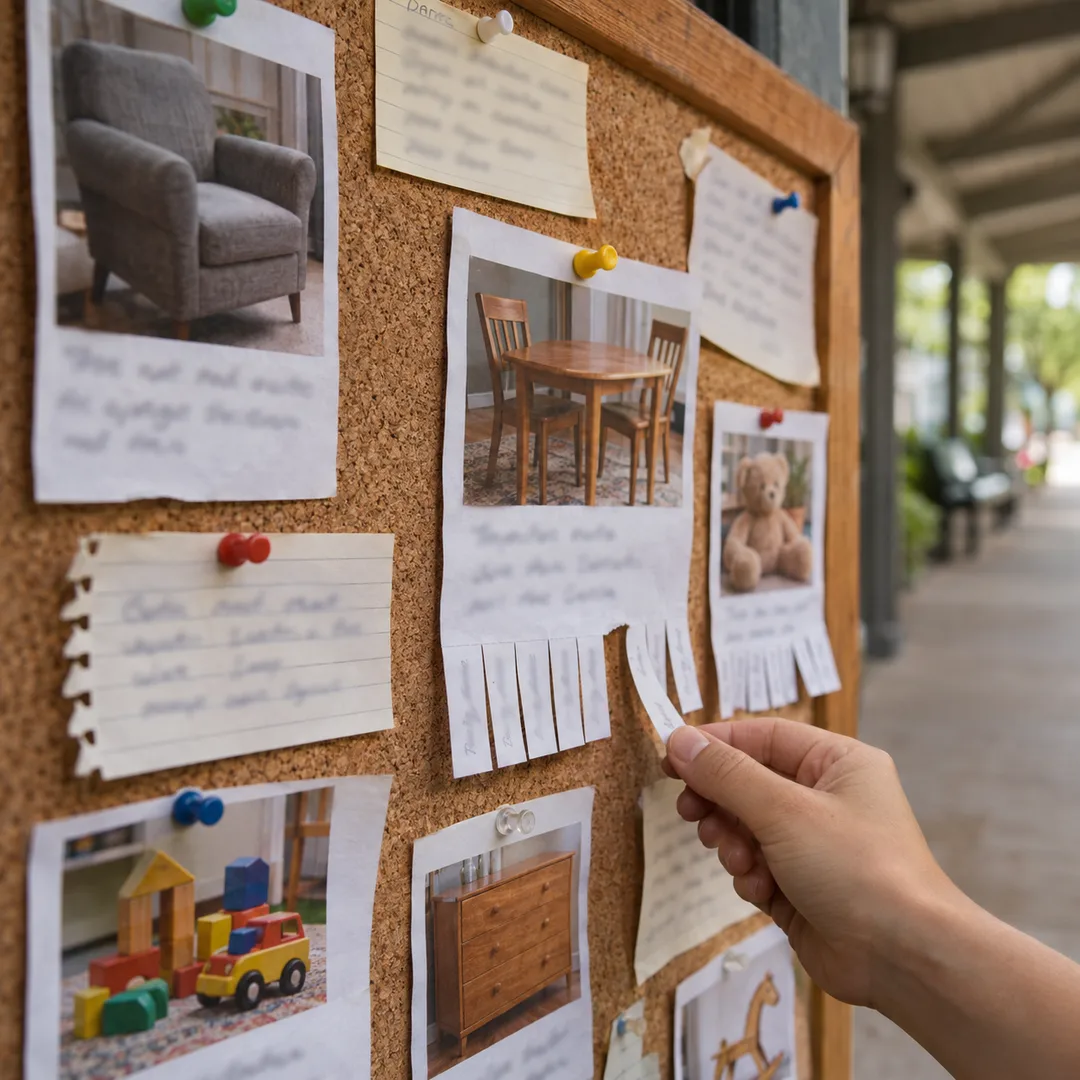
Start with the notice boards in cafes, supermarkets and community spaces around the village. Handwritten cards with photos usually mean a household sale. Read the moving date, since that tells you how keen the seller is. Take a photo of anything interesting rather than tearing off every strip, and message soon, mentioning which card you saw and when you can collect.
Church halls and charity shops in the wider area also run preloved tables, often supporting local causes. Their stock changes weekly and leans toward books, toys, kitchenware and smaller furniture. Volunteers appreciate it when you ask whether there is more in the back, and they will often tell you which days new donations are sorted. Buying here also keeps good things out of the bin, which is part of the point.
Testing Furniture Before You Carry It Away
Sit in every chair you are considering, and rock gently to feel for loose joints. Rattan should flex without cracking, and the weave should not be fraying at the corners where arms meet the seat. Pull drawers fully out to check the runners, and look underneath tables and cabinets for termite trails or soft wood, which are the real risks in this climate.
Smell matters too. A cabinet that has lived in a closed room may carry mould, so open the doors and breathe in before you commit. Measure twice: lift doors and corridors in older condos can be narrow, and a sofa that fits the living room may not fit through the door. If a seller offers to help carry, accept, and bring a friend with a car for anything larger than a lamp.
The Children's Corner: Books, Bikes and Toys
Families with young kids will find this the most rewarding part of the crawl. Moving households often leave behind balance bikes, scooters, wooden toys and stacks of picture books that their children have outgrown. Check bike brakes and tyre condition before buying, and flip through a few pages of any book to look for water damage or crayon surprises.
Plastic toys and car seats need more caution. Skip secondhand car seats entirely unless you know their history, since you cannot see crash damage. Soft toys are easy to wash, but anything with electronics should be tested on the spot. Many parents are delighted to pass toys to another family and may throw in extras if you show your kids are going to use them.
A Walking Loop With Breaks
Begin in the main shop rows of the village, where cafes and boards are concentrated, and work outward toward the quieter streets of Chip Bee Gardens. The residential lanes there are shaded by old rain trees and make for a gentler walk between pickups. Keep a short list on your phone of which addresses you have arranged to visit, and do not knock on doors without a message first.
Pause for a kopi or a fresh juice at one of the neighbourhood's long-running food spots, and use the break to sort what you have agreed to collect today and what needs a car later. If the bags are light, finish by walking a short stretch of the Rail Corridor nearby. The green trail is a calm place to sit with a new paperback after a morning of carrying.
Plan B When the Good Pieces Are Gone
Move-out sales are first come, first served, and you will lose some. When the sideboard you wanted is gone, ask the seller if they know any neighbours who are also leaving. Expat families often move in clusters at the end of a school year, and one sale leads to another. Keep a short wish list so you can pivot to a second item on the spot.
If the boards are empty and the charity tables picked over, treat the day as reconnaissance. Note which cafes keep busy boards and which volunteers know their stock, then come back in a week. Rain is the other common spoiler. The covered walkways along the shop rows let you keep browsing, but leave the outdoor pickups for a drier afternoon so that rattan and books stay dry.
Using Karpo APP to Shape the Crawl
Before you head out, tell Karpo APP what your flat still needs, for example a bookshelf, two balcony chairs and something for a toddler, and ask it to suggest a walking order around Holland Village with places to pause in between. You can also ask for nearby charity shops and preloved spots in other neighbourhoods, so a thin day here becomes a plan for the next outing.
Karpo APP will not hold an item for you or message sellers on your behalf, so keep that part personal and quick. What it does well is help you shape the day: where to start, where to rest out of the heat, and which green walk is close enough to finish on. That leaves your attention free for the part that matters, deciding which farewell becomes your welcome.
Ask Karpo for more information.
Keep reading
- Chinatown Batik Canting Pen Picker: Fine Spouts for Silk
 Tiong Bahru Batik Canting Pen Picker: Handles and Bowls
 Katong Batik Canting Pen Picker: Wide Spouts for Wave Fills